


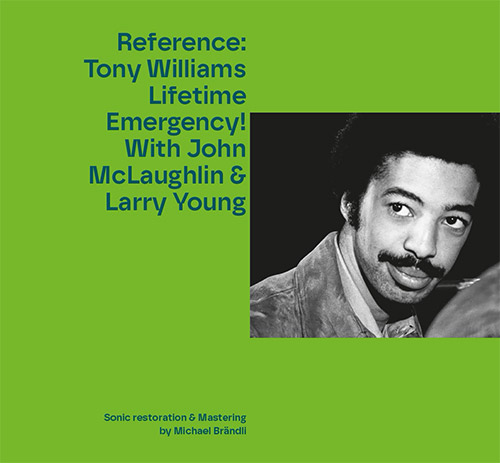
A restored edition of Tony Williams Lifetime's incendiary 1969 trio debut with John McLaughlin on guitar and Larry Young on organ, documenting one of jazz-rock fusion's earliest and most audacious statements, where Williams' radical rhythmic designs, Young's dense harmonic force, and McLaughlin's searing electric vocabulary collide in urgent, psychedelic, genre-defying improvisation.
In Stock
Quantity in Basket: None
Log In to use our Wish List
Shipping Weight: 3.00 units
Sample The Album:
Tony Williams-drums, vocals
John McLaughlin-electric guitars, acoustic guitars
Larry Young-organ
Click an artist name above to see in-stock items for that artist.
UPC: 7649988716874
Label: ALAY
Catalog ID: thingamajig 2508
Squidco Product Code: 37525
Format: CD
Condition: New
Released: 2026
Country: Switzerland
Packaging: Cardboard Gatefold
Recorded at Olmstead Sound Studios, in Brooklyn, New York, on May 26th and 28th, 1969, by Gene Radice.
Originally released in 1969 as a double Vinyl LP on the Polydor label with catalog code 25-3001.
Artist Biographies
• Show Bio for Tony Williams "Anthony Tillmon Williams (December 12, 1945 � February 23, 1997) was an American jazz drummer. Williams first gained fame in the band of trumpeter Miles Davis and pioneered jazz fusion. He was inducted into the Modern Drummer Hall of Fame in 1986. During his lifetime, music critic Robert Christgau described Williams as "probably the best drummer in the world". Williams was born in Chicago and grew up in Boston. He was of African, Portuguese, and Chinese descent. He studied with drummer Alan Dawson at an early age, and began playing professionally at the age of 13 with saxophonist Sam Rivers. Saxophonist Jackie McLean hired Williams when he was 16. At 17 Williams gained attention by joining Miles Davis in what was later dubbed Davis's Second Great Quintet. Williams was a vital element of the group, called by Davis in his autobiography "the center that the group's sound revolved around." His playing helped redefine the role of the jazz rhythm section through the use of polyrhythms and metric modulation. Meanwhile, he recorded his first two albums as leader for Blue Note label, Life Time (1964) and Spring (1965). He also recorded as a sideman for the label including, in 1964, Out to Lunch! with Eric Dolphy and Point of Departure with Andrew Hill. In 1969, he formed a trio, the Tony Williams Lifetime, with John McLaughlin on guitar and Larry Young on organ. Lifetime was a pioneering band of the fusion movement. Their first album was Emergency!. After the departures of McLaughlin and bassist Jack Bruce, who had joined the group for its second album, and several more releases, Lifetime disbanded. In 1975, Williams put together a band he called "The New Tony Williams Lifetime", featuring bassist Tony Newton, pianist Alan Pasqua, and English guitarist Allan Holdsworth, which recorded two albums for Columbia Records, Believe It and Million Dollar Legs. In mid-1976, Williams was a part of a reunion with his colleagues from the Miles Davis band: keyboardist Herbie Hancock, bassist Ron Carter, and saxophonist Wayne Shorter. Davis was in the midst of a six-year hiatus and was "replaced" by Freddie Hubbard. The record was later released as V.S.O.P. The group toured and for several years and a series of live albums were released under the name "V.S.O.P." or "V.S.O.P.: The Quintet". In 1979, Williams, McLaughlin and bassist Jaco Pastorius united for a one-time performance at the Havana Jazz Festival. This trio came to be known as the Trio of Doom, and a recording of their performance (along with some studio tracks recorded in New York shortly thereafter) was released in 2007. It opens with a powerful drum improvisation by Williams, followed by McLaughlin's "Dark Prince" and Pastorius' "Continuum", Williams' original composition "Para Oriente" and McLaughlin's "Are You the One?" Williams and Pastorius had also played together on the Herbie Hancock track "Good Question" from his 1978 album Sunlight. With the group Fuse One, Williams released two albums in 1980 and 1982. In 1985, he returned to Blue Note and the result was a series of recordings for the label beginning with Foreign Intrigue, which featured the playing of pianist Mulgrew Miller and trumpeter Wallace Roney. Later that year he formed a quintet with Miller, Roney, saxophonist Bill Pierce, and bassist Charnett Moffett (later Ira Coleman). This band played Williams' compositions almost exclusively. Williams also played drums for the band Public Image Limited, fronted by John Lydon (a.k.a. Johnny Rotten of the Sex Pistols), on their release Album/Cassette/Compact Disc (1986, the album title varied depending on the format). He played on the songs "FFF", "Rise" (a modest hit), and "Home". Bass guitarist Bill Laswell co-wrote those three songs with Lydon. The other drummer on that album was Ginger Baker. Williams lived and taught in the San Francisco Bay Area until his death from a heart attack following routine gall bladder surgery. One of his final recordings was The Last Wave by the trio known as Arcana, a release organized by Bill Laswell." ^ Hide Bio for Tony Williams • Show Bio for John McLaughlin "John McLaughlin (born 4 January 1942), also known as Mahavishnu, is an English guitarist, bandleader, and composer. A pioneer of jazz fusion, his music combines elements of jazz with rock, world music, Indian classical music, Western classical music, flamenco, and blues. After contributing to several key British groups of the early 1960s, McLaughlin made Extrapolation, his first album as a bandleader, in 1969. He then moved to the U.S., where he played with drummer Tony Williams's group Lifetime and then with Miles Davis on his electric jazz fusion albums In a Silent Way, Bitches Brew, Jack Johnson, Live-Evil, and On the Corner. His 1970s electric band, the Mahavishnu Orchestra, performed a technically virtuosic and complex style of music that fused electric jazz and rock with Indian influences. McLaughlin's solo on "Miles Beyond" from his album Live at Ronnie Scott's won the 2018 Grammy Award for the Best Improvised Jazz Solo. He has been awarded multiple "Guitarist of the Year" and "Best Jazz Guitarist" awards from magazines such as DownBeat and Guitar Player based on reader polls. In 2003, he was ranked 49th in Rolling Stone magazine's list of the "100 Greatest Guitarists of All Time". In 2009, DownBeat included McLaughlin in its unranked list of "75 Great Guitarists", in the "Modern Jazz Maestros" category. In 2012, Guitar World magazine ranked him 63rd on its top 100 list. In 2010, Jeff Beck called McLaughlin "the best guitarist alive", and Pat Metheny has also described him as the world's greatest guitarist. In 2017, McLaughlin was awarded an honorary doctorate of music from Berklee College of Music." ^ Hide Bio for John McLaughlin • Show Bio for Larry Young "If Jimmy Smith was "the Charlie Parker of the organ," Larry Young was its John Coltrane. One of the great innovators of the mid- to late '60s, Young fashioned a distinctive modal approach to the Hammond B-3 at a time when Smith's earthy, blues-drenched soul-jazz style was the instrument's dominant voice. Initially, Young was very much a Smith admirer himself. After playing with various R&B bands in the 1950s and being featured as a sideman with tenor saxman Jimmy Forrest in 1960, Young debuted as a leader that year with Testifying, which, like his subsequent soul-jazz efforts for Prestige, Young Blues (1960), and Groove Street, (1962), left no doubt that Smith was his primary inspiration. But when Young went to Blue Note in 1964, he was well on his way to becoming a major innovator. Coltrane's post-bop influence asserted itself more and more in Young's playing and composing, and his work grew much more cerebral and exploratory. Unity, recorded in 1965, remains his best-known album. Quick to embrace fusion, Young played with Miles Davis in 1969, John McLaughlin in 1970, and Tony Williams' groundbreaking Lifetime in the early '70s. Unfortunately, his work turned uneven and erratic as the '70s progressed. Young was only 38 when, in 1978, he checked into the hospital suffering from stomach pains, and died from untreated pneumonia. The Hammond hero's work for Blue Note (as both a leader and a sideman) was united for Mosaic's limited-edition six-CD box set The Complete Blue Note Recordings."-Alex Henderson ^ Hide Bio for Larry Young
6/25/2026
Have a better biography or biography source? Please Contact Us so that we can update this biography.
6/25/2026
Have a better biography or biography source? Please Contact Us so that we can update this biography.
6/25/2026
Have a better biography or biography source? Please Contact Us so that we can update this biography.
Track Listing:
1. Emergency 9:44
2. Beyond Games 8:25
3. Where 12:21
4. Vashkar 5:06
5. Via De Spectrum Road 7:58
6. Spectrum 8:58
7. Sangria For Three 13:21
8. Something Spiritual 5:45
June 2026
Improvised Music
Jazz
Free Improvisation
Jazz & Improvisation Based on Compositions
Trio Recordings
Jazz Reissues
Staff Picks & Recommended Items
New in Improvised Music
Recent Releases and Best Sellers
Search for other titles on the label:
ALAY.
 |
| Dorham, Kenny The Classic Albums 1960-1962 [4 CDs] (Enlightenment) |
| A 4-CD/8 album survey of Kenny Dorham's early-1960s output, compiling sessions from Show Boat through Una Mas, where his warm, lyrical trumpet leads shifting ensembles including Joe Henderson and Herbie Hancock, bridging hard bop, modal jazz, and Latin-tinged explorations with refined compositional clarity. |
 |
| McLean, Jackie One Step Beyond To New And Old Gospel, Revisited (ezz-thetics by Hat Hut Records Ltd) |
| Pushed on by new approaches to jazz as the be-bop era ended, alto saxophonist and composer Jackie McLean assembled a new quintet including soon-to-be Miles drummer Tony Williams to record One Step Beyond, here remastered and matched with his 1967 quintet album New and Old Gospel that included Ornette Coleman on trumpet and Coleman drummer Billy Higgins; two exceptional albums "revisited". |
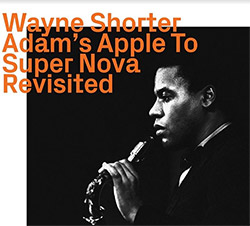 |
| Shorter, Wayne Adams Apple To Super Nova Revisited (ezz-thetics by Hat Hut Records Ltd) |
| Following the evolution in form and approach of composer and tenor saxophonist Wayne Shorter from his 1966 Blue Note album Adam's Apple with Hancock, Workman and Chambers (including a pre-Miles "Footprints") to the 1969 Weather Report precursor Super Nova with John McLaughlin, Sonny Sharock, Miroslav Vitous, Chick Corea, and Jack DeJohnette. |
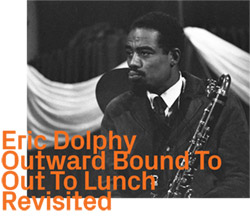 |
| Dolphy, Eric Outward Bound To Out To Lunch Revisited (ezz-thetics by Hat Hut Records Ltd) |
| Arriving in NY in 1959, saxophonist, flute & bass clarinetist Eric Dolphy joined some of the finest avant jazz players, releasing his 1st album as a leader in 1960--Outward Bound--with Freddie Hubbard, Jaki Byard, George Tucker & Roy Haynes; subsequently tagged as an anti-jazz musician, it would be 4 years before his masterwork Out To Lunch would be released, both albums here reissued & remastered. |
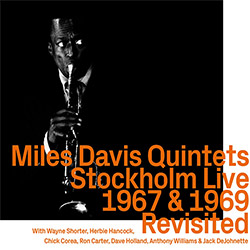 |
| Davis, Miles Quintets Stockholm 1967 & 1969 Revisited (ezz-thetics by Hat Hut Records Ltd) |
| Two live recordings from Miles Davis in the 1960s, first from Stockholm in 1967 with the classic 60s quintet of Miles, Wayne Shorter, Herbie Hancock, Ron Carter and Tony Williams; then two years later also in Stockholm with the "Lost Quintet" of Miles, Wayne Shorter, Chick Corea, Dave Holland and Jack DeJohnette, pushing new directions with tracks including "Bitches Brew". |
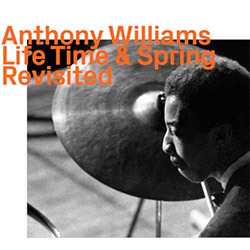 |
| Williams, Anthony (w/ Shorter / Rivers / Hancock / Hutcherson / Carter / Davis / Peacock) Life Time & Spring, Revisited (ezz-thetics by Hat Hut Records Ltd) |
| Remastering & reissuing drummer Anthony Williams first two albums: Life Time was recorded for Blue Note shortly after joining the Miles Davis Quintet, employing two bassists--Richard Davis and Gary Peacock--along with mentor Sam Rivers and Davis alumni Herbie Hancock & Ron Carter; Spring reflects the new freedom of 60s jazz in a quintet with both Wayne Shorter & Sam Rivers. |
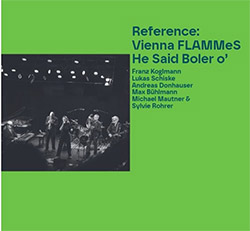 |
| Vienna FLAMMeS (Koglmann / Schiske / Donhauser / Buhlmann / Mautner / Rohrer) He Said Boler o' (ALAY) |
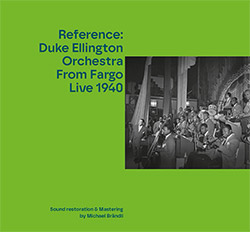 |
| Ellington, Duke Orchestra From Fargo Live 1940 (ALAY) |
| A legendary 1940 live document of Duke Ellington's Blanton-Webster orchestra, captured in Fargo by Jack Towers and Richard Burris, with Ellington on piano, Johnny Hodges and Otto Hardwick on alto saxophones, Ben Webster on tenor, Harry Carney on baritone, Barney Bigard on clarinet, Rex Stewart, Ray Nance and Wallace Jones in the brass, Jimmy Blanton on bass, Sonny Greer on drums, and Ivie Anderson and Herb Jeffries on vocals. |
Customers Who Bought This Item Also Bought:
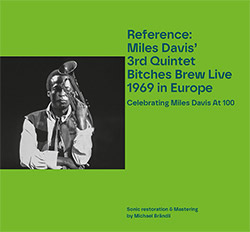 |
| Davis, Miles 3rd Quintet Reference: Bitches Brew Live 1969 In Europe [2 CDs + 2 POSTCARDS] (ALAY) |
| Documenting Miles Davis' 1969 "lost" third quintet live in Berlin, Stockholm and Rotterdam with Wayne Shorter, Chick Corea, Dave Holland and Jack DeJohnette, this 2-CD set captures the post-In a Silent Way ensemble reshaping material headed toward Bitches Brew, balancing lyricism and abstraction through open forms, electric-piano clusters, volatile rhythmic invention and Davis' fiercely exploratory trumpet. |
 |
| Ballister + Luke Stewart Clocking the Wheel (Aerophonic) |
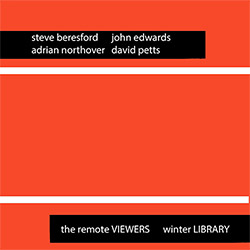 |
| Remote Viewers, The Winter Library Vol 1 (Remote Viewers) |
| The first volume in The Remote Viewers' Winter Library series, this live London quartet recording brings David Petts and Adrian Northover together with John Edwards and Steve Beresford, reworking material from The Remote Code into an acoustic chamber of tenor and soprano saxophones, resonant bass, objects and toys, balancing angular themes, brittle textures, oblique melody and free improvisational exchange. |
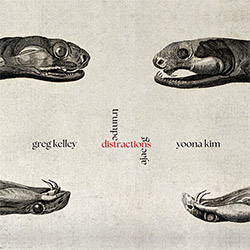 |
| Kelley, Greg / Yoona Kim Distractions for Trumpet & Ajaeng (Relative Pitch) |
| Bringing together Greg Kelley's extended-technique trumpet with Yoona Kim's non-traditional approach to the ajaeng, this Boston duo explores breath, bow, friction, resonance, and near-silence through taut improvisations where fragile tones, coarse strings, microscopic air bursts, and sudden ruptures forge a focused, unpredictable shared language. |
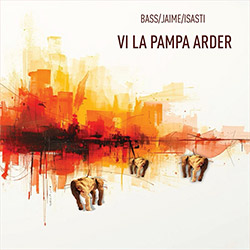 |
| Bass, Luciana / Ezekiel Jaime / Federico Isasti Vi La Pampa Arder (Relative Pitch) |
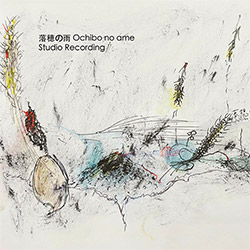 |
| Ochibo No Ame (kawashima / Inage / Yamagishi) Studio Recording (Relative Pitch) |
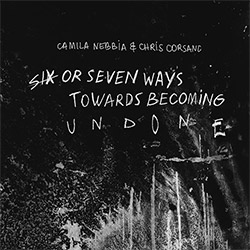 |
| Nebbia, Camila / Chris Corsano Six or Seven Ways Towards Becoming Undone (Relative Pitch) |
| A fierce, spontaneous duo of Camila Nebbia on tenor saxophone and Chris Corsano on drums, recorded in Berlin in 2025, merging Nebbia's searching lines, breath-driven textures and unstable lyricism with Corsano's explosive, highly detailed percussion language, moving between delicate abrasion, surging intensity, fragmented melody and raw improvised exchange. |
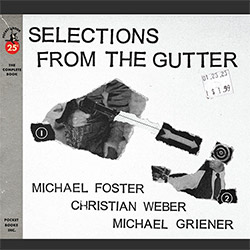 |
| Foster, Michael / Christian Weber / Michael Griener Selections from the Gutter (Relative Pitch) |
| NYC saxophonist Michael Foster joins Swiss bassist Christian Weber and Berlin drummer Michael Griener for a visceral trio session of free improv charged with noir tension, drawing on American crime novelist David Goodis-inspired titles as the group moves through fractured momentum, suspenseful restraint and explosive exchanges shaped by deep rhythmic instinct and structural awareness. |
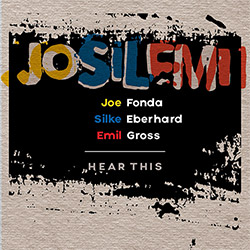 |
| JOSILEMI (featuring Joe Fonda / Silke Eberhard / Emil Gross) Hear This (Listen! Foundation (Fundacja Sluchaj!)) |
| Uniting veteran bassist Joe Fonda with German saxophonist Silke Eberhard and Austrian drummer Emil Gross, this collective trio balances lyrical structure, agile free improv, and Dolphy-informed melodic abstraction through elegant and highly responsive interplay, where tightly focused compositions unfold into fluid spontaneous exchanges driven by rhythmic precision, adventurous harmonies, and a vibrant live energy. |
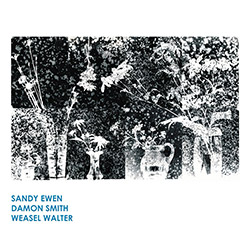 |
| Ewen / Smith / Walter Untitled (2) (Balance Point Acoustics) |
| Reuniting more than a decade after their explosive 2011 debut, guitarist Sandy Ewen, bassist Damon Smith, and percussionist Weasel Walter deliver a fiercely focused free improv session recorded with vivid clarity, balancing dense collective eruptions, microscopic textural detail, and deeply evolved ensemble interplay shaped in part through years performing together in Roscoe Mitchell's quartet. |
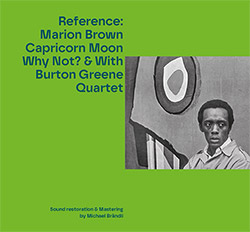 |
| Brown, Marion / Burton Greene Quartet Reference: Capricorn Moon, Why Not & With Burton Greene Quartet [2 CDs + POSTCARD] (ALAY) |
| Gathering key 1965-66 New York sessions, this 2-CD set traces alto saxophonist Marion Brown's emergence in the free jazz vanguard through Capricorn Moon, Why Not? and Burton Greene quartet recordings, with Alan Shorter, Bennie Maupin, Stanley Cowell, Henry Grimes, Sirone, Rashied Ali and others shaping music of lyrical urgency, open-form momentum and evolving collective freedom. |
 |
| Beiderbecke, Bix Reference: Bix Beiderbecke, 1924 to 1928 [2 CDs] (ALAY) |
| Gathering 45 small-group recordings from 1924-1928, this restored 2-CD reference traces Bix Beiderbecke's singular cornet and piano artistry alongside Frankie Trumbauer, Miff Mole, Don Murray, Tommy Dorsey, Eddie Lang, Joe Venuti and others, revealing a poised, lyrical and formally lucid voice whose economy, harmonic curiosity and graceful invention helped shape early jazz beyond its dance-band conventions. |
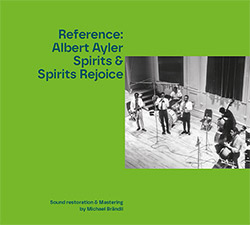 |
| Ayler, Albert Reference: Albert Ayler, Spirits & Spirits Rejoice [CD + POSTCARD] (ALAY) |
| Uniting Albert Ayler's 1964 New York sessions for Spirits (Debut) and Spirits Rejoice (ESP, with Donald Ayler, Charles Tyler, Call Cobbs, Henry Grimes, Gary Peacock, Sunny Murray, Normand Howard and Earle Henderson, this remastered edition captures Ayler's volatile balance of spiritual song, sculptural horn lines, churning bass motion, ecstatic fanfare and free jazz intensity. |

![Jerman, Jeph: For Alvin Kelly [CASSETTE + DOWNLOAD]](https://www.teuthida.com/productImages/misc4/37521.jpg)
![Russell, Aaron / Sandy Ewen: Dissectologists [CASSETTE + DOWNLOAD]](https://www.teuthida.com/productImages/misc4/37542.jpg)
![Mann, Oliver / Stefano Pilia: Precious Moments [CASSETTE + DOWNLOAD]](https://www.teuthida.com/productImages/misc4/37494.jpg)
![Vergara, Benjamin / Eden Carrasco: Secuelas [CASSETTE + DOWNLOAD]](https://www.teuthida.com/productImages/misc4/37495.jpg)
![Jerman, Jeph / Ted Byrnes: Muir [CASSETTE + DOWNLOAD]](https://www.teuthida.com/productImages/misc4/37520.jpg)
![+DOG+: Angel Wings [VINYL]](https://www.teuthida.com/productImages/misc4/37513.jpg)
![Amba, Zoh: Eyes Full [VINYL]](https://www.teuthida.com/productImages/misc4/37491.jpg)
![[ahmed] (Thomas / Grip / Gerbal / Wright): Play Monk [2 CDs]](https://www.teuthida.com/productImages/misc4/37428.jpg)
![Money: 4 [2 CDs]](https://www.teuthida.com/productImages/misc4/37505.jpg)

![+DOG+: The Garden [VINYL]](https://www.teuthida.com/productImages/misc4/37511.jpg)
![Le UN: 25 Pieces Sans Vide [3 CDs]](https://www.teuthida.com/productImages/misc4/37374.jpg)
![Directives: Reconsolid [CASSETTE]](https://www.teuthida.com/productImages/misc4/37418.jpg)
![La Casa, Eric / Francisco Lopez: Collection Supranaturelle: Induction / Mutation [2 CDs]](https://www.teuthida.com/productImages/misc4/37287.jpg)
![Aries House Zaes: Network Friction [VINYL]](https://www.teuthida.com/productImages/misc4/37242.jpg)
![Lindorff-Ellery, Evan: Light Sound Falling [CASSETTE w/ DOWNLOAD]](https://www.teuthida.com/productImages/misc4/37043.jpg)
![Lindorff-Ellery, Evan / Naomi Juniper: Studio, Creek [CASSETTE W/ DOWNLOAD]](https://www.teuthida.com/productImages/misc4/37044.jpg)
![Feldman, Morton / GBSR Duo w/ Taylor MacLennan: Trios [6 CD BOX SET]](https://www.teuthida.com/productImages/misc4/37020.jpg)
![Frey, Jurg : Composer, Alone [3 CDs]](https://www.teuthida.com/productImages/misc4/36927.jpg)

![Frey, Jurg with ensemble]h[iatus: Je Laisse A La Nuit Son Poids D](https://www.teuthida.com/productImages/misc4/36988.jpg)

![Henry Cow: The Henry Cow Box Redux: The Complete Henry Cow [18 CDs, DVD & 3 BOOKLETS]](https://www.teuthida.com/productImages/misc4/37272.jpg)
![MacLean, Steve: Box Of Seven [7 CD BOX]](https://www.teuthida.com/productImages/misc4/36467.jpg)
![Mehead: One Good Eye [REISSUE]](https://www.teuthida.com/productImages/misc4/37276.jpg)
![Zorn, John: The Song of Songs [CD + CD BOOK]](https://www.teuthida.com/productImages/misc4/36923.jpg)
![Coultrain: Mundus [COLORED VINYL]](https://www.teuthida.com/productImages/misc4/33056.jpg)
![Hprizm: Signs Remixed [COLORED VINYL]](https://www.teuthida.com/productImages/misc4/30635.jpg)
![Halls Of the Machine: All Tribal Dignitaries [CASSETTE w/ DOWNLOAD]](https://www.teuthida.com/productImages/misc4/36134.jpg)
![Koenjihyakkei: Live at Club Goodman [2 CDs]](https://www.teuthida.com/productImages/misc4/36111.jpg)
![Sorry For Laughing (G. Whitlow / M. Bates / Dave-Id / E. Ka-Spel): Rain Flowers [2 CDS]](https://www.teuthida.com/productImages/misc4/35985.jpg)
![Rolando, Tommaso / Andy Moor : Biscotti [CASSETTE w/ DOWNLOADS]](https://www.teuthida.com/productImages/misc4/36106.jpg)
![Electric Bird Noise / Derek Roddy: 8-10-22 [CD EP]](https://www.teuthida.com/productImages/misc4/35970.jpg)
![Coley, Byron: Dating Tips for Touring Bands [VINYL]](https://www.teuthida.com/productImages/misc4/17906.jpg)
![Lost Kisses: My Life is Sad & Funny [DVD]](https://www.teuthida.com/productImages/misc4/lostKissesDVD.jpg)