



![Davis, Miles 3rd Quintet: Reference: Bitches Brew Live 1969 In Europe [2 CDs + 2 POSTCARDS] (ALAY)](https://www.teuthida.com/productImages/misc4/37544.jpg "Davis, Miles 3rd Quintet: Reference: Bitches Brew Live 1969 In Europe [2 CDs + 2 POSTCARDS] (ALAY)")
![Davis, Miles 3rd Quintet: Reference: Bitches Brew Live 1969 In Europe [2 CDs + 2 POSTCARDS] (ALAY)](https://www.teuthida.com/productImages/full/37544.Full.jpg "Davis, Miles 3rd Quintet: Reference: Bitches Brew Live 1969 In Europe [2 CDs + 2 POSTCARDS] (ALAY)")
Documenting Miles Davis' 1969 "lost" third quintet live in Berlin, Stockholm and Rotterdam with Wayne Shorter, Chick Corea, Dave Holland and Jack DeJohnette, this 2-CD set captures the post-In a Silent Way ensemble reshaping material headed toward Bitches Brew, balancing lyricism and abstraction through open forms, electric-piano clusters, volatile rhythmic invention and Davis' fiercely exploratory trumpet.
In Stock
Quantity in Basket: None
Log In to use our Wish List
Shipping Weight: 5.00 units
EU & UK Customers:
Discogs.com can handle your VAT payments
So please order through Discogs
Sample The Album:
Miles Davis-trumpet
Wayne Shorter-tenor saxophone, soprano saxophone
Chick Corea-electric piano
Dave Holland-bass
Jack DeJohnette-drums
Click an artist name above to see in-stock items for that artist.
UPC: 7649988716898
Label: ALAY
Catalog ID: thingamajig 2510-2
Squidco Product Code: 37544
Format: 2 CDs
Condition: New
Released: 2026
Country: Switzerland
Packaging: Cardboard Gatefold
CD1, tracks 1-5 recorded at Berlin Philharmonie in Berlin, Germany,on November 7th, 1969.
CD1, tracks 6-8 and CD2, tracks 1 and 2 recorded at Folkets Hus in Stockholm, Sweden, on November 5th, 1969.
CD 2, tracks 3-8 recorded at De Doelen, in Rotterdam, The Netherlands, on November 9th, 1969.
The shock and awe that Bitches Brew produced within and without the jazz world on its release in March 1970 was largely unexpected, the result of the music's uncompromising power and what many felt to be its perplexing, eccentric sound and structure. In retrospect, we know how Miles' unconventional studio methodology and Teo Macero's subsequent compositional editing of the voluminous taped material innovated the remarkable finished product. But what has only marginally been discussed is the extent to which Davis' characteristic conceptual choices affected the changes for the future that this album initiated. Certainly, considering its novel production techniques, the precedent was set on his previous release, In a Silent Way, where separate episodes of predetermined compositions by Miles and recent recruit Joe Zawinul, and not the thematic-induced jams of the Bitches Brew sessions, were collaged into the LP's two flowing sidelong works. Further, the significant contribution by guitarist John McLaughlin, though another recent addition, was rather a continuation of Miles' to-this-point unsatisfactory attempt to sweeten the quintet's studio palette with guitar, dating back to 1967 and including Joe Beck and George Benson, eventually leading to his twin-guitar touring bands post-1971. Finally, the use of simultaneous electric keyboards so prominent here had been initiated in late '68 sessions, although the tracks were not released for several years.
The most striking, indeed, revolutionary metamorphoses that Bitches Brew introduced were in terms of instrumental color and rhythmic complexity. With Wayne Shorter switching his focus to soprano saxophone and the crucial complement of Bennie Maupin's bass clarinet, as well as the electronic augmentation of Davis' trumpet, the chiming electric pianos, and the stinging electric guitar, the ensemble's tonal potential broadened dramatically - a factor that Miles sought to exploit periodically throughout his career in his various collaborations with Gil Evens, dating as far back as the "Birth of the Cool" nonet. This, however, was the first time he took the step of combining two bassists and several drummers/percussionists in order to, as John Cage liked to say in another context, "thicken the plot," while incorporating shuffle, boogaloo, rock, and funk beats, with polyrhythmic combinations.
Which brings us to the issue at hand, the role of this "third quintet" swept into the maelstrom of musical idiosyncrasies that Bitches Brew precipitated. Tradition and economics had largely determined the post-bop quintet format for Miles from circa 1955 (the first "classic" quintet with John Coltrane - the roughly two years with Cannonball Adderley's participation notwithstanding) through 1968 (the point where Herbie Hancock, Ron Carter, and Tony Williams left the second "classic" quintet to pursue individual careers) - and the brilliance of the studio albums produced over this extended period, cultivated with two such distinctive groups of musical talent, only confirms Miles' genius for concept and detail. There's no doubt that the second quintet, individually and collectively, embraced a visionary zeal, enlarging Miles' perspective over time (witness the expansion of group improvisational interaction, and the reliance on the compositions by Shorter, Hancock, and Carter in the albums from E.S.P. to Miles in the Sky).
The third quintet, assembled to fulfill gigs on the East Coast and the Antibes Jazz Festival in the summer of 1969, offered radical changes from the very beginning, with its potent new rhythm section of Chick Corea (on electric piano almost exclusively), Dave Holland, and Jack DeJohnette, and a repertoire all-but devoid of the standard tunes transformed by the prior quintets, now featuring select compositions by Shorter and those Miles had introduced on In a Silent Way and was preparing for Bitches Brew. Following the augmented excursions of the August recording sessions, the quintet toured Scandinavia and Europe - the source of this concert material from Berlin, Stockholm, and Rotterdam. And in order to reclaim the expansive details of the music in their compact format, necessity required they invent a style of their own that balanced intensity and lyricism, abstraction and elaboration, form and freedom.
One of their solutions was to use each individual composition as not as a score but an open outline, spontaneously reinterpreting the phrasing and placement of melodic motives, loosening or altogether abandoning the harmonic sequences to give the soloists additional room to maneuver. Miles sounds inspired - protean and provocative - throughout, and Shorter's adventures, alternating between tenor and soprano, seem especially insistent in Rotterdam and oddly constructivist in Berlin. To my ear, Corea is the wild card. Exploiting a unique percussive technique on the electric piano, he injects agile countermelodies and bursts of supportive chords and brusque undesignated clusters, alongside jolting circuitous, quixotic solos.
Alas, the so-called "lost" quintet quickly became the last quintet. Within a few months Wayne Shorter departed, and Miles, desiring to expand the music's rhythmic parameters, added Airto Moreira to the touring band and replaced the rhythm section again. The tribal concerts of the '70s were on the horizon, and another shift was in the wind."-Art Lange, Chicago, February 2026
Artist Biographies
• Show Bio for Miles Davis "Miles Davis, in full Miles Dewey Davis III, (born May 26, 1926, Alton, Illinois, U.S.-died September 28, 1991, Santa Monica, California), American jazz musician, a great trumpeter who as a bandleader and composer was one of the major influences on the art from the late 1940s. Davis grew up in East St. Louis, Illinois, where his father was a prosperous dental surgeon. (In later years he often spoke of his comfortable upbringing, sometimes to rebuke critics who assumed that a background of poverty and suffering was common to all great jazz artists.) He began studying trumpet in his early teens; fortuitously, in light of his later stylistic development, his first teacher advised him to play without vibrato. Davis played with jazz bands in the St. Louis area before moving to New York City in 1944 to study at the Institute of Musical Art (now the Juilliard School)-although he skipped many classes and instead was schooled through jam sessions with masters such as Dizzy Gillespie and Charlie Parker. Davis and Parker recorded together often during the years 1945-48. Davis's early playing was sometimes tentative and not always fully in tune, but his unique, intimate tone and his fertile musical imagination outweighed his technical shortcomings. By the early 1950s Davis had turned his limitations into considerable assets. Rather than emulate the busy, wailing style of such bebop pioneers as Gillespie, Davis explored the trumpet's middle register, experimenting with harmonies and rhythms and varying the phrasing of his improvisations. With the occasional exception of multinote flurries, his melodic style was direct and unornamented, based on quarter notes and rich with inflections. The deliberation, pacing, and lyricism in his improvisations are striking. [...]" ^ Hide Bio for Miles Davis • Show Bio for Wayne Shorter "Wayne Shorter (born August 25, 1933) is an American jazz saxophonist and composer. Shorter came to prominence in the late 1950s as a member of, and eventually primary composer for, Art Blakey's Jazz Messengers. In the 1960s, he joined Miles Davis's Second Great Quintet, and then co-founded the jazz fusion band Weather Report. He has recorded over 20 albums as a bandleader. Many Shorter compositions have become jazz standards, and his music has earned worldwide recognition, critical praise and commendation. Shorter has won 11 Grammy Awards. He is acclaimed for his mastery of the soprano saxophone since switching his focus from the tenor in the late 1960s and beginning an extended reign in 1970 as Down Beat's annual poll-winner on that instrument, winning the critics' poll for 10 consecutive years and the readers' for 18. The New York Times' Ben Ratliff described Shorter in 2008 as "probably jazz's greatest living small-group composer and a contender for greatest living improviser". In 2017, he was awarded the Polar Music Prize." ^ Hide Bio for Wayne Shorter • Show Bio for Chick Corea "Armando Anthony "Chick" Corea (June 12, 1941 - February 9, 2021) was an American jazz composer, pianist, keyboardist, bandleader, and occasional percussionist. His compositions "Spain", "500 Miles High", "La Fiesta", "Armando's Rhumba", and "Windows" are widely considered jazz standards. As a member of Miles Davis's band in the late 1960s, he participated in the birth of jazz fusion. In the 1970s he formed Return to Forever. Along with McCoy Tyner, Herbie Hancock, and Keith Jarrett, Corea is considered to have been one of the foremost jazz pianists of the post-John Coltrane era. Corea continued to collaborate frequently while exploring different musical styles throughout the 1980s and 1990s. He won 27 Grammy Awards and was nominated more than 70 times for the award. [...]" ^ Hide Bio for Chick Corea • Show Bio for Dave Holland "Dave Holland is a bassist, composer, bandleader whose passion for musical expression of all styles, and dedication to creating consistently innovative music ensembles have propelled a professional career of more than 50 years, and earned him top honors in his field including multiple Grammy awards and the title of NEA Jazz Master in 2017. Holland stands as a guiding light on acoustic and electric bass, having grown up in an age when musical genres-jazz, rock, funk, avant-garde, folk, electronic music, and others-blended freely together to create new musical pathways. He was a leading member of a generation that helped usher jazz bass playing from its swing and post-bop legacy to the vibrancy and multidiscipline excitement of the modern era, extending the instrument's melodic, expressive capabilities. Holland's virtuosic technique and rhythmic feel, informed by an open-eared respect of a formidable spread of styles and sounds, is widely revered and remains much in demand. To date, His playing can be heard on hundreds of recordings, with more than thirty as a leader under his own name. Holland first rose to prominence in groundbreaking groups led by such legends as Miles Davis, Stan Getz, Sam Rivers, Betty Carter, and Anthony Braxton-as well as collaborations with the likes of Chick Corea, Gary Burton, Jack DeJohnette, and John McLaughlin. Carrying such an enviable history Holland does with little fanfare and extreme humility; to him what matters most is the immediate musical project at hand. Fittingly, he is today more celebrated for the bands that he continues to assemble, record and perform with-ensembles which range from duos and trios to big bands, and often feature musicians like Steve Coleman, Robin and Kevin Eubanks, Jason Moran, Chris Potter, Eric Harland, among many others who were bound for their own headline-status. The consistent priority connecting all of Holland's projects is an abiding sense of challenge-to himself, his fellow musicians, and his listeners. His comments on this driving force in his career serve as a personal credo: "My take on the relationship with the audience is that you don't want to underestimate their ability to hear the music. You want to be as clear as possible in your musical statement and not be obscure in terms of what it is you're doing. At the same time, you don't want to compromise on your creative ambitions because that's the driving force that's going to develop the music and keep it relevant for me. Outside of the audience, there's the aspect of me needing to be interested in what I'm doing and be stimulated by it in a challenging situation which is going to continue to allow me to grow as a player and composer." Holland was born in Wolverhampton, United Kingdom in 1946, and even before reaching puberty played ukulele and then guitar, having fallen under the spell of skiffle music like most British youth during the 1950s and early '60s. As an adolescent, he switched over to the low end of the string family, an uncle fabricating his first "tea-chest bass" out of the thin wooden crates in which tea was shipped. The bass ultimately proved the instrument that steered him away from a working-class destiny. At the ripe age of 14, he began playing R&B, rock and pop tunes for dances and in clubs with local bands, and visiting U.S. artists like Roy Orbison, Chet Atkins, and Johnnie Ray. By his late teens Holland began exploring an expanding palette of jazz styles and it was clear that music was Holland's calling. The search for more opportunities, experience, and advanced music education led the young bassist to journey from The Midlands to work in London in 1964, where he began to study with James Edward Merrett, the principal bassist with the London Philharmonic. A year later, Merrett recommended him for a scholarship to the Guildhall School of Music and Drama and Holland was on his way. The mid-'60s were an exciting time to be in "Swinging" London: the U.K. was pulling itself free from an extended postwar, economic decline and a whirlwind of fresh, cultural ideas (especially musical) was in the air. Holland was soon exploring more advanced classical and avant-garde music, as well as the work of jazz bass masters from Ray Brown, Leroy Vinegar and Charles Mingus, to Scott LaFaro, Jimmy Garrison, Ron Carter and Gary Peacock. He began to perform regularly with bands fronted by leaders at the cutting edge of the U.K. jazz scene: Tubby Hayes, Ronnie Scott, Chris McGregor, Evan Parker, and John Surman. Holland was a mere 19 years old when he began to appear at Ronnie Scott's jazz club in London's Soho district, supporting touring jazz veterans like Ben Webster, Coleman Hawkins and Joe Henderson. That was the venue in which famed trumpeter Miles Davis-who was about to transition from purely acoustic music to more electric instrumentation in 1968, including rock and funk influences-first heard Holland. Davis asked him to take over the bass chair in his band at a time when generations of musicians and music fans were intensely focused on every step the trumpeter was taking. Joining Davis's groundbreaking, semi-electric band was the catapult that launched Holland's career to the international stage. As the world watched and listened, he contributed to albums that pointed the way to the future-Filles De Kilimanjaro, In A Silent Way, Bitches Brew-and performed in jazz clubs and rock festivals, helping to lay the groundwork for the rise of Fusion jazz, an important member of a brotherhood of innovators adept at older and newer jazz vocabularies. While still with Davis, Holland gigged and recorded with other musicians as well, including the Thad Jones/Mel Lewis Orchestra, Chick Corea, and Joe Henderson. Holland left Davis's employ in 1970 and immediately co-founded Circle-the influential if short-lived free-jazz quartet, with Corea, Anthony Braxton and Barry Altschul. After the breakup of Circle in late '71, Holland found himself working in bands led by the likes of Stan Getz, Thelonious Monk, Braxton, and initiating an enduring relationship with saxophonist/bandleader Sam Rivers. By 1972, Holland relocated to upstate New York, and began recording under his own name, beginning a long-standing association with the Munich-based ECM label. It was during this period of re-establishment that he began participating with vibraphonist Karl Berger's Creative Music Studio, and co-founded the Gateway Trio with John Abercrombie and Jack DeJohnette. Holland later joined Betty Carter's group for a year, and served as a sideman on a wide range of recording projects that featured blues singer/guitarist Bonnie Raitt, vocalist Maria Muldaur, and bluegrass heavyweights John Hartford, Norman Blake, and Vassar Clements. In '77, Holland began performing solo bass concerts, which led to the studio album Emerald Tears, which he later followed with the solo cello recording Life Cycle in '83. As the '80s began, Holland stepped forward with a working band of his own for the first time. The Dave Holland Quintet was comprised of alto saxophonist Steve Coleman, trumpeter Kenny Wheeler, trombonist Julian Priester, and drummer Steve Ellington. Their 1984 debut was well-received critically, and initiated a long run of groups that varied in musical approach-smaller lineups focusing on lengthy improvisations, larger ensembles dealing with intricate arrangements- and evolved as new arrivals, like drummer Marvin "Smitty" Smith and guitarist Kevin Eubanks, who all became part of Holland's creative circle. In 1990, Holland debuted Extensions-a quartet album featuring Kevin Eubanks, Coleman and Smith-that was voted Album of the Year by Downbeat magazine. A year later, on the same week, he recorded World Trio, featuring Eubanks on acoustic guitar and percussionist Mino Cinelu, and Phase Space, a duo album with Steve Coleman. These were followed in '93 by Holland's third solo effort, Ones All (both World Trio and Ones All were originally released on the Intuition label.) By '97, the Dave Holland Quintet included a mix of younger and veteran players, with vibraphonist Steve Nelson and trombonist Robin Eubanks (Kevin's brother) alongside saxophonist Chris Potter and drummer Billy Kilson (and later Nate Smith.) While most of his creative choices as a bandleader are the result of feel and intuition, Holland admits a conscious decision when it comes to combining musicians of varying levels of experience. "I'm an equal opportunity employer. I don't think about anything to do with gender, race or age. I'm looking for the music. I listen to the music with my ears, but at the same time, I am also conscious of the fact that it's very important that there is intergenerational contact in the music. Older players should play with younger players and vice-versa so we have a chance to cross-pollinate our influences and backgrounds. This is how the music grows and expands." In the 1990s, Holland's desire to focus on his compositional and arranging skills led to the formation of the Dave Holland Big Band, a group that that led to his notching two Grammy awards for Best Large Jazz Ensemble. Around the same time, he earned a third for an all-star quintet with old colleagues Burton, Corea, Pat Metheny and Roy Haynes. During the '90s, Holland also revisited a number of historic collaborations-including the Gateway Trio, and working with Herbie Hancock-and in the 2000s, Holland expanded his focus to new collaborations: the comically named "ScoLoHoFo" quartet featuring Joe Lovano, John Scofield, and Al Foster; as well as a duo with Jim Hall. In 2003, Holland departed ECM and formed his own label, Dare2 Records, on which he has issued almost all of his recent recordings. In 2005, Dare2 premiered with Overtime, a big band project including music commissioned by the Monterey Jazz Festival. A year later, Critical Mass featured his Quintet (the first with Nate Smith), and Pass It On in 2008, a sextet performing arrangements in a mini-big band style (with, among others, Robin Eubanks, pianist Mulgrew Miller, drummer Eric Harland.) In 2010, Holland released two recordings: the live octet album Pathways, and Hands, a duet with flamenco guitarist Pepe Habichuela. In 2013, Holland dug deeper into his Fusion roots, unveiling his quartet Prism with Harland, Kevin Eubanks, and keyboardist Craig Taborn; and a year later, Holland teamed up with pianist and longtime friend Kenny Barron to record The Art Of Conversation for the Blue Note label. The remarkable rate at which Holland leads or collaborates his way into fresh and exciting projects proves he has no plans to diminish the range nor frequency of his creative drive. His band lineups reveal that his ear is still to the ground, listening for and recognizing fresh and deserving talent, and that many are the musicians who are happy to perform or record with him. As Holland prepares to celebrate his 70th year, he is currently playing with a new group, the Aziza quartet, co-founded with Harland, saxophonist Chris Potter, and guitarist Lionel Loueke. As a leader and collaborator, Holland continues to tour the world and it comes as no surprise that he has and still serves the music in an educational role, having worked during the 1980s as artistic director of the Banff Centre's jazz summer program (Canada), and as a faculty member for two years at the New England Conservatory of Music in the '90s, where he still serves as an artist in residence (as he does at the Royal Academy of Music.) He has also been elected a Fellow of the Guildhall School-his alma mater-and has received honorary doctorates from Birmingham Conservatoire (UK), Berklee College of Music, and the New England Conservatory. Most recently, Holland was made an Honorary Member of the Royal Academy of Music (UK)-a rare honor as membership is limited to 300 living musicians-and he's been named a 2017 Jazz Master by the National Endowment for the Arts. Over the years and through countless musical experiences, Holland has come to define his purpose as a musician-and he articulates it well: "I'm trying to create music that exists on multiple levels, such as simpler elements along with more complex elements. To me, a lot of great art, whether it's visual, musical or written, has an ability to do those things-to offer some fundamental truths that echo in people, yet at the same time, introduce them to a new way of looking at those fundamentals that gives them a little different perspective..." ^ Hide Bio for Dave Holland • Show Bio for Jack DeJohnette "Jack DeJohnette (born August 9, 1942) is an American jazz drummer, pianist, and composer. An important figure of the fusion era of jazz, DeJohnette is one of the most influential jazz drummers of the 20th century, given his extensive work as leader and sideman for musicians including Charles Lloyd, Freddie Hubbard, Keith Jarrett, Bill Evans, John Abercrombie, Alice Coltrane, Sonny Rollins, Miles Davis, Joe Henderson, Michael Brecker, Herbie Hancock and John Scofield. He was inducted into the Modern Drummer Hall of Fame in 2007." ^ Hide Bio for Jack DeJohnette
9/9/2026
Have a better biography or biography source? Please Contact Us so that we can update this biography.
9/9/2026
Have a better biography or biography source? Please Contact Us so that we can update this biography.
9/9/2026
Have a better biography or biography source? Please Contact Us so that we can update this biography.
9/9/2026
Have a better biography or biography source? Please Contact Us so that we can update this biography.
9/9/2026
Have a better biography or biography source? Please Contact Us so that we can update this biography.
Track Listing:
CD1
1. Directions (by Joe Zawinul) 6:59
2. Bitches Brew 13:28
3. It's About That Time 14:09
4. I Fall In Love Too Easily (by Jule Styne) 3:42
5. Sanctuary (by Wayne Shorter) 4:26
6. Bitches Brew 14:38
7. Paraphernalia (by Wayne Shorter) 9:19
8. Nefertiti (by Wayne Shorter) 10:05
CD2
1. Masqualero (by Wayne Shorter) 7:55
2. This (by Chick Corea) 5:38
3. Directions (by Joe Zawinul) 10:20
4. Bitches Brew 12:18
5. I Fall In love Too Easily (by Jule Styne) 2:37
6. Sancturary (by Wayne Shorter) 3:58
7. It's About TIme 17:15
8. Masqualero (by Wayne Shorter) 15:01
June 2026
Hat Art
Jazz
Jazz & Improvisation Based on Compositions
NY Downtown & Metropolitan Jazz/Improv
Quintet Recordings
Staff Picks & Recommended Items
New in Improvised Music
Recent Releases and Best Sellers
Contemporary and Composed Modern Jazz
Search for other titles on the label:
ALAY.
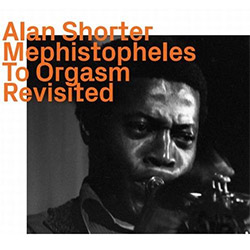 |
| Shorter, Alan Mephistopheles To Orgasm - Revisited (ezz-thetics by Hat Hut Records Ltd) |
| An exemplary set of explorative hard bop compositions from composer/trumpeter Alan Shorter, first Mephistopheles from Wayne Shorter's The All Seeing Eye in an octet with legends Wayne Shorter, James Spaulding, Freddie Hubbard, Grachan Moncur III, Herbie Hancock, Ron Carter & Joe Chambers; and then Alan Shorter's own Orgasm with Gato Barbieri, Charlie Haden, Reggie Johnson, Muhammad Ali & Rashied Ali. |
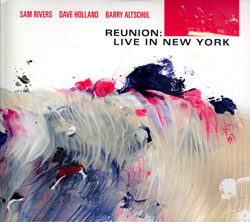 |
| Rivers / Holland / Altschul Reunion: Live in New York [2 CDs] (Pi Recordings) |
| After 25 years, saxophonist, flutist, and pianist Sam Rivers reunites his groundbreaking trio of Dave Holland on bass and Barry Altschul on drums for a fully improvised concert at Miller Theatre. |
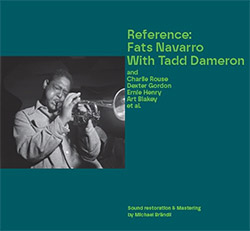 |
| Navarro, Fats Reference: Nostaligia w/ Tadd Dameron and Charlie Rouse / Dexter Gordon / Ernie Henry / Art Blakey (ALAY) |
| Restoring New York sessions from 1947 to 1949, this collection places Fats Navarro's brilliant, cleanly articulated trumpet within Tadd Dameron's harmonically refined bebop writing, joined by Charlie Rouse, Dexter Gordon, Ernie Henry, Leo Parker, Wardell Gray, Cecil Payne, Art Blakey, Kenny Clarke and others as the ensembles move between intricate modern lines, swing-rooted lyricism and early Afro-Cuban color. |
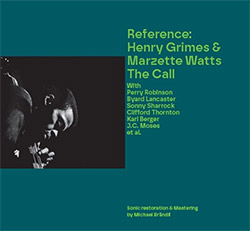 |
| Grimes, Henry / Marzette Watts (w/ Robinson / Lancaster / Sharrock / Thornton / Berger / Moses &c) The Call (ALAY) |
| Reissuing Henry Grimes' concise, darkly lyrical 1965 trio album with clarinetist Perry Robinson and drummer Tom Price alongside Marzette Watts' turbulent 1966 octet session, this remastered edition contrasts free improvisation with a dense collective of Byard Lancaster, Clifford Thornton, Sonny Sharrock, Karl Berger, Juini Booth and J. C. Moses, Grimes the link between two vital expressions of 1960s freedom |
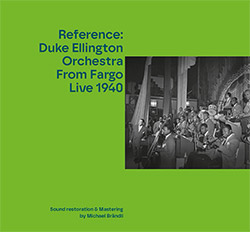 |
| Ellington, Duke Orchestra From Fargo Live 1940 (ALAY) |
| A legendary 1940 live document of Duke Ellington's Blanton-Webster orchestra, captured in Fargo by Jack Towers and Richard Burris, with Ellington on piano, Johnny Hodges and Otto Hardwick on alto saxophones, Ben Webster on tenor, Harry Carney on baritone, Barney Bigard on clarinet, Rex Stewart, Ray Nance and Wallace Jones in the brass, Jimmy Blanton on bass, Sonny Greer on drums, and Ivie Anderson and Herb Jeffries on vocals. |
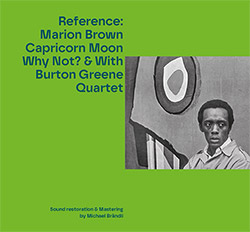 |
| Brown, Marion / Burton Greene Quartet Reference: Capricorn Moon, Why Not & With Burton Greene Quartet [2 CDs + POSTCARD] (ALAY) |
| Gathering key 1965-66 New York sessions, this 2-CD set traces alto saxophonist Marion Brown's emergence in the free jazz vanguard through Capricorn Moon, Why Not? and Burton Greene quartet recordings, with Alan Shorter, Bennie Maupin, Stanley Cowell, Henry Grimes, Sirone, Rashied Ali and others shaping music of lyrical urgency, open-form momentum and evolving collective freedom. |
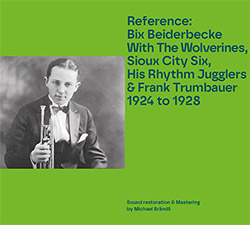 |
| Beiderbecke, Bix Reference: Bix Beiderbecke, 1924 to 1928 [2 CDs] (ALAY) |
| Gathering 45 small-group recordings from 1924-1928, this restored 2-CD reference traces Bix Beiderbecke's singular cornet and piano artistry alongside Frankie Trumbauer, Miff Mole, Don Murray, Tommy Dorsey, Eddie Lang, Joe Venuti and others, revealing a poised, lyrical and formally lucid voice whose economy, harmonic curiosity and graceful invention helped shape early jazz beyond its dance-band conventions. |
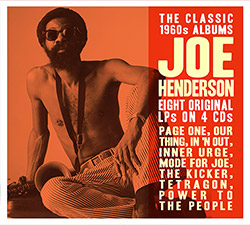 |
| Henderson, Joe The Classic 1960s Albums [4 CD BOX SET] (Enlightenment) |
| Bringing together seven landmark 1960s sessions, this 4-CD set captures Joe Henderson at the height of his early career, leading stellar ensembles through a compelling range of post-bop expression, from hard-driving grooves to exploratory improvisation, showcasing his commanding tone, compositional strength, and enduring influence on modern jazz. |
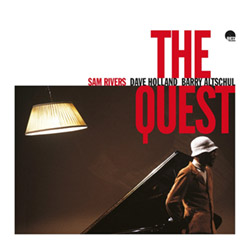 |
| Rivers, Sam The Quest (Red Records) |
| A reissue of Sam Rivers' powerful 1976 trio session with bassist Dave Holland and drummer Barry Altschul, capturing the group's remarkable chemistry in four extended pieces that move fluidly between searing swing, freeform expression, and percussive intensity, with Rivers shifting between tenor, soprano, flute, and piano in a virtuosic and deeply spontaneous studio performance. |
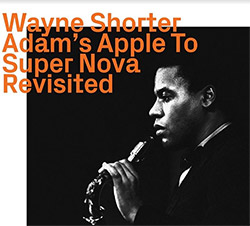 |
| Shorter, Wayne Adams Apple To Super Nova Revisited (ezz-thetics by Hat Hut Records Ltd) |
| Following the evolution in form and approach of composer and tenor saxophonist Wayne Shorter from his 1966 Blue Note album Adam's Apple with Hancock, Workman and Chambers (including a pre-Miles "Footprints") to the 1969 Weather Report precursor Super Nova with John McLaughlin, Sonny Sharock, Miroslav Vitous, Chick Corea, and Jack DeJohnette. |
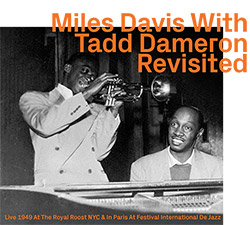 |
| Davis, Miles w/ Tadd Dameron Revisited (ezz-thetics by Hat Hut Records Ltd) |
| Between his work with Charlie Parker and before his own personal success, trumpeter Miles Davis joined the influential ensemble of pianist, composer and arranger Tadd Dameron, heard in six large ensemble pieces at New York's Royal Roost in 1949, and then in a quintet at the Paris Festival International De Jazz the same year, in both hearing a unique and confident facet to Miles' playing. |
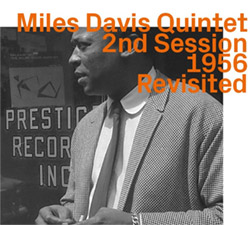 |
| Davis, Miles Quintet 2nd Sessions 1956, Revisited (ezz-thetics by Hat Hut Records Ltd) |
| Recorded in the same October 1956 Rudy Van Gelder sessions that are heard on Miles Davis' Cookin' and Steamin' albums, these alternate takes with his quintet of John Coltrane on tenor saxophone, Red Garland on piano, Paul Chambers on double bass and Philly Joe Jones on drums give us a unique view on the consistency and strength of the famous and foundational hard bop band. |
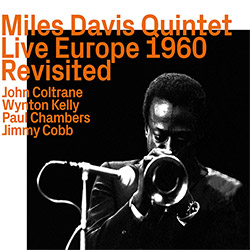 |
| Davis, Miles Quintet (w/ Coltrane / Kelly / Chambers / Cobb) Live Europe 1960, Revisited (ezz-thetics by Hat Hut Records Ltd) |
| Culled from two concerts on Norman Granz's Spring 1960 European tour, Miles' seminal 50s band was on the point of dissolution, Coltrane soon to leave to form his own classic quartet, and the distinction between the old and new is evident in Coltrane's expansive and intricate soloing over standards and Kind of Blue material including "So What" or "On Green Dolphin Street". |
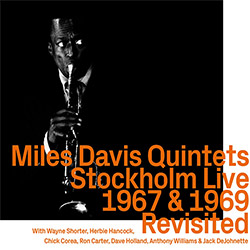 |
| Davis, Miles Quintets Stockholm 1967 & 1969 Revisited (ezz-thetics by Hat Hut Records Ltd) |
| Two live recordings from Miles Davis in the 1960s, first from Stockholm in 1967 with the classic 60s quintet of Miles, Wayne Shorter, Herbie Hancock, Ron Carter and Tony Williams; then two years later also in Stockholm with the "Lost Quintet" of Miles, Wayne Shorter, Chick Corea, Dave Holland and Jack DeJohnette, pushing new directions with tracks including "Bitches Brew". |
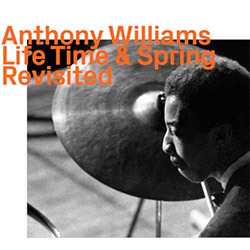 |
| Williams, Anthony (w/ Shorter / Rivers / Hancock / Hutcherson / Carter / Davis / Peacock) Life Time & Spring, Revisited (ezz-thetics by Hat Hut Records Ltd) |
| Remastering & reissuing drummer Anthony Williams first two albums: Life Time was recorded for Blue Note shortly after joining the Miles Davis Quintet, employing two bassists--Richard Davis and Gary Peacock--along with mentor Sam Rivers and Davis alumni Herbie Hancock & Ron Carter; Spring reflects the new freedom of 60s jazz in a quintet with both Wayne Shorter & Sam Rivers. |
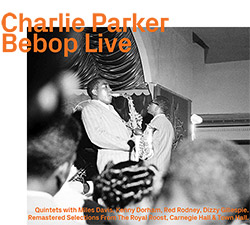 |
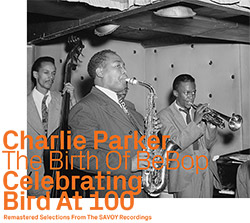
| Parker, Charlie Bebop Live [2 CDs] (ezz-thetics by Hat Hut Records Ltd) |
| Remarkably remastered recordings of Charlie Parker's quintets from 1945-49, performing live at Carnegie Hall, Royal Roost, & Town Hall with configurations of Miles Davis, Dizzy Gillespie, Kenny Dorham, Red Rodney, Don Byas, Al Haig, Max Roach, Roy Haynes, Kenny Clarke, Tommy Potter & Curley Russell, allowing us to re-live the consistent brilliance of the leader and his sidemen. |
 |
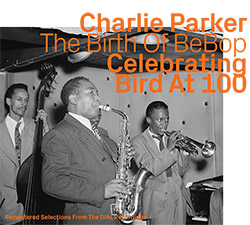
| Parker, Charlie Selections From The SAVOY Recordings (ezz-thetics by Hat Hut Records Ltd) |
| The second of two volumes in celebration of legendary saxophonist Charlie Parker's 100th birthday, here remastering his landmark recordings for the Savoy label in New York City between 1945-48, performing with jazz greats including Bud Powell, Dizzy Gillespie, Miles Davis, John Lewis, Curley Russel, Max Roach, &c. for some of be-bop's finest and best known compositions. |
 |
| Parker, Charlie Selections From The DIAL Recordings (ezz-thetics by Hat Hut Records Ltd) |
| The first of two volumes in celebration of legendary saxophonist Charlie Parker's 100th birthday, here remastering his landmark recordings for the Dial label on the US West Coast between 1946-47, performing with jazz greats including Miles Davis, Lucky Thompson, Erroll Garner, Barney Kessel, Red Calender, JJ Johson, Max Roach, &c. for some of Parker's best known and essential compositions. |
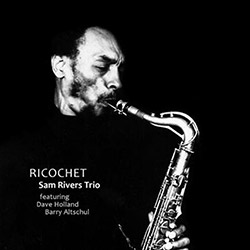 |
| Rivers, Sam Trio feat Dave Holland / Barry Altschul Ricochet (NoBusiness) |
| Captured live in San Francisco in 1978, the lastest in the NoBusiness Sam Rivers Archive series finds the masterful wind player in peak form with the trio of Dave Holland on bass & cello, and Barry Altschul on drums, Rivers on tenor & soprano sax, flute & piano, in the 52 minute free jazz epic "Ricochet", a high-energy work of diverse mood and character; superb! |
Customers Who Bought This Item Also Bought:
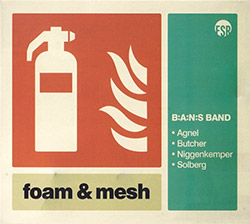 |
| B:A:N:S BAND (Sophie Agnel / John Butcher / Pascal Niggenkemper / Stale Liavik Solberg) Foam & Mesh (Fundacja Sluchaj!) |
| The debut recording from B:A:N:S Band brings Sophie Agnel's radically extended piano together with John Butcher's exploratory saxophones, Pascal Niggenkemper's highly physical double bass and Ståle Liavik Solberg's responsive percussion in two long-form collective improvisations of texture, resonance, density and silence, captured live at Austria's 2024 Artacts Festival. |
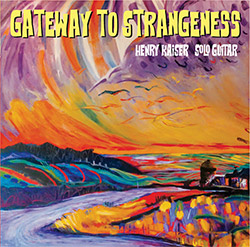 |
| Kaiser, Henry Gateway To Strangeness (solo guitar) (Metalanguage) |
| A limited artist-released solo guitar recording from Henry Kaiser on acoustic guitar, electric guitar, harp guitar, and seven guitars laid across a table, presenting concise to medium-length explorations of resonance, distortion, extended-string sonority, tabletop texture, and improvisational invention from one of creative music's most idiosyncratic and restless guitarists. |
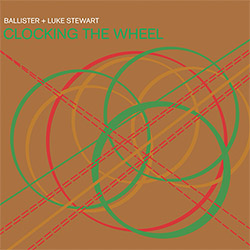 |
| Ballister + Luke Stewart Clocking the Wheel (Aerophonic) |
| Joining Dave Rempis on saxophones, Fred Lonberg-Holm on cello, and Paal Nilssen-Love on drums with bassist Luke Stewart, this live Ballister performance from Roulette expands the trio's ferocious long-running rapport into a dense, high-velocity quartet, Stewart locking with Nilssen-Love in elastic propulsion as cello and saxophone surge through explosive, telepathic collective improvisation. |
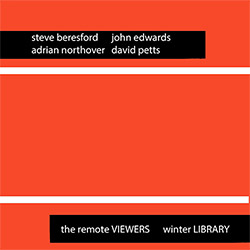 |
| Remote Viewers, The Winter Library Vol 1 (Remote Viewers) |
| The first volume in The Remote Viewers' Winter Library series, this live London quartet recording brings David Petts and Adrian Northover together with John Edwards and Steve Beresford, reworking material from The Remote Code into an acoustic chamber of tenor and soprano saxophones, resonant bass, objects and toys, balancing angular themes, brittle textures, oblique melody and free improvisational exchange. |
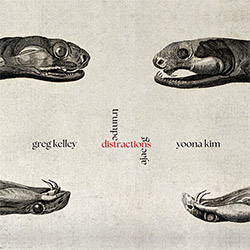 |
| Kelley, Greg / Yoona Kim Distractions for Trumpet & Ajaeng (Relative Pitch) |
| Bringing together Greg Kelley's extended-technique trumpet with Yoona Kim's non-traditional approach to the ajaeng, this Boston duo explores breath, bow, friction, resonance, and near-silence through taut improvisations where fragile tones, coarse strings, microscopic air bursts, and sudden ruptures forge a focused, unpredictable shared language. |
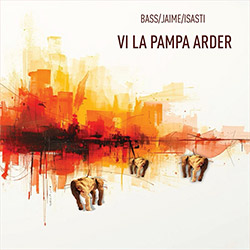 |
| Bass, Luciana / Ezekiel Jaime / Federico Isasti Vi La Pampa Arder (Relative Pitch) |
| An intense Argentine free-improvising trio of Luciana Bass on guitar, Ezekiel Jaime on electric bass, and Federico Isasti on drums, shaping spontaneous forms from brittle textures, distorted low-end resonance, scattered rhythmic detail, and explosive collective energy, moving between sparse tension and combustible interaction in a fearless session of attentive, unstable, and deeply physical sound. |
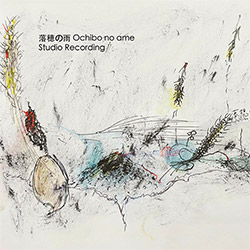 |
| Ochibo no ame (Kawashima / Inage / Yamagishi) Studio Recording (Relative Pitch) |
| A fierce studio document from the Japanese free-improvising trio of Makoto Kawashima on alto saxophone, Louis Inage on bass, and Naoto Yamagishi on drums and percussion, moving through charged silences, abrasive eruptions, fractured melody, dark bass resonance, and scattered percussive force in a raw, intuitive exchange rooted in underground intensity and collective risk. |
![Ehrlich, Marty: OPEN AIR: The Complete Saxophone Quartet Compositions of Julius Hemphill [2CDs]](https://www.teuthida.com/productImages/misc4/37922.jpg)
![Frith, Fred / Cornelius Claudio Kreusch / Johannes Tonio Kreusch: Pink / Neon [2 CDs]](https://www.teuthida.com/productImages/misc4/37712.jpg)
![Frith, Fred / Cornelius Claudio Kreusch / Johannes Tonio Kreusch: Pink / Neon [VINYL 2 LPs]](https://www.teuthida.com/productImages/misc4/37713.jpg)
![Miguel, Sei: Viva! O Carro de Fogo de Sei Miguel [2 CDs]](https://www.teuthida.com/productImages/misc4/37739.jpg)
![Money: 5 [2 CDs]](https://www.teuthida.com/productImages/misc4/37890.jpg)
![Drumm, Kevin: The Mild Temper [6 CD BOX SET]](https://www.teuthida.com/productImages/misc4/37651.jpg)
![Trzaska, Mikolaj / John Edwards / Mark Sanders: Because It Happens [VINYL]](https://www.teuthida.com/productImages/misc4/37551.jpg)
![Wassermann, Ute: Chimeric [VINYL]](https://www.teuthida.com/productImages/misc4/37652.jpg)


![Aranda, Irene (Malfon / Aranda / Yamasaki): May [CD + DOWNLOAD]](https://www.teuthida.com/productImages/misc4/37825.jpg)
![Bopp, Christiane: Rever, murmurer, dire [CD + DOWNLOAD]](https://www.teuthida.com/productImages/misc4/37823.jpg)
![Angles 4 (Kuchen / Haker-Flaten / Stahl / Nordeson): Angles 4 [CD + DOWNLOAD]](https://www.teuthida.com/productImages/misc4/37826.jpg)
![Glass Triangle (Parkins / Rasmussen / Sawyer): 3 X 1 [CD + DOWNLOAD]](https://www.teuthida.com/productImages/misc4/37827.jpg)
![Musicworks: #154 Summer 2026 [MAGAZINE + CD]](https://www.teuthida.com/productImages/misc4/37879.jpg)
![Dan, Lao Chicago Quartet: Klotski [VINYL]](https://www.teuthida.com/productImages/misc4/37518.jpg)
![TRAC (Teddy Ryles / Alexander Cooper): Heavy Nano Ream Aria [2 CDs]](https://www.teuthida.com/productImages/misc4/37647.jpg)
![Jerman, Jeph: For Alvin Kelly [CASSETTE + DOWNLOAD]](https://www.teuthida.com/productImages/misc4/37521.jpg)
![Mann, Oliver / Stefano Pilia: Precious Moments [CASSETTE + DOWNLOAD]](https://www.teuthida.com/productImages/misc4/37494.jpg)
![Jerman, Jeph / Ted Byrnes: Muir [CASSETTE + DOWNLOAD]](https://www.teuthida.com/productImages/misc4/37520.jpg)
![+DOG+: Angel Wings [VINYL]](https://www.teuthida.com/productImages/misc4/37513.jpg)
![Money: 4 [2 CDs]](https://www.teuthida.com/productImages/misc4/37505.jpg)
![+DOG+: The Garden [VINYL]](https://www.teuthida.com/productImages/misc4/37511.jpg)
![Le UN: 25 Pieces Sans Vide [3 CDs]](https://www.teuthida.com/productImages/misc4/37374.jpg)
![Directives: Reconsolid [CASSETTE]](https://www.teuthida.com/productImages/misc4/37418.jpg)
![Tilbury, John: At Home [4 CDs]](https://www.teuthida.com/productImages/misc4/37729.jpg)
![Scott, Ryan: 21st-Century Canadian Snare Drum [2 CDs]](https://www.teuthida.com/productImages/misc4/37538.jpg)
![Feldman, Morton / GBSR Duo w/ Taylor MacLennan: Trios [6 CD BOX SET]](https://www.teuthida.com/productImages/misc4/37020.jpg)
![Frey, Jurg : Composer, Alone [3 CDs]](https://www.teuthida.com/productImages/misc4/36927.jpg)
![Bruce, Lenny: Comedy & Controversy: The Original Albums 1958-61 [2 CDs]](https://www.teuthida.com/productImages/misc4/37409.jpg)
![Amba, Zoh: Eyes Full [VINYL]](https://www.teuthida.com/productImages/misc4/37491.jpg)
![Henry Cow: The Henry Cow Box Redux: The Complete Henry Cow [18 CDs, DVD & 3 BOOKLETS]](https://www.teuthida.com/productImages/misc4/37272.jpg)
![MacLean, Steve: Box Of Seven [7 CD BOX]](https://www.teuthida.com/productImages/misc4/36467.jpg)
![Mehead: One Good Eye [REISSUE]](https://www.teuthida.com/productImages/misc4/37276.jpg)
![Zorn, John: The Song of Songs [CD + CD BOOK]](https://www.teuthida.com/productImages/misc4/36923.jpg)
![Coultrain: Mundus [COLORED VINYL]](https://www.teuthida.com/productImages/misc4/33056.jpg)
![Hprizm: Signs Remixed [COLORED VINYL]](https://www.teuthida.com/productImages/misc4/30635.jpg)
![Halls Of the Machine: All Tribal Dignitaries [CASSETTE w/ DOWNLOAD]](https://www.teuthida.com/productImages/misc4/36134.jpg)
![Koenjihyakkei: Live at Club Goodman [2 CDs]](https://www.teuthida.com/productImages/misc4/36111.jpg)
![Sorry For Laughing (G. Whitlow / M. Bates / Dave-Id / E. Ka-Spel): Rain Flowers [2 CDS]](https://www.teuthida.com/productImages/misc4/35985.jpg)
![Rolando, Tommaso / Andy Moor : Biscotti [CASSETTE w/ DOWNLOADS]](https://www.teuthida.com/productImages/misc4/36106.jpg)
![Electric Bird Noise / Derek Roddy: 8-10-22 [CD EP]](https://www.teuthida.com/productImages/misc4/35970.jpg)
![Coley, Byron: Dating Tips for Touring Bands [VINYL]](https://www.teuthida.com/productImages/misc4/17906.jpg)
![Lost Kisses: My Life is Sad & Funny [DVD]](https://www.teuthida.com/productImages/misc4/lostKissesDVD.jpg)