



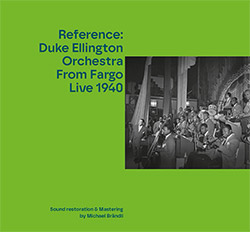
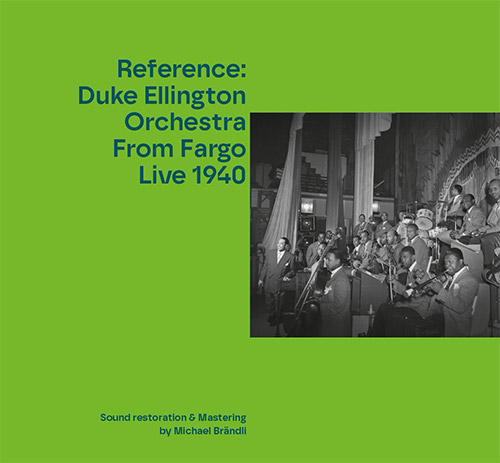
A legendary 1940 live document of Duke Ellington's Blanton-Webster orchestra, captured in Fargo by Jack Towers and Richard Burris, with Ellington on piano, Johnny Hodges and Otto Hardwick on alto saxophones, Ben Webster on tenor, Harry Carney on baritone, Barney Bigard on clarinet, Rex Stewart, Ray Nance and Wallace Jones in the brass, Jimmy Blanton on bass, Sonny Greer on drums, and Ivie Anderson and Herb Jeffries on vocals.
In Stock
Quantity in Basket: None
Log In to use our Wish List
Shipping Weight: 3.00 units
Sample The Album:
Duke Ellington-piano
Johnny Hodges-alto saxophone
Otto Hardwick-alto saxophone, clarinet
Ben Webster-tenor saxophone
Harry Carney-baritone saxophone, clarinet
Barney Bigard-clarinet
Rex Stewart-cornet
Ray Nance-trumpet, violin, vocals
Wallace Jones-trumpet
Joe Nanton-trombone
Juan Tizol-trombone
Lawrence Brown-trombone
Fred Guy-guitar
Jimmy Blanton-bass
Sonny Greer-drums
Ivie Anderson-vocals
Herb Jeffries-vocals
Click an artist name above to see in-stock items for that artist.
UPC: 7649988716867
Label: ALAY
Catalog ID: thingamajig 2507
Squidco Product Code: 37524
Format: CD
Condition: New
Released: 2026
Country: Switzerland
Packaging: Cardboard Gatefold
Recorded at the City Auditorium, in Fargo, North Dakota, on November 7th, 1940, by Jack Towers and Richard Burris.
"It was, all things considered, just an unexceptional whistle stop on a wearying circuit of dance halls and theaters — the night before they had played in Winnipeg, Manitoba and, conveyed by train the 200 miles to this evening's North Dakota gig, would immediately afterwards find themselves en route to Duluth, Minnesota for their next show. There was certainly no expectation that the on-site recording, made by two South Dakota fans, Jack H. Towers and Dick Burris, on a single acetate disc recorder (which accounts for some gaps in the music when the discs needed to be replaced), would survive through the decades and ultimately become an iconic document, preserving timeless evidence of such singular musicianship and distinctive music. The circumstances that provided us with the opportunity to appreciate this slice of history are extraordinary, to say the least. But here we are.
One of the thousands of gigs the various incarnations of the Ellington orchestra performed over Duke's fifty-seven year career, this night in Fargo became legendary for several reasons: the unlikely consequences of time and place, the personnel, the compositions, and the inspiration that sometimes strikes when it is least expected, even amid an incidental lapse of ensemble or momentary miscue. Which is not to say that the band — or indeed any Ellington band over the years — was incapable of achieving countless nights of similar rewarding music; no doubt they did, and in fact there are other live recordings that merit equal praise. Fargo, however, is remarkable for qualities all its own.
To begin, the band was in a transitional phase between the brilliant "jungle period" of the late '20s and the streamlined swing of the '40s. As is common knowledge, Ellington's compositional perspective was hardwired to the nature of his interpreters — their individual instrumental tonalities, technical abilities and limitations, and personality traits — and one of Ellington's saving graces was their loyalty to the cause. Three men present at Fargo — Otto Hardwick, Fred Guy, and Sonny Greer — were with Ellington's Washingtonians sextet as early as 1924, and he began assembling reliable sidemen shortly thereafter. Tricky Sam Nanton joined in '26, Harry Carney in '27, Johnny Hodges in '28. By 1932 both the trombone and saxophone sections were intact, as was three-fourths of the rhythm section. But there were also changes that would significantly alter the band's sound and character. Bubber Miley, whose trumpet was a primary color and texture in the band's early successes, was long gone, and his replacement, Cootie Williams, had recently departed (though he would return). Here, Rex Stewart, not specifically a growler, contributed an intricate sensibility. Bassist Jimmy Blanton brought a new versatility and virtuosity to the bass (though his participation was, alas, short lived). And the addition of Ben Webster would introduce a new element — the equally volatile and romantic tenor saxophonist — to the band.
The key soloists were still Hodges, Barney Bigard, and Nanton, with Stewart and Wallace Jones sharing trumpet roles (this probably being Ray Nance's first night on the job, he had not yet found his niche), and Sonny Greer inimitable as ever. The repertoire was a mixture of Ellington classics, new material, and popular songs the audience would recognize. Remember, this was not a concert setting but a dance hall, which necessitated a variety of tempi, rhythms, and styles to keep the customers happy. Thus the latin-tinged "Conga Brava" and "The Flaming Sword" for the fancy-steppers, "Mood Indigo" and "Warm Valley" for more intimate maneuvers. Duke's ambitious charts, like "Harlem Airshaft" and "Ko Ko," would allow the dancers a respite to catch their breath.
For us, however, Fargo is a rare opportunity to savor several of Duke's newest items in the brief period before they were permanently dropped from the set list. Even the previously recorded classics — "The Mooche," "Mood Indigo," and "Rockin' in Rhythm" — were tweaked with new twists; "The Mooche" obtained a previously unheard section with Hodges' alto answering Nanton's vocally-plungered trombone, Wallace Jones' sensitive open and muted trumpet enhanced "Mood Indigo," and the indefatigable "Rockin'" survived Stewart's whinnying and wailing. But the majority of the Ellington pieces selected here, ten in all, had been recorded earlier that year and six of them would disappear shortly thereafter, to be replaced by an ever-increasing magnificence of new compositions that would redefine Ellington's career throughout the '40s. So "Chatterbox," "Sepia Panorama," and "Clarinet Lament" may not deserve the obscurity that was fated for them. As for "On the Air," named by Duke on-the-spot (a reference to the 30-minute local radio broadcast and the occasionally audible announcer), this may be the only public performance it ever received. The band, then, and Duke's alchemy make this a memorable evening, but for my money Ben Webster steals the show. Notice his sharp attack enlivening "Bojangles," the thrilling recreation of "Cotton Tail," and the dramatic intensity of his soliloquy on "Star Dust." Just another whistle stop? Hardly."-Art Lange, Chicago, January 2026
Curater's note: I have selected these tracks with the assistance of Art Lange, from the complete recording of Fargo 1940. I followed my knowledge about the great Ellington tunes and the quality of these performances, while Art made a point of lesser known pieces. Our final selection has been approved by the producer, Bernhard "Benne" Vischer."-Werner X. Uehlinger
Artist Biographies
• Show Bio for Duke Ellington "Edward Kennedy "Duke" Ellington (April 29, 1899 - May 24, 1974) was an American jazz pianist, composer, and leader of his eponymous jazz orchestra from 1924 through the rest of his life. Music critic Ralph J. Gleason called him "America's most important composer". Born and raised in Washington, D.C., Ellington was based in New York City from the mid-1920s and gained a national profile through his orchestra's appearances at the Cotton Club in Harlem. A master at writing miniatures for the three-minute 78 rpm recording format, Ellington wrote or collaborated on more than one thousand compositions; his extensive body of work is the largest recorded personal jazz legacy, and many of his pieces have become standards. He also recorded songs written by his bandsmen, such as Juan Tizol's "Caravan", which brought a Spanish tinge to big band jazz. At the end of the 1930s, Ellington began a nearly thirty-five-year collaboration with composer-arranger-pianist Billy Strayhorn, whom he called his writing and arranging companion. With Strayhorn, he composed multiple extended compositions, or suites, as well as many short pieces. For a few years at the beginning of Strayhorn's involvement, Ellington's orchestra featured bassist Jimmy Blanton and tenor saxophonist Ben Webster, and reached what many claim to be a creative peak for the group. Some years later, following a low-profile period, an appearance by Ellington and his orchestra at the Newport Jazz Festival in July 1956 led to a major revival and regular world tours. Ellington recorded for most American record companies of his era, performed in and scored several films, and composed a handful of stage musicals. Although a pivotal figure in the history of jazz, in the opinion of Gunther Schuller and Barry Kernfeld, "the most significant composer of the genre", Ellington himself embraced the phrase "beyond category", considering it a liberating principle, and referring to his music as part of the more general category of American music. Ellington was known for his inventive use of the orchestra, or big band, as well as for his eloquence and charisma. He was awarded a posthumous Pulitzer Prize Special Award for music in 1999." ^ Hide Bio for Duke Ellington • Show Bio for Johnny Hodges Johnny Hodges was one of Duke Ellington's defining soloists, celebrated for his sensuous alto saxophone sound, lyrical phrasing, and commanding presence on ballads and blues, helping shape the unmistakable color of the Ellington reed section. ^ Hide Bio for Johnny Hodges • Show Bio for Otto Hardwick Otto "Toby" Hardwick was an early Ellington associate and a member of the Washingtonians circle, contributing alto saxophone and clarinet to several phases of the orchestra's development while remaining closely tied to Ellington's formative years. ^ Hide Bio for Otto Hardwick • Show Bio for Ben Webster Ben Webster brought a powerful new tenor saxophone voice to Ellington's orchestra, combining a robust, driving attack with a deeply romantic ballad style that became central to the celebrated Blanton-Webster era. ^ Hide Bio for Ben Webster • Show Bio for Harry Carney Harry Carney was Ellington's essential baritone saxophonist for more than four decades, anchoring the reed section with a rich, resonant sound and becoming one of the most influential baritone saxophone voices in jazz. ^ Hide Bio for Harry Carney • Show Bio for Barney Bigard Barney Bigard was a New Orleans-born clarinetist whose fluid tone and Creole-inflected phrasing became a key element of Ellington's orchestra, particularly in the band's clarinet features and early-to-mid-period orchestral colors. ^ Hide Bio for Barney Bigard • Show Bio for Rex Stewart Rex Stewart was a cornetist known for his expressive half-valve effects, wit, and rhythmic bite, bringing a highly individual brass voice to Ellington after earlier work with groups including Fletcher Henderson's orchestra. ^ Hide Bio for Rex Stewart • Show Bio for Ray Nance Ray Nance joined Ellington in 1940 as a multi-instrumentalist and vocalist, adding trumpet, violin, and singing to the orchestra and later becoming closely associated with several of the band's most memorable performances. ^ Hide Bio for Ray Nance • Show Bio for Wallace Jones Wallace Jones was a trumpeter with Duke Ellington's orchestra from the late 1930s into the mid-1940s, contributing to the brass section during one of the band's most admired and heavily documented periods. ^ Hide Bio for Wallace Jones • Show Bio for Joe Nanton Joe "Tricky Sam" Nanton was one of Ellington's most distinctive trombonists, renowned for his plunger-muted "wah-wah" and "ya-ya" effects, which helped define the orchestra's earlier jungle sound and remained vital to its expressive language. ^ Hide Bio for Joe Nanton • Show Bio for Juan Tizol "Juan Vicente Tizol Martínez, commonly known as Juan Tizol, was a significant Puerto Rican musician and composer who made a lasting impact on the jazz scene in the United States during the 20th century. Born near San Juan, Puerto Rico, he was influenced by a rich musical environment, thanks in part to his uncle, a well-known musician who introduced him to various instruments. Tizol immigrated to the U.S. in 1920, eventually becoming a key member of Duke Ellington's orchestra, where he served as a copyist and contributed to the band's innovative sound. He is celebrated for his ability to fuse jazz with Latin music, pioneering the genre of Latin jazz and creating popular compositions like "Caravan," which features distinct Middle Eastern influences. Throughout his career, Tizol's works not only showcased his exceptional musicianship but also helped to elevate Latin American cultural sensibilities in the predominantly African American jazz scene of the time. He continued to perform and compose until his retirement in the 1960s, leaving behind a legacy of significant contributions to both jazz and Latin music. Tizol's influence remains evident in the music world, particularly through his enduring compositions that continue to resonate with audiences today." ^ Hide Bio for Juan Tizol • Show Bio for Lawrence Brown Lawrence Brown was a technically polished and lyrically expressive trombonist whose elegant phrasing gave Ellington's trombone section a contrasting voice alongside the more growling, plunger-driven style of Joe Nanton. ^ Hide Bio for Lawrence Brown • Show Bio for Fred Guy Fred Guy was a long-serving Ellington rhythm guitarist and former banjoist who joined the band in its early Washingtonians period, helping sustain the orchestra's rhythm-section foundation through the swing era. ^ Hide Bio for Fred Guy • Show Bio for Jimmy Blanton Jimmy Blanton transformed the role of the jazz bass during his brief time with Ellington, bringing unprecedented melodic freedom, rhythmic flexibility, and soloistic imagination to the instrument. ^ Hide Bio for Jimmy Blanton • Show Bio for Sonny Greer Sonny Greer was Ellington's longtime drummer and one of the orchestra's original associates, known for his colorful percussion setup, theatrical touch, and deep understanding of Ellington's ensemble drama. ^ Hide Bio for Sonny Greer • Show Bio for Ivie Anderson Ivie Anderson was Ellington's first major full-time vocalist, prized for her warm tone, blues feeling, and effortless swing, and she remained one of the orchestra's signature vocal presences throughout the 1930s and early 1940s. ^ Hide Bio for Ivie Anderson • Show Bio for Herb Jeffries Herb Jeffries was a baritone vocalist and actor whose work with Ellington included the hit "Flamingo," bringing a smooth, relaxed vocal style to the orchestra during the early 1940s. ^ Hide Bio for Herb Jeffries
9/15/2026
Have a better biography or biography source? Please Contact Us so that we can update this biography.
Have a better biography or biography source? Please Contact Us so that we can update this biography.
Have a better biography or biography source? Please Contact Us so that we can update this biography.
Have a better biography or biography source? Please Contact Us so that we can update this biography.
Have a better biography or biography source? Please Contact Us so that we can update this biography.
Have a better biography or biography source? Please Contact Us so that we can update this biography.
Have a better biography or biography source? Please Contact Us so that we can update this biography.
Have a better biography or biography source? Please Contact Us so that we can update this biography.
Have a better biography or biography source? Please Contact Us so that we can update this biography.
Have a better biography or biography source? Please Contact Us so that we can update this biography.
9/15/2026
Have a better biography or biography source? Please Contact Us so that we can update this biography.
Have a better biography or biography source? Please Contact Us so that we can update this biography.
Have a better biography or biography source? Please Contact Us so that we can update this biography.
Have a better biography or biography source? Please Contact Us so that we can update this biography.
Have a better biography or biography source? Please Contact Us so that we can update this biography.
Have a better biography or biography source? Please Contact Us so that we can update this biography.
Have a better biography or biography source? Please Contact Us so that we can update this biography.
Track Listing:
1. The Mooche 5:23
2. The Sheik of Araby (Smith-Wheeler-Snyder) 2:55
3. Ko Ko 2:23
4. Chatterbox (Ellington-Stewart) 3:23
5. Mood Indigo (Ellington-Bigard) 4:14
6. Harlem Airshaft 3:42
7. Warm Valley 3:36
8. Bojangles 3:55
9. On the Air 4:38
10. The Flaming Sword 4:29
11. Never No Lament 4:07
12. Clarinet Lament (Ellington-Bigard) 3:19
13. Sepia Panorama 5:00
14. Rockin' In Rhythm (Ellington-Carney) 4:51
15. Cotton Tail 2:57
16. Conga Brava (Ellington-Tizol) 4:09
17. Across theTrack Blues 6:46
18. Stardust (Carmichael) 4:18
19. St. Louis Blues (Handy) 5:38
Hat Art
June 2026
Improvised Music
Jazz
Jazz & Improvisation Based on Compositions
Melodic and Lyrical Jazz
Large Ensembles
Jazz Reissues
Staff Picks & Recommended Items
New in Improvised Music
Recent Releases and Best Sellers
Traditional Jazz Formats
Search for other titles on the label:
ALAY.
 |
| Navarro, Fats Reference: Nostaligia w/ Tadd Dameron and Charlie Rouse / Dexter Gordon / Ernie Henry / Art Blakey (ALAY) |
| Restoring New York sessions from 1947 to 1949, this collection places Fats Navarro's brilliant, cleanly articulated trumpet within Tadd Dameron's harmonically refined bebop writing, joined by Charlie Rouse, Dexter Gordon, Ernie Henry, Leo Parker, Wardell Gray, Cecil Payne, Art Blakey, Kenny Clarke and others as the ensembles move between intricate modern lines, swing-rooted lyricism and early Afro-Cuban color. |
 |
| Grimes, Henry / Marzette Watts (w/ Robinson / Lancaster / Sharrock / Thornton / Berger / Moses &c) The Call (ALAY) |
| Reissuing Henry Grimes' concise, darkly lyrical 1965 trio album with clarinetist Perry Robinson and drummer Tom Price alongside Marzette Watts' turbulent 1966 octet session, this remastered edition contrasts free improvisation with a dense collective of Byard Lancaster, Clifford Thornton, Sonny Sharrock, Karl Berger, Juini Booth and J. C. Moses, Grimes the link between two vital expressions of 1960s freedom |
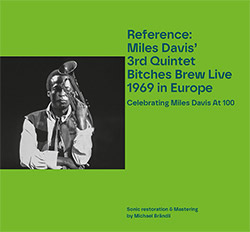 |
| Davis, Miles 3rd Quintet Reference: Bitches Brew Live 1969 In Europe [2 CDs + 2 POSTCARDS] (ALAY) |
| Documenting Miles Davis' 1969 "lost" third quintet live in Berlin, Stockholm and Rotterdam with Wayne Shorter, Chick Corea, Dave Holland and Jack DeJohnette, this 2-CD set captures the post-In a Silent Way ensemble reshaping material headed toward Bitches Brew, balancing lyricism and abstraction through open forms, electric-piano clusters, volatile rhythmic invention and Davis' fiercely exploratory trumpet. |
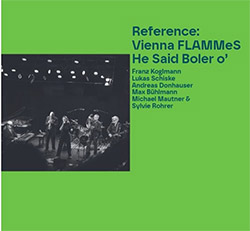 |
| Vienna FLAMMeS (Koglmann / Schiske / Donhauser / Buhlmann / Mautner / Rohrer) He Said Boler o' (ALAY) |
| Led by Franz Koglmann's cool-toned trumpet and flugelhorn with Michael Mautner's motifs and electronics, Vienna FLAMMeS joins Lukas Schiske, Andreas Donhauser, Silvia Deixler, Max Buhlmann, and Josef Ka in a post-jazz sound world of fractured grooves, Canterbury echoes, reed color, guitar abrasion, spoken elements, and egalitarian improvisation shaped by Viennese modernism and collective risk. |
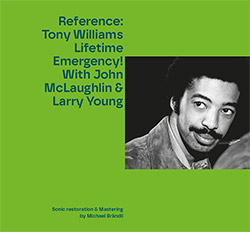 |
| Williams, The Tony Emergency w/ John McLaughlin / Larry Young Emergency! (ALAY) |
| A restored edition of Tony Williams Lifetime's incendiary 1969 trio debut with John McLaughlin on guitar and Larry Young on organ, documenting one of jazz-rock fusion's earliest and most audacious statements, where Williams' radical rhythmic designs, Young's dense harmonic force, and McLaughlin's searing electric vocabulary collide in urgent, psychedelic, genre-defying improvisation. |
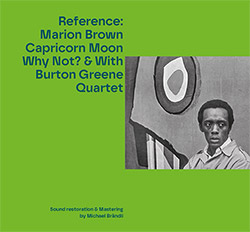 |
| Brown, Marion / Burton Greene Quartet Reference: Capricorn Moon, Why Not & With Burton Greene Quartet [2 CDs + POSTCARD] (ALAY) |
| Gathering key 1965-66 New York sessions, this 2-CD set traces alto saxophonist Marion Brown's emergence in the free jazz vanguard through Capricorn Moon, Why Not? and Burton Greene quartet recordings, with Alan Shorter, Bennie Maupin, Stanley Cowell, Henry Grimes, Sirone, Rashied Ali and others shaping music of lyrical urgency, open-form momentum and evolving collective freedom. |
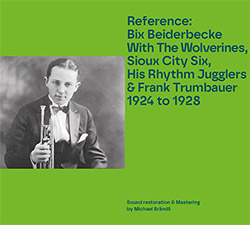 |
| Beiderbecke, Bix Reference: Bix Beiderbecke, 1924 to 1928 [2 CDs] (ALAY) |
| Gathering 45 small-group recordings from 1924-1928, this restored 2-CD reference traces Bix Beiderbecke's singular cornet and piano artistry alongside Frankie Trumbauer, Miff Mole, Don Murray, Tommy Dorsey, Eddie Lang, Joe Venuti and others, revealing a poised, lyrical and formally lucid voice whose economy, harmonic curiosity and graceful invention helped shape early jazz beyond its dance-band conventions. |
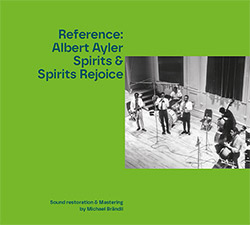 |
| Ayler, Albert Reference: Albert Ayler, Spirits & Spirits Rejoice [CD + POSTCARD] (ALAY) |
| Uniting Albert Ayler's 1964 New York sessions for Spirits (Debut) and Spirits Rejoice (ESP, with Donald Ayler, Charles Tyler, Call Cobbs, Henry Grimes, Gary Peacock, Sunny Murray, Normand Howard and Earle Henderson, this remastered edition captures Ayler's volatile balance of spiritual song, sculptural horn lines, churning bass motion, ecstatic fanfare and free jazz intensity. |
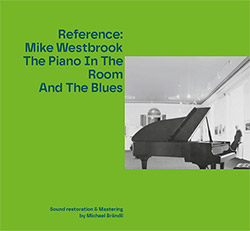 |
| Westbrook, Mike The Piano In The Room And The Blues (ALAY) |
| Recorded on a Steinway in the gallery of Falmouth Arts Centre, pianist Mike Westbrook delivers an introspective solo exploration of the blues, revisiting its forms — eight, twelve, sixteen, and extended bar structures — through spontaneous variations that blur improvisation and instant composition, blending traditional feeling with modern harmonic invention and the ambient sounds around him. |
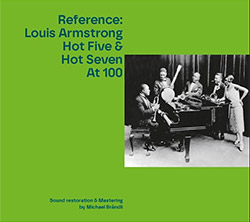 |
| Armstrong, Louis Hot Five & Hot Seven At 100 [2 CDs + 2 POSTCARDS] (ALAY) |
| Recorded in Chicago between 1925 and 1928, these seminal Hot Five and Hot Seven sessions led by Louis Armstrong capture a transformative moment in early jazz, where his virtuosic phrasing, rhythmic innovation, and charismatic presence redefine the music's expressive scope, presented here with exceptional restoration and mastering, and accompanied by two postcards detailing recording sessions and personnel. |
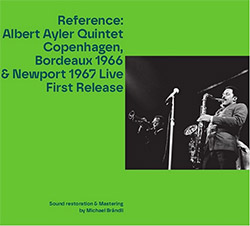 |
| Ayler, Albert Quintet Copenhagen, Bordeaux 1966 & Newport 1967 Live First Release (ALAY) |
| Previously unreleased recordings from the Albert Ayler Quintet — captured in Copenhagen and Bordeaux during the 1966 Newport in Europe tour and at the Newport Jazz Festival in 1967 — present Ayler with Donald Ayler, Michel Samson, Bill Folwell, and Beaver Harris/Milford Graves in fiercely expressive performances, newly restored and mastered from rediscovered tapes. |
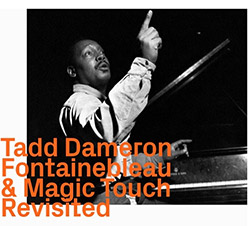 |
| Dameron, Tadd Fontainebleau & Magic Touch, Revisited (ezz-thetics by Hat Hut Records Ltd) |
| Composer, pianist, and bandleader Tadd Dameron's first album, Fontainebleau (1956), and his final work, The Magic Touch (1962), are remastered to highlight his sophisticated hard bop compositions for large ensembles, featuring influential players like Bill Evans, Philly Joe Jones, and Ron Carter, and showcasing Dameron's lasting impact on jazz before his untimely passing. |
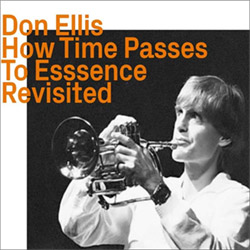 |
| Ellis, Don (Byard / Carter / Persip; Bley / Peacock / Stone /Martinis) How Time Passes To Essence, Revisited (ezz-thetics by Hat Hut Records Ltd) |
| Before his experimental, culturally absorbing large band work in the late 60s and 70s, trumpeter Don Ellis released these two excellent quartet albums featuring his own compositions, particularly the side-long work "Improvisational Suite 1", in bands with Jaki Byard, Ron Carter & Charlie Persip (How Time Passes) and with Paul Bley, Gary Peacock and either Gene Stone or Nick Martinis (Essence). |
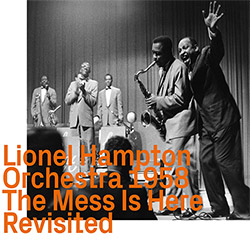 |
| Hampton, Lionel Orchestra 1958 The Mess Is Here, Revisited (ezz-thetics by Hat Hut Records Ltd) |
| An influence on the next generation of small band and bop players, vibraphonist and Band Leader Lionel Hampton's programs included both crowd-pleasers and sophisticatedly complex sections, heard here in this 1958 studio recording from Stuttgart, Germany while touring Europe, Ghana and Israel with his exceptional band expanded by three German jazz musicians. |
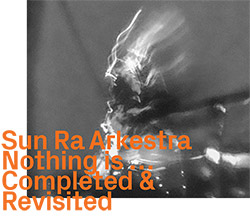 |
| Sun Ra Arkestra Nothing is ... Completed & Revisited (ezz-thetics by Hat Hut Records Ltd) |
| Reissuing and remastering Sun Ra's 1966 Arkestra album Nothing Is, the complete live recording from St. Lawrence University in NY with a classic ensemble including saxophonists Marshall Allen, Pat Patrick & John Gilmore, bassist Ronnie Boykins, drummer Cliffor Jarvis, &c., an incredible concert with an exemplary set of Sun Ra compositions and performances. |
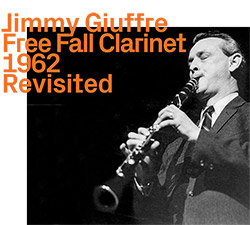 |
| Giuffre, Jimmy (w / Bley / Swallow) Free Fall Clarinet 1962, Revisited (ezz-thetics by Hat Hut Records Ltd) |
| Reissuing clarinetist Jimmy Giuffre's 1963 Columbia album Free Fall, presenting trio performances with bassist Steve Swallow and pianist Paul Bley recorded after their 1961 European tour, along with duos between Giuffre and Swallow and several solo tracks from the clarinetist himself, propelling himself and his band into his sophisticated, risk-taking chamber jazz compositions. |
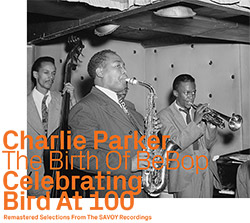 |
| Parker, Charlie Selections From The SAVOY Recordings (ezz-thetics by Hat Hut Records Ltd) |
| The second of two volumes in celebration of legendary saxophonist Charlie Parker's 100th birthday, here remastering his landmark recordings for the Savoy label in New York City between 1945-48, performing with jazz greats including Bud Powell, Dizzy Gillespie, Miles Davis, John Lewis, Curley Russel, Max Roach, &c. for some of be-bop's finest and best known compositions. |
Customers Who Bought This Item Also Bought:
 |
| Ballister + Luke Stewart Clocking the Wheel (Aerophonic) |
| Joining Dave Rempis on saxophones, Fred Lonberg-Holm on cello, and Paal Nilssen-Love on drums with bassist Luke Stewart, this live Ballister performance from Roulette expands the trio's ferocious long-running rapport into a dense, high-velocity quartet, Stewart locking with Nilssen-Love in elastic propulsion as cello and saxophone surge through explosive, telepathic collective improvisation. |
 |
| Remote Viewers, The Winter Library Vol 1 (Remote Viewers) |
| The first volume in The Remote Viewers' Winter Library series, this live London quartet recording brings David Petts and Adrian Northover together with John Edwards and Steve Beresford, reworking material from The Remote Code into an acoustic chamber of tenor and soprano saxophones, resonant bass, objects and toys, balancing angular themes, brittle textures, oblique melody and free improvisational exchange. |
 |
| Kelley, Greg / Yoona Kim Distractions for Trumpet & Ajaeng (Relative Pitch) |
| Bringing together Greg Kelley's extended-technique trumpet with Yoona Kim's non-traditional approach to the ajaeng, this Boston duo explores breath, bow, friction, resonance, and near-silence through taut improvisations where fragile tones, coarse strings, microscopic air bursts, and sudden ruptures forge a focused, unpredictable shared language. |
 |
| Bass, Luciana / Ezekiel Jaime / Federico Isasti Vi La Pampa Arder (Relative Pitch) |
| An intense Argentine free-improvising trio of Luciana Bass on guitar, Ezekiel Jaime on electric bass, and Federico Isasti on drums, shaping spontaneous forms from brittle textures, distorted low-end resonance, scattered rhythmic detail, and explosive collective energy, moving between sparse tension and combustible interaction in a fearless session of attentive, unstable, and deeply physical sound. |
 |
| Ochibo no ame (Kawashima / Inage / Yamagishi) Studio Recording (Relative Pitch) |
| A fierce studio document from the Japanese free-improvising trio of Makoto Kawashima on alto saxophone, Louis Inage on bass, and Naoto Yamagishi on drums and percussion, moving through charged silences, abrasive eruptions, fractured melody, dark bass resonance, and scattered percussive force in a raw, intuitive exchange rooted in underground intensity and collective risk. |
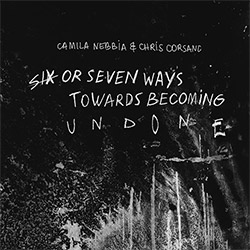 |
| Nebbia, Camila / Chris Corsano Six or Seven Ways Towards Becoming Undone (Relative Pitch) |
| A fierce, spontaneous duo of Camila Nebbia on tenor saxophone and Chris Corsano on drums, recorded in Berlin in 2025, merging Nebbia's searching lines, breath-driven textures and unstable lyricism with Corsano's explosive, highly detailed percussion language, moving between delicate abrasion, surging intensity, fragmented melody and raw improvised exchange. |
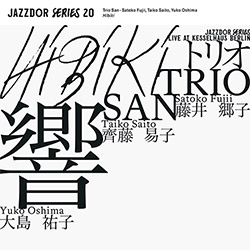 |
| Trio San (Fujii / Saito / Oshima) Hibiki (Jazz Door) |
| Uniting the intersecting musical worlds of Satoko Fujii on piano, Taiko Saito on vibraphone and marimba, and Yuko Oshima on drums, this live debut from Trio SAN draws on their histories in duos and first European tour to shape a delicate yet resonant collective language of shifting timbres, prepared piano colors, ringing percussion, and freely developing melodic forms. |
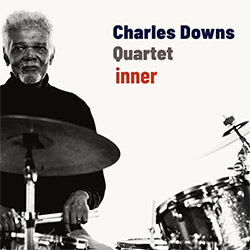 |
| Downs, Charles Quartet (w / Paz / Saft / Morris) Inner (ESP Disk) |
| A long-overdue first sole-leader album from drummer Charles Downs, formerly Rashid Bakr, bringing his deep history with Cecil Taylor, Jemeel Moondoc, Other Dimensions in Music, and the New York avant-garde into a collective quartet with Hery Paz on saxophone, Jamie Saft on piano, and Joe Morris on bass for five improvisations of fire, lyricism, angular reflection, and seasoned rapport. |
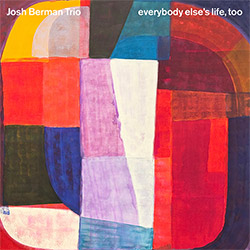 |
| Berman, Josh Trio Everybody Else's Life, Too (Corbett vs. Dempsey) |
| Cornetist Josh Berman's trio with Jason Roebke on bass and Chris Corsano on drums brings Chicago's jazz lineage into sharp contemporary focus, balancing compact composition and expansive interaction through playful, adventurous music that draws on early jazz, AACM-rooted invention, melodic swing, textural abstraction, and volatile rhythmic exchange. |
![Rollins, Sonny : The Early Years [4 CDs]](https://www.teuthida.com/productImages/misc4/37711.jpg)
![Orchestre National De Jazz: With Carla [2 CDs]](https://www.teuthida.com/productImages/misc4/37714.jpg)
![Vasseur, Christian / Steve Gibbs / Nicolo Vivi : FWWU+ Duos Trios [2 CDs]](https://www.teuthida.com/productImages/misc4/37891.jpg)
![Ehrlich, Marty: OPEN AIR: The Complete Saxophone Quartet Compositions of Julius Hemphill [2 CDs]](https://www.teuthida.com/productImages/misc4/37922.jpg)
![Frith, Fred / Cornelius Claudio Kreusch / Johannes Tonio Kreusch: Pink / Neon [2 CDs]](https://www.teuthida.com/productImages/misc4/37712.jpg)
![Frith, Fred / Cornelius Claudio Kreusch / Johannes Tonio Kreusch: Pink / Neon [VINYL 2 LPs]](https://www.teuthida.com/productImages/misc4/37713.jpg)
![Miguel, Sei: Viva! O Carro de Fogo de Sei Miguel [2 CDs]](https://www.teuthida.com/productImages/misc4/37739.jpg)
![Money: 5 [2 CDs]](https://www.teuthida.com/productImages/misc4/37890.jpg)
![Drumm, Kevin: The Mild Temper [6 CD BOX SET]](https://www.teuthida.com/productImages/misc4/37651.jpg)
![Trzaska, Mikolaj / John Edwards / Mark Sanders: Because It Happens [VINYL]](https://www.teuthida.com/productImages/misc4/37551.jpg)
![Wassermann, Ute: Chimeric [VINYL]](https://www.teuthida.com/productImages/misc4/37652.jpg)
![Aranda, Irene (Malfon / Aranda / Yamasaki): May [CD + DOWNLOAD]](https://www.teuthida.com/productImages/misc4/37825.jpg)


![Bopp, Christiane: Rever, murmurer, dire [CD + DOWNLOAD]](https://www.teuthida.com/productImages/misc4/37823.jpg)
![Angles 4 (Kuchen / Haker-Flaten / Stahl / Nordeson): Angles 4 [CD + DOWNLOAD]](https://www.teuthida.com/productImages/misc4/37826.jpg)
![Glass Triangle (Parkins / Rasmussen / Sawyer): 3 X 1 [CD + DOWNLOAD]](https://www.teuthida.com/productImages/misc4/37827.jpg)
![Musicworks: #154 Summer 2026 [MAGAZINE + CD]](https://www.teuthida.com/productImages/misc4/37879.jpg)
![TRAC (Teddy Ryles / Alexander Cooper): Heavy Nano Ream Aria [2 CDs]](https://www.teuthida.com/productImages/misc4/37647.jpg)
![Jerman, Jeph: For Alvin Kelly [CASSETTE + DOWNLOAD]](https://www.teuthida.com/productImages/misc4/37521.jpg)
![Mann, Oliver / Stefano Pilia: Precious Moments [CASSETTE + DOWNLOAD]](https://www.teuthida.com/productImages/misc4/37494.jpg)
![Jerman, Jeph / Ted Byrnes: Muir [CASSETTE + DOWNLOAD]](https://www.teuthida.com/productImages/misc4/37520.jpg)
![+DOG+: Angel Wings [VINYL]](https://www.teuthida.com/productImages/misc4/37513.jpg)
![Money: 4 [2 CDs]](https://www.teuthida.com/productImages/misc4/37505.jpg)
![+DOG+: The Garden [VINYL]](https://www.teuthida.com/productImages/misc4/37511.jpg)
![Le UN: 25 Pieces Sans Vide [3 CDs]](https://www.teuthida.com/productImages/misc4/37374.jpg)
![Directives: Reconsolid [CASSETTE]](https://www.teuthida.com/productImages/misc4/37418.jpg)
![Tilbury, John: At Home [4 CDs]](https://www.teuthida.com/productImages/misc4/37729.jpg)
![Scott, Ryan: 21st-Century Canadian Snare Drum [2 CDs]](https://www.teuthida.com/productImages/misc4/37538.jpg)
![Feldman, Morton / GBSR Duo w/ Taylor MacLennan: Trios [6 CD BOX SET]](https://www.teuthida.com/productImages/misc4/37020.jpg)
![Frey, Jurg : Composer, Alone [3 CDs]](https://www.teuthida.com/productImages/misc4/36927.jpg)
![Bruce, Lenny: Comedy & Controversy: The Original Albums 1958-61 [2 CDs]](https://www.teuthida.com/productImages/misc4/37409.jpg)
![Amba, Zoh: Eyes Full [VINYL]](https://www.teuthida.com/productImages/misc4/37491.jpg)
![Henry Cow: The Henry Cow Box Redux: The Complete Henry Cow [18 CDs, DVD & 3 BOOKLETS]](https://www.teuthida.com/productImages/misc4/37272.jpg)
![MacLean, Steve: Box Of Seven [7 CD BOX]](https://www.teuthida.com/productImages/misc4/36467.jpg)
![Mehead: One Good Eye [REISSUE]](https://www.teuthida.com/productImages/misc4/37276.jpg)
![Zorn, John: The Song of Songs [CD + CD BOOK]](https://www.teuthida.com/productImages/misc4/36923.jpg)
![Coultrain: Mundus [COLORED VINYL]](https://www.teuthida.com/productImages/misc4/33056.jpg)
![Hprizm: Signs Remixed [COLORED VINYL]](https://www.teuthida.com/productImages/misc4/30635.jpg)
![Halls Of the Machine: All Tribal Dignitaries [CASSETTE w/ DOWNLOAD]](https://www.teuthida.com/productImages/misc4/36134.jpg)
![Koenjihyakkei: Live at Club Goodman [2 CDs]](https://www.teuthida.com/productImages/misc4/36111.jpg)
![Sorry For Laughing (G. Whitlow / M. Bates / Dave-Id / E. Ka-Spel): Rain Flowers [2 CDS]](https://www.teuthida.com/productImages/misc4/35985.jpg)
![Rolando, Tommaso / Andy Moor : Biscotti [CASSETTE w/ DOWNLOADS]](https://www.teuthida.com/productImages/misc4/36106.jpg)
![Electric Bird Noise / Derek Roddy: 8-10-22 [CD EP]](https://www.teuthida.com/productImages/misc4/35970.jpg)
![Coley, Byron: Dating Tips for Touring Bands [VINYL]](https://www.teuthida.com/productImages/misc4/17906.jpg)
![Lost Kisses: My Life is Sad & Funny [DVD]](https://www.teuthida.com/productImages/misc4/lostKissesDVD.jpg)