



![Clifford Brown: The Ultimate Collection [4 CDs] (Enlightenment)](https://www.teuthida.com/productImages/misc4/37290.jpg "Clifford Brown: The Ultimate Collection [4 CDs] (Enlightenment)")
![Clifford Brown: The Ultimate Collection [4 CDs] (Enlightenment)](https://www.teuthida.com/productImages/full/37290.Full.jpg "Clifford Brown: The Ultimate Collection [4 CDs] (Enlightenment)")
A 4-CD survey of Clifford Brown's essential 1953-1956 Blue Note and EmArcy recordings, tracing his masterful trumpet voice through early leader dates, string settings, vocal and ensemble sessions, and the classic Max Roach quintet with Harold Land, Sonny Rollins, Richie Powell and George Morrow, capturing a foundational hard bop figure at astonishing creative strength.
In Stock
Quantity in Basket: None
Log In to use our Wish List
Shipping Weight: 12.00 units
Sample The Album:
Clifford Brown-trumpet
Max Roach-drums
Sonny Rollins-tenor saxophone
Harold Land-tenor saxophone
Richie Powell-piano
George Morrow-bass
Art Farmer-trumpet
Gigi Gryce-alto saxophone
Quincy Jones-trumpet, arrangements
J. J. Johnson-trombone
Dinah Washington-vocals
Herb Geller-alto saxophone
Clark Terry-trumpet
Lou Donaldson-alto saxophone
Art Blakey-drums
Tadd Dameron-piano, arrangements
Lionel Hampton-vibraphone, bandleader
Click an artist name above to see in-stock items for that artist.
UPC: 823564040301
Label: Enlightenment
Catalog ID: EN4CD9255
Squidco Product Code: 37290
Format: 4 CDs
Condition: New
Released: 2026
Country: UK
Packaging: Digipack - 8 panel
Recorded 1953 to 1956.
This 4-CD collection brings together eight essential Blue Note and EmArcy albums, following Brown through early leadership dates, larger ensemble encounters, vocal and arranging contexts, the elegant Clifford Brown with Strings session, and the classic Brown/Roach quintet with Harold Land, Richie Powell and George Morrow, later joined by Sonny Rollins. With contributions from Art Farmer, Gigi Gryce, Quincy Jones, J. J. Johnson, Dinah Washington, Herb Geller, Clark Terry, Lou Donaldson, Art Blakey, Tadd Dameron and Lionel Hampton, the set presents both a concentrated portrait of Brown's artistry and a vivid cross-section of mid-1950s jazz at a pivotal moment, when bebop's virtuosity was being reshaped into the drive, structure and expressive depth of hard bop.
Artist Biographies
• Show Bio for Clifford Brown American trumpeter Clifford Brown was one of the most influential jazz musicians of the 1950s, admired for his brilliant technique, warm tone, melodic invention and harmonic clarity. As co-leader with drummer Max Roach of the Clifford Brown-Max Roach Quintet, he helped define hard bop before his career was cut short by his death in a 1956 automobile accident at age 25. ^ Hide Bio for Clifford Brown • Show Bio for Max Roach "Maxwell Lemuel Roach (January 10, 1924 - August 16, 2007) was an American jazz drummer and composer. A pioneer of bebop, he worked in many other styles of music, and is generally considered one of the most important drummers in history. He worked with many famous jazz musicians, including Coleman Hawkins, Dizzy Gillespie, Charlie Parker, Miles Davis, Duke Ellington, Thelonious Monk, Abbey Lincoln, Dinah Washington, Charles Mingus, Billy Eckstine, Stan Getz, Sonny Rollins, Eric Dolphy, and Booker Little. He was inducted into the DownBeat Hall of Fame in 1980 and the Modern Drummer Hall of Fame in 1992. Roach also co-led a pioneering quintet along with trumpeter Clifford Brown and the percussion ensemble M'Boom. He made numerous musical statements relating to the civil rights movement. [...]" ^ Hide Bio for Max Roach • Show Bio for Sonny Rollins One of the most influential tenor saxophonists in jazz history, Sonny Rollins (b. 1930) helped define post-bop improvisation with his powerful tone, thematic development, and fearless spontaneity. Emerging in the late 1940s, he played with icons like Miles Davis, Thelonious Monk, and Max Roach before establishing himself as a visionary bandleader. Rollins�s seminal albums — including Saxophone Colossus, The Bridge, and Way Out West — showcase his unmatched ability to reshape melody and rhythm in real time. Known for taking extended sabbaticals to reinvent his sound, he remains a towering figure in jazz�s evolution. ^ Hide Bio for Sonny Rollins • Show Bio for Richie Powell American pianist and composer Richie Powell, the younger brother of bebop pianist Bud Powell, was a key member of the Clifford Brown-Max Roach Quintet, contributing both agile modern piano playing and original compositions to the ensemble. His promising career ended alongside Clifford Brown in the same 1956 automobile accident. ^ Hide Bio for Richie Powell • Show Bio for George Morrow American bassist George Morrow was best known as a member of the influential Clifford Brown-Max Roach Quintet, providing a strong, dependable foundation for one of hard bop's defining ensembles. His work also included recordings and performances with Sonny Rollins, Kenny Dorham, Dinah Washington and other leading figures of 1950s jazz. ^ Hide Bio for George Morrow • Show Bio for Clark Terry "Clark Terry's career in jazz spanned more than seventy years. He was a world-class trumpeter, flugelhornist, educator, composer, writer, trumpet/flugelhorn designer, teacher and NEA Jazz Master. He performed for eight U.S. Presidents, and was a Jazz Ambassador for State Department tours in the Middle East and Africa. More than fifty jazz festivals featured him at sea and on land in all seven continents. Many were named in his honor. He was one of the most recorded musicians in the history of jazz, with more than nine-hundred recordings. Clark's discography reads like a "Who's Who In Jazz," with personnel that included greats such as Quincy Jones, Ella Fitzgerald, Oscar Peterson, Dizzy Gillespie, Dinah Washington, Ben Webster, Aretha Franklin, Charlie Barnet, Doc Severinsen, Ray Charles, Billy Strayhorn, Dexter Gordon, Thelonious Monk, Billie Holiday, Gerry Mulligan, Sarah Vaughan, Coleman Hawkins, Zoot Sims, Milt Jackson, Bob Brookmeyer, and Dianne Reeves. Among his numerous recordings, he was featured with the Duke Ellington Orchestra, Count Basie Orchestra, Dutch Metropole Orchestra, Chicago Jazz Orchestra, Woody Herman Orchestra, Herbie Mann Orchestra, Jimmy Heath Orchestra, Donald Byrd Orchestra, and many other large ensembles - high school and college ensembles, his own duos, trios, quartets, quintets, sextets, octets, and two big bands - Clark Terry's Big Bad Band and Clark Terry's Young Titans of Jazz. His Grammy and NARAS Awards include: 2010 Grammy Lifetime Achievement Award, NARAS President's Merit Award, three Grammy nominations, and two Grammy certificates. His original compositions include more than two hundred jazz songs, and he co-authored books such as Let's Talk Trumpet: From Legit to Jazz, Interpretation of the Jazz Language and Clark Terry's System of Circular Breathing for Woodwind and Brass Instruments with Phil Rizzo. He won several awards for Clark: The Autobiography of Clark Terry, which was published in 2011 by the University of California Press. A quote from the Preface which was written by Quincy Jones says, "He has always been loving and encouraging, and he has helped countless aspiring musicians. Even at ninety-three years old, he's still making dreams come true for young hopefuls who want to learn from a true master. Still making time to share his wisdom." Writer Chuck Berg said, "Clark Terry is one of contemporary music's great innovators, and justly celebrated for his great technical virtuosity, swinging lyricism, and impeccable good taste. Combining these with the gifts of a great dramatist, Clark is a master storyteller whose spellbinding musical 'tales' leave audiences thrilled and always awaiting more." After serving in the navy from 1942-1945 during the historic "Great Lakes Experience," Clark's musical star rose rapidly with successful stints in the bands of George Hudson, Charlie Barnet, Charlie Ventura, Eddie Vinson, and then in 1948 - the great Count Basie. In addition to his outstanding musical contribution to these bands, Mr. Terry exerted a positive influence on musicians such as Miles Davis and Quincy Jones, both of whom credit Clark as a formidable influence during the early stages of their careers. In 1951 Clark was asked to join Maestro Duke Ellington's renowned orchestra where he stayed for eight years as a featured soloist. Following a tour in the "Free and Easy" musical in 1959 with music director, Quincy Jones, Clark's international recognition soared when he broke the color barrier by accepting an offer in 1960 from the National Broadcasting Company to become its first African American staff musician. He was with NBC for twelve years as one of the spotlighted musicians in the Tonight Show band. During that time, he scored a smash hit as a singer with his irrepressible "Mumbles." After his stint at NBC, between his performances and recording dates at concerts, clubs, cruises and jazz festivals, Clark became more dedicated to his greatest passion - jazz education. He organized a Harlem youth band which became the seed for Jazz Mobile in New York City. Billy Taylor then asked him to teach in educational institutions. This motivated Clark to organize other youth bands and influence many other jazz legends to teach with him at jazz camps, clinics and festivals at colleges and universities, while still maintaining a hectic performance and recording schedule for the next thirty years. On December 14, 2010, he celebrated his ninetieth birthday, and his students continue to fly from Australia, Israel, Austria, Canada, the United States, and many other locations to Clark's home for jazz lessons. Clark said, "Teaching jazz allows me to play a part in making dreams come true for aspiring musicians." To celebrate his contributions to jazz education, he was honored with fifteen honorary doctorates, and three adjunct professorships. He also received numerous awards from high schools, junior high schools and elementary schools where he shared his knowledge of jazz. Among his many awards, he received honors from his hometown in St. Louis, Missouri which included a Hall of Fame Award from Vashon High School; a Walk of Fame Award and Star on Blueberry Hill in St. Louis, and a life-sized wax figure and memorabilia display at the Griot Museum. Clark received dozens of other Hall and Wall of Fame Awards, Jazz Master Awards, keys to cities, lifetime achievement awards (four were presented to him in 2010), trophies, plaques and other prestigious awards. The French and Austrian Governments presented him with their esteemed Arts and Letters Awards, and he was knighted in Germany. At William Paterson University in Wayne, New Jersey, where Clark was an adjunct professor for many years, there is a Living Jazz Archive, which features a collection of his memorabilia. Students are taught about Clark's impact in the history of jazz, and tours are scheduled for visiting groups of students from public schools, from other colleges and universities, and the general public. Details and pictures of this extraordinary collection may be seen at livingjazzarchives.org." ^ Hide Bio for Clark Terry • Show Bio for Lou Donaldson "Lou Donaldson (born November 1, 1926) is an American retired jazz alto saxophonist. He is best known for his soulful, bluesy approach to playing the alto saxophone, although in his formative years he was, as many were of the bebop era, heavily influenced by Charlie Parker. Donaldson was born in Badin, North Carolina, United States. He attended North Carolina Agricultural and Technical State University in Greensboro in the early 1940s. He enlisted in the U.S. Navy during World War II and was trained at the Great Lakes bases in Chicago where he was introduced to bop music in the lively club scene. At the war's conclusion, he returned to Greensboro, where he worked club dates with the Rhythm Vets, a combo composed of A and T students who had served in the U.S. Navy. The band recorded the soundtrack to a musical comedy featurette, Pitch a Boogie Woogie, in Greenville, North Carolina, in the summer of 1947. The movie had a limited run at black audience theatres in 1948 but its production company, Lord-Warner Pictures, folded and never made another film. Pitch a Boogie Woogie was restored by the American Film Institute in 1985 and re-premiered on the campus of East Carolina University in Greenville the following year. Donaldson and the surviving members of the Vets performed a reunion concert after the film's showing. In the documentary made on Pitch by UNC-TV, Boogie in Black and White, Donaldson and his musical cohorts recall the film's making�he originally believed that he had played clarinet on the soundtrack. A short piece of concert footage from a gig in Fayetteville, North Carolina, is included in the documentary. Donaldson's first jazz recordings were with the Charlie Singleton Orchestra in 1950 and then with bop emissaries Milt Jackson and Thelonious Monk in 1952, and he participated in several small groups with other prominent jazz musicians such as trumpeter Blue Mitchell, pianist Horace Silver, and drummer Art Blakey. In 1953, he also recorded sessions with the trumpet virtuoso Clifford Brown, and Philly Joe Jones. He was a member of Art Blakey's Quintet and appeared on some of their best regarded albums, including the two albums recorded at Birdland in February 1954 Night at Birdland. He was inducted into the North Carolina Music Hall of Fame on October 11, 2012. Also in 2012, he was named a NEA Jazz Master by the National Endowment for the Arts. In 2018, he declared himself retired, having performed his final shows in 2017. On November 2, 2021, he made a public appearance at a 95th birthday tribute show at Dizzy�s Club." ^ Hide Bio for Lou Donaldson • Show Bio for Art Blakey "Arthur Blakey (October 11, 1919 - October 16, 1990) was an American jazz drummer and bandleader. He was also known as Abdullah Ibn Buhaina after he converted to Islam for a short time in the late 1940s. Blakey made a name for himself in the 1940s in the big bands of Fletcher Henderson and Billy Eckstine. He then worked with bebop musicians Thelonious Monk, Charlie Parker, and Dizzy Gillespie. In the mid-1950s, Horace Silver and Blakey formed the Jazz Messengers, a group that the drummer was associated with for the next 35 years. The group was formed as a collective of contemporaries, but over the years the band became known as an incubator for young talent, including Freddie Hubbard, Wayne Shorter, Lee Morgan, Benny Golson, Kenny Dorham, Hank Mobley, Donald Byrd, Jackie McLean, Johnny Griffin, Curtis Fuller, Chuck Mangione, Chick Corea, Keith Jarrett, Cedar Walton, Woody Shaw, Terence Blanchard, and Wynton Marsalis. The Biographical Encyclopedia of Jazz calls the Jazz Messengers "the archetypal hard bop group of the late 50s". Blakey was inducted into the Down Beat Jazz Hall of Fame (in 1981). Posthumously, he was inducted into the Modern Drummer Hall of Fame in 1991 and the Grammy Hall of Fame (in 1998 and 2001). He was awarded the Grammy Lifetime Achievement Award in 2005." ^ Hide Bio for Art Blakey • Show Bio for Tadd Dameron "Tadley Ewing Peake Dameron (February 21, 1917 - March 8, 1965) was an American jazz composer, arranger, and pianist. Born in Cleveland, Ohio, Dameron was the most influential arranger of the bebop era, but also wrote charts for swing and hard bop players. The bands he arranged for included those of Count Basie, Artie Shaw, Jimmie Lunceford, Dizzy Gillespie, Billy Eckstine, and Sarah Vaughan. In 1940-41 he was the piano player and arranger for the Kansas City band Harlan Leonard and his Rockets. He and lyricist Carl Sigman wrote "If You Could See Me Now" for Sarah Vaughan and it became one of her first signature songs. According to the composer, his greatest influences were George Gershwin and Duke Ellington. In the late 1940s, Dameron wrote arrangements for Gillespie's big band, who gave the première of his large-scale orchestral piece Soulphony in Three Hearts at Carnegie Hall in 1948. Also in 1948, Dameron led his own group in New York, which included Fats Navarro; the following year Dameron was at the Paris Jazz Festival with Miles Davis. From 1961 he scored for recordings by Milt Jackson, Sonny Stitt, and Blue Mitchell. Dameron also arranged and played for rhythm and blues musician Bull Moose Jackson. Playing for Jackson at that same time was Benny Golson, who was to become a jazz composer in his own right. Golson has said that Dameron was the most important influence on his writing. Dameron composed several bop and swing standards, including "Hot House", "If You Could See Me Now", "Our Delight", "Good Bait" (composed for Count Basie) and "Lady Bird". Dameron's bands from the late 1940s and early 1950s featured leading players such as Fats Navarro, Miles Davis, Dexter Gordon, Sonny Rollins, Wardell Gray, and Clifford Brown. In 1956 he led two sessions based on his compositions, released as the 1956 album "Fontainebleau" and the 1957 album "Mating Call". The latter featured John Coltrane. Dameron developed an addiction to narcotics toward the end of his career. He was arrested on drug charges in 1957 and 1958, and served time (1959-60) in a federal prison hospital in Lexington, Kentucky. After his release, Dameron recorded a single notable project as a leader, The Magic Touch, but was sidelined by health problems; he had several heart attacks before dying of cancer in 1965, at the age of 48. He was buried at Ferncliff Cemetery in Hartsdale, New York." ^ Hide Bio for Tadd Dameron • Show Bio for Lionel Hampton "Lionel Hampton is one of the most extraordinary musicians of the 20th century and his artistic achievements symbolize the impact that jazz music has had on our culture in the 21st century. He was born April 20, 1908 in Louisville, Kentucky. His father, Charles Hampton, a promising pianist and singer, was reported missing and later declared killed in World War I. Lionel and his mother, Gertrude, first moved to Birmingham, Alabama, to be with her family, then settled in Chicago. He attended the Holy Rosary Academy, near Kenosha, Wisconsin, where a Dominican sister give him his first drum lessons. Later, while attending St. Monica's School in Chicago, Lionel got a job selling papers in order to join the Chicago Defender's Newsboys Band. At first, he helped carry the bass drum, and later played the snare drum. While in high school, Les Hite gave Lionel a job in a teenage band. Later, the 15-year-old Lionel, who had just graduated from high school, promised his grandmother he would continue to say his daily prayers and left for Los Angeles to join Reb Spikes's Sharps and Flats. He also played with Paul Howard's Quality Serenaders and a new band organized by Hite, which backed Louis Armstrong at the Cotton Club. In 1930, Hampton was called in to a recording session with Armstrong, and during a break Hampton walked over to a vibraphone and started to play. He ended up playing the vibes on one song. The song became a hit; Hampton had introduced a new voice to jazz and he became "King of the Vibes." When Benny Goodman heard him play, Goodman immediately asked Hampton to record with him, Gene Krupa on drums and Teddy Wilson on piano. The Benny Goodman Quartet recorded the jazz classics "Dinah," "Moonglow," "My Last Affair," and "Exactly Like You." Hampton's addition to the groups also marked the breaking of the color barrier; the Benny Goodman Quartet was the first racially integrated group of jazz musicians. Hampton and his wife, Gladys, were married Nov. 11, 1936. Gladys served as his personal manager, and developed a reputation as a brilliant businesswoman. She was responsible for raising the money for Lionel to start his own band. As a bandleader, he established the Lionel Hampton Orchestra that became known around the world for its tremendous energy and dazzling showmanship. "Sunny Side of the Street," "Central Avenue Breakdown" (his signature tune), "Flying Home," and "Hamp's Boogie-Woogie" all became top-of-the-chart best-sellers upon release. The name Lionel Hampton became world famous overnight, and the Lionel Hampton Orchestra had a phenomenal array of sidemen. The band also initiated the first phase of Hampton's career as an educator by graduating such talents as Illinois Jacquet, Cat Anderson, Dexter Gordon, Art Farmer, Clifford Brown, Fats Navarro, Clark Terry, Quincy Jones, Charles Mingus, Wes Montgomery, and singers Joe Williams, Dinah Washington, Betty Carter and Aretha Franklin. The Lionel Hampton Orchestra became known around the world for its first-class jazz musicianship. As a composer and arranger, Hampton wrote more than 200 works, including the jazz standards Flying Home, Evil Gal Blues, and Midnight Sun. He also composed the major symphonic work, "King David Suite." As a statesman, he was asked by President Eisenhower to serve as a goodwill ambassador for the United States, and his band made many tours to Europe, Africa, the Middle East, and the Far East, generating a huge international following. President George Bush appointed him to the Board of the Kennedy Center, and President Clinton awarded him the National Medal of the Arts. As a businessman, he established two record labels, his own publishing company, and he founded the Lionel Hampton Development Corporation to build low-income housing in inner cities. In his continuing role as an educator, he began working with the University of Idaho in the early 1980s to establish his dream for the future of music education. In 1985, the University named its jazz festival for him, and in 1987 the University's music school was named the Lionel Hampton School of Music. The Lionel Hampton International Jazz Festival, The Lionel Hampton School of Music, and the International Jazz Collections archives of the UI Library are all designed to help teach and preserve the heritage of jazz. Lionel Hampton passed away Saturday, August 31, 2002." ^ Hide Bio for Lionel Hampton
Have a better biography or biography source? Please Contact Us so that we can update this biography.
9/23/2026
Have a better biography or biography source? Please Contact Us so that we can update this biography.
Have a better biography or biography source? Please Contact Us so that we can update this biography.
Have a better biography or biography source? Please Contact Us so that we can update this biography.
Have a better biography or biography source? Please Contact Us so that we can update this biography.
9/23/2026
Have a better biography or biography source? Please Contact Us so that we can update this biography.
9/23/2026
Have a better biography or biography source? Please Contact Us so that we can update this biography.
9/23/2026
Have a better biography or biography source? Please Contact Us so that we can update this biography.
9/23/2026
Have a better biography or biography source? Please Contact Us so that we can update this biography.
9/23/2026
Have a better biography or biography source? Please Contact Us so that we can update this biography.
Track Listing:
CD1
1. Stockholm Sweetnin' 5:30
2. 'Scuse These Blues 4:30
3. Falling In Love With You 5:26
4. Lover Come Back To Me 5:23
5. Philly J J 5:14
6. Dial 'B' For Beauty 4:38
7. Theme Of No Repeat 5:24
8. Choose Now 4:57
9. Hymn Of The Orient 4:09
10. Easy Living 3:46
11. Minor Mood 4:37
12. Cherokee 3:29
13. Wail Bait 4:05
14. Brownie Speaks 3:49
15. De-Dah 4:53
16. Cookin' 3:16
17. You Go To My Head 4:22
18. Carvin' The Rock 3:58
CD2
1. Sweet Clifford 6:43
2. I Don't Stand A Ghost Of A Chance With You 7:23
3. Stompin' At The Savoy 6:27
4. I'll String Along With You 4:14
5. Mildama 4:35
6. Darn That Dream 4:05
7. I Get A Kick Out Of You 7:37
8. Caravan 15:14
9. Autumn In New York 21:36
CD3
1. Coronado 19:45
2. You Go To My Head 17:15
3. Yesterdays 3:04
4. Laura 3:30
5. What's New? 3:27
6. Blue Moon 3:16
7. Can't Help Lovin' Dat Man 3:47
8. Embraceable You 3:04
9. Willow Weep For Me 3:28
10. Memories Of You 3:34
11. Smoke Gets In Your Eyes 3:16
12. Portrait Of Jenny 3:28
13. Where Or When 3:30
14. Stardust 3:23
CD4
1. Cherokee 5:49
2.Jacqui 5:14
3. Swingin' 2:55
4. Lands End 5:00
5. George's Dilemma 5:39
6. Sandu 4:59
7. Gerkin For Perkin 2:59
8. If I Love Again 3:26
9. Take The 'A' Train 4:20
10. What Is This Thing Called Love? 7:40
11. Love Is A Many Splendored Thing 4:18
12. I'll Remember April 9:19
13. Powell's Prances 3:32
14. Time 5:08
15. The Scene Is Clean 6:10
16. Gertrude's Bounce 4:13
May 2026
Box Sets
Improvised Music
Jazz
Melodic and Lyrical Jazz
Jazz Reissues
New in Improvised Music
Recent Releases and Best Sellers
Traditional Jazz Formats
Search for other titles on the label:
Enlightenment.
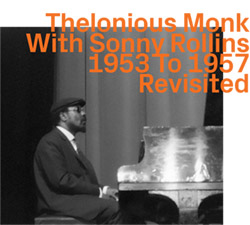 |
| Monk, Thelonious with Sonny Rollins 1953 To 1957 Revisited (ezz-thetics by Hat Hut Records Ltd) |
| Restoring and remastering three key sessions documenting the evolving creative relationship between Thelonious Monk and Sonny Rollins, alongside artists including Julius Watkins, Ernie Henry, Oscar Pettiford, and Max Roach, in a vital revisitation of formative collaborations that highlight Monk's unique brilliance and Rollins' early improvisational voice within shifting post-bop ensembles. |
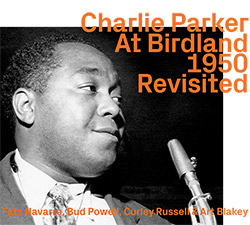 |
| Parker, Charlie At Birdland 1950 "Revisited" (ezz-thetics by Hat Hut Records Ltd) |
| A remarkable feat of remastering, sound restoration and pitch correction from the tapes of this June 1950 radio broadcast at Birdland in NYC, finding the exceptional quintet of jazz pioneers led by alto saxophonist Charlie Parker in superb form, with Fats Navarro on trumpet, Bud Powell on piano, Curley Russell on double bass and Art Blakey on drums. |
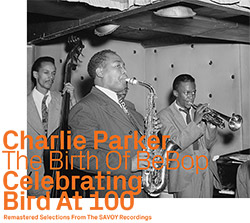 |
| Parker, Charlie Selections From The SAVOY Recordings (ezz-thetics by Hat Hut Records Ltd) |
| The second of two volumes in celebration of legendary saxophonist Charlie Parker's 100th birthday, here remastering his landmark recordings for the Savoy label in New York City between 1945-48, performing with jazz greats including Bud Powell, Dizzy Gillespie, Miles Davis, John Lewis, Curley Russel, Max Roach, &c. for some of be-bop's finest and best known compositions. |
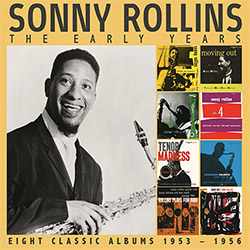 |
| Rollins, Sonny The Early Years [4 CDs] (Enlightenment) |
| A four-CD survey of Sonny Rollins' formative Prestige years, collecting eight albums recorded from 1951-1956, with Rollins' tenor saxophone joined by Miles Davis on piano, Clifford Brown and Kenny Dorham on trumpet, John Coltrane on tenor, Thelonious Monk, Red Garland and Tommy Flanagan on piano, and rhythm sections featuring Max Roach, Art Blakey, Philly Joe Jones and others, tracing Rollins' rapid emergence as one of modern jazz's defining improvisers. |
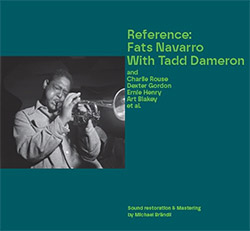 |
| Navarro, Fats Reference: Nostaligia w/ Tadd Dameron and Charlie Rouse / Dexter Gordon / Ernie Henry / Art Blakey (ALAY) |
| Restoring New York sessions from 1947 to 1949, this collection places Fats Navarro's brilliant, cleanly articulated trumpet within Tadd Dameron's harmonically refined bebop writing, joined by Charlie Rouse, Dexter Gordon, Ernie Henry, Leo Parker, Wardell Gray, Cecil Payne, Art Blakey, Kenny Clarke and others as the ensembles move between intricate modern lines, swing-rooted lyricism and early Afro-Cuban color. |
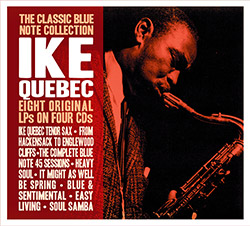 |
| Quebec, Ike The Classic Blue Note Collection [4 CDs] (Enlightenment) |
| Spanning Ike Quebec's Blue Note work from 1940s swing-era 78s through his early-1960s comeback, this four-CD set follows the tenor saxophonist's broad, breathy sound across blues, ballads, jukebox organ sessions, hard bop and Brazilian-inflected soul jazz, joined by Sir Charles Thompson, Earl Van Dyke, Skeeter Best, Milt Hinton, Sam Jones, J. C. Heard and others in performances of warmth, weight and direct emotional power. |
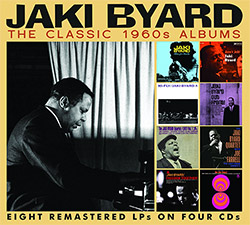 |
| Byard, Jaki The Classic 1960s Albums [4 CDs] (Enlightenment) |
| Collecting eight Jaki Byard albums from 1960-67, this 4-CD set follows the pianist and occasional alto saxophonist through his extraordinary synthesis of ragtime, stride, swing, bop and free jazz, joined across varied sessions by Booker Ervin, Rahsaan Roland Kirk, Joe Farrell, Richard Williams, Ron Carter, Roy Haynes, Alan Dawson and others in music of encyclopedic reach, sharp humor and restless invention. |
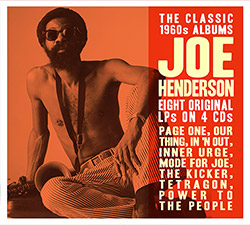 |
| Henderson, Joe The Classic 1960s Albums [4 CD BOX SET] (Enlightenment) |
| Bringing together seven landmark 1960s sessions, this 4-CD set captures Joe Henderson at the height of his early career, leading stellar ensembles through a compelling range of post-bop expression, from hard-driving grooves to exploratory improvisation, showcasing his commanding tone, compositional strength, and enduring influence on modern jazz. |
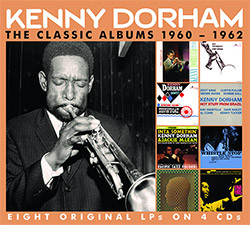 |
| Dorham, Kenny The Classic Albums 1960-1962 [4 CDs] (Enlightenment) |
| A 4-CD/8 album survey of Kenny Dorham's early-1960s output, compiling sessions from Show Boat through Una Mas, where his warm, lyrical trumpet leads shifting ensembles including Joe Henderson and Herbie Hancock, bridging hard bop, modal jazz, and Latin-tinged explorations with refined compositional clarity. |
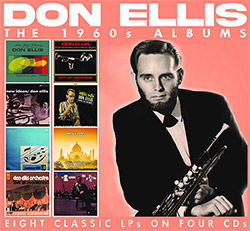 |
| Ellis, Don The 1960s Albums [4 CD BOX SET] (Enlightenment) |
| Collecting eight albums from the early to late '60s, this generous four-CD set surveys the groundbreaking work of trumpeter, composer, and bandleader Don Ellis, tracing his evolution from post-bop experiments with shifting metric structures into large-ensemble innovation infused with global rhythms, expanded instrumentations, and a fiercely exploratory imagination. |
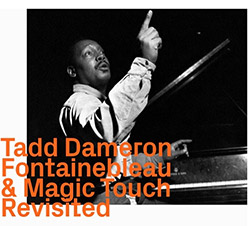 |
| Dameron, Tadd Fontainebleau & Magic Touch, Revisited (ezz-thetics by Hat Hut Records Ltd) |
| Composer, pianist, and bandleader Tadd Dameron's first album, Fontainebleau (1956), and his final work, The Magic Touch (1962), are remastered to highlight his sophisticated hard bop compositions for large ensembles, featuring influential players like Bill Evans, Philly Joe Jones, and Ron Carter, and showcasing Dameron's lasting impact on jazz before his untimely passing. |
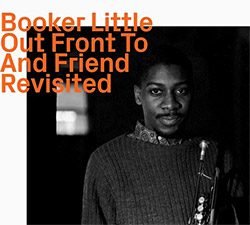 |
| Little, Booker Out Front To And Friends, Revisited (ezz-thetics by Hat Hut Records Ltd) |
| The lesser known hard bop trumpeter Booker Little died at just 23, but left a legacy in these two sextet albums that balance lyricism with freedom — Out Front and Booker Little and Friend — the former recorded with Eric Dophy and Max Roach, and the latter with George Coleman & Julian Priester, both albums with legendary players including Ron Carter, Reggie Workman, Art Davis, Don Friedman &c.. |
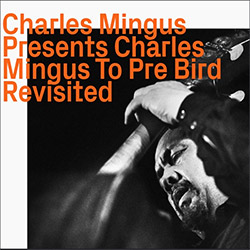 |
| Mingus, Charles Presents Charles Mingus To Pre Bird, Revisited (ezz-thetics by Hat Hut Records Ltd) |
| Three sides of Charles Mingus in this remastered reissue set: the 1961 Candid album Mingus Presents Mingus with the classic quartet of Eric Dolphy, Ted Curson and Dannie Richmond; then the Mercury release Pre-Bird from the same year, in ensembles performing the music of or influenced by Duke Ellington, along with the ambitious and brilliant through-composed work, "Half Mast Inhibition". |
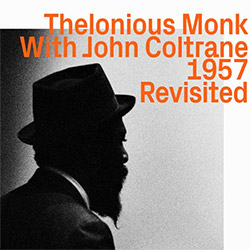 |
| Monk, Thelonious with John Coltrane 1957, Revisited (ezz-thetics by Hat Hut Records Ltd) |
| A transformative experience for John Coltrane, whose 1957 studio sessions with pianist Thelonious Monk, recorded after Monk's residency at the Five Spot, came at a transitional point for the iconic tenor saxophonist, expanding his knowledge of harmonic structure and refining his approach to soloing; with Coleman Hawkins, Art Blakey, Gigi Gryce, Ray Copeland, Wilbur Ware and Shadow Wilson. |
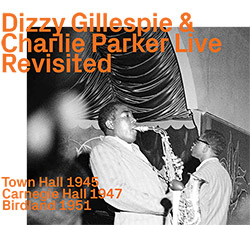 |
| Gillespie, Dizzy & Charlie Parker Live, Revisited (ezz-thetics by Hat Hut Records Ltd) |
| Three essential concerts remastered, from the legacy of be-bop trailblazers, trumpeter Dizzy Gillespie and alto saxophonist Charlie Parker, with Don Byas, Al Haig piano, Curley Russell, Max Roach & Sidney Catlett at Town Hall 1945; with John Lewis, Al McKibbon & Joe Harris at Carnegie Hall 1947; and with Bud Powell, Tommy Potter & Roy Haynes at Birdland 1951. |
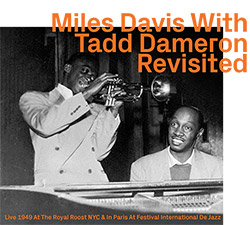 |
| Davis, Miles w/ Tadd Dameron Revisited (ezz-thetics by Hat Hut Records Ltd) |
| Between his work with Charlie Parker and before his own personal success, trumpeter Miles Davis joined the influential ensemble of pianist, composer and arranger Tadd Dameron, heard in six large ensemble pieces at New York's Royal Roost in 1949, and then in a quintet at the Paris Festival International De Jazz the same year, in both hearing a unique and confident facet to Miles' playing. |
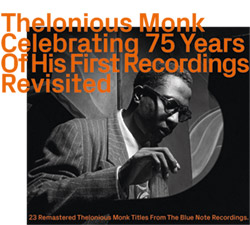 |
| Monk, Thelonious Celebrating 75 Years Of His First Recordings (ezz-thetics by Hat Hut Records Ltd) |
| The foundational work of composer and pianist Thelonious Monk is heard in these six remastered studio sessions for Blue Note Records recorded between 1947 to 1952, performing twenty three original compositions in bands from trios to sextets with a who's who of emerging jazz leaders including Art Blakey, Max Roach, Lou Donaldson, Kenny Dorham, and Milt Jackson. |
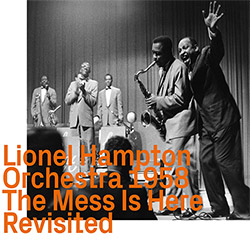 |
| Hampton, Lionel Orchestra 1958 The Mess Is Here, Revisited (ezz-thetics by Hat Hut Records Ltd) |
| An influence on the next generation of small band and bop players, vibraphonist and Band Leader Lionel Hampton's programs included both crowd-pleasers and sophisticatedly complex sections, heard here in this 1958 studio recording from Stuttgart, Germany while touring Europe, Ghana and Israel with his exceptional band expanded by three German jazz musicians. |
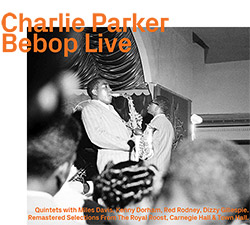 |
| Parker, Charlie Bebop Live [2 CDs] (ezz-thetics by Hat Hut Records Ltd) |
| Remarkably remastered recordings of Charlie Parker's quintets from 1945-49, performing live at Carnegie Hall, Royal Roost, & Town Hall with configurations of Miles Davis, Dizzy Gillespie, Kenny Dorham, Red Rodney, Don Byas, Al Haig, Max Roach, Roy Haynes, Kenny Clarke, Tommy Potter & Curley Russell, allowing us to re-live the consistent brilliance of the leader and his sidemen. |
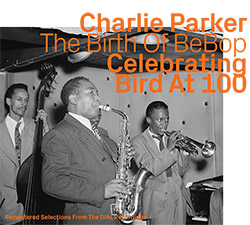 |
| Parker, Charlie Selections From The DIAL Recordings (ezz-thetics by Hat Hut Records Ltd) |
| The first of two volumes in celebration of legendary saxophonist Charlie Parker's 100th birthday, here remastering his landmark recordings for the Dial label on the US West Coast between 1946-47, performing with jazz greats including Miles Davis, Lucky Thompson, Erroll Garner, Barney Kessel, Red Calender, JJ Johson, Max Roach, &c. for some of Parker's best known and essential compositions. |
Customers Who Bought This Item Also Bought:
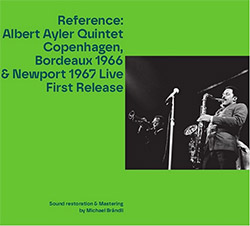 |
| Ayler, Albert Quintet Copenhagen, Bordeaux 1966 & Newport 1967 Live First Release (ALAY) |
| Previously unreleased recordings from the Albert Ayler Quintet — captured in Copenhagen and Bordeaux during the 1966 Newport in Europe tour and at the Newport Jazz Festival in 1967 — present Ayler with Donald Ayler, Michel Samson, Bill Folwell, and Beaver Harris/Milford Graves in fiercely expressive performances, newly restored and mastered from rediscovered tapes. |
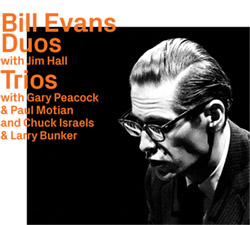 |
| Evans, Bill (Evans, Hall, Peacock, Motian, Israels, Bunker) Duos With Jim Hall & Trios '64 & '65, Revisited [2 CDs] (ezz-thetics by Hat Hut Records Ltd) |
| Three configurations of sophisticated duos & trios from four remastered albums recorded between 1962 and 1966 by pianist Bill Evans: first in duos with guitarist Jim Hall (Undercurrent); then with his trio of bassist Gary Peacock & Paul Motian (Trio 64); then with bassist Chuck Israels & drummer Larry Bunker (Trio 65); and last full circle to 1966, again with Jim Hall (Intermodulation). |
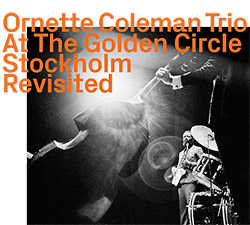 |
| Coleman, Ornette Trio At The Golden Circle Stockholm, Revisited (ezz-thetics by Hat Hut Records Ltd) |
| Reissuing and remastering both volumes from saxophonist, trumpeter and violinist Ornette Coleman's 1966 Blue Note album of his 1965 performance at the Golden Circle in Stockholm, Sweden in a trio with double bassist David Izenzon and drummer Charles Moffett, two days of exceptional concerts and the first example of Ornette's violin playing on any recording. |
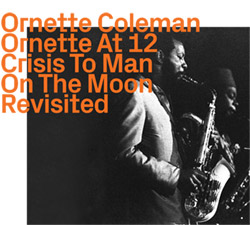 |
| Coleman, Ornette Ornette At 12, Crisis & Man On The Moon, Revisited (ezz-thetics by Hat Hut Records Ltd) |
| Reissuing and remastering two Impulse! albums from saxophonist Ornette Coleman: 1969's Ornette At 12 with Dewey Redman, Charlie Haden and his then 12-year-old son Denardo on drums; 1972's Crisis adding Don Cherry on trumpet; and a lesser-known 1969 EP, Man On The Moon, with electronics from Dr. Emmanuel Ghent and Ed Blackwell on drums. |
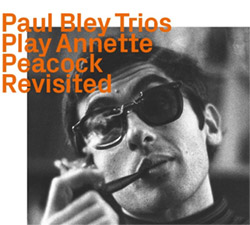 |
| Bley, Paul Trios Play Annette Peacock, Revisited (ezz-thetics by Hat Hut Records Ltd) |
| Annette Peacock's response to the free-blowing loft scene was to compose using spacious intervals, allowing great harmonic and rhythmic freedom, inspiring pianist Paul Bley and his trio as heard in two unique interpretations of the same pieces from two exceptional working bands: one with bassist & drummer Mark Levinson & Barry Altschul, the other with Gary Peacock & Billy Elgart. |
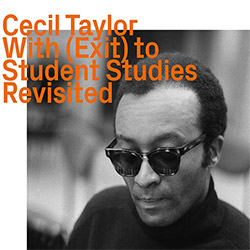 |
| Taylor, Cecil (w/ Lyons / Dixon / Grimes / Silva / Cyrille) With (Exit) To Student Studies, Revisited (ezz-thetics by Hat Hut Records Ltd) |
| Changing approaches to his music with new quartet of Jimmy Lyons on alto sax, Alan Silva on double bass and Andrew Cyrille on drums, pianist Cecil Taylor's incredible 1966 concert in Paris presented four extended compositions, here remastered and reissued with a track from a compilation LP--"With (Exit)"--extending his quartet with Bill Dixon on trumpet and Henry Grimes on double bass. |

![Rose, Jon: Rosenberg Museum [5 CDs]](https://www.teuthida.com/productImages/misc4/37935.jpg)
![Corsano, Chris / Tashi Dorji: Live at Ritual Botanica [VINYL]](https://www.teuthida.com/productImages/misc4/37552.jpg)
![My Face Is Dancing (Federico Ughi / Alberto Ughi / Martino Ughi / Benjamin Ughi): My Face Is Dancing [VINYL]](https://www.teuthida.com/productImages/misc4/37836.jpg)
![Kim, Doyeon (w/ Sorey / Maneri / Fraser): Wellspring [VINYL]](https://www.teuthida.com/productImages/misc4/37338.jpg)
![Radigue, Eliane: Triptych [VINYL 2 LPs]](https://www.teuthida.com/productImages/misc4/37875.jpg)
![Orchestre National De Jazz: With Carla [2 CDs]](https://www.teuthida.com/productImages/misc4/37714.jpg)
![Vasseur, Christian / Steve Gibbs / Nicolo Vivi : FWWU+ Duos Trios [2 CDs]](https://www.teuthida.com/productImages/misc4/37891.jpg)
![Ehrlich, Marty: OPEN AIR: The Complete Saxophone Quartet Compositions of Julius Hemphill [2 CDs]](https://www.teuthida.com/productImages/misc4/37922.jpg)
![Frith, Fred / Cornelius Claudio Kreusch / Johannes Tonio Kreusch: Pink / Neon [2 CDs]](https://www.teuthida.com/productImages/misc4/37712.jpg)
![Frith, Fred / Cornelius Claudio Kreusch / Johannes Tonio Kreusch: Pink / Neon [VINYL 2 LPs]](https://www.teuthida.com/productImages/misc4/37713.jpg)
![Miguel, Sei: Viva! O Carro de Fogo de Sei Miguel [2 CDs]](https://www.teuthida.com/productImages/misc4/37739.jpg)
![Wassermann, Ute: Chimeric [VINYL]](https://www.teuthida.com/productImages/misc4/37652.jpg)
![Money: 5 [2 CDs]](https://www.teuthida.com/productImages/misc4/37890.jpg)
![Drumm, Kevin: The Mild Temper [6 CD BOX SET]](https://www.teuthida.com/productImages/misc4/37651.jpg)
![TRAC (Teddy Ryles / Alexander Cooper): Heavy Nano Ream Aria [2 CDs]](https://www.teuthida.com/productImages/misc4/37647.jpg)
![Jerman, Jeph: For Alvin Kelly [CASSETTE + DOWNLOAD]](https://www.teuthida.com/productImages/misc4/37521.jpg)
![Mann, Oliver / Stefano Pilia: Precious Moments [CASSETTE + DOWNLOAD]](https://www.teuthida.com/productImages/misc4/37494.jpg)
![Jerman, Jeph / Ted Byrnes: Muir [CASSETTE + DOWNLOAD]](https://www.teuthida.com/productImages/misc4/37520.jpg)
![+DOG+: Angel Wings [VINYL]](https://www.teuthida.com/productImages/misc4/37513.jpg)
![Money: 4 [2 CDs]](https://www.teuthida.com/productImages/misc4/37505.jpg)

![+DOG+: The Garden [VINYL]](https://www.teuthida.com/productImages/misc4/37511.jpg)
![Tilbury, John: At Home [4 CDs]](https://www.teuthida.com/productImages/misc4/37729.jpg)
![Scott, Ryan: 21st-Century Canadian Snare Drum [2 CDs]](https://www.teuthida.com/productImages/misc4/37538.jpg)

![Feldman, Morton / GBSR Duo w/ Taylor MacLennan: Trios [6 CD BOX SET]](https://www.teuthida.com/productImages/misc4/37020.jpg)
![Frey, Jurg : Composer, Alone [3 CDs]](https://www.teuthida.com/productImages/misc4/36927.jpg)
![Bruce, Lenny: Comedy & Controversy: The Original Albums 1958-61 [2 CDs]](https://www.teuthida.com/productImages/misc4/37409.jpg)

![Amba, Zoh: Eyes Full [VINYL]](https://www.teuthida.com/productImages/misc4/37491.jpg)

![Henry Cow: The Henry Cow Box Redux: The Complete Henry Cow [18 CDs, DVD & 3 BOOKLETS]](https://www.teuthida.com/productImages/misc4/37272.jpg)
![MacLean, Steve: Box Of Seven [7 CD BOX]](https://www.teuthida.com/productImages/misc4/36467.jpg)
![Mehead: One Good Eye [REISSUE]](https://www.teuthida.com/productImages/misc4/37276.jpg)
![Zorn, John: The Song of Songs [CD + CD BOOK]](https://www.teuthida.com/productImages/misc4/36923.jpg)
![Coultrain: Mundus [COLORED VINYL]](https://www.teuthida.com/productImages/misc4/33056.jpg)
![Hprizm: Signs Remixed [COLORED VINYL]](https://www.teuthida.com/productImages/misc4/30635.jpg)
![Halls Of the Machine: All Tribal Dignitaries [CASSETTE w/ DOWNLOAD]](https://www.teuthida.com/productImages/misc4/36134.jpg)
![Koenjihyakkei: Live at Club Goodman [2 CDs]](https://www.teuthida.com/productImages/misc4/36111.jpg)
![Sorry For Laughing (G. Whitlow / M. Bates / Dave-Id / E. Ka-Spel): Rain Flowers [2 CDS]](https://www.teuthida.com/productImages/misc4/35985.jpg)
![Rolando, Tommaso / Andy Moor : Biscotti [CASSETTE w/ DOWNLOADS]](https://www.teuthida.com/productImages/misc4/36106.jpg)
![Electric Bird Noise / Derek Roddy: 8-10-22 [CD EP]](https://www.teuthida.com/productImages/misc4/35970.jpg)
![Coley, Byron: Dating Tips for Touring Bands [VINYL]](https://www.teuthida.com/productImages/misc4/17906.jpg)
![Lost Kisses: My Life is Sad & Funny [DVD]](https://www.teuthida.com/productImages/misc4/lostKissesDVD.jpg)