


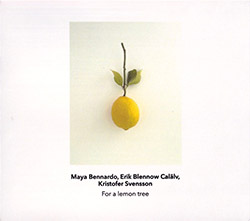
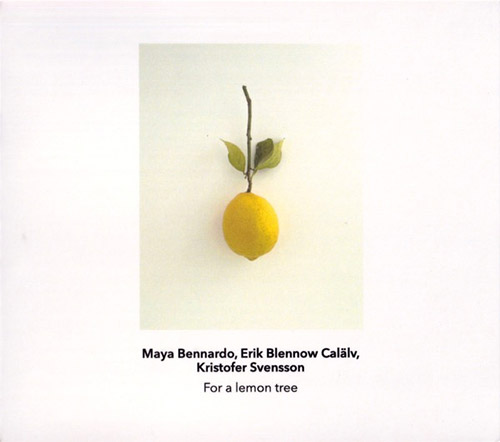
Exploring Kristofer Svensson's 11-limit Just Intonation tuning for Prakāśa, violinist Maya Bennardo, bass clarinetist Erik Blennow Calälv and Svensson on Indonesian kacapi shape a fragile, resonant chamber music of fully notated form and modal improvisation, where breath, string resonance, silence and unequal intervals create a quietly radiant field of melancholy and meditative depth.
In Stock
Quantity in Basket: None
Log In to use our Wish List
Shipping Weight: 3.00 units
EU & UK Customers:
Discogs.com can handle your VAT payments
So please order through Discogs
Sample The Album:
Maya Bennardo-violin
Erik Blennow Calalv-bass clarinet
Kristofer Svensson-Indonesian zither
Click an artist name above to see in-stock items for that artist.
Label: Another Timbre
Catalog ID: at253
Squidco Product Code: 37450
Format: CD
Condition: New
Released: 2026
Country: UK
Packaging: Cardboard Gatefold
Recorded at Atlantis Grammofon, in Stockholm, Sweden, in June, 2024, by Calle Gustavsson.
Bringing together violinist Maya Bennardo, bass clarinetist Erik Blennow Calälv and kacapi player Kristofer Svensson, For A Lemon Tree presents two closely related works rooted in Svensson's 11-limit Just Intonation tuning for Prakāśa, where chamber precision, modal improvisation and the resonant character of the Indonesian zither converge in a music of quiet tension, melancholy colour and suspended attention.
The brief title work is fully notated, written by Bennardo and Svensson as a condensed reflection of the trio's shared exploration of this material, while the expansive Improvisation on Prakāśa unfolds within a defined tuning and form, allowing the performers to move through unequal intervals, unstable dyads and settling harmonic constellations as a living field of perception rather than a fixed scale.
Through Bennardo's finely poised violin, Calälv's breath-rich bass clarinet and Svensson's shimmering kacapi, the trio develops a fragile but deeply focused sound world, where timbre, resonance, pacing and silence shape the music as much as melody or gesture. The result is a beautifully attuned album of contemporary chamber improvisation, balancing discipline and openness while letting the tuning reveal its own grammar, affect and meditative depth.
Another Timbre Interview with Kristofer Svensson
'For a Lemon Tree' consists of two pieces: the title track, which lasts 12 minutes, and the much longer 'Improvisation on Prakāśa'. Both tracks are played by the trio of Maya Bennardo (violin), Erik Blennow Calälv (bass clarinet) and yourself on kacapi (a kind of zither from Indonesia). I'm not clear how much of the music is improvised. Could you explain how both pieces work?
In Improvisation on Prakāśa the music is improvised within a tuning and form, while For a lemon tree is fully notated.
The instructions to Prakāśa are quite brief. The first page of the score gives the tuning and maps the harmonic terrain: sub-modal regions, tunable paths, and a few implied near-pitches that intonating instruments can lean toward when they're clearly suggested. The second (and last) page gives a simple large-scale form — an order for introducing and omitting materials — so the piece tends to generate a similar harmonic shape each time it's played.
What this gives us in practice is not just a palette of notes to improvise with, but a set of constraints and affordances. Because the intervals are unequal and highly specific, the mode doesn't behave like a neutral scale: it suggests which pitch combinations can actually settle, which dyads resist stabilizing on their own, which three-note constellations feel calm, and where tension naturally collects. All of this adds up to a distinct attunemental tone: an affective atmosphere, a kind of 'rasa'.
At the same time, it would be misleading to say that this affect is built into the tuning itself. It arises relationally, in performance, through how we move through the mode. Rehearsal becomes a kind of perceptual learning where we internalize the tuning by performing it, and we work out our version of the piece. While improvisation is our method, we don't treat it as an obligation to do something new every time. Our practice is more about going deeper into the mode and letting the piece gradually clarify for us — not as something we study from the outside, but as something that can only arise through playing.
For a lemon tree came about directly from this process. We wanted a shorter fully notated piece that could function as a condensed version of how we had learned to play this material. So Maya and I wrote a composition based on Prakāśa, using the same tuning and the same attunemental field we had developed as an ensemble. In that sense, I would say that the shorter piece captures something like the essence of our way of playing Prakāśa.
Part of what I love about 'Prakāśa' is its melancholic mood, which I'm always a sucker for. Now, I don't understand the detail of Just Intonation at all, but on the CD cover you describe the piece as an "11-limit Just Intonation tuning and accompanying rules for modal improvisation". Combining this with your previous answer, are you saying that the intervals in this tuning are predisposed to a particular affective atmosphere - in this case melancholy - in the same sort of way as a minor key in tonal music? Or does this atmosphere arise only because of the 'rules' you give yourselves in the improvisation, which limit your choice of pitches?
It's a great question, and it gets at a real puzzle in just Intonation: does the atmosphere come from the scale itself, or from how we treat it? With Just Intonation those two are usually hard to separate. Designing a JI scale is already a compositional act, like designing a seed while thinking through the ways the plant might grow.In many modal traditions, the affect isn't 'in the mode' by itself so much as in the style. In Renaissance polyphony, for example, moods aren't tied to modes themselves (Dorian, Mixolydian, or what later becomes our major/minor distinction) but arise largely through compositional constraint: what melodic motions are favoured, how cadences work, how steps and leaps are balanced, and which degrees are repeatedly affirmed.What JI adds is that some of those constraints become acoustically explicit. Certain simultaneities stabilise readily while others resist; some motions feel natural and settle easily, while others feel like deliberate tension. Of course, one can disregard that and treat the scale as generic microtonality, but if you play it as a relational system, the scale starts to teach you its own grammar and atmosphere through perceptual learning.In Prakāśa, the form and the order in which the material is introduced matter to the atmosphere because they help establish a tonal centre - especially since I tend to design scales with multiple plausible centres - but most of the 'rules' we follow, and the melodies and harmonies we tend to play, are really extractions from the scale itself: things that, I would argue, any player would discover by living with the tuning long enough.
So yes: for us it can feel as if melancholy is built into the tuning - but it depends on a way of playing that lets the tuning's asymmetries and moments of settling actually come into focus. And of course tuning is only one parameter: pacing, density, phrasing, and timbre all matter too.
Also relating to the question of mood, or affective atmosphere, can you explain a bit more about the concept of 'rasa' which you referred to? I know it comes from Indian classical music, but that's about all, so can you elaborate on what you are taking from it?
Yes, rasa is a term from classical Indian aesthetics (it's also used quite ordinarily in Indonesia to talk about musical feel, and I heard it often while studying kacapi in West Java), and it literally means 'taste'. In a loose sense it can overlap with what we call a mood or atmosphere, but the reason I tend to use it is actually that it connects aesthetic moods to soteriological goals. Beyond the more familiar rasas that a piece might attune a listener to (melancholy, tenderness, romance, joy), Abhinavagupta (one of the main theorists of rasa) places śāntarasa, the 'taste' of peace, at the apex: an aesthetic serenity that is less entangled with emotional reactivity, and that can intimate liberation. Buddhism has a related but sharper notion: samarasa — the 'taste of sameness', where like and dislike dissolve altogether. To what extent music, which often attunes us to a mood, can intimate śāntarasa — and perhaps even approach samarasa — is a question I've returned to for years: whether musical atmospheres can become quiet, thin, and spacious enough to open into these less emotionally bound attunements — or, in other words, to what extent musical attunement can, through sound, begin to resemble the feeling of meditating in silence.

The Squid's Ear!
Artist Biographies
• Show Bio for Maya Bennardo "Maya Bennardo (she/her) is an active performer, improviser, and composer living between Brooklyn, NY and Stockholm, Sweden. Maya is interested in opening the dialogue and blurring the boundaries between composers and performers, and is devoted to performing music of the present. She is a founding member of the violin/viola duo andPlay, described by I Care If You Listen as "enthusiastic champions for new music and collaboration." She is a core member of Mivos Quartet and also performs new and traditional repertoire for violin and piano with pianist Karl Larson. Maya also performs regularly with Nouveau Classical Project and Hotel Elefant, and has worked with ensemble mise-en, Contemporaneous, Mimesis Ensemble, Ensemble Signal, [Switch~ Ensemble], and Talea Ensemble. Recent highlights include recording residencies at Electronic Media and Performing Arts Center (EMPAC) in Troy, NY and at the Elektronmusikstudion (EMS) in Stockholm, Sweden with andPlay, performances at the Library of Congress on the "Betts" Stradivarius violin (Washington D.C.), Walt Disney Hall on Noon to Midnight (Los Angeles, CA), Lucerne Festival Academy with Saul Williams (Lucerne, CH), North Sea Jazz Festival with Ambrose Akinmusire (Rotterdam, NE), June in Buffalo (Buffalo, NY), Lincoln Center Festival (NYC), and Strings of Autumn (Prague, CZ). Maya was a fellow at the Bang on a Can Summer Festival at Mass MoCa 2014/15, a member of the Lucerne Festival Academy Orchestra in 2014, and a participant in the Darmstadt Internationale Ferienkurse für Neue Musik 2016. Maya recently recorded her first solo record, 'four strings' with music by Eva-Maria Houben and Kristofer Svensson which will be released on the kuyin label, September 17th 2022. The album is a continuation of Bennardo's work exploring sonic fragility and temporal stasis on the violin. Maya enjoys a rich teaching life, and teaches students in her private studio. She graduated from NYU with a Master of Music and the Oberlin Conservatory of Music with a Bachelor of Music studying with Gregory Fulkerson at both institutions." ^ Hide Bio for Maya Bennardo • Show Bio for Erik Blennow Calalv Erik Blennow Calälv is a bass clarinetist, know for the band The Schematics, and his duo with guitarist Finn Loxbo. ^ Hide Bio for Erik Blennow Calalv • Show Bio for Kristofer Svensson "Kristofer Svensson (they/them) is a Swedish kacapi musician, music theorist, and composer whose music is characterized by simple moments of harmonic sounds appearing and disappearing in a dynamic correspondence with emptiness. Tuning harmony in Just Intonation, a characteristic feature of all their music, and often letting tones emerge from silence through noise, draws attention to music's simple raw materials-the aperture of sound and transparency of tone. Svensson's music have been performed by soloists and groups such as Contemporaneous, ensemble mise-en, Quatuor Bozzini, andPlay, Mats Persson & Kristine Scholz, Musica Vitae, Miyama McQueen-Tokita, the Swedish Wind Ensemble, N/A ensemble, Arcus Collective, Bennardo/Larson duo, Norbotten NEO, and the Hong Kong New Music Ensemble at festivals such as Bang on a Can Summer Music Festival (US, 2015), Kalv (SE, 2015), Nordic Music Days (FO, 2021), KROCH fest (SE, 2018), Svensk Musikvår (SE, 2019), Sound of Stockholm (SE, 2016), Ung Nordisk Musik (IS, 2017 and SE, 2019), University of Toledo's Festival of New Music (US, 2018), and o/modernt (SE, 2013). In October 2017, a portrait concert with Svensson's music titled "pale air (oscillating)" was given at Scandinavia House in New York City. Svensson studied the shakuhachi with Gunnar Jinmei Linder in Stockholm, the qín with Yung-Hak Chi in Hong Kong, and Sundanese karawitan (with a special emphasis on the kacapi) with, amongst others, Ade Suparman and Dody Satya Ekagustdiman, in West Java. These studies were supported by grants from the Indonesian Ministry for Arts and Culture (2013) and the Swedish foundations Gålös (2015), Anna Withlock Memorial Foundation (2014), AAA (2013 and 2015), and Erik och Göran Ennerfelts stiftelse (2015). Svensson studied composition with Fujieda Mamoru in Fukuoka, Japan supported by a JASSO Scholarship from the Japanese government (2015). Taken together, these musical traditions and lineages form the societal as well as spiritual context for Svensson's work-a context in which artistic, contemplative, and meditative practices merge. At the heart of Svensson's work lies a search for a resolution to the inescapable tension that lies between a commitment to the Buddhist path and a commitment to art. Svensson shares reflections from this search in the form of texts on soteriological aesthetics online at Intimating Emptiness. As a kacapi musician, Svensson has been developing a practice of justly tuned, modal, improvisation as both a solo performer as well as in collaboration with Maya Bennardo, Vilhelm Bromander, Ryan Packard, and Erik Blennow Calälv. In 2020, Svensson's debut solo kacapi album 'Andra Segel' was released on the kuyin label, and in 2022, a trio album with Bennardo and Blennow Calälv was released on the thanatosis label. Svensson's activities as a composer-performer have been supported by numerous grants from Swedish foundations and institutions such as Helge Ax:son Johnson Foundation (2014 and 2015), Anders Sandrews Foundation (2013), five awards from the Swedish Performing Rights Society (STIM, 2013, 2015, 2017, 2019, 2020), two awards from the Society of Swedish Composers (FST, 2016 and 2018) and a commission through the Swedish Arts Council to write the program stilla sväva, consisting of two pieces for early keyboard instruments, for Mats Persson and Kristine Scholz. Stilla sväva was premiered in 2019 and released on the kuyin label in 2022. Svensson obtained their Bachelor's degree in Music Composition from the Royal College of Music in Stockholm, where they studied composition primarily with Pär Lindgren but also with Magnus Granberg, and a Master's degree in Music Composition from the University of Hong Kong with the thesis "The Use of Just Intonation in my Recent Compositions". Expanding upon Lou Harrison's simple idea of a 'strict' and 'free' style of Just Intonation and correlating this idea with findings from recent research in music cognition and learning theory, Svensson formulated an expanded taxonomy of Just Intonation in which the novel 'loose style' of Just Intonation is articulated for the first time. This research can be found in the continuously updated online text Varieties of Just Intonation." ^ Hide Bio for Kristofer Svensson
10/6/2026
Have a better biography or biography source? Please Contact Us so that we can update this biography.
Have a better biography or biography source? Please Contact Us so that we can update this biography.
10/6/2026
Have a better biography or biography source? Please Contact Us so that we can update this biography.
Track Listing:
1. For a Lemon Tree 12:59
2. Improvisation on Prakasa, June 10, 2024 43:45
May 2026
Compositional Forms
European Improvisation, Composition and Experimental Forms
Chamber Rock
Trio Recordings
Ambient, Minimal, Reductionist, Onky Sound, &c.
New in Compositional Music
Recent Releases and Best Sellers
Search for other titles on the label:
Another Timbre.
 |
| Lim, Sylvia Flare (Another Timbre) |
| Composer Sylvia Lim's quietly individualistic chamber works explore fragility, decay and timbral richness across solo, duo, trio and small ensemble settings, using prepared cello, resonant piano, clarinets, percussion and guitars to let intimate gestures, unstable sounds and microscopic details slowly unfold into hushed, tactile sound worlds. |
 |
| Creed, James M. (To Your Ear Collective) Tending (Another Timbre) |
| Presenting four recent works by James M. Creed performed by Standard Issue, To Your Ear Collective and Outline Ensemble, this debut on Another Timbre explores sparse notation, instrumental doubling, fragile homophony and gently shimmering ensemble textures, as overlapping groups of young UK experimental musicians sustain music of quiet uncertainty, collective attention and delicate, slowly forming resonance. |
 |
| Lang, Klaus / Apartment House Geschrieben In Wasser (Another Timbre) |
| Klaus Lang's chamber works for Apartment House trace a patient, inwardly focused music of sustained tones, structural clarity and lyrical restraint, drawing from Pre-Raphaelite poetry, Basho's autumnal imagery and Keats' epitaph as clarinets, strings, piano and electric organ reveal slowly shifting architectures where beauty, stillness and sound become forms of quiet protest. |
 |
| Feldman, Morton / GBSR Duo w/ Taylor MacLennan Trios [6 CD BOX SET] (Another Timbre) |
| Spanning Morton Feldman's three expansive trios for flute, piano, and percussion, these performances by the GBSR Duo with Taylor MacLennan immerse the listener in an extended temporal field where quiet intensity, precise timbral balance, and fragile rhythmic relationships unfold with hypnotic patience, transforming duration itself into an expressive element of listening, presence, and sustained attention. |
 |
| Fischer, Santiago Diez Songs (Another Timbre) |
| Blending acoustic trio writing, subtle electronics, and everyday vocal gestures, Argentine composer Santiago Diez Fischer's decade-spanning set of five works for Gyre Ensemble shapes a raw, sculptural, and "punk-poetic" sound world where baritone sax, accordion, and percussion merge with the composer's vocal and electronic interventions to reveal music poised deliberately between rough material and refined form. |
 |
| Granberg, Magnus / Skogen The Willow Bends And So Do I (Another Timbre) |
| Composed from four pools of material inspired by Johnny Mandel's A Time for Love, Magnus Granberg's 2024 work for his Swedish ensemble Skogen unfolds in ten slow cycles where delicate fragments, melodic shadings, and restrained improvisation interlace across strings, harp, guitar, percussion, and prepared piano, creating a quietly luminous meditation on fragility and motion. |
 |
| Schwarz, Ferdinand Listening Time (Another Timbre) |
| A contemplative composition by Ferdinand Schwarz for the Oslo-based ensemble AREPO, Listening Time unfolds as a patient, microtonal exploration of harmonic stasis and collective structure, blending just intonation, fragile textures, and co-composed material in a deep listening experience that merges composed form with improvisational sensibility and communal artistry. |
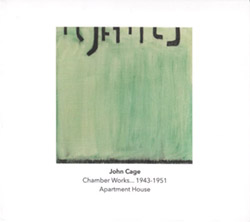 |
| Cage, John Chamber Works 1943-1951 (Another Timbre) |
| A superb interpretation of John Cage's early chamber works, performed by members of Apartment House and pianist Kerry Yong, recorded at The Old School, in Starston, UK, highlighting Cage's intricate balance of rhythm and resonance through prepared piano, strings, and percussion, captured in detailed and intimate recordings by Simon Reynell at The Old School in Starston, UK. |
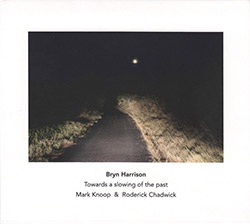 |
| Harrison, Bryn (Mark Knoop / Roderick Chadwick) Towards A Slowing Of The Past (Another Timbre) |
| Exploring time, memory, and perception, composer Bryn Harrison crafts an intricate sonic landscape for two pianos and electronics, performed with great precision by Mark Knoop and Roderick Chadwick, where dense, swirling repetitions give way to moments of eerie stillness, gradually descending into a murky, destabilizing space while immersing the listener in a hypnotic and disorienting temporal experience. |
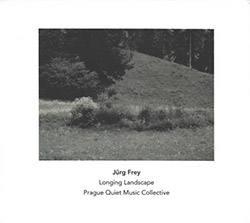 |
| Frey, Jurg Longing Landscape (Another Timbre) |
| Swiss composer Jürg Frey joins with the Prague Quiet Music Collective for three recent works exploring delicate tonal shifts, structural lists, and slow, evolving forms, balancing between consonance and dissonance, the ensemble — featuring clarinets, strings, guitars, double bass, and percussion — interprets Frey's subtly shifting frameworks with a deep sensitivity. |
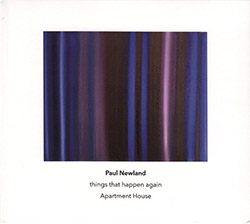 |
| Newland, Paul Things That Happen Again (Another Timbre) |
| A portrait of UK interdisciplinary composer Paul Newland's music through five pieces dating from 2009 to 2023 performed by members of London's Apartment House ensemble, including a string quartet, two different trio combinations, a short work for solo piano, and a score for open instrumentation, realised in this recording by a septet. |
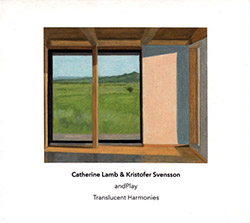 |
| Lamb, Catherine / Kristofer Svensson Translucent Harmonies - two duos for violin and viola, performed by andPlay (Another Timbre) |
| The New York-based andPlay duo of violinist Maya Bennardo and violist Hannah Levinson perform two extended works commissioned for their performance series, Translucent Harmonies: first an acoustic rendering of Catherine Lamb's "Prisma Interius VIII (Melodic Duo)"; then Kristofer Svensson's work of contrasts, surprises, modulations, and transformations. |
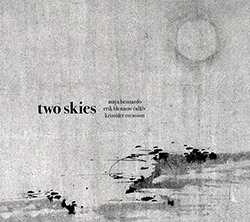 |
| Bennardo, Maya / Erik Blennow Calaly / Kristofer Svensson Two Skies (thanatosis produktion) |
| The first recording of an ongoing collaboration between violinist Maya Bennardo, bass clarinetist Erik Blennow Calälv, and kacapi (similar to a Japanese koto) musician Kristofer Svensson, presenting two restrained and lovely compositions bringing together contemporary classical, free improvisation and Sundanese music in a unique chamber format. |
 |
| Cabado, Tomas / Christoph Schiller Unconscious Collections (Another Timbre) |
| Swiss prepared spinet player Christoph Schiller and Argentine guitarist-composer Tomás Cabado, whose work is found on the Wandelweiser label, met in Schiller's studio in Basel to perform compositions from both and to improvise, recording this wonderfully relaxed but compelling music that exists in the fertile grey area between composition and improvisation. |
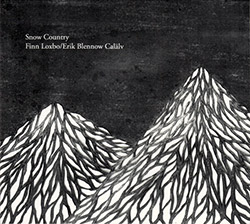 |
| Loxbo, Finn / Erik Blennow Calalv Snow Country (Creative Sources) |
| A duo between Swedish guitarist Finn Loxbo (Fire! Orchestra) and bass clarinetist Erik Blennow Calalv, in a low-key, moody and tranquil album of improvisations with titles implying their unhurried approach to their dialog--"Clouds", "Moving, Dancing", and "Ryoanji"-- making a beautiful album of nearly ambient but decidedly determined music. |
Customers Who Bought This Item Also Bought:
 |
| Futterman, Joel / William Parker Transcendent Universe (Burning Ambulance Music) |
| Joel Futterman and William Parker continue a collaboration of more than forty years in an hour of spontaneous composition, the pianist's heavy, high-energy approach meeting Parker's deeply grounded bass in two extended movements and a brief coda that balance ecstatic force, romantic beauty, collective listening and a rapturous sense of spiritual, improvised communion. |
 |
| Columbia Icefield (Wooley / Alcorn / Mendoza / Sawyer) A Silence Opens (Out Of Your Head Records) |
| A deeply elegiac final statement from Nate Wooley's Columbia Icefield, with Susan Alcorn's pedal steel, Ava Mendoza's guitar and voice, and Ryan Sawyer's drums joining Wooley's trumpet, amplifier, voice, whistling and footwork in music shaped by grief, memory and gratitude, responding to the deaths of Ron Miles and Alcorn through expansive, emotionally weighted improvisation. |
 |
| Ehrlich, Marty Cartographies of Flight: Lines Set Afloat Towards Hope (Corbett vs. Dempsey) |
| Marty Ehrlich leads a chamber-jazz septet with poet Erica Hunt reciting her own texts, shaping fifteen concise works where clarinet, flute, alto saxophone, trumpet, bassoon, cello, bass, and percussion move through composed forms, free improv, and spoken word in a vivid, scene-shifting suite balancing dark resonance, bright melodic sparks, and a searching sense of hope. |
 |
| Melford, Myra / Satoko Fujii Katarahi (RogueArt) |
| Myra Melford and Satoko Fujii meet in a rare two-piano encounter rooted in decades of friendship, their live performance unfolding as the heart-to-heart conversation suggested by the title, with both artists so deeply attuned that individual lines dissolve into a shared language of spontaneous form, lyrical intensity, emotional openness and beautifully balanced collective invention. |
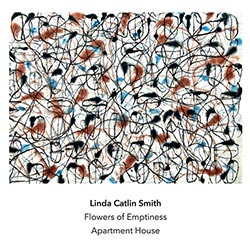 |
| Smith, Linda Catlin Flowers of Emptiness (Another Timbre) |
| The 6th album on Another Timbre from Canadian composer Linda Catlin Smith, a leading voice in contemporary chamber music, presents eight exquisite works performed by Apartment House, including the 1st recordings of three string quartets, alongside a violin duo, a clarinet quartet, an early string trio, a cello and piano duo, and a bass clarinet solo; evocative and deeply expressive artistry. |
![Sun Ra / Merzbow: Strange City [2 CDs]](https://www.teuthida.com/productImages/misc4/37648.jpg)
![Mollestad, Hedvig Weejuns: Bitches Blues [VINYL]](https://www.teuthida.com/productImages/misc4/37656.jpg)
![Bopp, Christiane: Rever, murmurer, dire [CD + DOWNLOAD]](https://www.teuthida.com/productImages/misc4/37823.jpg)

![Perelman, Ivo / Matthew Shipp: Duologues 7: Distillation [5x5 ALBUM FACSIMILE WITH DOWNLOAD]](https://www.teuthida.com/productImages/misc4/38004.jpg)


![Mori, Ikue: Enchanted and Delighted [CD + DVD]](https://www.teuthida.com/productImages/misc4/37828.jpg)


![Corsano, Chris / Tashi Dorji: Live at Ritual Botanica [VINYL]](https://www.teuthida.com/productImages/misc4/37552.jpg)
![Kim, Doyeon (w/ Sorey / Maneri / Fraser): Wellspring [VINYL]](https://www.teuthida.com/productImages/misc4/37338.jpg)
![My Face Is Dancing (Federico Ughi / Alberto Ughi / Martino Ughi / Benjamin Ughi): My Face Is Dancing [VINYL]](https://www.teuthida.com/productImages/misc4/37836.jpg)
![Radigue, Eliane: Triptych [VINYL 2 LPs]](https://www.teuthida.com/productImages/misc4/37875.jpg)
![Money: 5 [2 CDs]](https://www.teuthida.com/productImages/misc4/37890.jpg)
![Drumm, Kevin: The Mild Temper [6 CD BOX SET]](https://www.teuthida.com/productImages/misc4/37651.jpg)

![TRAC (Teddy Ryles / Alexander Cooper): Heavy Nano Ream Aria [2 CDs]](https://www.teuthida.com/productImages/misc4/37647.jpg)
![Jerman, Jeph: For Alvin Kelly [CASSETTE + DOWNLOAD]](https://www.teuthida.com/productImages/misc4/37521.jpg)
![Mann, Oliver / Stefano Pilia: Precious Moments [CASSETTE + DOWNLOAD]](https://www.teuthida.com/productImages/misc4/37494.jpg)
![Jerman, Jeph / Ted Byrnes: Muir [CASSETTE + DOWNLOAD]](https://www.teuthida.com/productImages/misc4/37520.jpg)


![+DOG+: Angel Wings [VINYL]](https://www.teuthida.com/productImages/misc4/37513.jpg)
![Rose, Jon: Rosenberg Museum [4 CDs]](https://www.teuthida.com/productImages/misc4/37935.jpg)
![Tilbury, John: At Home [4 CDs]](https://www.teuthida.com/productImages/misc4/37729.jpg)
![Scott, Ryan: 21st-Century Canadian Snare Drum [2 CDs]](https://www.teuthida.com/productImages/misc4/37538.jpg)
![Frey, Jurg : Composer, Alone [3 CDs]](https://www.teuthida.com/productImages/misc4/36927.jpg)

![Bruce, Lenny: Comedy & Controversy: The Original Albums 1958-61 [2 CDs]](https://www.teuthida.com/productImages/misc4/37409.jpg)

![Amba, Zoh: Eyes Full [VINYL]](https://www.teuthida.com/productImages/misc4/37491.jpg)

![Henry Cow: The Henry Cow Box Redux: The Complete Henry Cow [18 CDs, DVD & 3 BOOKLETS]](https://www.teuthida.com/productImages/misc4/37272.jpg)
![MacLean, Steve: Box Of Seven [7 CD BOX]](https://www.teuthida.com/productImages/misc4/36467.jpg)
![Mehead: One Good Eye [REISSUE]](https://www.teuthida.com/productImages/misc4/37276.jpg)

![Zorn, John: The Song of Songs [CD + CD BOOK]](https://www.teuthida.com/productImages/misc4/36923.jpg)
![Coultrain: Mundus [COLORED VINYL]](https://www.teuthida.com/productImages/misc4/33056.jpg)
![Hprizm: Signs Remixed [COLORED VINYL]](https://www.teuthida.com/productImages/misc4/30635.jpg)
![Halls Of the Machine: All Tribal Dignitaries [CASSETTE w/ DOWNLOAD]](https://www.teuthida.com/productImages/misc4/36134.jpg)

![Koenjihyakkei: Live at Club Goodman [2 CDs]](https://www.teuthida.com/productImages/misc4/36111.jpg)

![Sorry For Laughing (G. Whitlow / M. Bates / Dave-Id / E. Ka-Spel): Rain Flowers [2 CDS]](https://www.teuthida.com/productImages/misc4/35985.jpg)
![Rolando, Tommaso / Andy Moor : Biscotti [CASSETTE w/ DOWNLOADS]](https://www.teuthida.com/productImages/misc4/36106.jpg)
![Electric Bird Noise / Derek Roddy: 8-10-22 [CD EP]](https://www.teuthida.com/productImages/misc4/35970.jpg)
![Coley, Byron: Dating Tips for Touring Bands [VINYL]](https://www.teuthida.com/productImages/misc4/17906.jpg)

![Lost Kisses: My Life is Sad & Funny [DVD]](https://www.teuthida.com/productImages/misc4/lostKissesDVD.jpg)