



![Rollins, Sonny : The Early Years [4 CDs] (Enlightenment)](https://www.teuthida.com/productImages/misc4/37711.jpg "Rollins, Sonny : The Early Years [4 CDs] (Enlightenment)")
![Rollins, Sonny : The Early Years [4 CDs] (Enlightenment)](https://www.teuthida.com/productImages/full/37711.Full.jpg "Rollins, Sonny : The Early Years [4 CDs] (Enlightenment)")
A four-CD survey of Sonny Rollins' formative Prestige years, collecting eight albums recorded from 1951-1956, with Rollins' tenor saxophone joined by Miles Davis on piano, Clifford Brown and Kenny Dorham on trumpet, John Coltrane on tenor, Thelonious Monk, Red Garland and Tommy Flanagan on piano, and rhythm sections featuring Max Roach, Art Blakey, Philly Joe Jones and others, tracing Rollins' rapid emergence as one of modern jazz's defining improvisers.
In Stock
Quantity in Basket: None
Log In to use our Wish List
Shipping Weight: 8.00 units
Sample The Album:
Sonny Rollins-tenor saxophone
Miles Davis-trumpet
John Lewis-piano
Kenny Drew-piano
Milt Jackson-vibraphone
Percy Heath-bass
Kenny Clarke-drums
Art Blakey-drums
Roy Haynes-drums
Kenny Dorham-trumpet
Elmo Hope-piano
Thelonious Monk-piano
Tommy Potter-bass
Art Taylor-drums
Ray Bryant-piano
George Morrow-bass
Max Roach-drums
Clifford Brown-trumpet
Richie Powell-piano
John Coltrane-tenor saxophone
Red Garland-piano
Paul Chambers-bass
Philly Joe Jones-drums
Tommy Flanagan-piano
Doug Watkins-bass
Wade Legge-piano
Click an artist name above to see in-stock items for that artist.
UPC: 823564040615
Label: Enlightenment
Catalog ID: EN4CD9259
Squidco Product Code: 37711
Format: 4 CDs
Condition: New
Released: 2026
Country: UK
Packaging: Digipack - 8 panel
CD 1, tracks 1-4, recorded on October 7th, 1953, in New York City.
CD 1, tracks 5-12, recorded on December 17th, 1951, at Apex Studios, New York City.
CD 1, track 13, recorded on January 17th, 1951, at Apex Studios, New York City.
CD 1, tracks 14-17, recorded on August 18th, 1954, at Van Gelder Studio, Hackensack, New Jersey.
CD 1, track 18, recorded on October 25th, 1954, at Van Gelder Studio, Hackensack, New Jersey.
CD 2, tracks 1-5, recorded on December 2nd, 1955, at Van Gelder Studio, Hackensack, New Jersey.
CD 2, tracks 6-10, recorded on March 22nd, 1956, at Van Gelder Studio, Hackensack, New Jersey.
CD 3, tracks 1-5, recorded on May 24th, 1956, at Van Gelder Studio, Hackensack, New Jersey.
CD 3, tracks 6-10, recorded on June 22nd, 1956, at Van Gelder Studio, Hackensack, New Jersey.
CD 4, tracks 1-13, recorded on October 5th, 1956, at Van Gelder Studio, Hackensack, New Jersey.
CD 4, track 14, recorded on December 7th, 1956, at Van Gelder Studio, Hackensack, New Jersey.
Sonny Rollins with the Modern Jazz Quartet originally issued in 1956 as a vinyl LP on the Prestige label with catalog code PRLP 7029.
Moving Out originally issued in 1956 as a vinyl LP on the Prestige label with catalog code PRLP 7058.
Work Time originally issued in 1956 as a vinyl LP on the Prestige label with catalog code PRLP 7020.
Sonny Rollins Plus 4 originally issued in 1956 as a vinyl LP on the Prestige label with catalog code PRLP 7038.
Tenor Madness originally issued in 1956 as a vinyl LP on the Prestige label with catalog code PRLP 7047.
Saxophone Colossus originally issued in 1957 as a vinyl LP on the Prestige label with catalog code PRLP 7079.
Rollins Plays for Bird originally issued in 1957 as a vinyl LP on the Prestige label with catalog code PRLP 7095.
Sonny Boy originally issued in 1961 as a vinyl LP on the Prestige label with catalog code PRLP 7207.
"This 4-CD set contains eight classic albums that legendary tenor saxophonist Sonny Rollins recorded for the Prestige label during his early years
The Early Years is a comprehensive 4-CD collection celebrating the formative Prestige recordings of legendary tenor saxophonist Sonny Rollins, one of the most influential figures in the history of jazz. Spanning eight classic albums from Rollins' extraordinary early career, this anthology captures the period in which his inventive improvisation, commanding tone, and fearless creativity established him as the defining tenor saxophonist of his generation. Presented in newly remastered audio, the collection offers an exceptional overview of the recordings that laid the foundation for a career that transformed modern jazz.
Born Theodore Walter "Sonny" Rollins in 1930, Rollins composed enduring jazz standards including "St. Thomas," "Oleo," "Doxy," and "Airegin," while continually inspiring generations of musicians through more than seven decades of groundbreaking performances and recordings. Released following his passing in May 25, 2026 at the age of 95, this retrospective stands as a fitting tribute to a towering musical figure whose influence continues to shape contemporary jazz around the world. The set features landmark performances including "Tenor Madness," "St. Thomas," "Blue Seven," "Valse Hot," "Pent-Up House," and many other essential recordings from his celebrated Prestige years.
Issued by Enlightenment, The Early Years brings together eight foundational albums across four CDs, making it an indispensable collection for longtime jazz enthusiasts while providing an outstanding introduction to the remarkable artistry and enduring legacy of Sonny Rollins."-Enlightenment
Artist Biographies
• Show Bio for Sonny Rollins One of the most influential tenor saxophonists in jazz history, Sonny Rollins (b. 1930) helped define post-bop improvisation with his powerful tone, thematic development, and fearless spontaneity. Emerging in the late 1940s, he played with icons like Miles Davis, Thelonious Monk, and Max Roach before establishing himself as a visionary bandleader. Rollins�s seminal albums — including Saxophone Colossus, The Bridge, and Way Out West — showcase his unmatched ability to reshape melody and rhythm in real time. Known for taking extended sabbaticals to reinvent his sound, he remains a towering figure in jazz�s evolution. ^ Hide Bio for Sonny Rollins • Show Bio for Miles Davis "Miles Davis, in full Miles Dewey Davis III, (born May 26, 1926, Alton, Illinois, U.S.-died September 28, 1991, Santa Monica, California), American jazz musician, a great trumpeter who as a bandleader and composer was one of the major influences on the art from the late 1940s. Davis grew up in East St. Louis, Illinois, where his father was a prosperous dental surgeon. (In later years he often spoke of his comfortable upbringing, sometimes to rebuke critics who assumed that a background of poverty and suffering was common to all great jazz artists.) He began studying trumpet in his early teens; fortuitously, in light of his later stylistic development, his first teacher advised him to play without vibrato. Davis played with jazz bands in the St. Louis area before moving to New York City in 1944 to study at the Institute of Musical Art (now the Juilliard School)-although he skipped many classes and instead was schooled through jam sessions with masters such as Dizzy Gillespie and Charlie Parker. Davis and Parker recorded together often during the years 1945-48. Davis's early playing was sometimes tentative and not always fully in tune, but his unique, intimate tone and his fertile musical imagination outweighed his technical shortcomings. By the early 1950s Davis had turned his limitations into considerable assets. Rather than emulate the busy, wailing style of such bebop pioneers as Gillespie, Davis explored the trumpet's middle register, experimenting with harmonies and rhythms and varying the phrasing of his improvisations. With the occasional exception of multinote flurries, his melodic style was direct and unornamented, based on quarter notes and rich with inflections. The deliberation, pacing, and lyricism in his improvisations are striking. [...]" ^ Hide Bio for Miles Davis • Show Bio for John Lewis "John Aaron Lewis (May 3, 1920 � March 29, 2001) was an American jazz pianist, composer and arranger, best known as the founder and musical director of the Modern Jazz Quartet. John Lewis was born in La Grange, Illinois, and after his parents' divorce moved with his mother, a trained singer, to Albuquerque, New Mexico when he was two months old. She died from peritonitis when he was four and he was raised by his grandmother and great-grandmother. He began learning classical music and piano at the age of seven. His family was musical and had a family band that allowed him to play frequently and he also played in a Boy Scout music group. Even though he learned piano by playing the classics, he was exposed to jazz from an early age because his aunt loved to dance and he would listen to the music she played. He attended the University of New Mexico, where he led a small dance band that he formed and double majored in Anthropology and Music. His piano teacher at the university was Walter Keller, to whom he paid tribute on the title composition of the Modern Jazz Quartet's 1974 album In Memoriam. Eventually, he decided not to pursue Anthropology because he was advised that careers from degrees in the subject did not pay well. In 1942, Lewis entered the army and played piano alongside Kenny Clarke, who influenced him to move to New York once their service was over. Lewis moved to New York in 1945 to pursue his musical studies at the Manhattan School of Music and eventually graduated with a master's degree in music in 1953. Although his move to New York turned his musical attention more towards jazz, he still frequently played and listened to classical works and composers such as Chopin, Bach and Beethoven. Once Lewis moved to New York, Clarke introduced him to Dizzy Gillespie's bop-style big band. He successfully auditioned by playing a song called "Bright Lights" that he had written for the band he and Clarke played for in the army. The tune he originally played for Gillespie, renamed "Two Bass Hit", became an instant success. Lewis composed, arranged and played piano for the band from 1946 until 1948 after the band made a concert tour of Europe. When Lewis returned from the tour with Gillespie's band, he left it to work individually. Lewis was an accompanist for Charlie Parker and played on some of Parker's famous recordings, such as "Parker's Mood" (1948) and "Blues for Alice" (1951), but also collaborated with other prominent jazz artists such as Lester Young, Ella Fitzgerald and Illinois Jacquet. In an article about Dexter Gordon for WorldPress.com, reviewer Ted Panken suggests that ". . . Higgins�s buoyant ride cymbal and subtle touch propels the soloists through the master take of "Milestones," a John Lewis line for which Miles Davis took credit on his 1947 Savoy debut with Charlie Parker on tenor." Panken seems certain of his claim but does not offer corroboration to a charge that Davis took credit for music that was not his own. Lewis was also part of trumpeter Miles Davis's Birth of the Cool sessions. While in Europe, Lewis received letters from Davis urging him to come back to the United States and collaborate with him, Gil Evans, Gerry Mulligan and others on the second session of Birth of the Cool. From when he returned to the U.S. in 1948 through 1949, Lewis joined Davis's nonet and is considered "one of the more prolific arrangers with the 1949 Miles Davis Nonet". For the Birth of the Cool sessions, Lewis arranged "S'il Vous Plait", "Rouge", "Move" and "Budo". Lewis, vibraphonist Milt Jackson, drummer Clarke and bassist Ray Brown had been the small group within the Gillespie big band, and they frequently played their own short sets when the brass and reeds needed a break or even when Gillespie's band was not playing. The small band received a lot of positive recognition and it led to the foursome forming a full-time working group, which they initially called the Milt Jackson Quartet in 1951 but in 1952 renamed the Modern Jazz Quartet. [...]" ^ Hide Bio for John Lewis • Show Bio for Kenny Drew American jazz pianist Kenny Drew was a fluent bebop and hard-bop stylist whose crisp articulation and harmonic sophistication made him a valued sideman for artists including Sonny Rollins, John Coltrane, Dexter Gordon and Art Blakey. After moving to Copenhagen in the early 1960s, he became a central figure in the European jazz scene while continuing an extensive career as a leader and accompanist. ^ Hide Bio for Kenny Drew • Show Bio for Milt Jackson "Milton Jackson (January 1, 1923 � October 9, 1999), nicknamed "Bags", was an American jazz vibraphonist, usually thought of as a bebop player, although he performed in several jazz idioms. He is especially remembered for his cool swinging solos as a member of the Modern Jazz Quartet and his penchant for collaborating with hard bop and post-bop players. A very expressive player, Jackson differentiated himself from other vibraphonists in his attention to variations on harmonics and rhythm. He was particularly fond of the twelve-bar blues at slow tempos. He preferred to set his vibraphone's oscillator to a low 3.3 revolutions per second (as opposed to Lionel Hampton's speed of 10 revolutions per second) for a more subtle tremolo. On occasion, Jackson also sang and played piano. ackson was born on January 1, 1923, in Detroit, Michigan, United States, the son of Manley Jackson and Lillie Beaty Jackson. Like many of his contemporaries, he was surrounded by music from an early age, particularly that of religious meetings: "Everyone wants to know where I got that funky style. Well, it came from church. The music I heard was open, relaxed, impromptu soul music" (quoted in Nat Hentoff's liner notes to Plenty, Plenty Soul). He started on guitar when he was seven, and then on piano at 11. While attending Miller High School, he played drums in addition to timpani and violin and also sang in the choir. At 16, he sang professionally in a local touring gospel quartet called the Evangelist Singers. He took up the vibraphone at 16 after hearing Lionel Hampton play the instrument in Benny Goodman's band. Jackson was discovered by Dizzy Gillespie, who hired him for his sextet in 1945, then his larger ensembles. Jackson quickly acquired experience working with the most important figures in jazz of the era, including Woody Herman, Howard McGhee, Thelonious Monk, and Charlie Parker. In the Gillespie big band, Jackson fell into a pattern that led to the founding of the Modern Jazz Quartet: Gillespie maintained a former swing tradition of a small group within a big band, and his included Jackson, pianist John Lewis, bassist Ray Brown, and drummer Kenny Clarke (considered a pioneer of the ride cymbal timekeeping that became the signature for bop and most jazz to follow) while the brass and reeds took breaks. When they decided to become a working group in their own right, around 1950, the foursome was known at first as the Milt Jackson Quartet, becoming the Modern Jazz Quartet (MJQ) in 1952. By that time Percy Heath had replaced Ray Brown. Known at first for featuring Jackson's blues-heavy improvisations almost exclusively, in time the group came to split the difference between these and Lewis's more ambitious musical ideas. Lewis had become the group's musical director by 1955, the year Clarke departed in favour of Connie Kay, boiling the quartet down to a chamber jazz style, that highlighted the lyrical tension between Lewis's mannered, but roomy, compositions, and Jackson's unapologetic swing.[citation needed] The MJQ had a long independent career of some two decades until disbanding in 1974, when Jackson split with Lewis. The group reformed in 1981, however, and continued until 1993, after which Jackson toured alone, performing in various small combos, although agreeing to periodic MJQ reunions. From the mid-1970s to the mid-1980s, Jackson recorded for Norman Granz's Pablo Records, including Jackson, Johnson, Brown & Company (1983), featuring Jackson with J. J. Johnson on trombone, Ray Brown on bass, backed by Tom Ranier on piano, guitarist John Collins, and drummer Roy McCurdy. In 1989, Jackson was awarded an Honorary Doctorate of Music from the Berklee College of Music. His composition "Bags' Groove" is a jazz standard ("Bags" was a nickname given to him by a bass player in Detroit. "Bags" referred to the bags under his eyes). He was featured on the NPR radio program Jazz Profiles. Some of his other signature compositions include "The Late, Late Blues" (for his album with Coltrane, Bags & Trane), "Bluesology" (an MJQ staple), and "Bags & Trane".[citation needed] Jackson died of liver cancer in Manhattan, New York, at the age of 76. He was married to Sandra Whittington from 1959 until his death; the couple had a daughter." ^ Hide Bio for Milt Jackson • Show Bio for Percy Heath Bassist Percy Heath (1923�2005) was best known as the longtime anchor of the Modern Jazz Quartet, where his refined tone and impeccable time helped bridge bebop and chamber jazz. A World War II veteran, Heath also performed with jazz greats such as Miles Davis, Sonny Rollins, and Thelonious Monk. His understated but deeply supportive playing made him one of the most respected rhythm section players of the 1950s and beyond, and his artistry remains a benchmark for musical integrity and finesse. ^ Hide Bio for Percy Heath • Show Bio for Kenny Clarke "Kenny Clarke, known among musicians as "Klook" for one of his characteristic drum licks, is truly a jazz pioneer. He was a leader in the rhythmic advances that signaled the beginning of the modern jazz era, his drum style becoming the sound of bebop and influencing drummers such as Art Blakey and Max Roach. Clarke studied music broadly while in high school, including piano, trombone, drums, vibraphone, and theory. Such versatility of knowledge would later serve him well as a bandleader. Clarke moved to New York in late 1935, where he first began developing his unique approach to the drums, one with a wider rhythmic palette than that of the swing band drummers. Instead of marking the count with the top cymbal, Clarke used counter-rhythms to accent the beat, what became known as "dropping of bombs." He found a kindred spirit in Dizzy Gillespie when they hooked up in Teddy Hill's band in 1939. A key opportunity to further expand his drum language came in late 1940 when he landed a gig in the house band (with Thelonious Monk on piano, and Nick Fenton on bass) at Minton's Playhouse. It was this trio that welcomed such fellow travelers as guitarist Charlie Christian, Gillespie, and a host of others to its nightly jam sessions. These sessions became the primary laboratory for their brand of jazz, which came to be called bebop. A stint in the Army from 1943-46 introduced him to pianist John Lewis. After their discharge he and Lewis joined Gillespie's bebop big band, which gave Clarke his first taste of Paris during a European tour. After returning to New York, he joined the Milt Jackson Quartet, which metamorphosed into the Modern Jazz Quartet in 1952. Though he and Lewis remained friends, Clarke chafed at what he felt was the too-staid atmosphere of the MJQ. In 1956, he migrated to Paris, which became his home for nearly 30 years, working with Jacques Helian's band and backing up visiting U.S. jazz artists. During the years 1960-73, he co-led the major Europe-based jazz big band with Belgian pianist Francy Boland, the Clarke-Boland Big Band. The band featured the best of Europe's jazz soloists, including a number of exceptional U.S. expatriate musicians living in Europe. Among these were saxophonists Johnny Griffin and Sahib Shihab, and trumpeter Idrees Sulieman. After the disbanding of his big band, Clarke found numerous opportunities both on the bandstand and teaching in the classroom. He remained quite active as a freelancer, often working with visiting U.S. jazz musicians, until his death in 1985. In 1988, Clarke was inducted into the DownBeat Jazz Hall of Fame." ^ Hide Bio for Kenny Clarke • Show Bio for Art Blakey "Arthur Blakey (October 11, 1919 - October 16, 1990) was an American jazz drummer and bandleader. He was also known as Abdullah Ibn Buhaina after he converted to Islam for a short time in the late 1940s. Blakey made a name for himself in the 1940s in the big bands of Fletcher Henderson and Billy Eckstine. He then worked with bebop musicians Thelonious Monk, Charlie Parker, and Dizzy Gillespie. In the mid-1950s, Horace Silver and Blakey formed the Jazz Messengers, a group that the drummer was associated with for the next 35 years. The group was formed as a collective of contemporaries, but over the years the band became known as an incubator for young talent, including Freddie Hubbard, Wayne Shorter, Lee Morgan, Benny Golson, Kenny Dorham, Hank Mobley, Donald Byrd, Jackie McLean, Johnny Griffin, Curtis Fuller, Chuck Mangione, Chick Corea, Keith Jarrett, Cedar Walton, Woody Shaw, Terence Blanchard, and Wynton Marsalis. The Biographical Encyclopedia of Jazz calls the Jazz Messengers "the archetypal hard bop group of the late 50s". Blakey was inducted into the Down Beat Jazz Hall of Fame (in 1981). Posthumously, he was inducted into the Modern Drummer Hall of Fame in 1991 and the Grammy Hall of Fame (in 1998 and 2001). He was awarded the Grammy Lifetime Achievement Award in 2005." ^ Hide Bio for Art Blakey • Show Bio for Roy Haynes "Roy Owen Haynes (born March 13, 1925) is an American jazz drummer. He is among the most recorded drummers in jazz. In a career lasting over 75 years he has played swing, bebop, jazz fusion, avant-garde jazz and is considered the father of modern jazz drumming. "Snap Crackle" was a nickname given to him in the 1950s. He has led bands such as the Hip Ensemble. His albums Fountain of Youth and Whereas were nominated for a Grammy Award. He was inducted into the Modern Drummer Hall of Fame in 1999. His son Graham Haynes is a cornetist; his son Craig Holiday Haynes and grandson Marcus Gilmore are both drummers. " ^ Hide Bio for Roy Haynes • Show Bio for Kenny Dorham "McKinley Howard "Kenny" Dorham (August 30, 1924 - December 5, 1972) was an American jazz trumpeter, singer, and composer. Dorham's talent is frequently lauded by critics and other musicians, but he never received the kind of attention or public recognition from the jazz establishment that many of his peers did. For this reason, writer Gary Giddins said that Dorham's name has become "virtually synonymous with underrated." Dorham composed the jazz standard "Blue Bossa", which first appeared on Joe Henderson's album Page One. Dorham was one of the most active bebop trumpeters. He played in the big bands of Lionel Hampton, Billy Eckstine, Dizzy Gillespie, and Mercer Ellington and the quintet of Charlie Parker. He joined Parker's band in December 1948. He was a charter member of the original cooperative Jazz Messengers. He also recorded as a sideman with Thelonious Monk and Sonny Rollins, and he replaced Clifford Brown in the Max Roach Quintet after Brown's death in 1956. In addition to sideman work, Dorham led his own groups, including the Jazz Prophets (formed shortly after Art Blakey took over the Jazz Messengers name). The Jazz Prophets, featuring a young Bobby Timmons on piano, bassist Sam Jones, and tenorman J. R. Monterose, with guest Kenny Burrell on guitar, recorded a live album 'Round About Midnight at the Cafe Bohemia in 1956 for Blue Note. In 1963 Dorham added the 26-year-old tenor saxophonist Joe Henderson to his group, which later recorded Una Mas (the group also featured a young Tony Williams). The friendship between the two musicians led to a number of other albums, such as Henderson's Page One, Our Thing and In 'n Out. Dorham recorded frequently throughout the 1960s for Blue Note and Prestige Records, as leader and as sideman for Henderson, Jackie McLean, Cedar Walton, Andrew Hill, Milt Jackson and others. Dorham's later quartet consisted of some well-known jazz musicians: Tommy Flanagan (piano), Paul Chambers (double bass), and Art Taylor (drums). Their recording debut was Quiet Kenny for the Prestige Records' New Jazz label, an album which featured mostly ballads. An earlier quartet featuring Dorham as co-leader with alto saxophone player Ernie Henry had released an album together under the name "Kenny Dorham/Ernie Henry Quartet." They produced the album 2 Horns / 2 Rhythm for Riverside Records in 1957 with double bassist Eddie Mathias and drummer G.T. Hogan. In 1990 the album was re-released on CD under the name "Kenny Dorham Quartet featuring Ernie Henry." During his final years Dorham suffered from kidney disease, from which he died on December 5, 1972, aged 48. On June 25, 2019, The New York Times Magazine listed Kenny Dorham among hundreds of artists who recorded for record labels whose master recordings were reportedly destroyed in the 2008 Universal fire." ^ Hide Bio for Kenny Dorham • Show Bio for Elmo Hope American pianist and composer Elmo Hope was a distinctive bebop musician closely associated with contemporaries Bud Powell and Thelonious Monk, combining angular melodic ideas, complex harmonies and a strongly personal rhythmic approach. He recorded as a leader for labels including Blue Note, Prestige and Riverside, and worked with musicians including Sonny Rollins, Clifford Brown, Harold Land and Frank Foster. ^ Hide Bio for Elmo Hope • Show Bio for Thelonious Monk "Thelonious Sphere Monk. October 10, 1917-February 17, 1982. With the arrival Thelonious Sphere Monk, modern music-let alone modern culture--simply hasn't been the same. Recognized as one of the most inventive pianists of any musical genre, Monk achieved a startlingly original sound that even his most devoted followers have been unable to successfully imitate. His musical vision was both ahead of its time and deeply rooted in tradition, spanning the entire history of the music from the "stride" masters of James P. Johnson and Willie "the Lion" Smith to the tonal freedom and kinetics of the "avant garde." And he shares with Edward "Duke" Ellington the distinction of being one of the century's greatest American composers. At the same time, his commitment to originality in all aspects of life-in fashion, in his creative use of language and economy of words, in his biting humor, even in the way he danced away from the piano-has led fans and detractors alike to call him "eccentric," "mad" or even "taciturn." Consequently, Monk has become perhaps the most talked about and least understood artist in the history of jazz. Born on October 10, 1917, in Rocky Mount, North Carolina, Thelonious was only four when his mother and his two siblings, Marion and Thomas, moved to New York City. Unlike other Southern migrants who headed straight to Harlem, the Monks settled on West 63rd Street in the "San Juan Hill" neighborhood of Manhattan, near the Hudson River. His father, Thelonious, Sr., joined the family three years later, but health considerations forced him to return to North Carolina. During his stay, however, he often played the harmonica, 'Jew's harp," and piano-all of which probably influenced his son's unyielding musical interests. Young Monk turned out to be a musical prodigy in addition to a good student and a fine athlete. He studied the trumpet briefly but began exploring the piano at age nine. He was about nine when Marion's piano teacher took Thelonious on as a student. By his early teens, he was playing rent parties, sitting in on organ and piano at a local Baptist church, and was reputed to have won several "amateur hour" competitions at the Apollo Theater. ,Admitted to Peter Stuyvesant, one of the city's best high schools, Monk dropped out at the end of his sophomore year to pursue music and around 1935 took a job as a pianist for a traveling evangelist and faith healer. Returning after two years, he formed his own quartet and played local bars and small clubs until the spring of 1941, when drummer Kenny Clarke hired him as the house pianist at Minton's Playhouse in Harlem. Minton's, legend has it, was where the "bebop revolution" began. The after-hours jam sessions at Minton's, along with similar musical gatherings at Monroe's Uptown House, Dan Wall's Chili Shack, among others, attracted a new generation of musicians brimming with fresh ideas about harmony and rhythm-notably Charlie Parker, Dizzy Gillespie, Mary Lou Williams, Kenny Clarke, Oscar Pettiford, Max Roach, Tadd Dameron, and Monk's close friend and fellow pianist, Bud Powell. Monk's harmonic innovations proved fundamental to the development of modern jazz in this period. Anointed by some critics as the "High Priest of Bebop," several of his compositions ("52nd Street Theme," "Round Midnight," "Epistrophy" [co-written with Kenny Clarke and originally titled "Fly Right" and then "Iambic Pentameter"], "I Mean You") were favorites among his contemporaries. Thelonious Monk StyleYet, as much as Monk helped usher in the bebop revolution, he also charted a new course for modern music few were willing to follow. Whereas most pianists of the bebop era played sparse chords in the left hand and emphasized fast, even eighth and sixteenth notes in the right hand, Monk combined an active right hand with an equally active left hand, fusing stride and angular rhythms that utilized the entire keyboard. And in an era when fast, dense, virtuosic solos were the order of the day, Monk was famous for his use of space and silence. In addition to his unique phrasing and economy of notes, Monk would "lay out" pretty regularly, enabling his sidemen to experiment free of the piano's fixed pitches. As a composer, Monk was less interested in writing new melodic lines over popular chord progressions than in creating a whole new architecture for his music, one in which harmony and rhythm melded seamlessly with the melody. "Everything I play is different," Monk once explained, "different melody, different harmony, different structure. Each piece is different from the other. . . . [W]hen the song tells a story, when it gets a certain sound, then it's through . . . completed." ,Despite his contribution to the early development of modern jazz, Monk remained fairly marginal during the 1940s and early 1950s. Besides occasional gigs with bands led by Kenny Clarke, Lucky Millinder, Kermit Scott, and Skippy Williams, in 1944 tenor saxophonist Coleman Hawkins was the first to hire Monk for a lengthy engagement and the first to record with him. Most critics and many musicians were initially hostile to Monk's sound. Blue Note, then a small record label, was the first to sign him to a contract. Thus, by the time he went into the studio to lead his first recording session in 1947, he was already thirty years old and a veteran of the jazz scene for nearly half of his life. But he knew the scene and during the initial two years with Blue Note had hired musicians whom he believed could deliver. Most were not big names at the time but they proved to be outstanding musicians, including trumpeters Idrees Sulieman and George Taitt; twenty-two year-old Sahib Shihab and seventeen-year-old Danny Quebec West on alto saxophones; Billy Smith on tenor; and bassists Gene Ramey and John Simmons. On some recordings Monk employed veteran Count Basie drummer Rossiere "Shadow" Wilson; on others, the drum seat was held by well-known bopper Art Blakey. His last Blue Note session as a leader in 1952 finds Monk surrounded by an all-star band, including Kenny Dorham (trumpet), Lou Donaldson (alto), "Lucky" Thompson (tenor), Nelson Boyd (bass), and Max Roach (drums). In the end, although all of Monk's Blue Note sides are hailed today as some of his greatest recordings, at the time of their release in the late 1940s and early 1950s, they proved to be a commercial failure. Harsh, ill-informed criticism limited Monk's opportunities to work-opportunities he desperately needed especially after his marriage to Nellie Smith in 1947, and the birth of his son, Thelonious, Jr., in 1949. Monk found work where he could, but he never compromised his musical vision. His already precarious financial situation took a turn for the worse in August of 1951, when he was falsely arrested for narcotics possession, essentially taking the rap for his friend Bud Powell. Deprived of his cabaret card-a police-issued "license" without which jazz musicians could not perform in New York clubs-Monk was denied gigs in his home town for the next six years. Nevertheless, he played neighborhood clubs in Brooklyn-most notably, Tony's Club Grandean, sporadic concerts, took out-of-town gigs, composed new music, and made several trio and ensemble records under the Prestige Label (1952-1954), which included memorable performances with Sonny Rollins, Miles Davis, and Milt Jackson. In the fall of1953, he celebrated the birth of his daughter Barbara, and the following summer he crossed the Atlantic for the first time to play the Paris Jazz Festival. During his stay, he recorded his first solo album for Vogue. These recordings would begin to establish Monk as one of the century's most imaginative solo pianists. In 1955, Monk signed with a new label, Riverside, and recorded several outstanding LP's which garnered critical attention, notably Thelonious Monk Plays Duke Ellington, The Unique Thelonious Monk, Brilliant Corners, Monk's Music and his second solo album, Thelonious Monk Alone. In 1957, with the help of his friend and sometime patron, the Baroness Pannonica de Koenigswarter, he had finally gotten his cabaret card restored and enjoyed a very long and successful engagement at the Five Spot Café with John Coltrane on tenor saxophone, Wilbur Ware and then Ahmed Abdul-Malik on bass, and Shadow Wilson on drums. From that point on, his career began to soar; his collaborations with Johnny Griffin, Sonny Rollins, Art Blakey, Clark Terry, Gerry Mulligan, and arranger Hall Overton, among others, were lauded by critics and studied by conservatory students. Monk even led a successful big band at Town Hall in 1959. It was as if jazz audiences had finally caught up to Monk's music. By 1961, Monk had established a more or less permanent quartet consisting of Charlie Rouse on tenor saxophone, John Ore (later Butch Warren and then Larry Gales) on bass, and Frankie Dunlop (later Ben Riley) on drums. He performed with his own big band at Lincoln Center (1963), and at the Monterey Jazz Festival, and the quartet toured Europe in 1961 and Japan in 1963. In 1962, Monk had also signed with Columbia records, one of the biggest labels in the world, and in February of 1964 he became the third jazz musician in history to grace the cover of Time Magazine. However, with fame came the media's growing fascination with Monk's alleged eccentricities. Stories of his behavior on and off the bandstand often overshadowed serious commentary about his music. The media helped invent the mythical Monk-the reclusive, naïve, idiot savant whose musical ideas were supposed to be entirely intuitive rather than the product of intensive study, knowledge and practice. Indeed, his reputation as a recluse (Time called him the "loneliest Monk") reveals just how much Monk had been misunderstood. As his former sideman, tenor saxophonist Johnny Griffin, explained, Monk was somewhat of a homebody: "If Monk isn't working he isn't on the scene. Monk stays home. He goes away and rests." Unlike the popular stereotypes of the jazz musician, Monk was devoted to his family. He appeared at family events, played birthday parties, and wrote playfully complex songs for his children: "Little Rootie Tootie" for his son, "Boo Boo's Birthday" and "Green Chimneys" for his daughter, and a Christmas song titled "A Merrier Christmas." The fact is, the Monk family held together despite long stretches without work, severe money shortages, sustained attacks by critics, grueling road trips, bouts with illness, and the loss of close friends. During the 1960s, Monk scored notable successes with albums such as Criss Cross, Monk's Dream, It's Monk Time, Straight No Chaser, and Underground. But as Columbia/CBS records pursued a younger, rock-oriented audience, Monk and other jazz musicians ceased to be a priority for the label. Monk's final recording with Columbia was a big band session with Oliver Nelson's Orchestra in November of 1968, which turned out to be both an artistic and commercial failure. Columbia's disinterest and Monk's deteriorating health kept the pianist out of the studio. In January of 1970, Charlie Rouse left the band, and two years later Columbia quietly dropped Monk from its roster. For the next few years, Monk accepted fewer engagements and recorded even less. His quartet featured saxophonists Pat Patrick and Paul Jeffrey, and his son Thelonious, Jr., took over on drums in 1971. That same year through 1972, Monk toured widely with the "Giants of Jazz," a kind of bop revival group consisting of Dizzy Gillespie, Kai Winding, Sonny Stitt, Al McKibbon and Art Blakey, and made his final public appearance in July of 1976. Physical illness, fatigue, and perhaps sheer creative exhaustion convinced Monk to give up playing altogether. On February 5, 1982, he suffered a stroke and never regained consciousness; twelve days later, on February 17th, he died. Today Thelonious Monk is widely accepted as a genuine master of American music. His compositions constitute the core of jazz repertory and are performed by artists from many different genres. He is the subject of award winning documentaries, biographies and scholarly studies, prime time television tributes, and he even has an Institute created in his name. The Thelonious Monk Institute of Jazz was created to promote jazz education and to train and encourage new generations of musicians. It is a fitting tribute to an artist who was always willing to share his musical knowledge with others but expected originality in return."-Robin D. G. Kelley Ph.D. ^ Hide Bio for Thelonious Monk • Show Bio for Tommy Potter "Charles Thomas Potter (September 21, 1918 - March 1, 1988) was a jazz double bass player, best known for having been a member of Charlie Parker's "classic quintet", with Miles Davis, between 1947 and 1950. Born in Philadelphia, Potter had first played with Parker in 1944, in Billy Eckstine's band with Dizzy Gillespie, Lucky Thompson and Art Blakey. Potter also performed and recorded with many other notable jazz musicians, including Earl Hines, Artie Shaw, Bud Powell, Count Basie, Sonny Rollins, Stan Getz, Max Roach, Eddie Heywood, Tyree Glenn, Harry "Sweets" Edison, Buck Clayton and Charles Lloyd." ^ Hide Bio for Tommy Potter • Show Bio for Art Taylor American drummer Art Taylor was a major hard-bop percussionist whose precise, propulsive playing appeared on hundreds of recordings with artists including Miles Davis, John Coltrane, Thelonious Monk, Bud Powell, Sonny Rollins and Jackie McLean. He also led his own group, Taylor's Wailers, and later documented the experiences of fellow jazz musicians in his influential book Notes and Tones. ^ Hide Bio for Art Taylor • Show Bio for Ray Bryant American pianist and composer Ray Bryant developed a distinctive style rooted in blues, gospel and bebop, bringing a muscular rhythmic feel and melodic directness to performances with artists including Miles Davis, Dizzy Gillespie, Coleman Hawkins and Sonny Rollins. He also enjoyed a substantial career as a leader and composed enduring works including "Cubano Chant." ^ Hide Bio for Ray Bryant • Show Bio for George Morrow American bassist George Morrow was best known as a member of the influential Clifford Brown-Max Roach Quintet, providing a strong, dependable foundation for one of hard bop's defining ensembles. His work also included recordings and performances with Sonny Rollins, Kenny Dorham, Dinah Washington and other leading figures of 1950s jazz. ^ Hide Bio for George Morrow • Show Bio for Max Roach "Maxwell Lemuel Roach (January 10, 1924 - August 16, 2007) was an American jazz drummer and composer. A pioneer of bebop, he worked in many other styles of music, and is generally considered one of the most important drummers in history. He worked with many famous jazz musicians, including Coleman Hawkins, Dizzy Gillespie, Charlie Parker, Miles Davis, Duke Ellington, Thelonious Monk, Abbey Lincoln, Dinah Washington, Charles Mingus, Billy Eckstine, Stan Getz, Sonny Rollins, Eric Dolphy, and Booker Little. He was inducted into the DownBeat Hall of Fame in 1980 and the Modern Drummer Hall of Fame in 1992. Roach also co-led a pioneering quintet along with trumpeter Clifford Brown and the percussion ensemble M'Boom. He made numerous musical statements relating to the civil rights movement. [...]" ^ Hide Bio for Max Roach • Show Bio for Clifford Brown American trumpeter Clifford Brown was one of the most influential jazz musicians of the 1950s, admired for his brilliant technique, warm tone, melodic invention and harmonic clarity. As co-leader with drummer Max Roach of the Clifford Brown-Max Roach Quintet, he helped define hard bop before his career was cut short by his death in a 1956 automobile accident at age 25. ^ Hide Bio for Clifford Brown • Show Bio for Richie Powell American pianist and composer Richie Powell, the younger brother of bebop pianist Bud Powell, was a key member of the Clifford Brown-Max Roach Quintet, contributing both agile modern piano playing and original compositions to the ensemble. His promising career ended alongside Clifford Brown in the same 1956 automobile accident. ^ Hide Bio for Richie Powell • Show Bio for John Coltrane "John Coltrane, in full John William Coltrane, byname Trane, (born September 23, 1926, Hamlet, North Carolina, U.S.-died July 17, 1967, Huntington, New York), American jazz saxophonist, bandleader, and composer, an iconic figure of 20th-century jazz.John Coltrane, 1966. Coltrane's first musical influence was his father, a tailor and part-time musician. John studied clarinet and alto saxophone as a youth and then moved to Philadelphia in 1943 and continued his studies at the Ornstein School of Music and the Granoff Studios. He was drafted into the navy in 1945 and played alto sax with a navy band until 1946; he switched to tenor saxophone in 1947. During the late 1940s and early '50s, he played in nightclubs and on recordings with such musicians as Eddie ("Cleanhead") Vinson, Dizzy Gillespie, Earl Bostic, and Johnny Hodges. Coltrane's first recorded solo can be heard on Gillespie's "We Love to Boogie" (1951). Coltrane came to prominence when he joined Miles Davis's quintet in 1955. His abuse of drugs and alcohol during this period led to unreliability, and Davis fired him in early 1957. He embarked on a six-month stint with Thelonious Monk and began to make recordings under his own name; each undertaking demonstrated a newfound level of technical discipline, as well as increased harmonic and rhythmic sophistication. During this period Coltrane developed what came to be known as his "sheets of sound" approach to improvisation, as described by poet LeRoi Jones (later Amiri Baraka): "The notes that Trane was playing in the solo became more than just one note following another. The notes came so fast, and with so many overtones and undertones, that they had the effect of a piano player striking chords rapidly but somehow articulating separately each note in the chord, and its vibrating subtones." Or, as Coltrane himself said, "I start in the middle of a sentence and move both directions at once." The cascade of notes during his powerful solos showed his infatuation with chord progressions, culminating in the virtuoso performance of "Giant Steps" (1959). Coltrane's tone on the tenor sax was huge and dark, with clear definition and full body, even in the highest and lowest registers. His vigorous, intense style was original, but traces of his idols Johnny Hodges and Lester Young can be discerned in his legato phrasing and portamento (or, in jazz vernacular, "smearing," in which the instrument glides from note to note with no discernible breaks). From Monk he learned the technique of multiphonics, by which a reed player can produce multiple tones simultaneously by using a relaxed embouchure (i.e., position of the lips, tongue, and teeth), varied pressure, and special fingerings. In the late 1950s, Coltrane used multiphonics for simple harmony effects (as on his 1959 recording of "Harmonique"); in the 1960s, he employed the technique more frequently, in passionate, screeching musical passages. Coltrane returned to Davis's group in 1958, contributing to the "modal phase" albums Milestones (1958) and Kind of Blue (1959), both considered essential examples of 1950s modern jazz. (Davis at this point was experimenting with modes-i.e., scale patterns other than major and minor.) His work on these recordings was always proficient and often brilliant, though relatively subdued and cautious. After ending his association with Davis in 1960, Coltrane formed his own acclaimed quartet, featuring pianist McCoy Tyner, bassist Jimmy Garrison, and drummer Elvin Jones. At this time Coltrane began playing soprano saxophone in addition to tenor. Throughout the early 1960s Coltrane focused on mode-based improvisation in which solos were played atop one- or two-note accompanying figures that were repeated for extended periods of time (typified in his recordings of Richard Rodgers and Oscar Hammerstein's "My Favorite Things"). At the same time, his study of the musics of India and Africa affected his approach to the soprano sax. These influences, combined with a unique interplay with the drums and the steady vamping of the piano and bass, made the Coltrane quartet one of the most noteworthy jazz groups of the 1960s. Coltrane's wife, Alice (also a jazz musician and composer), played the piano in his band during the last years of his life. During the short period between 1965 and his death in 1967, Coltrane's work expanded into a free, collective (simultaneous) improvisation based on prearranged scales. It was the most radical period of his career, and his avant-garde experiments divided critics and audiences. Coltrane's best-known work spanned a period of only 12 years (1955-67), but, because he recorded prolifically, his musical development is well-documented. His somewhat tentative, relatively melodic early style can be heard on the Davis-led albums recorded for the Prestige and Columbia labels during 1955 and '56. Thelonious Monk and John Coltrane (1957) reveals Coltrane's growth in terms of technique and harmonic sense, an evolution further chronicled on Davis's albums Milestones and Kind of Blue. Most of Coltrane's early solo albums are of a high quality, particularly Blue Train (1957), perhaps the best recorded example of his early hard bop style (see bebop). Recordings from the end of the decade, such as Giant Steps (1959) and My Favorite Things (1960), offer dramatic evidence of his developing virtuosity. Nearly all of the many albums Coltrane recorded during the early 1960s rank as classics; A Love Supreme (1964), a deeply personal album reflecting his religious commitment, is regarded as especially fine work. His final forays into avant-garde and free jazz are represented by Ascension and Meditations (both 1965), as well as several albums released posthumously." ^ Hide Bio for John Coltrane • Show Bio for Red Garland American pianist Red Garland developed an immediately recognizable style built around lyrical single-note lines, blues-inflected phrasing and his characteristic block-chord technique. Best known for his work in Miles Davis' first great quintet, he also recorded extensively as a leader for Prestige and performed with artists including Sonny Rollins, John Coltrane and Coleman Hawkins. ^ Hide Bio for Red Garland • Show Bio for Paul Chambers "Paul Laurence Dunbar Chambers Jr. (April 22, 1935 - January 4, 1969) was an American jazz double bassist. A fixture of rhythm sections during the 1950s and 1960s, his importance in the development of jazz bass can be measured not only by the extent of his work in this short period, but also by his impeccable timekeeping and virtuosic improvisations. He was also known for his bowed solos. Chambers recorded about a dozen albums as a leader or co-leader, and over 100 more as a sideman, especially as the anchor of trumpeter Miles Davis's "first great quintet" (1955-63) and with pianist Wynton Kelly (1963-68). Born in Pittsburgh, Pennsylvania on April 22, 1935, to Paul Lawrence Chambers and Margaret Echos. He was brought up in Detroit, Michigan following the death of his mother. He began playing music with several of his schoolmates on the baritone horn. Later he took up the tuba. "I got along pretty well, but it's quite a job to carry it around in those long parades, and I didn't like the instrument that much". " ^ Hide Bio for Paul Chambers • Show Bio for Philly Joe Jones "Joseph Rudolph "Philly Joe" Jones (July 15, 1923 - August 30, 1985) was an American jazz drummer. As a child, Jones appeared as a featured tap dancer on The Kiddie Show on the Philadelphia radio station WIP. He was in the US Army during World War II. In 1947 he became the house drummer at Café Society in New York City, where he played with the leading bebop players of the day, including Tadd Dameron. From 1955 to 1958, Jones toured and recorded with Miles Davis Quintet - a band that became known as "The Quintet" (along with Red Garland on piano, John Coltrane on sax, and Paul Chambers on bass). Davis acknowledged that Jones was his favorite drummer, and stated in his autobiography that he would always listen for Jones in other drummers. From 1958, Jones worked as a leader, but continued to work as a sideman with other musicians, including Bill Evans and Hank Mobley. Evans, like Davis, also openly stated that Jones was his all-time favorite drummer. Between late 1967 and 1972 Jones lived in London and Paris, performing and recording with musicians including Archie Shepp, Mal Waldron and Hank Mobley. For two years (1967-69) Jones taught at a specially organized school in Hampstead, London, but was prevented from otherwise working in the UK by the Musicians' Union. His 1968 album Mo' Joe (also released as Trailways Express) was recorded in London with local musicians (including Peter King, Harold McNair, Chris Pyne, Kenny Wheeler and others).Later years Jones toured with Bill Evans in 1976 and 1978, recorded for Galaxy in 1977-79, and made studio and live recordings with Red Garland in 1977. In 1981, Jones helped to found the group Dameronia, dedicated to the music of the composer Tadd Dameron, and led it until Jones' death from a heart attack in 1985." ^ Hide Bio for Philly Joe Jones • Show Bio for Tommy Flanagan Detroit-born pianist Tommy Flanagan was celebrated for his refined touch, harmonic elegance and exceptional sensitivity as an accompanist, appearing on landmark recordings with Sonny Rollins, John Coltrane, Coleman Hawkins and many others. He was also a longtime musical director and accompanist for Ella Fitzgerald and maintained a distinguished career as a leader. ^ Hide Bio for Tommy Flanagan • Show Bio for Doug Watkins Detroit-born bassist Doug Watkins was a highly regarded hard-bop player whose strong time, rounded tone and melodic approach made him a frequent collaborator with Horace Silver, Donald Byrd, Sonny Rollins and other leading musicians of the 1950s. A member of the early Jazz Messengers, his career was cut short by his death in a 1962 automobile accident at age 27. ^ Hide Bio for Doug Watkins • Show Bio for Wade Legge American pianist Wade Legge emerged in the early 1950s as a gifted bebop and hard-bop musician, working with Dizzy Gillespie before recording and performing with artists including Sonny Rollins, Milt Jackson and Charles Mingus. Originally a bassist before concentrating on piano, Legge brought a light, agile touch and advanced harmonic vocabulary to a brief career that ended with his death in 1963. ^ Hide Bio for Wade Legge
Have a better biography or biography source? Please Contact Us so that we can update this biography.
9/14/2026
Have a better biography or biography source? Please Contact Us so that we can update this biography.
9/14/2026
Have a better biography or biography source? Please Contact Us so that we can update this biography.
Have a better biography or biography source? Please Contact Us so that we can update this biography.
9/14/2026
Have a better biography or biography source? Please Contact Us so that we can update this biography.
Have a better biography or biography source? Please Contact Us so that we can update this biography.
9/14/2026
Have a better biography or biography source? Please Contact Us so that we can update this biography.
9/14/2026
Have a better biography or biography source? Please Contact Us so that we can update this biography.
9/14/2026
Have a better biography or biography source? Please Contact Us so that we can update this biography.
9/14/2026
Have a better biography or biography source? Please Contact Us so that we can update this biography.
Have a better biography or biography source? Please Contact Us so that we can update this biography.
9/14/2026
Have a better biography or biography source? Please Contact Us so that we can update this biography.
9/14/2026
Have a better biography or biography source? Please Contact Us so that we can update this biography.
Have a better biography or biography source? Please Contact Us so that we can update this biography.
Have a better biography or biography source? Please Contact Us so that we can update this biography.
Have a better biography or biography source? Please Contact Us so that we can update this biography.
9/14/2026
Have a better biography or biography source? Please Contact Us so that we can update this biography.
Have a better biography or biography source? Please Contact Us so that we can update this biography.
Have a better biography or biography source? Please Contact Us so that we can update this biography.
9/14/2026
Have a better biography or biography source? Please Contact Us so that we can update this biography.
Have a better biography or biography source? Please Contact Us so that we can update this biography.
9/14/2026
Have a better biography or biography source? Please Contact Us so that we can update this biography.
9/14/2026
Have a better biography or biography source? Please Contact Us so that we can update this biography.
Have a better biography or biography source? Please Contact Us so that we can update this biography.
Have a better biography or biography source? Please Contact Us so that we can update this biography.
Have a better biography or biography source? Please Contact Us so that we can update this biography.
Track Listing:
CD1
1. The Stopper (3:00)
2. Almost Like Being In Love (3:26)
3. No Moe (3:32)
4. In A Sentimental Mood (3:21)
5. Scoops (2:17)
6. With A Song In My Heart (3:09)
7. Newk's Fadeaway (3:16)
8. Time On My Hands (2:43)
9. This Love Of Mine (2:27)
10. Shadrack (2:36)
11. On A Slow Boat To China (2:42)
12. Mambo Bounce (2:26)
13. I Know (2:32)
14. Moving Out (4:28)
15. Swingin' For Bumsy (5:46)
16. Silk 'n' Satin (3:58)
17. Solid (6:25)
18. More Than You Know (10:47)
CD2
1. There's No Business Like Show Business (6:18)
2. Paradox (4:56)
3. Raincheck (5:58)
4. There Are Such Things (9:28)
5. It's All Right With Me (6:07)
6. Valse Hot (8:36)
7. Kiss And Run (7:07)
8. I Feel A Song Comin' On (5:13)
9. Count Your Blessings (Instead Of Sheep) (2:29)
10. Pent-Up House (8:51)
CD3
1. Tenor Madness (12:13)
2. When Your Lover Has Gone (6:11)
3. Paul's Pal (5:09)
4. My Reverie (6:05)
5. The Most Beautiful Girl In The World (5:34)
6. St. Thomas (6:43)
7. You Don't Know What Love Is (6:25)
8. Strode Rode (5:11)
9. Moritat (10:03)
10. Blue Seven (11:09)
CD4
1. I Remember You (3:07)
2. My Melancholy Baby (2:45)
3. Old Folks (2:53)
4. They Can't Take That Away From Me (3:00)
5. Just Friends (2:48)
6. My Little Suede Shoes (2:48)
7. Star Eyes (9:07)
8. Kids Know (11:35)
9. I've Grown Accustomed To Your Face (4:50)
10. Ee-Ah (6:56)
11. B. Quick (9:14)
12. B. Swift (5:19)
13. The House I Live In (9:25)
14. Sonny Boy (8:22)
September 2026
Improvised Music
Jazz
Jazz & Improvisation Based on Compositions
Melodic and Lyrical Jazz
Quartet Recordings
Quintet Recordings
Jazz Reissues
Staff Picks & Recommended Items
New in Improvised Music
Recent Releases and Best Sellers
Search for other titles on the label:
Enlightenment.
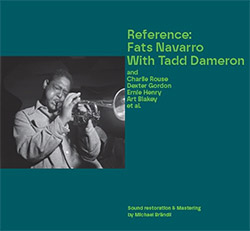 |
| Navarro, Fats Reference: Nostaligia w/ Tadd Dameron and Charlie Rouse / Dexter Gordon / Ernie Henry / Art Blakey (ALAY) |
| Restoring New York sessions from 1947 to 1949, this collection places Fats Navarro's brilliant, cleanly articulated trumpet within Tadd Dameron's harmonically refined bebop writing, joined by Charlie Rouse, Dexter Gordon, Ernie Henry, Leo Parker, Wardell Gray, Cecil Payne, Art Blakey, Kenny Clarke and others as the ensembles move between intricate modern lines, swing-rooted lyricism and early Afro-Cuban color. |
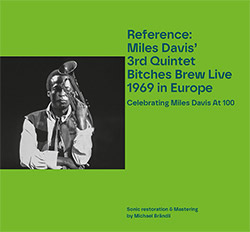 |
| Davis, Miles 3rd Quintet Reference: Bitches Brew Live 1969 In Europe [2 CDs + 2 POSTCARDS] (ALAY) |
| Documenting Miles Davis' 1969 "lost" third quintet live in Berlin, Stockholm and Rotterdam with Wayne Shorter, Chick Corea, Dave Holland and Jack DeJohnette, this 2-CD set captures the post-In a Silent Way ensemble reshaping material headed toward Bitches Brew, balancing lyricism and abstraction through open forms, electric-piano clusters, volatile rhythmic invention and Davis' fiercely exploratory trumpet. |
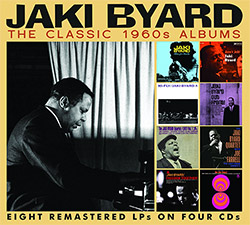 |
| Byard, Jaki The Classic 1960s Albums [4 CDs] (Enlightenment) |
| Collecting eight Jaki Byard albums from 1960-67, this 4-CD set follows the pianist and occasional alto saxophonist through his extraordinary synthesis of ragtime, stride, swing, bop and free jazz, joined across varied sessions by Booker Ervin, Rahsaan Roland Kirk, Joe Farrell, Richard Williams, Ron Carter, Roy Haynes, Alan Dawson and others in music of encyclopedic reach, sharp humor and restless invention. |
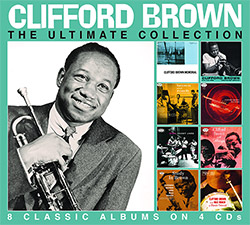 |
| Clifford Brown The Ultimate Collection [4 CDs] (Enlightenment) |
| A 4-CD survey of Clifford Brown's essential 1953-1956 Blue Note and EmArcy recordings, tracing his masterful trumpet voice through early leader dates, string settings, vocal and ensemble sessions, and the classic Max Roach quintet with Harold Land, Sonny Rollins, Richie Powell and George Morrow, capturing a foundational hard bop figure at astonishing creative strength. |
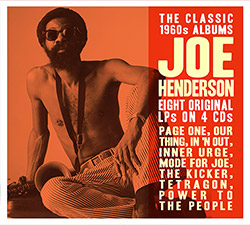 |
| Henderson, Joe The Classic 1960s Albums [4 CD BOX SET] (Enlightenment) |
| Bringing together seven landmark 1960s sessions, this 4-CD set captures Joe Henderson at the height of his early career, leading stellar ensembles through a compelling range of post-bop expression, from hard-driving grooves to exploratory improvisation, showcasing his commanding tone, compositional strength, and enduring influence on modern jazz. |
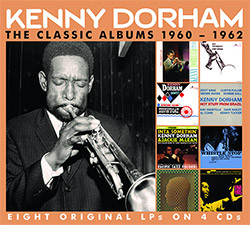 |
| Dorham, Kenny The Classic Albums 1960-1962 [4 CDs] (Enlightenment) |
| A 4-CD/8 album survey of Kenny Dorham's early-1960s output, compiling sessions from Show Boat through Una Mas, where his warm, lyrical trumpet leads shifting ensembles including Joe Henderson and Herbie Hancock, bridging hard bop, modal jazz, and Latin-tinged explorations with refined compositional clarity. |
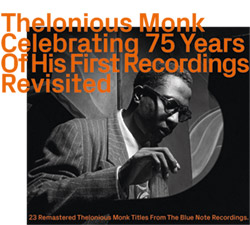 |
| Monk, Thelonious Celebrating 75 Years Of His First Recordings (ezz-thetics by Hat Hut Records Ltd) |
| The foundational work of composer and pianist Thelonious Monk is heard in these six remastered studio sessions for Blue Note Records recorded between 1947 to 1952, performing twenty three original compositions in bands from trios to sextets with a who's who of emerging jazz leaders including Art Blakey, Max Roach, Lou Donaldson, Kenny Dorham, and Milt Jackson. |
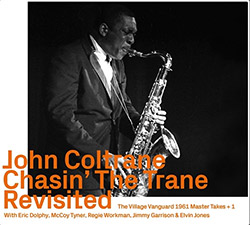 |
| Coltrane, John Chasin The Trane, Revisited (ezz-thetics by Hat Hut Records Ltd) |
| The 4-night engagement at the Village Vanguard in November 1961 with sidemen Eric Dolphy, McCoy Tyner, Reggie Workman, Jimmy Garrison & Elvin Jones resulted in saxophonist John Coltrane's 1962 "Live at the Village Vanguard" album, his evolving freedom surprisingly divisive and even decried as "anti-jazz", here reissued and remastered with a bonus version of "Spiritual". |
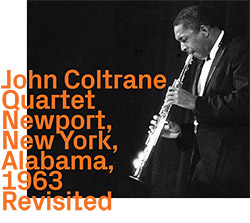 |
| Coltrane, John Quartet Newport, New York, Alabama, 1963, Revisited (ezz-thetics by Hat Hut Records Ltd) |
| Two quartets performing two live concerts from 1963 led by John Coltrane on tenor & soprano saxophones, the first at the Newport Jazz Festival with McCoy Tyner on piano, Jimmy Garrison on double bass and Roy Haynes on drums, the second at Birdland with Elvin Jones on the drums, plus 2 studio recordings with that quartet at Van Gelder Studio in the same year. |
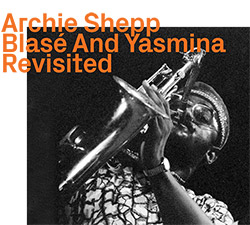 |
| Shepp, Archie Blase And Yasmina, Revisited (ezz-thetics by Hat Hut Records Ltd) |
| Revisiting two of Archie Shepp's 1969 recordings released on the BYG label as Blasé, and title track to Yasmina, three tracks featuring the vocals of Jeanne Lee, with four band configurations including Dave Burrell, Malachi Favors, Lester Bowie, Roscoe Mitchell, Sunny Murray, Philly Joe Jones, &c., beautifully remastered to bring to light Shepp's pan-stylistic impulses. |
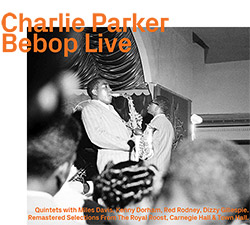 |
| Parker, Charlie Bebop Live [2 CDs] (ezz-thetics by Hat Hut Records Ltd) |
| Remarkably remastered recordings of Charlie Parker's quintets from 1945-49, performing live at Carnegie Hall, Royal Roost, & Town Hall with configurations of Miles Davis, Dizzy Gillespie, Kenny Dorham, Red Rodney, Don Byas, Al Haig, Max Roach, Roy Haynes, Kenny Clarke, Tommy Potter & Curley Russell, allowing us to re-live the consistent brilliance of the leader and his sidemen. |
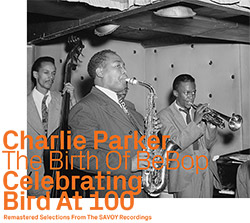 |
| Parker, Charlie Selections From The SAVOY Recordings (ezz-thetics by Hat Hut Records Ltd) |
| The second of two volumes in celebration of legendary saxophonist Charlie Parker's 100th birthday, here remastering his landmark recordings for the Savoy label in New York City between 1945-48, performing with jazz greats including Bud Powell, Dizzy Gillespie, Miles Davis, John Lewis, Curley Russel, Max Roach, &c. for some of be-bop's finest and best known compositions. |
 |
| Parker, Charlie Selections From The DIAL Recordings (ezz-thetics by Hat Hut Records Ltd) |
| The first of two volumes in celebration of legendary saxophonist Charlie Parker's 100th birthday, here remastering his landmark recordings for the Dial label on the US West Coast between 1946-47, performing with jazz greats including Miles Davis, Lucky Thompson, Erroll Garner, Barney Kessel, Red Calender, JJ Johson, Max Roach, &c. for some of Parker's best known and essential compositions. |
![Orchestre National De Jazz: With Carla [2 CDs]](https://www.teuthida.com/productImages/misc4/37714.jpg)
![Vasseur, Christian / Steve Gibbs / Nicolo Vivi : FWWU+ Duos Trios [2 CDs]](https://www.teuthida.com/productImages/misc4/37891.jpg)
![Ehrlich, Marty: OPEN AIR: The Complete Saxophone Quartet Compositions of Julius Hemphill [2 CDs]](https://www.teuthida.com/productImages/misc4/37922.jpg)
![Frith, Fred / Cornelius Claudio Kreusch / Johannes Tonio Kreusch: Pink / Neon [2 CDs]](https://www.teuthida.com/productImages/misc4/37712.jpg)
![Frith, Fred / Cornelius Claudio Kreusch / Johannes Tonio Kreusch: Pink / Neon [VINYL 2 LPs]](https://www.teuthida.com/productImages/misc4/37713.jpg)
![Miguel, Sei: Viva! O Carro de Fogo de Sei Miguel [2 CDs]](https://www.teuthida.com/productImages/misc4/37739.jpg)

![Money: 5 [2 CDs]](https://www.teuthida.com/productImages/misc4/37890.jpg)
![Drumm, Kevin: The Mild Temper [6 CD BOX SET]](https://www.teuthida.com/productImages/misc4/37651.jpg)
![Trzaska, Mikolaj / John Edwards / Mark Sanders: Because It Happens [VINYL]](https://www.teuthida.com/productImages/misc4/37551.jpg)
![Wassermann, Ute: Chimeric [VINYL]](https://www.teuthida.com/productImages/misc4/37652.jpg)


![Aranda, Irene (Malfon / Aranda / Yamasaki): May [CD + DOWNLOAD]](https://www.teuthida.com/productImages/misc4/37825.jpg)


![Bopp, Christiane: Rever, murmurer, dire [CD + DOWNLOAD]](https://www.teuthida.com/productImages/misc4/37823.jpg)
![Angles 4 (Kuchen / Haker-Flaten / Stahl / Nordeson): Angles 4 [CD + DOWNLOAD]](https://www.teuthida.com/productImages/misc4/37826.jpg)
![Glass Triangle (Parkins / Rasmussen / Sawyer): 3 X 1 [CD + DOWNLOAD]](https://www.teuthida.com/productImages/misc4/37827.jpg)
![Musicworks: #154 Summer 2026 [MAGAZINE + CD]](https://www.teuthida.com/productImages/misc4/37879.jpg)

![TRAC (Teddy Ryles / Alexander Cooper): Heavy Nano Ream Aria [2 CDs]](https://www.teuthida.com/productImages/misc4/37647.jpg)
![Jerman, Jeph: For Alvin Kelly [CASSETTE + DOWNLOAD]](https://www.teuthida.com/productImages/misc4/37521.jpg)
![Mann, Oliver / Stefano Pilia: Precious Moments [CASSETTE + DOWNLOAD]](https://www.teuthida.com/productImages/misc4/37494.jpg)
![Jerman, Jeph / Ted Byrnes: Muir [CASSETTE + DOWNLOAD]](https://www.teuthida.com/productImages/misc4/37520.jpg)
![+DOG+: Angel Wings [VINYL]](https://www.teuthida.com/productImages/misc4/37513.jpg)

![Money: 4 [2 CDs]](https://www.teuthida.com/productImages/misc4/37505.jpg)

![+DOG+: The Garden [VINYL]](https://www.teuthida.com/productImages/misc4/37511.jpg)
![Le UN: 25 Pieces Sans Vide [3 CDs]](https://www.teuthida.com/productImages/misc4/37374.jpg)
![Directives: Reconsolid [CASSETTE]](https://www.teuthida.com/productImages/misc4/37418.jpg)

![Tilbury, John: At Home [4 CDs]](https://www.teuthida.com/productImages/misc4/37729.jpg)
![Scott, Ryan: 21st-Century Canadian Snare Drum [2 CDs]](https://www.teuthida.com/productImages/misc4/37538.jpg)

![Feldman, Morton / GBSR Duo w/ Taylor MacLennan: Trios [6 CD BOX SET]](https://www.teuthida.com/productImages/misc4/37020.jpg)
![Frey, Jurg : Composer, Alone [3 CDs]](https://www.teuthida.com/productImages/misc4/36927.jpg)

![Bruce, Lenny: Comedy & Controversy: The Original Albums 1958-61 [2 CDs]](https://www.teuthida.com/productImages/misc4/37409.jpg)

![Amba, Zoh: Eyes Full [VINYL]](https://www.teuthida.com/productImages/misc4/37491.jpg)

![Henry Cow: The Henry Cow Box Redux: The Complete Henry Cow [18 CDs, DVD & 3 BOOKLETS]](https://www.teuthida.com/productImages/misc4/37272.jpg)
![MacLean, Steve: Box Of Seven [7 CD BOX]](https://www.teuthida.com/productImages/misc4/36467.jpg)
![Mehead: One Good Eye [REISSUE]](https://www.teuthida.com/productImages/misc4/37276.jpg)
![Zorn, John: The Song of Songs [CD + CD BOOK]](https://www.teuthida.com/productImages/misc4/36923.jpg)
![Coultrain: Mundus [COLORED VINYL]](https://www.teuthida.com/productImages/misc4/33056.jpg)
![Hprizm: Signs Remixed [COLORED VINYL]](https://www.teuthida.com/productImages/misc4/30635.jpg)
![Halls Of the Machine: All Tribal Dignitaries [CASSETTE w/ DOWNLOAD]](https://www.teuthida.com/productImages/misc4/36134.jpg)
![Koenjihyakkei: Live at Club Goodman [2 CDs]](https://www.teuthida.com/productImages/misc4/36111.jpg)
![Sorry For Laughing (G. Whitlow / M. Bates / Dave-Id / E. Ka-Spel): Rain Flowers [2 CDS]](https://www.teuthida.com/productImages/misc4/35985.jpg)
![Rolando, Tommaso / Andy Moor : Biscotti [CASSETTE w/ DOWNLOADS]](https://www.teuthida.com/productImages/misc4/36106.jpg)
![Electric Bird Noise / Derek Roddy: 8-10-22 [CD EP]](https://www.teuthida.com/productImages/misc4/35970.jpg)
![Coley, Byron: Dating Tips for Touring Bands [VINYL]](https://www.teuthida.com/productImages/misc4/17906.jpg)

![Lost Kisses: My Life is Sad & Funny [DVD]](https://www.teuthida.com/productImages/misc4/lostKissesDVD.jpg)