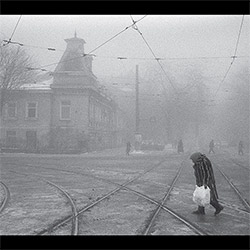



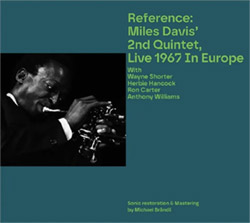
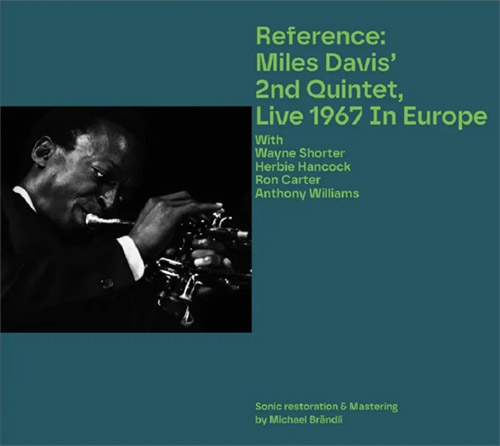
Miles Davis' Second Great Quintet — Wayne Shorter, Herbie Hancock, Ron Carter, and Tony Williams — captured during its 1967 European tour in Antwerp, Copenhagen, and Paris, presenting three CDs of adventurous post-bop improvisation, rhythmic elasticity, and collective interplay as the ensemble transforms familiar compositions into fluid, unpredictable performances.
In Stock
Quantity in Basket: None
Log In to use our Wish List
Shipping Weight: 5.00 units
Sample The Album:
Miles Davis-trumpet
Wayne Shorter-tenor saxophone
Herbie Hancock-piano
Ron Carter-bass
Tony Williams-drums
Click an artist name above to see in-stock items for that artist.
UPC: 7649988758331
Label: ALAY
Catalog ID: thingamagjig 3-2514
Squidco Product Code: 38003
Format: 3 CDs
Condition: New
Released: 2026
Country: Switzerland
Packaging: Cardboard Gatefold 3 Panels
CD 1 recorded at Koningin Elizabethzaal, in Antwerp, Belgium, on October 28th, 1967.
CD2 tracks 1-5 recorded at Tivolis Koncertsal, in Copenhagen, Denmark, on November 2, 1967;tracks 6 and 7 recorded at Salle Pleyel, in Paris, France, on November 6th, 1967.
CD 3 recorded at Salle Pleyel, in Paris, France, on November 6th, 1967.
Documenting Miles Davis' Second Great Quintet during its remarkable autumn 1967 European tour, this three-CD collection brings together concerts from Antwerp, Copenhagen, and Paris, capturing one of jazz's most influential ensembles at a pivotal moment in its evolution. With Wayne Shorter on tenor saxophone, Herbie Hancock on piano, Ron Carter on bass, and Tony Williams on drums, Davis leads a group whose approach to collective improvisation was transforming the relationship between composition, rhythm, and spontaneous interaction.
By 1967, the quintet had developed an extraordinary musical vocabulary, moving beyond conventional hard bop structures toward an increasingly open approach to harmony and time. Williams' restless, multidirectional drumming continually reshapes the rhythmic foundation, while Carter's bass lines move between firmly established pulse and melodic counterpoint. Hancock's harmonically adventurous piano playing creates shifting textures around the horns, and Shorter's elliptical phrasing and distinctive compositions provide an ideal complement to Davis' increasingly economical trumpet statements.
The repertoire includes Davis' "Agitation" and "No Blues," Shorter's "Footprints" and "Masqualero," Hancock's "Riot," and interpretations of Thelonious Monk's "'Round Midnight" and the standard "I Fall in Love Too Easily." Familiar themes become starting points for extended explorations, with the musicians continually adjusting to one another through sudden rhythmic shifts, fragmented melodic exchanges, unexpected silences, and passages of intense collective momentum. Rather than relying on predetermined solo sequences, the quintet frequently dissolves the boundaries between accompaniment and improvisation, allowing each instrument to redirect the music's development.
Recorded on October 28, 1967, at Koningin Elizabethzaal in Antwerp; November 2 at Tivolis Koncertsal in Copenhagen; and November 6 at Salle Pleyel in Paris, these performances offer multiple perspectives on the group's rapidly evolving concert repertoire. The recordings reveal how compositions could be transformed from one evening to another, balancing the precision of a deeply experienced ensemble with the unpredictability of musicians constantly challenging their own conventions.
Together, these concerts document the Second Great Quintet approaching the end of its acoustic period, before Davis' subsequent experiments with electric instrumentation. They capture the group's distinctive combination of structural sophistication, rhythmic freedom, and collective responsiveness, offering an expansive portrait of an ensemble whose innovations would profoundly influence the direction of modern jazz.
Artist Biographies
• Show Bio for Miles Davis "Miles Davis, in full Miles Dewey Davis III, (born May 26, 1926, Alton, Illinois, U.S.-died September 28, 1991, Santa Monica, California), American jazz musician, a great trumpeter who as a bandleader and composer was one of the major influences on the art from the late 1940s. Davis grew up in East St. Louis, Illinois, where his father was a prosperous dental surgeon. (In later years he often spoke of his comfortable upbringing, sometimes to rebuke critics who assumed that a background of poverty and suffering was common to all great jazz artists.) He began studying trumpet in his early teens; fortuitously, in light of his later stylistic development, his first teacher advised him to play without vibrato. Davis played with jazz bands in the St. Louis area before moving to New York City in 1944 to study at the Institute of Musical Art (now the Juilliard School)-although he skipped many classes and instead was schooled through jam sessions with masters such as Dizzy Gillespie and Charlie Parker. Davis and Parker recorded together often during the years 1945-48. Davis's early playing was sometimes tentative and not always fully in tune, but his unique, intimate tone and his fertile musical imagination outweighed his technical shortcomings. By the early 1950s Davis had turned his limitations into considerable assets. Rather than emulate the busy, wailing style of such bebop pioneers as Gillespie, Davis explored the trumpet's middle register, experimenting with harmonies and rhythms and varying the phrasing of his improvisations. With the occasional exception of multinote flurries, his melodic style was direct and unornamented, based on quarter notes and rich with inflections. The deliberation, pacing, and lyricism in his improvisations are striking. [...]" ^ Hide Bio for Miles Davis • Show Bio for Wayne Shorter "Wayne Shorter (born August 25, 1933) is an American jazz saxophonist and composer. Shorter came to prominence in the late 1950s as a member of, and eventually primary composer for, Art Blakey's Jazz Messengers. In the 1960s, he joined Miles Davis's Second Great Quintet, and then co-founded the jazz fusion band Weather Report. He has recorded over 20 albums as a bandleader. Many Shorter compositions have become jazz standards, and his music has earned worldwide recognition, critical praise and commendation. Shorter has won 11 Grammy Awards. He is acclaimed for his mastery of the soprano saxophone since switching his focus from the tenor in the late 1960s and beginning an extended reign in 1970 as Down Beat's annual poll-winner on that instrument, winning the critics' poll for 10 consecutive years and the readers' for 18. The New York Times' Ben Ratliff described Shorter in 2008 as "probably jazz's greatest living small-group composer and a contender for greatest living improviser". In 2017, he was awarded the Polar Music Prize." ^ Hide Bio for Wayne Shorter • Show Bio for Herbie Hancock "Herbert Jeffrey Hancock (born April 12, 1940) is an American pianist, keyboardist, bandleader, composer and actor. Hancock started his career with Donald Byrd. He shortly thereafter joined the Miles Davis Quintet, where he helped to redefine the role of a jazz rhythm section and was one of the primary architects of the post-bop sound. In the 1970s, Hancock experimented with jazz fusion, funk, and electro styles. Hancock's best-known compositions include the jazz standards "Cantaloupe Island", "Watermelon Man", "Maiden Voyage", and "Chameleon", as well as the hit singles "I Thought It Was You" and "Rockit". His 2007 tribute album River: The Joni Letters won the 2008 Grammy Award for Album of the Year, only the second jazz album to win the award, after Getz/Gilberto in 1965. [...]" ^ Hide Bio for Herbie Hancock • Show Bio for Ron Carter "Ron Carter is among the most original, prolific, and influential bassists in jazz. He has recorded over 2200 albums, and has a Guinness world record to prove it! In Jazz: Over his 60 year career, he has recorded with so many of the jazz greats greats: Lena Horne, Bill Evans, B.B. King, Dexter Gordon, Wes Montgomery, Bobby Timmons, Eric Dolphy, Cannonball Adderley and Jaki Byard to name a few. From 1963 to 1968, he was a member of the acclaimed Miles Davis Quintet. In other genres: After leaving the quintet he embarked on a prolific 50-year free lance career that spanned vastly different music genres and continues to this day. He recorded with Aretha Franklin, appeared on the seminal hip-hop album Low End Theory with a Tribe Called Quest, wrote and recorded pieces for string quartets and Bach chorales for 2-8 basses and accompanied Danny Simmons on a spoken word album. As a leader: Carter spends at least half the year on worldwide tours with his various groups. The Ron Carter Trio, The Ron Carter quartet, the Ron Carter Nonet and Ron Carter�s Great Big Band. He has recorded multiple albums with his groups. As an author: Carter shares his expertise in the series of books he authored, where he explains his creative process and teaches bassists of all levels to improve their skills and develop their own unique sound. He also penned his autobiography �Finding the Right Notes� which is available in print and also as an audiobook read by the Maestro himself. As a teacher: Carter has lectured, conducted, and performed at clinics and master classes, instructing jazz ensembles and teaching the business of music at numerous universities. He was Artistic Director of the Thelonious Monk Institute of Jazz Studies while it was located in Boston and, after 18 years on the faculty of the Music Department of The City College of New York, he is now Distinguished Professor Emeritus, he currently teaches at Manhattan School of Music. In film scoring: In addition to scoring and arranging music for many films, including some projects for Public Broadcasting System, Carter composed music for A Gathering of Old Men, starring Lou Gosset Jr., The Passion of Beatrice directed by Bertrand Tavernier, and Blind Faith starring Courtney B. Vance. Film appearances: Most jazz documentaries feature the Maestro because of his indelible contribution to the genre. Ken Burns �Jazz�, �Birth of the Cool� about Miles Davis, "It Must be Schwing", the story of the Blue Note and many more. He also appeared as himself in HBO�s hit series �Treme� and was the bassist on soundtracks of Twin Peaks, Bird, and way too many others to mention. Education: Carter earned a bachelor of music degree from the Eastman School in Rochester and a master's degree in double bass from the Manhattan School of Music in New York City. He has also received five honorary doctorates, from the New England Conservatory of Music, Manhattan School of Music, University of Rochester, Juilliard and Berklee, and was the 2002 recipient of the prestigious Hutchinson Award from the Eastman School at the University of Rochester." ^ Hide Bio for Ron Carter • Show Bio for Tony Williams "Anthony Tillmon Williams (December 12, 1945 � February 23, 1997) was an American jazz drummer. Williams first gained fame in the band of trumpeter Miles Davis and pioneered jazz fusion. He was inducted into the Modern Drummer Hall of Fame in 1986. During his lifetime, music critic Robert Christgau described Williams as "probably the best drummer in the world". Williams was born in Chicago and grew up in Boston. He was of African, Portuguese, and Chinese descent. He studied with drummer Alan Dawson at an early age, and began playing professionally at the age of 13 with saxophonist Sam Rivers. Saxophonist Jackie McLean hired Williams when he was 16. At 17 Williams gained attention by joining Miles Davis in what was later dubbed Davis's Second Great Quintet. Williams was a vital element of the group, called by Davis in his autobiography "the center that the group's sound revolved around." His playing helped redefine the role of the jazz rhythm section through the use of polyrhythms and metric modulation. Meanwhile, he recorded his first two albums as leader for Blue Note label, Life Time (1964) and Spring (1965). He also recorded as a sideman for the label including, in 1964, Out to Lunch! with Eric Dolphy and Point of Departure with Andrew Hill. In 1969, he formed a trio, the Tony Williams Lifetime, with John McLaughlin on guitar and Larry Young on organ. Lifetime was a pioneering band of the fusion movement. Their first album was Emergency!. After the departures of McLaughlin and bassist Jack Bruce, who had joined the group for its second album, and several more releases, Lifetime disbanded. In 1975, Williams put together a band he called "The New Tony Williams Lifetime", featuring bassist Tony Newton, pianist Alan Pasqua, and English guitarist Allan Holdsworth, which recorded two albums for Columbia Records, Believe It and Million Dollar Legs. In mid-1976, Williams was a part of a reunion with his colleagues from the Miles Davis band: keyboardist Herbie Hancock, bassist Ron Carter, and saxophonist Wayne Shorter. Davis was in the midst of a six-year hiatus and was "replaced" by Freddie Hubbard. The record was later released as V.S.O.P. The group toured and for several years and a series of live albums were released under the name "V.S.O.P." or "V.S.O.P.: The Quintet". In 1979, Williams, McLaughlin and bassist Jaco Pastorius united for a one-time performance at the Havana Jazz Festival. This trio came to be known as the Trio of Doom, and a recording of their performance (along with some studio tracks recorded in New York shortly thereafter) was released in 2007. It opens with a powerful drum improvisation by Williams, followed by McLaughlin's "Dark Prince" and Pastorius' "Continuum", Williams' original composition "Para Oriente" and McLaughlin's "Are You the One?" Williams and Pastorius had also played together on the Herbie Hancock track "Good Question" from his 1978 album Sunlight. With the group Fuse One, Williams released two albums in 1980 and 1982. In 1985, he returned to Blue Note and the result was a series of recordings for the label beginning with Foreign Intrigue, which featured the playing of pianist Mulgrew Miller and trumpeter Wallace Roney. Later that year he formed a quintet with Miller, Roney, saxophonist Bill Pierce, and bassist Charnett Moffett (later Ira Coleman). This band played Williams' compositions almost exclusively. Williams also played drums for the band Public Image Limited, fronted by John Lydon (a.k.a. Johnny Rotten of the Sex Pistols), on their release Album/Cassette/Compact Disc (1986, the album title varied depending on the format). He played on the songs "FFF", "Rise" (a modest hit), and "Home". Bass guitarist Bill Laswell co-wrote those three songs with Lydon. The other drummer on that album was Ginger Baker. Williams lived and taught in the San Francisco Bay Area until his death from a heart attack following routine gall bladder surgery. One of his final recordings was The Last Wave by the trio known as Arcana, a release organized by Bill Laswell." ^ Hide Bio for Tony Williams
11/10/2026
Have a better biography or biography source? Please Contact Us so that we can update this biography.
11/10/2026
Have a better biography or biography source? Please Contact Us so that we can update this biography.
11/10/2026
Have a better biography or biography source? Please Contact Us so that we can update this biography.
11/10/2026
Have a better biography or biography source? Please Contact Us so that we can update this biography.
11/10/2026
Have a better biography or biography source? Please Contact Us so that we can update this biography.
Track Listing:
CD1
1. Agitation 5:27
2. Footprints 9:38
3.'Round Midnight 7:37
4. No Blues 11:15
5. Riot 3:40
6. On Green Dolphin Street 8:26
7. Masqualero 8:53
8. Gingerbread Boy 5:56
9. The Theme 1:16
10. Agitation 6:42
11. Footprints 6:07
CD2
1. I Fall in Love Too Easily 11:35
2. Gingerbread Boy 5:23
3. The Theme 0:28
4. Agitation 6:33
5. Footprints 10:30
6. 'Round Midnight 8:06
7. No Blues 13:01
8. Masqualero 10:00
9. I Fall in Love Too Easily 10:37
CD3
1. Riot 3:39
2.Walkin' 9:01
3. On Green Dolphin Street 9:05
4. The Theme 8:23
5. Agitation 6:14
6. Footprints 9:01
7. 'Round Midnight 7:16
8. No Blues 14:41
9. Masqualero 10:03
Hat Art
November 2026
Improvised Music
Jazz
Jazz & Improvisation Based on Compositions
NY Downtown & Metropolitan Jazz/Improv
Quintet Recordings
Staff Picks & Recommended Items
New in Improvised Music
Recent Releases and Best Sellers
Search for other titles on the label:
ALAY.
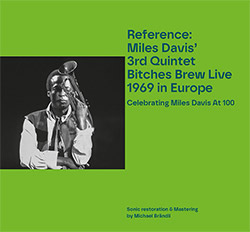 |
| Davis, Miles 3rd Quintet Reference: Bitches Brew Live 1969 In Europe [2 CDs + 2 POSTCARDS] (ALAY) |
| Documenting Miles Davis' 1969 "lost" third quintet live in Berlin, Stockholm and Rotterdam with Wayne Shorter, Chick Corea, Dave Holland and Jack DeJohnette, this 2-CD set captures the post-In a Silent Way ensemble reshaping material headed toward Bitches Brew, balancing lyricism and abstraction through open forms, electric-piano clusters, volatile rhythmic invention and Davis' fiercely exploratory trumpet. |
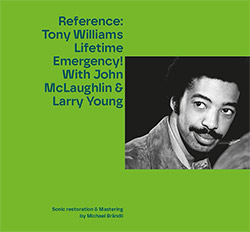 |
| Williams, The Tony Emergency w/ John McLaughlin / Larry Young Emergency! (ALAY) |
| A restored edition of Tony Williams Lifetime's incendiary 1969 trio debut with John McLaughlin on guitar and Larry Young on organ, documenting one of jazz-rock fusion's earliest and most audacious statements, where Williams' radical rhythmic designs, Young's dense harmonic force, and McLaughlin's searing electric vocabulary collide in urgent, psychedelic, genre-defying improvisation. |
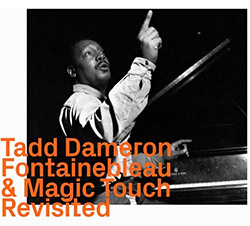 |
| Dameron, Tadd Fontainebleau & Magic Touch, Revisited (ezz-thetics by Hat Hut Records Ltd) |
| Composer, pianist, and bandleader Tadd Dameron's first album, Fontainebleau (1956), and his final work, The Magic Touch (1962), are remastered to highlight his sophisticated hard bop compositions for large ensembles, featuring influential players like Bill Evans, Philly Joe Jones, and Ron Carter, and showcasing Dameron's lasting impact on jazz before his untimely passing. |
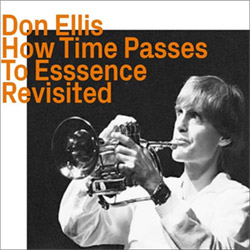 |
| Ellis, Don (Byard / Carter / Persip; Bley / Peacock / Stone /Martinis) How Time Passes To Essence, Revisited (ezz-thetics by Hat Hut Records Ltd) |
| Before his experimental, culturally absorbing large band work in the late 60s and 70s, trumpeter Don Ellis released these two excellent quartet albums featuring his own compositions, particularly the side-long work "Improvisational Suite 1", in bands with Jaki Byard, Ron Carter & Charlie Persip (How Time Passes) and with Paul Bley, Gary Peacock and either Gene Stone or Nick Martinis (Essence). |
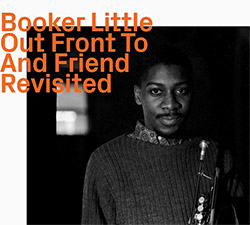 |
| Little, Booker Out Front To And Friends, Revisited (ezz-thetics by Hat Hut Records Ltd) |
| The lesser known hard bop trumpeter Booker Little died at just 23, but left a legacy in these two sextet albums that balance lyricism with freedom — Out Front and Booker Little and Friend — the former recorded with Eric Dophy and Max Roach, and the latter with George Coleman & Julian Priester, both albums with legendary players including Ron Carter, Reggie Workman, Art Davis, Don Friedman &c.. |
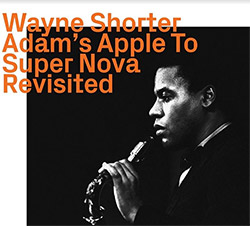 |
| Shorter, Wayne Adams Apple To Super Nova Revisited (ezz-thetics by Hat Hut Records Ltd) |
| Following the evolution in form and approach of composer and tenor saxophonist Wayne Shorter from his 1966 Blue Note album Adam's Apple with Hancock, Workman and Chambers (including a pre-Miles "Footprints") to the 1969 Weather Report precursor Super Nova with John McLaughlin, Sonny Sharock, Miroslav Vitous, Chick Corea, and Jack DeJohnette. |
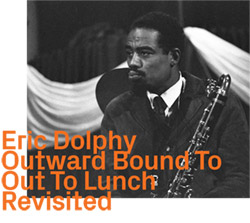 |
| Dolphy, Eric Outward Bound To Out To Lunch Revisited (ezz-thetics by Hat Hut Records Ltd) |
| Arriving in NY in 1959, saxophonist, flute & bass clarinetist Eric Dolphy joined some of the finest avant jazz players, releasing his 1st album as a leader in 1960--Outward Bound--with Freddie Hubbard, Jaki Byard, George Tucker & Roy Haynes; subsequently tagged as an anti-jazz musician, it would be 4 years before his masterwork Out To Lunch would be released, both albums here reissued & remastered. |
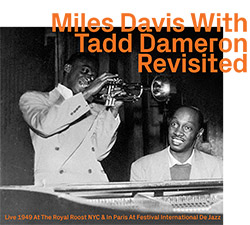 |
| Davis, Miles w/ Tadd Dameron Revisited (ezz-thetics by Hat Hut Records Ltd) |
| Between his work with Charlie Parker and before his own personal success, trumpeter Miles Davis joined the influential ensemble of pianist, composer and arranger Tadd Dameron, heard in six large ensemble pieces at New York's Royal Roost in 1949, and then in a quintet at the Paris Festival International De Jazz the same year, in both hearing a unique and confident facet to Miles' playing. |
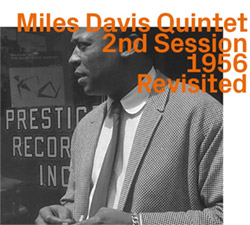 |
| Davis, Miles Quintet 2nd Sessions 1956, Revisited (ezz-thetics by Hat Hut Records Ltd) |
| Recorded in the same October 1956 Rudy Van Gelder sessions that are heard on Miles Davis' Cookin' and Steamin' albums, these alternate takes with his quintet of John Coltrane on tenor saxophone, Red Garland on piano, Paul Chambers on double bass and Philly Joe Jones on drums give us a unique view on the consistency and strength of the famous and foundational hard bop band. |
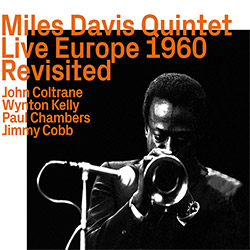 |
| Davis, Miles Quintet (w/ Coltrane / Kelly / Chambers / Cobb) Live Europe 1960, Revisited (ezz-thetics by Hat Hut Records Ltd) |
| Culled from two concerts on Norman Granz's Spring 1960 European tour, Miles' seminal 50s band was on the point of dissolution, Coltrane soon to leave to form his own classic quartet, and the distinction between the old and new is evident in Coltrane's expansive and intricate soloing over standards and Kind of Blue material including "So What" or "On Green Dolphin Street". |
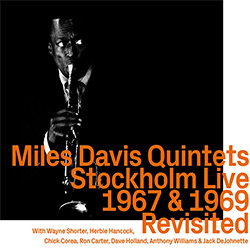 |
| Davis, Miles Quintets Stockholm 1967 & 1969 Revisited (ezz-thetics by Hat Hut Records Ltd) |
| Two live recordings from Miles Davis in the 1960s, first from Stockholm in 1967 with the classic 60s quintet of Miles, Wayne Shorter, Herbie Hancock, Ron Carter and Tony Williams; then two years later also in Stockholm with the "Lost Quintet" of Miles, Wayne Shorter, Chick Corea, Dave Holland and Jack DeJohnette, pushing new directions with tracks including "Bitches Brew". |
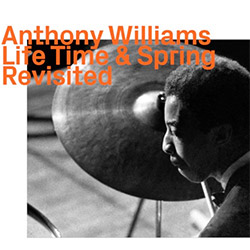 |
| Williams, Anthony (w/ Shorter / Rivers / Hancock / Hutcherson / Carter / Davis / Peacock) Life Time & Spring, Revisited (ezz-thetics by Hat Hut Records Ltd) |
| Remastering & reissuing drummer Anthony Williams first two albums: Life Time was recorded for Blue Note shortly after joining the Miles Davis Quintet, employing two bassists--Richard Davis and Gary Peacock--along with mentor Sam Rivers and Davis alumni Herbie Hancock & Ron Carter; Spring reflects the new freedom of 60s jazz in a quintet with both Wayne Shorter & Sam Rivers. |
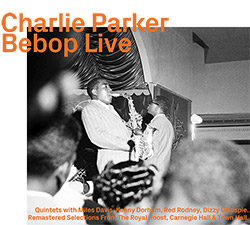 |
| Parker, Charlie Bebop Live [2 CDs] (ezz-thetics by Hat Hut Records Ltd) |
| Remarkably remastered recordings of Charlie Parker's quintets from 1945-49, performing live at Carnegie Hall, Royal Roost, & Town Hall with configurations of Miles Davis, Dizzy Gillespie, Kenny Dorham, Red Rodney, Don Byas, Al Haig, Max Roach, Roy Haynes, Kenny Clarke, Tommy Potter & Curley Russell, allowing us to re-live the consistent brilliance of the leader and his sidemen. |
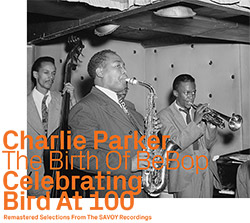 |
| Parker, Charlie Selections From The SAVOY Recordings (ezz-thetics by Hat Hut Records Ltd) |
| The second of two volumes in celebration of legendary saxophonist Charlie Parker's 100th birthday, here remastering his landmark recordings for the Savoy label in New York City between 1945-48, performing with jazz greats including Bud Powell, Dizzy Gillespie, Miles Davis, John Lewis, Curley Russel, Max Roach, &c. for some of be-bop's finest and best known compositions. |
 |
| Parker, Charlie Selections From The DIAL Recordings (ezz-thetics by Hat Hut Records Ltd) |
| The first of two volumes in celebration of legendary saxophonist Charlie Parker's 100th birthday, here remastering his landmark recordings for the Dial label on the US West Coast between 1946-47, performing with jazz greats including Miles Davis, Lucky Thompson, Erroll Garner, Barney Kessel, Red Calender, JJ Johson, Max Roach, &c. for some of Parker's best known and essential compositions. |