



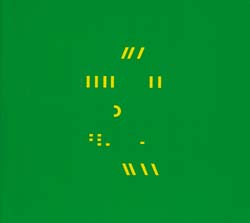
A collection of Feldman compositions primarily for piano as recorded by his earliest interpreters: Cornelius Cardew, John Tilbury, David Tutor, Cantilene Chamber Players, and Feldman himself.
In Stock
Quantity in Basket: None
Log In to use our Wish List
Shipping Weight: 4.00 units
EU & UK Customers:
Discogs.com can handle your VAT payments
So please order through Discogs
Sample The Album:
Morton Feldman
John Tilbury
Cornelius Cardew
Cantilena Chamber Players
David Tudor
Janos Negyesy
Edna Michell
Harry Zaratzian
Stephen Kates
Frank Glazer
Eberhard Blum
Nora Post
Garrett List
Joseph Kubera
Jan Williams
Click an artist name above to see in-stock items for that artist.
10 page insert with text in German and English.
UPC: 4029455101014
Label: Edition Rz
Catalog ID: ed. Rz 1010
Squidco Product Code: 14136
Format: CD
Condition: New
Released: 1994
Country: Germany
Packaging: Digipack
Piano (Three Hands), 1957 (Sender Freies Berlin 1971); Intermission 5, 1952 (Deutschlandfunk 1978); Vertical Thoughts 2, 1963 (Radio Bremen 1973); Extensions 3, 1952 (Westdeutscher Rundfunk 1977); Four Instruments, 1975 (Grenadilla Records 1979); Intermission 5, 1952 (Norddeutscher Rundfunk 1956); Piano Piece 1956 A (Norddeutscher Rundfunk 1956); Piano Piece 1956 B (Hessischer Rundfunk 1959); Intersection 3, 1953 (Hessischer Rundfunk 1959); Instruments 1, 1974 (Südwestfunk 1975)
"Beautiful collection, primarily made up of Feldman's earliest, shorter piano works from the early 50s, going through the late 70s. A much needed compendium to all the essential documentation of his later, intensely long works that have been coming out (mainly on Hat Art). Performances here by Feldman himself, David Tudor, Cornelius Cardew, John Tilbury and others."
"In his compositions for piano, which make up a central part of his oeuvre and in which all of his experience is accumulated, it is the play of Feldman's hand whose touch is intended precisely for the 'untouchableness' of sound. The clear character of the 'attack' thus displays the paradox of such playing: it is just as much about concealing the idiosyncrasy of the piano sound, the precise point of attack while, at the same time, the structure and tension of those sounds are formed by the hand."-Stefan Schadler
10 page insert with text in German and English.
Artist Biographies
• Show Bio for Morton Feldman "Morton Feldman was born in New York in 1926 and died there in 1987. Just like Cage, a close friend, he was an American composer - an American artist - an American in the true sense of the word. He identified himself by differentiating his views on composition from those of his colleagues in Europe. He was proud to be an American because he was convinced that it enabled him the freedom, unparalleled in Europe, to work unfettered by tradition. And, he was an American also in what may have been a slight inferiority complex in the face of cultural traditions in Europe, something he proudly rejected and secretly admired. Like any true artist, Feldman was endowed with a sensitivity for impressions of a wide variety of sources, literature and painting in particular. His affinity to Samuel Beckett has enriched music literature by a unique music theatre piece, Neither, and two ensemble works. His friendship with abstract impressionist painters gave birth to a range of masterpieces, Rothko Chapel in particular. But even the knotting of oriental rugs gave Feldman musical ideas (The Turfan Fragments). To the question as to why he preferred soft dynamic levels, he replied: "- Because when it's loud, you can't hear the sound. You hear its attack. Then you don't hear the sound, only in its decay. And I think that's essentially what impressed Boulez . That he heard a sound, not an attack, emerging and disappearing without attack and decay, almost like an electronic medium. Also, you have to remember that loud and soft is an aspect of differentiation. And my music is more like a kind of monologue that does not need exclamation point, colon, it does not need..." Feldman also had an intriguing reply up his sleeve when it came to answering the question why he composed in the first place: "You know that marvellous remark of Disraeli's? Unfortunately, he was not a good writer, but if he was a great writer, it would have been a wonderful remark. They asked him whydid he begin to write novels. He said because there was nothing to read. (laughs). I felt very much like that in terms of contemporary music. I was not really happy with it. It became like a Rohrschach test". More than twenty years since his death, Morton Feldman's music is as alive as ever." ^ Hide Bio for Morton Feldman • Show Bio for John Tilbury "John Tilbury (born 1 February 1936) is a British pianist. He is considered one of the foremost interpreters of Morton Feldman's music, and since 1980 has been a member of the free improvisation group AMM. Tilbury studied piano at the Royal College of Music with Arthur Alexander and James Gibb and also with Zbigniew Drzewiecki in Warsaw. 1968 he was the winner of the Gaudeamus competition in the Netherlands. During the 1960s, Tilbury was closely associated with the composer Cornelius Cardew, whose music he has interpreted and recorded and a member of the Scratch Orchestra. His biography of Cardew, "Cornelius Cardew - A life unfinished" was published in 2008. Tilbury has also recorded the works of Howard Skempton and John White, among many others, and has also performed adaptations of the radio plays of Samuel Beckett. With guitarist AMM bandmate Keith Rowe's electroacoustic ensemble M.I.M.E.O., Tilbury recorded The Hands of Caravaggio, inspired by the painter's The Taking of Christ {1602). In this live performance, twelve of the members of M.I.M.E.O. were positioned around the piano in a deliberate echo of Christ's Last Supper. The thirteenth M.I.M.E.O. member (Cor Fuhler) is credited with "inside piano" as he interacted and interfered with Tilbury's playing by manipulating and damping the instrument's strings, essentially doing piano preparation in real time. Critic Brian Olewnick describes the album as "A staggering achievement, one is tempted to call The Hands of Caravaggio the first great piano concerto of the 21st century." Another notable recent recording of Tilbury's was Duos for Doris (like The Hands of Caravaggio also on Erstwhile Records), a collaboration with Keith Rowe. It is widely considered a landmark recording in the genre of electroacoustic improvisation (or "EAI"). In 2013 he collaborated with artist Armando Lulaj in FIEND performance at the National Theatre of Tirana (Albania)." ^ Hide Bio for John Tilbury • Show Bio for Cornelius Cardew "Cornelius Cardew (7 May 1936 � 13 December 1981) was an English experimental music composer, and founder (with Howard Skempton and Michael Parsons) of the Scratch Orchestra, an experimental performing ensemble. He later rejected experimental music, explaining why he had "discontinued composing in an avantgarde idiom" in his own programme notes to his Piano Album 1973 in favour of a politically motivated "people's liberation music". Cardew was born in Winchcombe, Gloucestershire. He was the second of three sons whose parents were both artists�his father was the potter Michael Cardew. The family moved to Wenford Bridge Pottery Cornwall a few years after his birth where he was later accepted as a pupil by the Canterbury Cathedral School which had evacuated to the area during the war due to bombing. His musical career thus began as a chorister. From 1953 to 1957, Cardew studied piano, cello, and composition at the Royal Academy of Music in London. Having won a scholarship to study at the recently established Studio for Electronic Music in Cologne, Cardew served as an assistant to Karlheinz Stockhausen from 1958 to 1960. He was given the task of independently working out the composition plans for the German composer's score Carr�, and Stockhausen noted: As a musician he was outstanding because he was not only a good pianist but also a good improviser and I hired him to become my assistant in the late 50s and he worked with me for over three years. I gave him work to do which I have never given to any other musician, which means to work with me on the score I was composing. He was one of the best examples that you can find among musicians because he was well informed about the latest theories of composition as well as being a performer. Most of Cardew's compositions from this period make use of the integral and total serialist languages pioneered by Boulez and Stockhausen. In 1959, Cardew performed in the first British performance of Pierre Boulez's Le marteau sans ma�tre at Dartington International Summer School of Music (having learnt to play the guitar for the occasion as no professional guitar player was available). Indeterminacy and the American experimentalists In 1958, Cardew witnessed a series of concerts in Cologne by John Cage and David Tudor which had a considerable influence on him, leading him to abandon post-Sch�nbergian serial composition and develop the indeterminate and experimental scores for which he is best known. He was particularly prominent in introducing the works of American experimental composers such as Morton Feldman, La Monte Young, Earle Brown, Christian Wolff, and Cage to an English audience during the early to mid sixties and came to have a considerable impact on the development of English music from the late sixties onwards. Cardew's most important scores from his experimental period are Treatise (1963�67), a 193-page graphic score which allows for considerable freedom of interpretation, and The Great Learning, a work in seven parts or "Paragraphs," based on translations of Confucius by Ezra Pound. The Great Learning instigated the formation of the Scratch Orchestra. During those years, he took a course in graphic design and he made his living as a graphic designer at Aldus Books in London. In 1966, Cardew joined the free improvisation group AMM as cellist and pianist. AMM had formed the previous year and included English jazz musicians Lou Gare, Eddie Pr�vost, Keith Rowe, and one of his first students at the Royal Academy Christopher Hobbs. Performing with the group allowed Cardew to explore music in a completely democratic environment, freely improvising without recourse to scores. While teaching an experimental music class at London's Morley College in 1968, Cardew, along with Howard Skempton and Michael Parsons formed the Scratch Orchestra, a large experimental ensemble, initially for the purposes of interpreting Cardew's The Great Learning. The Scratch Orchestra gave performances throughout Britain and elsewhere until its demise in 1972. It was during this period that the question of art for whom was hotly debated within the context of the Orchestra, which Cardew came to see as elitist despite its numerous attempts to make socially accessible music.Political involvements After the demise of the Orchestra, Cardew became more directly involved in left-wing politics and abandoned avant-garde music altogether, adopting a populist though post-romantic tonal style. He spent 1973 in West Berlin on an artist's grant from the City, where he was active in a campaign for a children's clinic. During the 1970s, he produced many songs, often drawing from traditional English folk music put at the service of lengthy Marxist-Maoist exhortations; representative examples are Smash the Social Contract and There Is Only One Lie, There Is Only One Truth. In 1974, he published a book entitled Stockhausen Serves Imperialism, which denounced, in Maoist self-critical style, his own involvement with Stockhausen and the Western avant-garde tradition. Cardew was active in various causes in British politics, such as the struggle against the revival of neo-Nazi groups in Britain, and subsequently was involved in the People's Liberation Music group with Laurie Scott Baker, John Marcangelo, Vicky Silva, Hugh Shrapnel, Keith Rowe and others. The group developed and performed music in support of various popular causes including benefits for striking miners and Northern Ireland. Cardew became a member of the Communist Party of England (Marxist-Leninist) in the 1970s, and in 1979 was a co-founder and member of the Central Committee of the Revolutionary Communist Party of Britain (Marxist-Leninist). His creative output from the demise of the Scratch Orchestra until his death reflected his political commitment. Cardew stated his attitude towards the avant-garde in Stockhausen Serves Imperialism: Cardew's efforts to politicise culture in Britain were influenced by his relationship with Hardial Bains, the Canadian communist leader and a leading anti-revisionist politician. Bains contributed the lyrics to Cardew's signature song from his later period, We Sing for the Future.Death Cardew died on 13 December 1981, the victim of a hit-and-run car accident near his London home in Leyton. The driver was never found. Musician John Tilbury, in his book Cornelius Cardew�A Life Unfinished suggests that the possibility that Cardew was killed because of his prominent Marxist-Leninist involvement "cannot be ruled out". Tilbury quotes a friend of Cardew's, John Maharg; "MI5 are quite ruthless; people don't realise it. And they kill pre-emptively". A 70th Birthday Anniversary Festival, including live music from all phases of Cardew's career and a symposium on his music, took place on 7 May 2006 at the Cecil Sharpe House in London." ^ Hide Bio for Cornelius Cardew • Show Bio for David Tudor "David Tudor was born in Philadelphia, PA, in 1926. He studied with H. William Hawke (organ, theory), Irma Wolpe Rademacher (piano) and Stephan Wolpe (composition and analysis).His first professional activity was as an organist, and he subsequently became known as one of the leading avante-garde pianists of our time. Tudor gave highly acclaimed first or early performances of worksby contemporary composers Earle Brown, Sylvano Bussotti, Morton Feldman, Karlheinz Stockhausen, Christian Wolff, Stephan Wolpe, and La Monte Young, among others. Tudor began working with John Cage in the early fifties, as a member of the Merce Cunningham Dance Company and with Cage's Project of Music for Electronic Tape. Tudor gradually ended his active career as a pianist, turning exclusively to the composition of live electronic music. As a composer, Tudor chose specific electronic components and their interconnections to define both composition and performance drawing upon resources that were both flexible and complex. Tudor was one of four Core Artists who collaborated on the design of the Pepsi Pavilion for Expo '70, Osaka, Japan, a project of Experiments in Art and Technology, Inc. Many of Tudor's compositions have involved collaborative visual forces: light systems, laser projections, dance, theater, television, film. Tudor's last project, Toneburst: Maps and Fragments, was a collaboration with visual artist Sophia Ogielska. Tudor's several collaborations with visual artist Jacqueline Monnier included the development of a kite environment installed at the Whitney Museum (Philip Morris, NYC) in 1986, at the exhibition "Klangraume" in Dusseldorf in 1988, and at the Jack Tilton Gallery in New York City in 1990. Other collaborators have included Lowell Cross, Molly Davies, Viola Farber, Anthony Martin, and Robert Rauschenberg. Tudor had been affiliated with the Merce Cunningham Dance Company (MCDC) since its inception in the summer of 1953. In 1992, after CageÕs death, Tudor took over as Music Director of MCDC. Merce Cunningham has commissioned numerous works from Tudor, including Rainforest I (1968); Toneburst (1974); Weatherings (1978); Phonemes (1981); Sextet for Seven (1982); Fragments (1984); Webwork (1987), Five Stone Wind (1988), Virtual Focus (1990); Neural Network Plus (1992); and most recently Soundings: Ocean Diary (1994) for what was John Cage's last conception, Ocean. David Tudor passed away on August 13, 1996 at his home in Tomkins Cove, NY." ^ Hide Bio for David Tudor
9/9/2026
Have a better biography or biography source? Please Contact Us so that we can update this biography.
9/9/2026
Have a better biography or biography source? Please Contact Us so that we can update this biography.
9/9/2026
Have a better biography or biography source? Please Contact Us so that we can update this biography.
9/9/2026
Have a better biography or biography source? Please Contact Us so that we can update this biography.
Track Listing:
1. Piano Three Hands 8:03
2. Intermission 5 3:52
3. Vertical Thoughts 2 6:49
4. Extensions 8:05
5. Four Instruments 8:12
6. Intermission 5 2:11
7. Piano Piece 1956 A 2:23
8. Piano Piece 1956 B 3:07
9. Intersection 3 3:08
10. Instruments 1 24:16
Compositional Forms
Avant-Garde
Piano & Keyboards
Search for other titles on the label:
Edition Rz.
 |
| Tilbury, John At Home [4 CDs] (Another Timbre) |
| Spanning home recordings from 2018 to 2026 with selected archival material, this four-CD set closes John Tilbury's recording career through piano, clavichord, organ and voice, joined by Keith Rowe, Klaus Filip and six pianists in music ranging from Elizabethan songbooks and contemporary compositions to quiet improvisation and reflection. |
 |
| AMM (Prevost / Rowe / Tilbury) Phlegm (Matchless) |
| A late-period live recording from AMM — Eddie Prévost, Keith Rowe, and John Tilbury — capturing their refined electroacoustic free improv language of near-silence, where percussion, electronics, and piano dissolve into a shared sonic field shaped by extreme restraint, microscopic detail, and a collective focus on texture, duration, and deep listening. |
 |
| Feldman, Morton / GBSR Duo w/ Taylor MacLennan Trios [6 CD BOX SET] (Another Timbre) |
| Spanning Morton Feldman's three expansive trios for flute, piano, and percussion, these performances by the GBSR Duo with Taylor MacLennan immerse the listener in an extended temporal field where quiet intensity, precise timbral balance, and fragile rhythmic relationships unfold with hypnotic patience, transforming duration itself into an expressive element of listening, presence, and sustained attention. |
 |
| Feldman, Morton Intermission 6 (Another Timbre) |
| Finnish composer Antti Tolvi's 72-minute realization of Morton Feldman's Intermission 6 transforms the brief 1953 piano score into an extended meditation on sound and silence, his patient, quietly unpredictable interpretation revealing the work's subtle randomness and serene depth, evoking Feldman's later explorations of duration and near-stillness. |
 |
| AMM (Prevost / Tilbury) Aura (Matchless) |
| Recorded in Finland in 2016, this extended improvisation features a core duo from later AMM configurations — percussionist Eddie Prévost and pianist John Tilbury, who also performs on harpsichord — captured in the exceptional acoustics of The Sibelius Museum concert hall where the intimate setting elicits profound, beautifully recorded dialogue between these two masterful performers. |
 |
| AMM (Rowe / Prevost + Tilbury) Last Calls (Matchless) |
| To celebrate drummer/percussionist Eddie Prévost's 80th birthday, Café Oto hosted four concerts once a week in June, 2022, each a differing configuration from Prévost's history; this final concert reconvened for an extended improvisation between Prévost & guitarist Keith Rowe, with a "Postscript" from pianist John Tilbury recorded at his home in January, 2023. |
 |
| Feldman, Morton / Apartment House Violin and String Quartet [2 CDs] (Another Timbre) |
| One of New York School minimalist composer Morton Feldman's later works, this extended composition spread across two CDs invokes waves of beautifully suspended, weaving strings from four violinists and cello, performed by the UK Apartment House ensemble violinists Mira Benjamin, Chihiro Ono, Amalia Young & Bridget Carey and cellist Anton Lukoszevieze. |
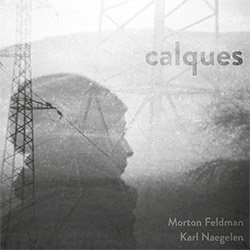 |
| Quatuor Umlaut (Karl Naegelen / Morton Feldman) Calques (Umlaut Records) |
| Founded by violinists Amaryllis Billet and Anna Jalving, with Fanny Paccoud on viola and Sarah Ledoux on cello, Quatuor Umlaut presents their first recordings, joined by clarinetist Joris Ruhl for two pieces: "Calques" by composer Karl Naegelen using effects of transparency and fusion of tones; and Morton Feldman's highly textured "Clarinet and String Quartet". |
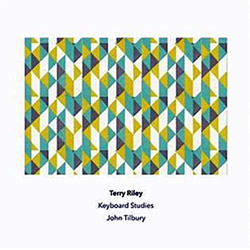 |
| Riley, Terry played by John Tilbury Keyboard Studies (Another Timbre) |
| There is uncertainty of when pianist John Tilbury recorded these three solo keyboard works by his associate and friend, legendary minimalist composer Terry Riley, performing "Keyboard Study #1" and #2, along with "Dorian Reeds" using piano, electric organ, harpsichord & celesta, captured with excellent quality in superb performances from Tilbury at the height of his powers. |
 |
| Vandermark, Ken w/ Butcher / Drake / Kessler / McPhee / Mori / Noble / Prevost / Rasmussen / Tilbury / Wooley Unexpected Alchemy [7-CD BOX] (Not Two) |
| Recorded during Ken Vandermark's residency titled "The Unexpectable", in Krakow in 2017 at Klub Alchemia, plus concerts at Hevre and Black Box in Germany, with duos, trios and quartets in a variety of configurations with artists including Ken Vandermark, Nate Wooley, Ikue Mori, John Butcher, Kent Kessler, Steve Noble, Mette Rasmussen, Eddie Prevost, Joe McPhee &c. |
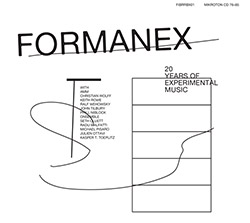 |
| Formanex w/ AMM / Christian Wolff / Keith Rowe / Ralf Wehowsky / John Tilbury / Phill Niblock / ONsemble / Seth Cluett / Radu Malfatti / Michael Pisaro / Julien Ottavi / Kasper T. Toeplitz 20 Years Of Experimental Music [10 CDS] (Mikroton Recordings) |
| Their first release in 2000 performing Cornelius Cardew's "Treatise", for 20 years the Formanex quartet of sound artists, conceptualists and experimenters Anthony Taillard, Christophe Havard, Emmanuel Leduc, and Julien Ottavi are heard here in collaborations with Keith Rowe, Kasper T. Toeplitz, Ralf Wehowsky, Seth Cluett, Michael Pisaro, Radu Malfatti, &c. |
 |
| AMM (Previost / Rowe / Tilbury) An Unintended Legacy [3 CDs] (Matchless) |
| A beautiful 3-CD set with a hardcover book presenting 3 full concerts from 2015 & 2016 of the AMM trio configuration of John Tilbury (piano), Keith Rowe (guitar) and Eddie Prevost (percussion). The 70 page book, dedicated to saxophonist Lou Gare, includes an AMM discography, plus photos, and essays by Paige Mitchell and Allen Fisher; Keith Rowe; Eddie Prevost; and Seymour Wright. |
 |
| Cardew, Cornelius / London Experimental Ensemble Treatise (Split Rock Records) |
| The full two-hour performance of Cornelius Cardew's entire 193-page legendary Treatise graphic score, performed at Iklectik in London, England on January 28, 2017 in an 11-member ensemble of some of London's most interesting improvisers including participants in Scratch Orchestra, in a double CD release with liner notes by AMM founder Eddie Prevost. |
 |
| Smith Quartet with John Tilbury Morton Feldman: Music for Piano and Strings Volume 3 [DVD-AUDIO] (Matchless) |
| Recorded live at the Huddersfield Festival of Contemporary Music in 2006, this is the 3rd and final volume of works by Morton Feldman performed by the Smith Quartet with John Tilbury on piano, recorded in high quality DVD audio and with extensive liner notes by Tilbury. |
 |
| Davies, Angharad / Rhodri Davies / Michael Duch / Lina Lapelyte / John Lely & John Tilbury Goldsmiths (Another Timbre) |
| An extended group improvisation and compositions by Lely, Sarah Hughes, and Jurg Frey, subtle and beautiful performances by Angharad Davies (violin), Rhodri Davies (electric harp), Michael Duch (bass), Lina Lapelyte (violin), John Lely (objects & electronics) & John Tilbury (piano). |
 |
| AMM Spanish Fighters (Matchless) |
| Recorded at the festival Neposlusno (Sound Disobedience) in Ljubljana, Slovenia in 2012, the AMM duo of Eddie Prevost on percussion and John Tilbury on piano perform an extend improvisation of tension and dynamic, delicately balancing sound in a rich dialog. |
 |
| AMM (Tilbury / Prevost) Place Sub. V (Matchless) |
| AMM (Eddie Prevost on percussion and John Tilbury on piano(+)) performing a 1 hour, 1 minute and 1 second live concert at the 2012 Festival of Traditional and Avant-Garde Music in Lublin, Poland in a beautiful melding of unconventional approaches to improvisation. |
 |
| Wolpe / Feldman / Zimmerman / Seel Four Generations (Hat [now] ART) |
| Pianist and composer Daniel N. Seel plays four pieces from four generations of different composers including Stefan Wolpe, Morton Feldman, Walter Zimmerman, and his own work. |
 |
| Chang / Davies / Drouin / Durrant / Patterson / Tilbury Variable Formations (Another Timbre) |
| A live recording at Cafe Oto in 2013 from this sextet in an extended and dynamic piece in which the musicians develop material they had presented in small groups in the first half of the concert, mixing improvised and prepared elements. |
 |
| AMM (Prevost / Tilbury) Two London Concerts (Matchless) |
| Two live recordings by master improvisers John Tilbury (piano) and Eddie Prevost (percussion) playing two emotional sets that are quiet at just the right times and allow for a balanced amount of white space, creating beautiful music. |
 |
| Rowe, Keith / John Tilbury E.E. Tension And Circumstance (Potlatch) |
| The first meeting of AMM guitarist Keith Rowe and pianist John Tilbury after Rowe departed in 2004, a delicate and intricate long improvisation, fascinating dialog between two long-acquainted and innovative conversationalists. |
 |
| Moser, Michael Resonant Cuts: (2 CDs AND BOOK) (Edition Rz) |
| Book and 2 CDs documenting a 2010 concert and sound installation by Carsten Seiffarth and Michael Moser, with Polweschsel & guests (Burkhard Beins, Axel Dorner, &c) performing the concert. |
 |
| Tudor, David Music for Piano (Edition Rz) |
| 2-CD set with recordings by the legendary 20th century avantgarde pianist performing compositions by (and with) John Cage, plus Sylvano Bussotti, Morton Feldman, Christian Wolff. |
 |
| AMM Sounding Music (Matchless) |
| AMM's performance at the 2009 Freedom of the City Festival with AMM regular members Eddie Prevost and John Tilbury extended with John Butcher, Chritian Wolff and Ute Kanngiesser. |
 |
| AMM (Cardew / Gare / Hobbs / Prevost / Rowe) The Crypt - 12th June 1968 The Complete Session [2 CDs] (Matchless) |
| Perhaps the most iconic and "classic" of AMM albums, recorded at The Crypt in London in 1968 with AMM as the quartet of Cornelius Cardew on piano & cello, Lou Gare on saxophone and violin, Christopher Hobbs on percussion, Eddie Prevost on percussion, and Keith Rowe on guitar & electronics. |
 |
| AMM (Prevost / Rowe / Tilbury) Fine (Matchless) |
![Ehrlich, Marty: OPEN AIR: The Complete Saxophone Quartet Compositions of Julius Hemphill [2CDs]](https://www.teuthida.com/productImages/misc4/37922.jpg)
![Frith, Fred / Cornelius Claudio Kreusch / Johannes Tonio Kreusch: Pink / Neon [2 CDs]](https://www.teuthida.com/productImages/misc4/37712.jpg)
![Frith, Fred / Cornelius Claudio Kreusch / Johannes Tonio Kreusch: Pink / Neon [VINYL 2 LPs]](https://www.teuthida.com/productImages/misc4/37713.jpg)
![Miguel, Sei: Viva! O Carro de Fogo de Sei Miguel [2 CDs]](https://www.teuthida.com/productImages/misc4/37739.jpg)
![Money: 5 [2 CDs]](https://www.teuthida.com/productImages/misc4/37890.jpg)
![Drumm, Kevin: The Mild Temper [6 CD BOX SET]](https://www.teuthida.com/productImages/misc4/37651.jpg)
![Trzaska, Mikolaj / John Edwards / Mark Sanders: Because It Happens [VINYL]](https://www.teuthida.com/productImages/misc4/37551.jpg)
![Wassermann, Ute: Chimeric [VINYL]](https://www.teuthida.com/productImages/misc4/37652.jpg)

![Aranda, Irene (Malfon / Aranda / Yamasaki): May [CD + DOWNLOAD]](https://www.teuthida.com/productImages/misc4/37825.jpg)
![Bopp, Christiane: Rever, murmurer, dire [CD + DOWNLOAD]](https://www.teuthida.com/productImages/misc4/37823.jpg)
![Angles 4 (Kuchen / Haker-Flaten / Stahl / Nordeson): Angles 4 [CD + DOWNLOAD]](https://www.teuthida.com/productImages/misc4/37826.jpg)
![Glass Triangle (Parkins / Rasmussen / Sawyer): 3 X 1 [CD + DOWNLOAD]](https://www.teuthida.com/productImages/misc4/37827.jpg)
![Musicworks: #154 Summer 2026 [MAGAZINE + CD]](https://www.teuthida.com/productImages/misc4/37879.jpg)
![Dan, Lao Chicago Quartet: Klotski [VINYL]](https://www.teuthida.com/productImages/misc4/37518.jpg)
![TRAC (Teddy Ryles / Alexander Cooper): Heavy Nano Ream Aria [2 CDs]](https://www.teuthida.com/productImages/misc4/37647.jpg)
![Jerman, Jeph: For Alvin Kelly [CASSETTE + DOWNLOAD]](https://www.teuthida.com/productImages/misc4/37521.jpg)
![Mann, Oliver / Stefano Pilia: Precious Moments [CASSETTE + DOWNLOAD]](https://www.teuthida.com/productImages/misc4/37494.jpg)
![Jerman, Jeph / Ted Byrnes: Muir [CASSETTE + DOWNLOAD]](https://www.teuthida.com/productImages/misc4/37520.jpg)
![+DOG+: Angel Wings [VINYL]](https://www.teuthida.com/productImages/misc4/37513.jpg)
![Money: 4 [2 CDs]](https://www.teuthida.com/productImages/misc4/37505.jpg)

![+DOG+: The Garden [VINYL]](https://www.teuthida.com/productImages/misc4/37511.jpg)
![Le UN: 25 Pieces Sans Vide [3 CDs]](https://www.teuthida.com/productImages/misc4/37374.jpg)
![Directives: Reconsolid [CASSETTE]](https://www.teuthida.com/productImages/misc4/37418.jpg)

![Scott, Ryan: 21st-Century Canadian Snare Drum [2 CDs]](https://www.teuthida.com/productImages/misc4/37538.jpg)
![Frey, Jurg : Composer, Alone [3 CDs]](https://www.teuthida.com/productImages/misc4/36927.jpg)
![Bruce, Lenny: Comedy & Controversy: The Original Albums 1958-61 [2 CDs]](https://www.teuthida.com/productImages/misc4/37409.jpg)

![Amba, Zoh: Eyes Full [VINYL]](https://www.teuthida.com/productImages/misc4/37491.jpg)
![Henry Cow: The Henry Cow Box Redux: The Complete Henry Cow [18 CDs, DVD & 3 BOOKLETS]](https://www.teuthida.com/productImages/misc4/37272.jpg)
![MacLean, Steve: Box Of Seven [7 CD BOX]](https://www.teuthida.com/productImages/misc4/36467.jpg)
![Mehead: One Good Eye [REISSUE]](https://www.teuthida.com/productImages/misc4/37276.jpg)
![Zorn, John: The Song of Songs [CD + CD BOOK]](https://www.teuthida.com/productImages/misc4/36923.jpg)
![Coultrain: Mundus [COLORED VINYL]](https://www.teuthida.com/productImages/misc4/33056.jpg)
![Hprizm: Signs Remixed [COLORED VINYL]](https://www.teuthida.com/productImages/misc4/30635.jpg)
![Halls Of the Machine: All Tribal Dignitaries [CASSETTE w/ DOWNLOAD]](https://www.teuthida.com/productImages/misc4/36134.jpg)
![Koenjihyakkei: Live at Club Goodman [2 CDs]](https://www.teuthida.com/productImages/misc4/36111.jpg)
![Sorry For Laughing (G. Whitlow / M. Bates / Dave-Id / E. Ka-Spel): Rain Flowers [2 CDS]](https://www.teuthida.com/productImages/misc4/35985.jpg)
![Rolando, Tommaso / Andy Moor : Biscotti [CASSETTE w/ DOWNLOADS]](https://www.teuthida.com/productImages/misc4/36106.jpg)
![Electric Bird Noise / Derek Roddy: 8-10-22 [CD EP]](https://www.teuthida.com/productImages/misc4/35970.jpg)
![Coley, Byron: Dating Tips for Touring Bands [VINYL]](https://www.teuthida.com/productImages/misc4/17906.jpg)

![Lost Kisses: My Life is Sad & Funny [DVD]](https://www.teuthida.com/productImages/misc4/lostKissesDVD.jpg)