


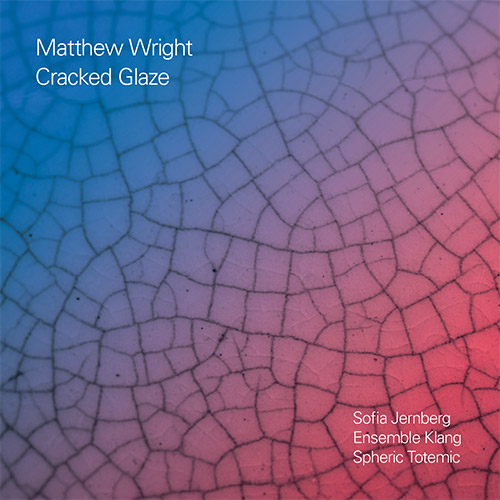
Commissioned for Ensemble Klang's Musical Utopias festival, Matthew Wright leads a twelve-piece ensemble with Sofia Jernberg and Spheric Totemic in a large-scale work structured around a slowly descending tonal "spine," where notated layers and timed frameworks intersect with free improv, while live sampling and post-production deepen the shifting interplay between form, texture, and sonic perspective.
In Stock
Quantity in Basket: None
Log In to use our Wish List
Shipping Weight: 3.00 units
Sample The Album:
Matthew Wright-turntables, live electronics, sampling
Sofia Jernberg-vocalist
Alexander Hawkins-piano, keyboards
Neil Charles-bass
Stephen Davis-drums, percussion
Mandhira de Saram-violin
Michiel van Dijk-soprano saxophone
Erik Jan de With-tenor saxophone, soprano saxophone
Anton van Houten-trombone
Pete Harden-guitar
Saskia Lankhoorn-keyboards
Joey Marijs-percussion, drums
Click an artist name above to see in-stock items for that artist.
Label: False Walls
Catalog ID: fw20
Squidco Product Code: 37270
Format: CD
Condition: New
Released: 2026
Country: UK
Packaging: Cardboard Gatefold 3 Panels w/ booklet
Recoeded live at Korzo Theatre, in The Hague, The Netherlands, on January 12th, 2024, by Micha de Kanter.
Matthew Wright's album Cracked Glaze is performed by virtuoso vocalist Sofia Jernberg, Ensemble Klang (Michiel van Dijk, Erik-Jan de With, Anton van Houten, Pete Harden, Saskia Lankhoorn and Joey Marijs) and Wright's improv/electronic group Spheric Totemic (Mandhira de Saram, Neil Charles, Alexander Hawkins, Stephen Davis and Matthew Wright).
The 46-minute piece was performed live, and is built around a 'spine' of one long, descending scale which takes nineteen minutes to unfurl, and which then repeats with variations. Other layers of notation provide supporting roles. Superimposed against this notated 'glaze' are time-brackets (essentially start and stop times) for the improvisors to play solo or in groups. Wright also sampled, processed and sculpted the live sound design from the stage, and made significant post-production enhancements for the album release."-False Walls
On Cracked Glaze
Matt Wright
"In ceramics, a cracked glaze can occur during the firing process, when intense heat creates fractures, resulting in a tension between a smooth form and a tarnished surface. With Cracked Glaze I'm interested in how the elements of musical notation, improvisation and technology collide and 'crack' each other to produce catalytic results.
Commissioned by Ensemble Klang for their Musical Utopias festival in 2024, the project brings together a part-reading, part-improvising 12-piece group of Ensemble Klang, Spheric Totemic and Sofia Jernberg. This piece came out of a long period of planning in the autumn of 2023, an afternoon of rehearsal on the day of the premiere in January 2024, followed by a long period of mixing and post-production between autumn 2024 and autumn 2025. In essence what you hear on this release is the live recording from the premiere, mixed to exaggerate the sound field and bring out individual musical lines that were buried in the texture during the live performance. I think of this post-production process as like a repeat firing in ceramics: the material has undergone another layer of glazing, of cracking, of clarifying.
In terms of the notated material, the whole piece is built around a 'spine' of one long, descending scale (each note lasting five seconds and played on the guitar) that takes nineteen minutes to unfurl. This then repeats with some variations before finally settling on a four-note figure in the bass. The figure then evaporates into a coda of bass harmonics and glissandi in the brass. The whole process takes around forty-six minutes and I think of this as like a time-stretched version of a Tom Johnson Rational Melody. It becomes almost inevitable across the span of the piece and functions like a clean, 'objective' form in ceramics.
There are other layers of the notation that provide supporting roles: compressed fragments of the descending scale that appear as tiny melodies in the keyboards and vibraphone; hyper-compressed tremolos on keyboards; repeating cells and glissandi in the brass; and the concert bass drum sounding at key points in the structure. All of these elements are connected to exact points on a timeline and therefore would be more or less the same every time the piece is played. This could, in simplistic terms, be perceived as the 'glaze' in the title.
Superimposed against this notated 'glaze' are time-brackets (essentially start and stop times) for improvisors. The order of the improvisations is fixed with specific timings (first a duo between Sofia and Mandhira de Saram; then a duo between Stephen Davis and Joey Marijs, joined by Neil Charles; a solo from Alexander Hawkins, and then another duo from Sofia and Mandhira that becomes connected to a final solo from Neil) and these sections generally overlap/crossfade. Whilst these parameters are fixed, the musical material for the improvisors is generally not specified apart from the occasional suggestion, such as asking for Neil to play with bass harmonics at the end of the piece. These genius improvisors bring to the open instructions decades of collective intuitive experience, their musical languages cracking the glaze of my notation and throwing the music into a different direction, nodding to influences beyond notated music and way beyond Europe.
In the performance I took inputs of all of the improvisors, the saxophones and the trombone into my turntable/laptop setup, so that I could sample, process and sculpt the live sound design from the stage. In the final post-production 'firing' I was able to expand the sound field through reverbs, delays and panning, making the spaces in the music deliberately wider and deeper. Long sustained tones (made from extreme software time-stretching of the descending scale) were evident in the premiere recording, but in post I was able to give them more of a 'sweeping/crossfading' role, acting almost like changing light around the cracked glaze.
In some cases I have added samples (such as the drum kit 'trio' around 13.40) that didn't exist in the original performance. There are even a few brief, surreal moments where I deliberately superimpose a soloist's improvisation from the premiere with their solo from the afternoon rehearsal (something for the real close listeners!). For me this is the temporal equivalent of a spatial relationship: 'present' and 'past' recordings being heard simultaneously like the ability to see both the outside and inside of a ceramic bowl at the same time. This is not a fully-formed thought perhaps, but I certainly think visually/spatially when I am mixing: 'feeling' recordings as three-dimensional objects with angles, distances and apertures.
The title is a reference to the barst glazuur (cracked glaze) collection in the Kunstmuseum Den Haag that I have been lucky enough to visit many times, especially whilst I was a guest teacher at The Royal Conservatory in The Hague during the spring and summer of 2023. My huge thanks to CJ Mitchell of False Walls, Sofia Jernberg, my fellow musicians in Spheric Totemic (Alexander Hawkins, Neil Charles, Stephen Davis, Mandhira de Saram) and the incredible Ensemble Klang, who have supported my music for nearly two decades. My thoughts are with the family of Erik-Jan de With, who passed away suddenly in February 2025. He was an incredible light."
The Flaneur's Mission
Matt Wright's Cracked Glaze and the Sustenance of Immersion
by Nate Wooley
"The walks started as a remedy for my pandemic cabin fever. Based on Nan Shepherd's The Living Mountain, a poetic description of the twentieth-century Scottish writer's hikes through the Cairngorm mountains, I've traced the same route in Brooklyn for almost five years: up a sycamore-lined row of crumbling, three-family homes to a small side-street jog, before taking a left and shooting straight up two-miles of city blocks to Prospect Park. I'd sit on a bench, then head back the exact same way, passing the same apartment buildings, crossing the same larger and smaller streets, smelling the same smell of Mexican bakeries. I maintain this practice, and every day I stroll through a world that is concrete and memorized. But my experience of these four miles has become a dense thicket of experience that changes shape depending on the season, the people or animals that I encounter, or my mood. The city blocks don't objectively change, but my experience of living in them subjectively wrestles them into a new shape and hue every time I walk down my front steps.
There's something about Matt Wright's Cracked Glaze that rhymes neatly with this phenomenological shift from objective to subjective and back, a process the anthropologist Mick Taussig calls enchantment. Although Wright's metaphor is pottery — and how the cracks in an otherwise perfect glaze become the all-important markers of difference and beauty within a very real piece of craftsmanship — and not a wandering walk, I believe our thinking is parallel. We're both understanding his composition as a balance between the repeatable and the spontaneous — the rigid form and its malleable content.
Set form and spontaneous content have danced together for millennia: narrative shaped the sung melodies of ancient music; florid improvisations grew out of the semiology of 17th century figured bass notation; and jazz structured itself on a grid of harmonies and time with ever-changing melodies. The last ten years, however, have seen contemporary composers embracing the unknown of improvisation as content within complex compositional forms. Inspired by the AACM, the British scene of the 1960s, and/or the New York School, the promise of the new found in improvisation is a strong motivator for many young composers to give up some of their authorship to the spontaneity of their performers. This has often resulted in a productive blurring of the line between the feral and the mannered. But centering improvisation and improvisors within a composition's form, presents the insensitive composer with a series of subtle but artistically devastating pitfalls. Cracked Glaze is a powerful example of a composer understanding these pitfalls and creatively avoiding them while making music worth returning to again and again.
Typically a composition works with form as a container which then has musical information poured into it, as in the cyclical AABA song or the developmental sonata-allegro movement. In Cracked Glaze, the form is structurally conceived as a melodic center-post around which Wright's composing and the improvisation of the ensemble is built. Wright calls this organizing feature the "spine" of the piece, and it's an apt description: his slowly descending line continually falls and repeats, truncating and expanding as it makes its way down the middle of the music. Rather than providing the dimensions of a musical box, Wright's "spine" outlines an audible path around which the improvising musicians can veer from and return to while signaling to the listener that, no matter what happens sonically, forward progress is being made.
To show why the "spine" is special, allow me to return to the subject of walking. Following the same path — be it along the streets of Brooklyn or over the Cairngorms of Scotland — with the intention of finding a new meaning and depth in its surroundings requires not only something of the attention of the walker, but also of the construction of their path. If the route is too difficult, its complexity destroys the flaneur's mission as they focus their attention on finding their way rather than being able to dig deeply into the changes in the foliage on a tree or a new addition to a family of feral cats. Using repetition to outline a form works in much the same way. Basing a composition around a musical idea that isn't both easy to reproduce, and ultimately hummable, forces the musicians and listeners to constantly keep their auditory attention fixed on tracking its complexity. Wright's "spine" form is wonderfully catchy without overshadowing the rest of the music. The timing and method of his meager manipulations are done with such care that the listener gets just the slightest sensation of change as they allow their ears to turn to the piece's other elements. This is one of the beauties of Cracked Glaze and is so subtle that it may be overlooked without spending time listening to the piece again — Nan Shepherd would be proud — and again.
But what of content? Cracked Glaze, as a musical composition, is defined by Wright's "spine" and his other notated themes, such as the brass glisses, micro-figures in the keyboards and mallets, and the marking-off of the concert bass drum. These ensemble moments make up a skeleton on which improvisations will be laid on as flesh. To use Wright's metaphor, the score could be seen as perfectly fired pottery: repeatable and flawless. But what's the use in perfection? As beautifully constructed as Wright's score is, would it be interesting to hear only those moments, flawlessly executed within his time code? Perhaps. But it's obvious that Cracked Glaze seeks something different. It is a vase begging for the personality given by a few well-placed cracks. Situating improvisation amid set compositional elements can, in the best circumstances, provide a musical complexity only rarely obtained with a pencil and paper. But relying on an improviser to fill in the details of a form in real time comes with the risk that the composition loses itself in the hysterical virtuosity of an improvisor "doing their thing."
There are such things as uninteresting cracks, just as there are such things as uninteresting walks. It doesn't mean either experience is objectively bad — the crack could be attractive, the walk sunny and warm — but the pleasure we receive from them doesn't necessarily validate itself as an experience worth remembering. The composer wants, and the listener needs, something to mark that moment as special. Engineering a sense of this ambiguous "something special" is at the center of choosing the improvisors for a piece such as Cracked Glaze. If you involve players that rely on slick virtuosity or a musical vocabulary cynically designed to "move" the listener, your piece will be pretty, but inane. If you go hard the other way, giving free reign to an improvisor that is radical but less than sensitive, your musical content may become a series of sounds that are fascinating in themselves but unrelated to each other and the piece you have worked so hard to erect.
The chosen players have to be flexible, sensitive, and egoless. And, again, Wright has made the correct move in asking Sofia Jernberg, Alex Hawkins, Neil Charles, Mandhira de Saram, Joey Marijs, and Stephen Davis to take on the not-for-the-faint-of-heart job of tapping the "cracks" into his piece. If you're familiar with their world of spontaneity and strangeness, you will already know these names, and their performances on this disc are likely to give you the self-satisfied warmth of hopes fulfilled. If you are new to their music, however, what you are about to discover is something I'd call magic if I didn't know how much preparation and work is required to be an improvisor of their caliber.
Another consideration in choosing performers is the balance of their improvisational languages. Hearing stylistically similar musicians improvise one after the other is about as interesting as sitting through a half dozen actors reading the same Lord Byron poem, each louder than the last. The wonderful tension of Cracked Glaze exists within, among other things, the push and pull of each player's syntactical funkiness. Perhaps the most dramatic example of this is Hawkins' Herbie Hancock-esque rollick down the middle of the piece's central spine. His modern jazz acrobatics and extended harmonies are stunning (unsurprising coming from Hawkins), but his solo would only be worth a passing mention if it didn't play so perfectly against the tart sound worlds created by Spheric Totemic and the always-almost-too-painfully-human quality of Jernberg's voice. It's the careful curation of artists and their care in bringing what is unique to them to the piece that ultimately makes Cracked Glaze work.
With form and content taken care of, there is one final trap to be negotiated: documentation. Composition and improvisation are saddled with different expectations, histories, and philosophies when it comes to recording. Composition's leaning toward reproducibility favors precision, with seemingly small musical choices like Pierre Boulez's slightly slow rendering of Beethoven's Fifth Symphony taking on outsized importance. On the other hand, improvisation is geared toward capturing the ephemerality of once-in-a-lifetime inspiration — lightning in a bottle. Wright has recognized the opportunity to create something more than a mimesis of live performance. He subtly layers post-recording and time-expansion effects throughout, not as a thick coat of electronics over what is a truly delicate and wild and wonderful live performance, but as a subtle luster within the sound itself.
All the post-production in the world, however, will not enliven a poor, or apathetic, performance. And Ensemble Klang deserves more than this belated credit as one of those rare ensembles that can negotiate complex notated music with accuracy and elegance while maintaining a sense of danger: like threading a needle while tossing a match onto a bonfire. The metaphors are odd, but I won't apologize for their color or their accuracy, because what Klang is doing is rare and wonderful both here and throughout their two decades. They are geniuses at turning the crazy idea into something that sounds completely natural and organic.
In the end, this whole recording is rare and wonderful. There are the reasons listed above — Wright's deft handling of the piece's form and balance, the joy of hearing great improvisors at the top of their game, a murderers' row new music ensemble, and a near flawless recorded document — but ultimately, the question that should be asked of this and all recordings is whether it leaves us wanting to return to it, demanding to know more. And that's where these notes have to leave you to do your own thinking. Some signposts and talking points have been outlined above, and with humility. I hope they will be helpful. But once the music starts, the preceding text immediately becomes flat and dull, because you're entering into Wright's world of sound. Once you do, you have to make a choice: you can inhabit this world once and move on to the next new thing, or you can take the time to revisit it again in order to find more in its depths. This is up to you, but repeated trips down this path will be rewarded.
It's getting too cold here for my daily walks, but when I do manage to get out, I'm happy to see the way the frost has redecorated the elms and sycamores; I like that the birds are fatter, and I can only recognize some of my neighbors from their eyes peeking out of their balaclavas. Soon, I'll be grounded for weeks at a time, and I'll have to turn my attention away from my little walking project and place my attention elsewhere. Luckily, I have Cracked Glaze, to revisit again and again."
Artist Biographies
• Show Bio for Matthew Wright "Matthew Wright B. 1977, Norwich, UK Matt Wright works internationally as a composer, performer, sound designer and producer. His compositional output stretches from scores for early music ensembles and contemporary chamber groups to digital improvisation, experimental turntablism and website installations, alongside collaborations with dance, theatre and film. As a performer he works with turntables, laptops and surround sound installations to create post-DJ, multichannel music embracing hip hop, avant and improvised traditions. His lives in Canterbury, where he runs the annual WINTERSOUND experimental music and sound festival. He works closely with Evan Parker in their live/studio project Trance Map and Trance Map+ (featuring guests such as Toma Gouband, Peter Evans, Spring Heel Jack and Mark Nauseef); with Ensemble Klang in The Hague (including the albums Music at the Edge of Collapse and Cold Highlife); with the Brussels-based Bl!ndman ensemble and composer Eric Sleichim (including NETWORK, directed by Ivo van Hove and starring Breaking Bad actor Bryan Cranston, as well as Beyond/Behind with soprano Claron McFadden); with Champ D'Action in Antwerp (including the LABO international arts residency); with The Six Tones based in Stockholm and Hanoi; with Ensemble Offspring in Sydney; with CEPROMusic in Mexico City; as sound designer for Elaine Mitchener and as guest with the Alexander Hawkins Ensemble (on the record 'Unit[e]'); as well as duo projects with Irreversible Entanglements saxophonist Keir Neuringer (Speak Cities), The Chap's Panos Ghikas (Unrealtime Combat), violinist/composer Roger Redgate (Single Combat) and saxophonist/composer Robert Stillman (The Wheel, BBC Radio 3's Exposure Ramsgate). His work has been presented at the Sydney Opera House, Le Poisson Rouge (New York), the Muziekcentrum an 't IJ (Amsterdam), The Kim Ma Theatre (Vietnam) and Abbey Road Studios, Tate Britain and Tate Modern. He has been commissioned by organisations such as The Huddersfield Contemporary Music Festival (hcmf//) and the MATA Festival (New York), his work being regularly broadcast on radio across Europe, but also including a two-hour focus on his work on the ABC Network in Australia. Reviews of his projects have appeared in the New York Times, the Sydney Morning Herald, Vietnam Today and the Financial Times. He remixed Robert Wyatt's Cuckooland album into a concert-length collaboration with Elaine Mitchener, Tony Hymas and the Brodsky Quartet, and Totem for Den Haag was selected to represent UK new music in Mexico City in 2015. His work is presented on Relative Pitch, Psi, Migro, Ensemble Klang, Extra Normal and Intakt.He studied Composition with Richard Steinitz and with Christopher Fox at the University of Huddersfield; with Steve Martland in London, Louis Andriessen, Martijn Padding and Richard Ayres at The Royal Conservatory of the Netherlands and with Roger Redgate at Goldsmiths College, London. Matt is a Professor of Composition and Sonic Art at Canterbury Christ Church University, regularly gives guest lectures across the UK and Europe and is an Associate Researcher at the Orpheus Institute, Ghent." ^ Hide Bio for Matthew Wright • Show Bio for Sofia Jernberg "Sofia Jernberg (born 5 July 1983, Ethiopia) is a Swedish experimental singer and composer. Between 2002 and 2004, Jernberg studied jazz at Fridhems Folk High School. Later she studied for Per Mårtensson and Henrik Strindberg at The Gotland School of Music Composition. In 2008, she received the Royal Swedish Academy of Music's jazz award. Jernberg is the leader (together with the pianist Cecilia Persson) of the chamber jazz group Paavo. The group received the "jazz group of the year" award from Swedish Radio. Jernberg is also working on the contemporary classical music scene, in which she serves as both singer and composer. As a singer she has premiered pieces by composers such as Lars Bröndum. She was a soloist with Norrbotten NEO when they performed Arnold Schönberg's Pierrot Lunaire. Jernberg has composed for several established ensembles such as Duo ego and Norrbotten NEO." ^ Hide Bio for Sofia Jernberg • Show Bio for Alexander Hawkins "Alexander Hawkins is a composer, pianist, organist, and bandleader who is 'unlike anything else in modern creative music' (Ni Kantu) and whose recent work has reached a 'dazzling new apex' (Downbeat). A largely self-taught improviser, he works in a vast array of creative contexts. His own highly distinctive soundworld is forged through the search to reconcile both his love of free improvisation and profound fascination with composition and structure. In 2012, he was chosen as a member of the first edition of the London Symphony Orchestra's 'Soundhub' scheme for young composers. He also received a major BBC commission in late 2012 for a fifty minute composition: One Tree Found was first performed and broadcast in March 2013, and was subsequently performed and broadcast for the WDR in Cologne (2014). He has also twice been commissioned by the London Jazz Festival (once as composer, once as an arranger), and by the Cheltenham Jazz Festival (2016). An in-demand sideman, Hawkins continues to be heard live and on record with vast array of contemporary leaders of all generations, including the likes of Evan Parker, John Surman, Joe McPhee, Mulatu Astatke, Wadada Leo Smith, Anthony Braxton, Marshall Allen, Rob Mazurek, Taylor Ho Bynum, and Harris Eisenstadt, amongst many others. He has also been noted in recent years for his performances in the bands of legendary South African drummer, Louis Moholo-Moholo. Concert appearances have taken him to club, concert and festival stages worldwide." ^ Hide Bio for Alexander Hawkins • Show Bio for Neil Charles "Neil Charles is a bassist, electronic producer and composer. He regularly performs, records and tours with numerous jazz, classical and contemporary music bands and ensembles like alex Hawkins, mingus big band, has played with Terence Blanchard, black top and is a member of the electro-acoustic jazz trio, Zed-U." ^ Hide Bio for Neil Charles • Show Bio for Stephen Davis Stephen Davis is an Irish-born, Belfast-based jazz/free-improv drummer and composer. ^ Hide Bio for Stephen Davis • Show Bio for Mandhira de Saram "Violinist Mandhira de Saram is a founding member and leader of the Ligeti Quartet, who specialise in contemporary and experimental music. The quartet has residencies at Sheffield University, Goldsmiths University of London, and Cambridge University, which involves numerous workshops with emerging composers and performers and outreach work. She is also a busy soloist, chamber musician, improviser, and collaborator, and works regularly with musicians including Steve Beresford (piano, objects and electronics), Benoît Delbecq (prepared piano), TableMusic, Riot Ensemble, Chineke!, Wadada Leo Smith, Laura Jurd, Alex Ward, Shabaka Hutchings, Ethan Iverson, and Trish Clowes. International solo and chamber music tours have taken her around Europe, as well as the USA, India, China and her country of origin, Sri Lanka. She has performed at prestigious venues such as the Wigmore Hall, Barbican Centre, Southbank Centre and St Johns Smith Square in London, and Carnegie Hall in New York. She has broadcast on BBC Radio 3, featuring on programmes such as In Tune, Jazz on 3, Hear and Now, and Late Junction. Mandhira is currently a mentor for the Young Music Leadership Programme in association with the Royal Academy of Music and Kuumba Youth Music. She teaches at home and regularly leads performance workshops and masterclasses. A Leverhulme Scholar at the Junior Royal Academy of Music, she went on to study Music at Worcester College, University of Oxford. Her violin teachers have included Igor Petrushevsky, Howard Davis and Levon Chilingirian, and she currently plays a 1735 Sanctus Seraphin violin kindly loaned to her by Derek Clements-Croome." ^ Hide Bio for Mandhira de Saram • Show Bio for Michiel van Dijk "Michiel van Dijk studied classical saxophone with Leo van Oostrom at the Royal Conservatory in The Hague. At the same institute he also studied jazz saxophone with John Ruocco for a number of years. He founded Vinex Productions together with Sjeng Schupp in 2002. With this he realized a number of theater tour, s titled Kijkshock: absurd animated films with live music. Their work has been released on DVD / book by Oog & Blik and Uitgeverij de Buitenkant with support from the Netherlands Film Fund. Michiel van Dijk plays with Ensemble Klang this season. Walla Kristalla, a children's performance by cellist Saartje van Camp. As a soloist with Orkest the Speedwell in "Blood on the Floor" by Mark-Anthony Turnage. Carnival des Animeaux with Zapp4 string quartet and with the David Kweksilber big band." ^ Hide Bio for Michiel van Dijk • Show Bio for Erik Jan de With "Dutch saxophonist Erik-Jan de With was a versatile and deeply committed figure in the contemporary music scene, known equally for his refined instrumental command and his tireless work as a collaborator, educator, and organizer. A graduate with distinction from the Royal Conservatoire in The Hague, where he studied with Leo van Oostrom and others, he developed a broad musical language that moved fluidly between classical repertoire, contemporary composition, and exploratory improvisation. As co-founder of Ensemble Klang, established in 2003, de With played a central role in shaping one of the Netherlands' leading contemporary ensembles, commissioning and performing new works by composers such as Heiner Goebbels, Tom Johnson, and Phill Niblock, while contributing to a repertoire defined by openness, experimentation, and structural clarity. Alongside his ensemble work, he was a founding member of The Hague Saxophone Quartet, an award-winning group that collaborated across disciplines and inspired new works, including Louis Andriessen's opera Inanna. His performance career brought him to stages across Europe and internationally, where he appeared with a wide range of orchestras and new music ensembles. Beyond performance, de With was an influential teacher and advocate for the saxophone, mentoring generations of students and founding initiatives such as the Westland Saxophone Festival, which grew into a major platform for the instrument in the Netherlands. Colleagues and students recall his vast knowledge of repertoire, his curiosity for timbre and technique, and his ability to connect musical ideas across traditions and practices. Remembered as both a passionate musician and a generous collaborator, de With combined precision, openness, and a deep commitment to musical exploration, leaving a lasting imprint on the contemporary saxophone community." ^ Hide Bio for Erik Jan de With • Show Bio for Anton van Houten "Anton studied at the Royal Conservatoire in The Hague and graduated with a 9,5 with distinction in 2009. He plays the trombone at the Ballet Orchestra Balletorchestra - in productions with the National Ballet and Nederlands Dans Theater - and regularly performs with the Residence Orchestra, the Netherlands Philharmonic Orchestra and the Netherlands Radio Philharmonic Orchestra, and the ASKO|Schönberg Ensemble, Nieuw Ensemble, De Volharding, Maarten Altena Ensemble, Modelo '62, New European Ensemble, Nederlands Blazers Ensemble, David Kweksilber Big Band and Ensemble Palatino on baroque trombone. In 2015 he founded 9×13; a neo-fanfare that mixes contemporary music with a taut, theatrical choreography, and brings it to new audiences at music and theatre festivals." ^ Hide Bio for Anton van Houten • Show Bio for Pete Harden "Pete Harden (UK, 1979) is a composer and musician whose work has been called "intriguing", "fierce, exciting" as well as conjuring "a subtle three-dimensional landscape" (De Volkskrant). In 2003, having completed studies with Louis Andriessen and Richard Ayres at the Royal Conservatoire, The Hague, he was a founding member of Ensemble Klang, for whom he is electric guitarist and artistic director. As a composer his work seeks out new forms and structures, marrying conceptually rigorous content with rich sonic environments. He has had works commissioned and performed by, among others, the Netherlands Radio Kamer Filharmonie, Bang on a Can All-stars (New York), ASKO | Schönberg ensemble, Maud le Pladec Dance Company (France), Percussion Group The Hague, NorrbottenNEO (Sweden), Saskia Lankhoorn, Marco Blaauw, and Trio Scordatura. As a guitarist he has performed with leading contemporary music ensembles including ASKO | Schönberg, Red Note Ensemble (UK) and i Solisti (Belgium). For the 2017-18 season he was artist-in-residence for the Red Sofa Series in De Doelen Concert Hall in Rotterdam. Recent years have seen a strong focus on interdisciplinary productions, particularly theatre and dance. In 2017-18 he performed in Ivo van Hove's production Network, at the National Theatre, London - and in the same season he worked closely with the French choreographer Maud le Pladec, writing the music for the hour-long production 27 Perspectives. He is one half of the duo Avenue Azure." ^ Hide Bio for Pete Harden • Show Bio for Saskia Lankhoorn "The versatile Dutch pianist Saskia Lankhoorn is an active soloist and chamber musician in the contemporary music scene. Her dedication to performing contemporary music dates from an early age; 1995 marked her first appearance on national radio, playing Arnold Schönberg's Sechs Kleine Klavierstücke. Saskia performs with Electra, duo Avenue Azure, Asko|Schönberg and has premiered new works with duo X88, her trans-Atlantic piano duo with Vicky Chow. She was a co-founder of Ensemble Klang, which has performed in festivals worldwide such as the Huddersfield Contemporary Music Festival, Cultural Olympiad UK 2012 and Sonic Festival in New York City. Her critically acclaimed solo concerts combine new art music with a strong performance and sonic concept, and strive to immerse the audience in a new sound world. Her first solo programme 'Chords & Cables', explored the external sound possibilities of the instrument through combining the piano with electronics and prepared sounds. And she has been exploring those sonic worlds ever since. Saskia performs in the leading venues and festivals of the Netherlands as well as internationally. 'Dances & Canons,' Saskia Lankhoorn's first solo album on ECM Records, featuring a suite of solo piano works by Kate Moore, was nominated for the Edison Award 2015. Saskia curates Festival Dag in de Branding, a leading platform for contemporary music in The Hague." ^ Hide Bio for Saskia Lankhoorn • Show Bio for Joey Marijs "Joey is percussionist with the ASKO | Schoenberg Ensemble, Slagwerk Den Haag, the David Kweksilber Big Band and also plays in the Anstatt Dass Trio with Michaela Riener and Erik-Jan de With which has a focus on performances of Entartete Musik. He studied at the Royal Conservatory of The Hague." ^ Hide Bio for Joey Marijs
5/4/2026
Have a better biography or biography source? Please Contact Us so that we can update this biography.
5/4/2026
Have a better biography or biography source? Please Contact Us so that we can update this biography.
5/4/2026
Have a better biography or biography source? Please Contact Us so that we can update this biography.
5/4/2026
Have a better biography or biography source? Please Contact Us so that we can update this biography.
Have a better biography or biography source? Please Contact Us so that we can update this biography.
5/4/2026
Have a better biography or biography source? Please Contact Us so that we can update this biography.
5/4/2026
Have a better biography or biography source? Please Contact Us so that we can update this biography.
Have a better biography or biography source? Please Contact Us so that we can update this biography.
5/5/2026
Have a better biography or biography source? Please Contact Us so that we can update this biography.
5/5/2026
Have a better biography or biography source? Please Contact Us so that we can update this biography.
5/5/2026
Have a better biography or biography source? Please Contact Us so that we can update this biography.
5/5/2026
Have a better biography or biography source? Please Contact Us so that we can update this biography.
Track Listing:
1. Cracked Glaze 46:21
May 2026
Improvised Music
Free Improvisation
Electro-Acoustic
Electro-Acoustic Improv
European Improvisation, Composition and Experimental Forms
London & UK Improv & Related Scenes
Large Ensembles
Staff Picks & Recommended Items
New in Improvised Music
Recent Releases and Best Sellers
Search for other titles on the label:
False Walls.
 |
| Brice, Olie Quartet (Brice / Musson / Hawkins / Glaser) All It Was (West Hill Records) |
| Rooted in personal loss and global sorrow, this powerful quartet album from bassist Olie Brice stands apart from many of his collective projects by featuring his own compositions — deeply emotional pieces shaped by grief, love, and resilience — dedicated to mentors, loved ones, and poetic voices and performed with lyrical intensity and free jazz spirit by Brice, Musson, Hawkins, and Glaser. |
 |
| Hawkins, Alexander / Taylor Ho Bynum A Near Permanent State Of Wonder (RogueArt) |
| Performing two Bill Dixon works alongside pieces by pianist Alexander Hawkins, Hawkins and cornetist Taylor Ho Bynum unite in a deeply intuitive duo recorded live in New Haven, their spacious and lyrical exchange balancing improvisational freedom with structural grace as two distinct voices attuned to form, texture, and expressive subtlety. |
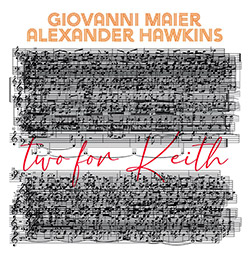 |
| Maier, Giovanni / Alexander Hawkins Two For Keith (Long Song Records) |
| Recorded live in the studio in Trieste, Italy, bassist Giovanni Maier and pianist Alexander Hawkins deliver a deeply expressive and adventurous duo session dedicated to the late, great Keith Tippett, weaving spontaneous improvisations and dynamic interplay in a heartfelt homage that reflects Tippett's profound influence and creative spirit. |
 |
| Gush (Gustafsson / Sandell / Strid) + Guests Gush 30 - Krakow 2018 [3 CD BOX SET] (Not Two) |
| The Gush trio — Mats Gustafsson on reeds and flute, Sten Sandell on piano, and Raymond Strid on drums — celebrate 30 years since their original formation, in extraordinary concerts at Alchemia and Manggha Hall in Krakow, joined by guests in three dynamic configurations — two sextets and a septet — for an unforgettable series of performances of irrepressible collective improvisation. |
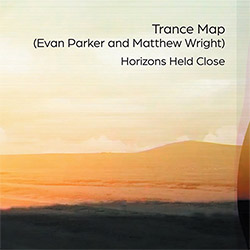 |
| Trance Map (Evan Parker / Matthew Wright) Horizons Held Close (Relative Pitch) |
| Returning to the duo format that launched their series, Evan Parker on soprano saxophone and Matthew Wright on turntables with live processing and sound design deliver two studio improvisations from Ramsgate, UK, with Wright transforming Parker's virtuosity through layers of electronic interaction, crafting a dynamic and intricate virtual symphony of technique and intent. |
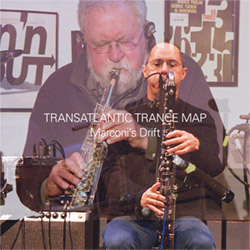 |
| Parker's, Evan Transatlantic Trance Map Marconi's Drift (False Walls) |
| Bringing together two groups of spectacular improvisers versed in free and electroacoustic improvisation for a live transatlantic performance, one group of seven musicians primarily from The UK & Europe performing from The Hot Tin venue in Faversham, Kent, UK, the other group of six musicians performing from Roulette, New York City, for this stunningly impressive group improvisation. |
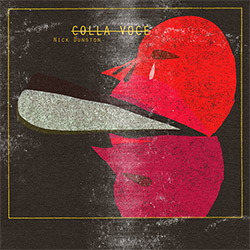 |
| Dunston, Nick Colla Voce (Out Of Your Head Records) |
| A wild "Afro-Surrealist Anti-Opera" from composer & bassist Nick Dunston, performed with an ensemble of string players (including JACK Quartet) and vocalists, in a gripping hybrid of acoustic and electronic music, using the studio for post-processing to create Dunston's self-described "warped narrative", an understatement for this incredibly passionate, surreal and absolutely impressive work. |
 |
| The Flame (Robert Mitchel / Neil Charles / Mark Sanders) Towards The Flame, Vol. 2 [VINYL] (577 Records) |
| Their first time playing together as a trio despite many permutations in various projects over the years, the trio of Robert Mitchell (F-IRE Collective) on piano & percussion, Neil Charles on double bass and the remarkably collaborative drummer Mark Sanders, are heard in this 2nd part to their 2022 concert at London's Cafe OTO for three extended, free and very informed collective improvisations. |
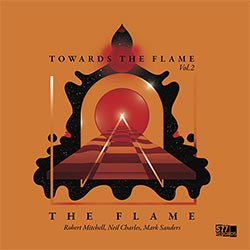 |
| Flame, The (Robert Mitchell / Neil Charles / Mark Sanders) Towards The Flame, Vol. 2 (577 Records) |
| Their first time playing together as a trio despite many permutations in various projects over the years, the trio of Robert Mitchell (F-IRE Collective) on piano & percussion, Neil Charles on double bass and remarkably collaborative drummer Mark Sanders are heard in this 2nd part to their 2022 concert at London's Cafe OTO for three extended, free and very informed collective improvisations. |
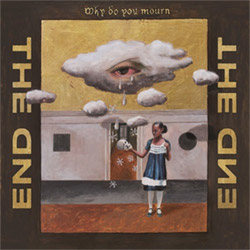 |
| End, The (Jernberg / Moster / Gustafsson / Hana / Fjordheim) Why Do You Mourn (Trost Records) |
| The third album from the genre-merging quintet The End of of Sofia Jernberg (vocals), Kjetil Moster (clarinet and tenor saxophone), Mats Gustafsson (flutes, baritone saxophone and electronics), Anders Hana (baritone and bass guitar) and Borge Fjordheim (drums), an experimental song-based project influenced by avant rock, jazz and soundscape in seven nuanced pieces. |
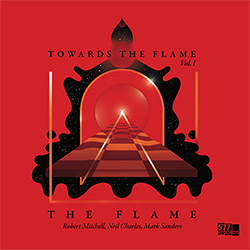 |
| Flame, The (Robert Mitchell / Neil Charles / Mark Sanders) Towards The Flame, Vol. 1 [VINYL CLEAR] (577 Records) |
| Their first time playing together as a trio despite many permutations in various projects over the years, the trio of Robert Mitchell (F-IRE Collective) on piano & percussion, Neil Charles on double bass and remarkably collaborative drummer Mark Sanders are heard in this 2022 concert at London's Cafe OTO for two extended, free and very informed collective improvisations. |
 |
| Flame, The (Robert Mitchell / Neil Charles / Mark Sanders) Towards The Flame, Vol. 1 (577 Records) |
| Their first time playing together as a trio despite many permutations in various projects over the years, the trio of Robert Mitchell (F-IRE Collective) on piano & percussion, Neil Charles on double bass and remarkably collaborative drummer Mark Sanders are heard in this 2022 concert at London's Cafe OTO for two extended, free and very informed collective improvisations. |
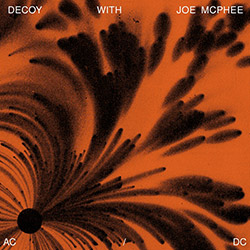 |
| Decoy (Alexander Hawkins / John Edwards / Steve Noble) With Joe McPhee AC/DC (Otoroku) |
| The UK Decoy trio of John Edwards (bass), Steve Noble (drums) and Alexander Hawkins (keys) joins forces with pocket trumpet and saxophone player Joe McPhee during McPhee's residency at London's Cafe OTO, recording these two huge sets of brilliant free improv, Hawkins performing on organ adding a unique and soulful tone to a set that balances powerful energy with innate lyricism. |
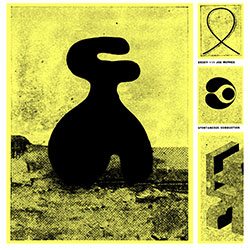 |
| Decoy with Joe Mcphee Spontaneous Combustion [2 CDs] (Otoroku) |
| A 2 CD issue of the 2013 LP with 78 additional minutes, from the two day residency at UK's Cafe Oto of Decoy (bassist John Edwards, Alexander Hawkins on Hammond B3, and drummer Steve Nobles) with special guest Joe McPhee on pocket trumpet and alto sax. |
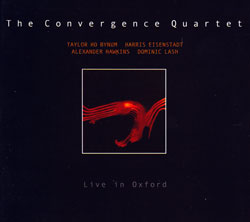 |
| Convergence Quartet, The Live In Oxford (FMR) |
| The Convergence Quartet (Taylor Ho Bynum, Harris Eisenstadt, Alexander Hawkins and Dominic Lash) in their first FMR CD performing inspired modern jazz live in Oxford. |

![Bley, Carla: Joyful Noise (Live In Hamburg 1984) [2 CDs]](https://www.teuthida.com/productImages/misc4/37195.jpg)
![Cimota (Lonning / Reinertsen / Wiik / Haker Flaten / Hulbaekmo): [ˈkɪmɔtɑː] [VINYL]](https://www.teuthida.com/productImages/misc4/37406.jpg)
![Directives: Reconsolid [CASSETTE]](https://www.teuthida.com/productImages/misc4/37418.jpg)

![Reid, Tomeka Quartet (w/ Roebke / Halvorson / Fujiwara): Dance! Skip! Hop! [VINYL]](https://www.teuthida.com/productImages/misc4/37094.jpg)
![Halvorson, Mary Amaryllis : About Ghosts [VINYL]](https://www.teuthida.com/productImages/misc4/36655.jpg)
![Sanchez, Marta : For The Space You Left [VINYL]](https://www.teuthida.com/productImages/misc4/37399.jpg)
![Lacy, Steve: The Straight Horn Of Steve Lacy [VINYL COLORED]](https://www.teuthida.com/productImages/misc4/37288.jpg)
![Oliveros, Pauline / Mia Masaoka / Issui Minegishi: Two Days In Dreamland [2 CDs]](https://www.teuthida.com/productImages/misc4/37341.jpg)
![Brown, Marion: Awofofora [VINYL]](https://www.teuthida.com/productImages/misc4/37337.jpg)
![Henderson, Joe: The Classic 1960s Albums [4 CD BOX SET]](https://www.teuthida.com/productImages/misc4/37197.jpg)
![Harriet Tubman (Ross / Gibbs / Lewis) & Georgia Anne Muldrow: Electrical Field of Love [VINYL]](https://www.teuthida.com/productImages/misc4/37330.jpg)

![Dorham, Kenny: The Classic Albums 1960-1962 [4 CDs]](https://www.teuthida.com/productImages/misc4/37102.jpg)
![La Casa, Eric / Francisco Lopez: Collection Supranaturelle: Induction / Mutation [2 CDs]](https://www.teuthida.com/productImages/misc4/37287.jpg)
![Aries House Zaes: Network Friction [VINYL]](https://www.teuthida.com/productImages/misc4/37242.jpg)
![Lindorff-Ellery, Evan: Light Sound Falling [CASSETTE w/ DOWNLOAD]](https://www.teuthida.com/productImages/misc4/37043.jpg)
![Lindorff-Ellery, Evan / Naomi Juniper: Studio, Creek [CASSETTE W/ DOWNLOAD]](https://www.teuthida.com/productImages/misc4/37044.jpg)
![Coleman, Rodger: Journey to Brno [CASSETTE + DOWNLOAD]](https://www.teuthida.com/productImages/misc4/37175.jpg)
![Allbee, Liz: Breath Vessels [VINYL]](https://www.teuthida.com/productImages/misc4/37012.jpg)
![Belorukov, Ilia / Alex Riva: Wrestling For Futility [CASSETTE w/DOWNLOAD]](https://www.teuthida.com/productImages/misc4/36994.jpg)
![Genthon, Anouck / Lionel Marchetti: Suite Blanche [2 CDs]](https://www.teuthida.com/productImages/misc4/36642.jpg)
![Toeplitz, Kasper T.: Erosions Programmees [CD + BOOKLET]](https://www.teuthida.com/productImages/misc4/36639.jpg)
![Gate, The : Almost Live [CASSETTE + MAGAZINE]](https://www.teuthida.com/productImages/misc4/36836.jpg)
![Feldman, Morton / GBSR Duo w/ Taylor MacLennan: Trios [6 CD BOX SET]](https://www.teuthida.com/productImages/misc4/37020.jpg)
![Frey, Jurg : Composer, Alone [3 CDs]](https://www.teuthida.com/productImages/misc4/36927.jpg)
![Frey, Jurg with ensemble]h[iatus: Je Laisse A La Nuit Son Poids D](https://www.teuthida.com/productImages/misc4/36988.jpg)

![Pisaro-Liu, Michael: Within (2) / Appearance (2) [2 CDs]](https://www.teuthida.com/productImages/misc4/36831.jpg)
![Henry Cow: The Henry Cow Box Redux: The Complete Henry Cow [18 CDs, DVD & 3 BOOKLETS]](https://www.teuthida.com/productImages/misc4/37272.jpg)
![MacLean, Steve: Box Of Seven [7 CD BOX]](https://www.teuthida.com/productImages/misc4/36467.jpg)
![Mehead: One Good Eye [REISSUE]](https://www.teuthida.com/productImages/misc4/37276.jpg)
![Zorn, John: The Song of Songs [CD + CD BOOK]](https://www.teuthida.com/productImages/misc4/36923.jpg)
![Coultrain: Mundus [COLORED VINYL]](https://www.teuthida.com/productImages/misc4/33056.jpg)
![Hprizm: Signs Remixed [COLORED VINYL]](https://www.teuthida.com/productImages/misc4/30635.jpg)
![Halls Of the Machine: All Tribal Dignitaries [CASSETTE w/ DOWNLOAD]](https://www.teuthida.com/productImages/misc4/36134.jpg)
![Koenjihyakkei: Live at Club Goodman [2 CDs]](https://www.teuthida.com/productImages/misc4/36111.jpg)
![Sorry For Laughing (G. Whitlow / M. Bates / Dave-Id / E. Ka-Spel): Rain Flowers [2 CDS]](https://www.teuthida.com/productImages/misc4/35985.jpg)
![Rolando, Tommaso / Andy Moor : Biscotti [CASSETTE w/ DOWNLOADS]](https://www.teuthida.com/productImages/misc4/36106.jpg)
![Electric Bird Noise / Derek Roddy: 8-10-22 [CD EP]](https://www.teuthida.com/productImages/misc4/35970.jpg)
![Coley, Byron: Dating Tips for Touring Bands [VINYL]](https://www.teuthida.com/productImages/misc4/17906.jpg)

![Lost Kisses: My Life is Sad & Funny [DVD]](https://www.teuthida.com/productImages/misc4/lostKissesDVD.jpg)