


Out of Stock
Reordered on 1/11/2026
Quantity in Basket: None
Log In to use our Wish List
Shipping Weight: 3.00 units
Sample The Album:
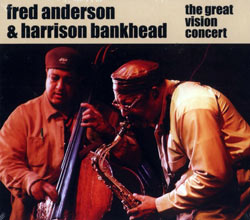
Fred Anderson-tenor saxophone
Harrison Bankhead-bass
Click an artist name above to see in-stock items for that artist.
UPC: 7320470068304
Label: Ayler
Catalog ID: aylCD-052
Squidco Product Code: 8199
Format: CD
Condition: New
Released: 2007
Country: France
Packaging: Digipack
Recorded live at The Vision Festival, The Center, NYC, May 22, 2003 by Stefan Heger and Don Jacobs.
Duo concert recordings from the 2003 Vision Festival in New York City, playing Anderson compositions. An amazing conversation between two veteran players interacting in subtle and astonishing ways.
Artist Biographies
• Show Bio for Fred Anderson "Fred Anderson (March 22, 1929 - June 24, 2010) was an American jazz tenor saxophonist who was based in Chicago, Illinois. Anderson's playing was rooted in the swing music and hard bop idioms, but he also incorporated innovations from free jazz. Anderson was also noted for having mentored numerous young musicians. Critic Ben Ratliff called him "a father figure of experimental jazz in Chicago". Writer John Corbett referred to him as "scene caretaker, underground booster, indefatigable cultural worker, quiet force for good." In 2001, author John Litweiler called Anderson "the finest tenor saxophonist in free jazz/underground jazz/outside jazz today." Anderson was born in Monroe, Louisiana. When he was ten, his parents separated, and he moved to Evanston, Illinois, where he initially lived with his mother and aunt in a one-room apartment. When Anderson was a teenager, a friend introduced him to the music of Charlie Parker, and he soon decided he wanted to play saxophone, purchasing his first instrument for $45. He listened to Lester Young, Johnny Hodges, Dexter Gordon, Gene Ammons, and Illinois Jacquet, all of whom would influence his playing. He also heard Young and Parker in concert on multiple occasions. Unlike many musicians at the time, Anderson did not play with dance bands or school ensembles, and instead focused on practicing, taking private lessons, and studying music theory at the Roy Knapp Conservatory in Chicago, all the while supporting his family by working as a waiter. He also began making an effort to develop a personal sound on his instrument, with the goal of combining Ammons' "big sound" with Parker's speed. Regarding Parker's influence, Anderson stated: "I tried to figure out how he was doing certain things - not so much the notes that he was playing. He had a unique way about placing things." He also recalled: "Charlie Parker was one of the freest musicians I had ever heard... [his] technique was superb. Each one of the notes would just come out and hit you... His music was so involved. It was hard. It's still hard." At around this time, he began to develop a series of exercises which he incorporated into his daily practice routine, and which eventually became a book titled "Exercises for the Creative Musician". In the early 1960s, Anderson began listening to and studying the music of Ornette Coleman, and immediately related Coleman's playing to that of Charlie Parker. He recalled: "When I heard Ornette Coleman back in those days... I knew exactly what he was doing. It wasn't strange to me. I knew exactly where he was coming from." At around this time, influenced by Coleman, he formed a piano-less band with trumpeter Bill Brimfield, with whom he had been practicing since 1957, bassist Bill Fletcher, and drummer Vernon Thomas, playing a mixture of bebop standards and Anderson originals. In 1963, Anderson began participating in weekly jam sessions in Chicago, where he met Roscoe Mitchell, Joseph Jarman, and Richard Abrams, with whom he began discussing the idea of forming a new organization to promote their music. In 1965, the AACM was born, with Anderson as one of its earliest members. (As per George E. Lewis, Anderson was not a charter member, but attended the early meetings and got in on the ground floor.) On August 16, 1965, Anderson played on the first AACM event as part of the Joseph Jarman Quintet, which also featured Brimfield as well as bassist Charles Clark and drummer Arthur Reed. In late 1966, Anderson participated in the recording of Jarman's debut album, Song For, and in 1968, he played on Jarman's As If It Were the Seasons. Both albums were released on the Delmark label. In the late 1960s, when many of his AACM colleagues moved to Europe, Anderson chose to remain behind, supporting his wife and three young children by working at a rug company, practicing his instrument, and heading the AACM's Evanston chapter with Brimfield. Around 1972 he formed the Fred Anderson Sextet, with trombonist George E. Lewis, reedist Douglas Ewart, bassist Felix Blackmon, drummer Hamid Drake (then known as Hank), and vocalist Iqua Colson, all of whom were much younger than Anderson. Paul Steinbeck of the University of Chicago wrote: "These performers were a full generation younger than Anderson and comparatively inexperienced, yet he granted them considerable creative agency as members of his band... The expressive multiplicity and non-hierarchic social structure promoted by Anderson made his 1970s band resemble a 'mutuality' - a special kind of collective enterprise that requires its members to achieve a 'high degree of autonomy' while maintaining a sense of 'full partner[ship]'... Anderson's inclusiveness and ardent support of his collaborators' creative development performed a crucial leveling function, partially erasing generational boundaries and also re-focusing the group on their autonomous, continually unfolding expressive aims." George E. Lewis recalled: "Fred let you play as long as you wanted, and you could try out anything." In February 1977, Anderson and Brimfield visited Europe, where they recorded Accents with the Austrian trio Neighbours (pianist Dieter Glawischnig, bassist Ewald Oberleitner, and drummer Joe Preininger). In May of that year, Anderson opened a venue in Chicago that he named the Birdhouse, named after Charlie Parker. Unfortunately, Anderson encountered resistance and harassment from officials and people in the neighborhood, who were suspicious of his motives, and he ended up closing the club a year later. In 1978, Anderson visited Europe again with a quintet, playing at the Moers festival, where he recorded Another Place, his first album as a leader. In 1979, he recorded Dark Day with Brimfield, bassist Steven Palmore, and drummer Hamid Drake, and The Missing Link with bassist Larry Hayrod, Drake, and percussionist Adam Rudolph. (The second album was not released until 1984.) In 1982, Anderson took over ownership of a bar in Chicago called the Velvet Lounge, and transformed it into a center for the city's jazz and experimental music scenes, hosting Sunday jam sessions and numerous concerts. The club expanded and relocated in the summer of 2006. According to John Fordham, "The venue became a spiritual home to many musicians who shared the uncommercial player's perennial need for an intimate space run by, and for, the people who cared." Regarding the environment at the Velvet Lounge, Paul Steinbeck wrote, "Under Anderson's supervision, participating musicians were encouraged to develop performance methodologies that were 'contributive, not competitive'... the musical and social practices that had characterized Anderson's bands since the 1960s were transmitted, in whole or in part, to a broader network of performers and listeners." Though he remained an active performer, Anderson rarely recorded for about a decade beginning in the early 1980s. (Recordings from this sparse period include Vintage Duets with drummer Steve McCall, recorded in 1980 but not released until 1994, and The Milwaukee Tapes Vol. 1, with Brimfield, Drake, and bassist Larry Hayrod, also recorded in 1980 but not released until 2000.) In 1990, however, he received the first Jazz Masters Fellowship from Arts Midwest, and by the mid-1990s, he resumed a more active recording schedule, both as a solo artist, and in collaboration with younger performers, such as pianist Marilyn Crispell (Destiny), with whom he toured in 1994, and often with familiar colleagues such as Hamid Drake and Bill Brimfield. In 1999, Anderson and Von Freeman appeared as soloists with a 30-piece orchestra in a performance of a work composed and conducted by Edward Wilkerson at the Chicago Jazz Festival. In 2002, the festival honored Anderson, and he appeared as a soloist with the NOW Orchestra, conducted by George E. Lewis, and featuring Bill Brimfield and Roscoe Mitchell. Meanwhile, the Velvet Lounge became internationally known, attracting artists from around the world. In 2005, the Vision Festival presented Fred Anderson Day in his honor, and in 2009, the Velvet Lounge hosted an 80th-birthday celebration featuring four sets of music from some of Chicago's top jazz artists. He continued to record and tour throughout the 2000s, and continued mentoring countless younger musicians, including Harrison Bankhead, Nicole Mitchell, and Dee Alexander, stating "My role in the city is to keep young musicians playing. I will always have a place for them to play." He died on June 24, 2010, at the age of 81, and was survived by two sons, Michael and Eugene (a third son, Kevin, predeceased him), as well as five grandchildren and six great-grandchildren. He was scheduled to perform the day he died." ^ Hide Bio for Fred Anderson
1/26/2026
Have a better biography or biography source? Please Contact Us so that we can update this biography.
Track Listing:
1. Cloverleaf
2. Wandering
3. Trying to Catch the Rabbit
4. The Strut
Total time: 57:12
Ayler Records
Improvised Music
Jazz
May 2007
Chicago Jazz & Improvisation
Recorindgs from the NYC Vision Festival
Duo Recordings
Search for other titles on the label:
Ayler.
 |
| Lila Bazooka (Sophie Bernado / Celine Grangey) Arashiyama (Ayler) |
| The French duo of bassoonist Sophie Bernado and sound artist Céline Grangey expand on the rich timbre of Bernado's bassoon, starting solo in beautiful etude improvisations only to have Grangey's sound designs expand around her playing, developing rich environments through electronics, field recording & voice, a beautiful intersection of experimental, composed and improvised music. |
 |
| Derviche (Borchard / Favriou) Murs Absurdes (Ayler Records) |
| The 2nd Derviche album on Ayler Records from the French electric bass and drum improvising duo of Eric Brochard and Fabrice Favriou, in five sequences of assertive and masterful instrumental improvising rock, ecstatically heavy material of thick detail and ominous overtone, intended to be played as a continuous suite and clearly intended for maximum amplitude! |
 |
| Brochard, Eric / Fabrice Favriou Derviche (Ayler) |
| Improvised and heavy forms of experimental rock from the French duo of piccolo bassist Eric Brochard and drummer Fabrice Favriou, their music dramatic, ritualistic and urgent as they reference Maya Deren and mythological experience, their music hypnotically mesmerizing and sonically rich, slowly whirling dervishes in five varying sequences that growl and transfix. |
Customers Who Bought This Item Also Bought:
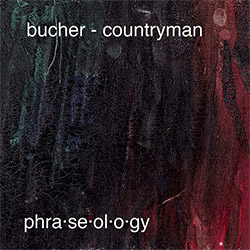 |
| Bucher - Countryman Phra-se-ol-o-gy (FMR) |
| Captured live in the Manila studio, the duo of Swiss drummer/percussionist Christian Bucher and alto saxophonist Rick Countryman engage in improvisation built on the idea of musical phrasing as syntax, where saxophone lines, punctuated drums and responsive space converge into a series of sound-sentences in which tone, pause and gesture become elements in a live lexicon of form. |
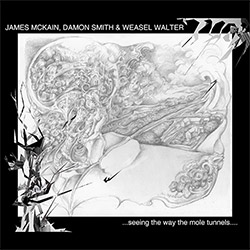 |
| McKain, James / Damon Smith / Weasel Walter ... Seeing the Way The Mole Tunnels... (Balance Point Acoustics / International School of Evidence) |
| Energetic trio interplay from saxophonist James McKain with Damon Smith and Weasel Walter, recorded in Collinsville, Illinois, where taut lines, volatile textures, and razor-cut dynamics sketch "free jazz by way of the European tradition," six concise pieces whose titles nod to Thomas Bernhard and whose restless momentum — anchored by springy bass and splintered drums — turns spontaneity into vividly shaped form. |
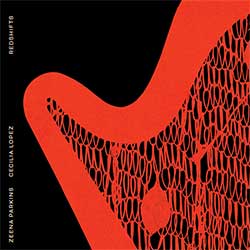 |
| Parkins, Zeena / Cecilia Lopez Redshifts (Relative Pitch) |
| Harnessing Zeena Parkins's electric and acoustic harps and ebow-piano alongside Cecilia Lopez's custom-built RED speaker-wire instrument and electronics, this live Brooklyn set fashions a singular sonic architecture where plucked strings, feedback networks and sustained fields fold into one expansive, sculptural conversation of improvisation and invention. |
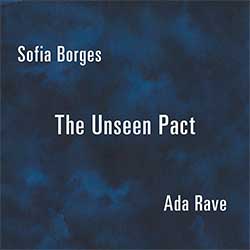 |
| Borges, Sofia / Ada Rave The Unseen Pact (Relative Pitch) |
| Recorded in their first meeting, percussionist Sofia Borges and saxophonist Ada Rave forge a vivid, intuitive dialogue of fire and reflection, blending spontaneous storytelling with fierce lyricism and dynamic restraint; their improvisations unfold like ritual acts of empathy and resistance, where every strike, breath, and silence reveals an unspoken pact between sound and spirit. |
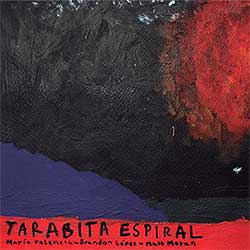 |
| Valencia, Maria / Matt Moran / Brandon Lopez Tarabita Espiral (Relative Pitch) |
| Recorded live at IBeam in Brooklyn, the trio of María Valencia (alto saxophone, Bb clarinet), Matt Moran (vibraphone), and Brandon Lopez (bass, percussion) weave a richly textured improvisation of lyric tension and resonant space, where breath, metal, and wood converge in shifting layers of sound, balancing volatility with quiet reflection in an atmosphere of deep, intuitive dialogue. |
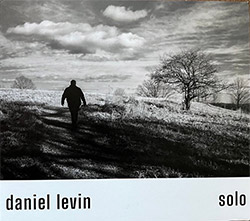 |
| Levin, Daniel Solo (ears&eyes Records) |
| A profound statement of non-idiomatic improvisation from cellist Daniel Levin, exploring the full tactile and sonic range of his instrument through shifting timbres, raw textures, and lyrical abstraction, forging spontaneous form in real time as intuition replaces memory and each gesture navigates vulnerability, intensity, and the transformative pursuit of musical freedom. |
 |
| Estoppey, Laurent / Daniel Levin Sumac (ears&eyes Records) |
| An intimate and exploratory duo encounter between saxophonist Laurent Estoppey and cellist Daniel Levin, born from the Sanctuary Series in Durham, where mutual trust fuels a fearless dive into the unknown, weaving shifting timbres, extended techniques, and raw dialogue into a deeply personal improvisational terrain defined by risk, resonance, and discovery. |
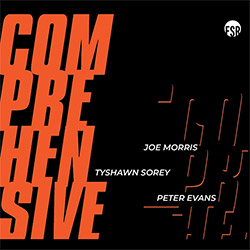 |
| Morris, Joe / Peter Evans / Tyshawn Sorey Comprehensive (Listen! Foundation (Fundacja Sluchaj!)) |
| Recorded at The Bunker Studio in Brooklyn in 2025, this first document of Peter Evans (trumpet), Joe Morris (bass), and Tyshawn Sorey (drums) captures four expansive improvisations where Evans's quicksilver trumpet, Sorey's architecturally detailed drumming, and Morris's tensile bass cohere into a lucid, high-energy trio language that balances raw edge with striking clarity. |
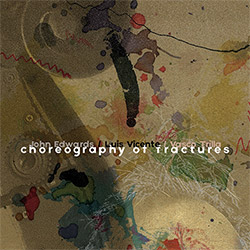 |
| Edwards, John / Luis Vicente / Vasco Trilla Choreography of Fractures (Listen! Foundation (Fundacja Sluchaj!)) |
| The first documented meeting of bassist John Edwards, trumpeter Luís Vicente, and percussionist Vasco Trilla channels the duo rapport of Vicente/Trilla into a volatile trio language, where tensile bass arcs, quicksilver trumpet figures, and textured percussion intertwine from hush to rupture across four expansive studio improvisations captured in Portugal — forcefully fractured. |
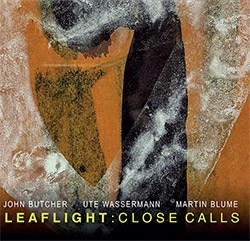 |
| Butcher, John / Ute Wassermann / Martin Blume Leaflight: Close Calls (FMR) |
| In a live Cologne performance the trio of Butcher (reeds), Wassermann (voice & bird-calls) and Blume (drums/percussion) transform ambient impulse and acoustic detail into a series of "close-call" ensemble gestures, where bird-like vocal fragments, saxophone multiphonics and micro-percussion co-here in porous space, yielding an improvised chamber of attentiveness, ecological flux and sonic shadow play. |
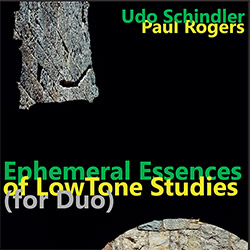 |
| Schindler, Udo / Paul Rogers Ephemeral Essences (FMR) |
| A striking Munich concert from Udo Schindler and Paul Rogers, where reeds, brass and seven-string double bass trace Burnside-inspired titles into supple, slow-burning forms, their precise timbral interplay and dynamic restraint yielding an improvised chamber drama of quiet intensity, eruptive weight, and finely poised, moment-to-moment architecture. |
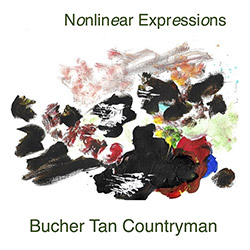 |
| Bucher / Tan / Countryman Nonlinear Expressions (FMR) |
| Recorded in Quezon City, Philippines during Typhoon Crising, the long-running trio of Christian Bucher (drums), Simon Tan (double bass), and Rick Countryman (alto saxophone) capture urgent and agile free improvisation between canceled gigs and storm delays, their 13 years of collaboration driving vibrant exchanges that balance volatility with poised, spontaneous form. |
 |
| Guionnet, Jean-Luc L'Epaisseur de l'air Live (Potlatch) |
| Recorded live at Les Instants Chavirés in Montreuil, France, across two sessions in 2023 and 2024, alto saxophonist Jean-Luc Guionnet's second solo release on Potlatch captures his intensely physical exploration of breath, resonance, and spatial acoustics, rendering sound as an emotional and architectural phenomenon where perception, geometry, and air intertwine in a vivid study of "the thickness of the air." |
 |
| Morris, Joe / Brad Barrett / Beth Ann Jones Abstract Forest (Relative Pitch) |
| Celebrating guitarist Joe Morris's 70th, this trio with Brad Barrett on cello and Beth Ann Jones on bass unfolds with deliberate restraint and deep listening, Morris layering textures around Barrett's lyrical and percussive bowing while Jones anchors with sculptural, propulsive bass, the group seamlessly shifting between spacious intimacy and taut collective momentum in an immersive improv dialogue. |
 |
| Believe (Farrar / Manojlovic / Thomas / Pike) Spirits Of The Dead Are Watching (Relative Pitch) |
| The debut of Sydney-based quartet Believe-Peter Farrar (alto saxophone), Novak Manojlovic (piano), Clayton Thomas (double bass), and Laurence Pike (drums)-unleashes three expansive improvisations of visceral energy and nuanced intimacy, blending extended techniques, shifting textures, and percussive interplay into a powerful free jazz statement that feels as natural as wind and waves. |
 |
| Rave, Ada / Marta Warelis Peel Mondo (Relative Pitch) |
| In a live set at Amsterdam's club & workspace Splendor, Argentinian tenor/sopranino explorer Ada Rave and Polish pianist Marta Warelis shape an intimate but volatile dialogue, fusing air, resonance, clusters, and melody into patient arcs that bloom from microscopic detail to surging release, a great example of the city's improvising community at their most attentive and fearless. |
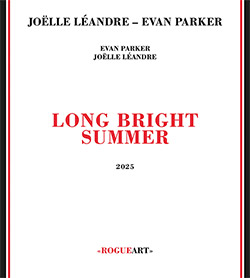 |
| Parker, Evan / Joelle Leandre Long Bright Summer (RogueArt) |
| Drawing on decades of fearless improvising, saxophonist Evan Parker and bassist Joëlle Léandre engage in an intense and unfiltered acoustic dialogue recorded live in France, their shared language enabling lightning reactions, extended techniques, surges of density and flow, hushed textural intimacy, and moments where Léandre's wordless voice merges seamlessly into their spontaneous interplay. |
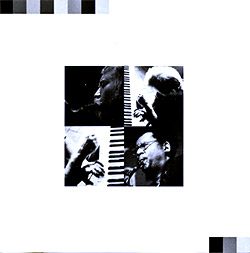 |
| Bergman, Borah / Anthony Braxton / Peter Brotzmann Eight By Three (Mixtery) |
| An extraordinary 1996 Mixtery Studio encounter between pianist Borah Bergman, Anthony Braxton on a wide range of reeds, and Peter Brötzmann on saxophones, clarinet, and tárogató, balancing ferocious torrents of free jazz interplay with moments of surprising lyricism and abstraction, as three titans of improvisation push their individual voices into a thrilling collective dialogue. |
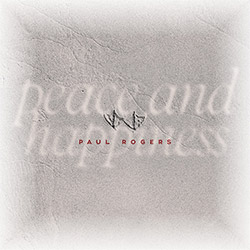 |
| Rogers, Paul Peace And Happiness (Listen! Foundation (Fundacja Sluchaj!)) |
| On a custom 7-string double bass, Paul Rogers delivers a powerful eight-part solo recital where deeply melodic lines and harmonically rich textures meet commanding technique — bowed chords, ringing harmonics and agile counterpoint — shaping fluid narratives that balance intensity and lyricism into a remarkable, satisfying journey. |
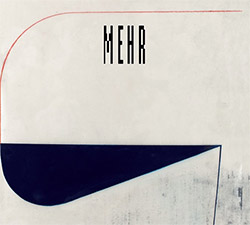 |
| Gauguet, Bertrand / Didier Lasserre Mehr (Akousis Records) |
| Intertwining alto saxophone and percussion in an intimate recording made at BAFF Studio in Montreuil, Bertrand Gauguet and Didier Lasserre craft four spacious improvisations rooted in attentive silence, where breath, multiphonics, resonant impacts and subtle frictions converge into quiet tensions and delicate textures that reveal a profoundly sensitive musical conversation. |
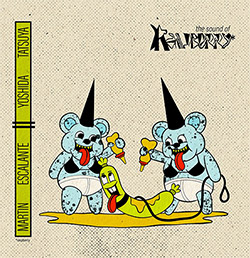 |
| Yoshida, Tatsuya / Martin Escalante The Sound of Raspberry [VINYL] (Wash and Wear Records) |
| A relentless duo of Japanese drummer, vocalist and electronic artist Tatsuya Yoshida (Ruins, Koenji Hyakkei), with Mexican saxophonist Martín Escalante on alto and voice, captured live in Tokyo in fourteen explosive improvisations of blistering energy, searing noise, and sudden precision shifts, balancing chaotic abandon with uncanny control. |
 |
| Zorn, John (Roeder / Wollesen / Zorn / Lage) New Masada Quartet, Volume Three (Tzadik) |
| The third volume in John Zorn's New Masada Quartet — Zorn on alto sax, Jorge Roeder on bass, Kenny Wollesen on drums, and Julian Lage on guitar — captures a packed 2024 concert at Roulette in Brooklyn, where fervent interplay and exceptional soloing bring six Zorn compositions to life in a single, seamlessly indexed track before an enthusiastic audience. |
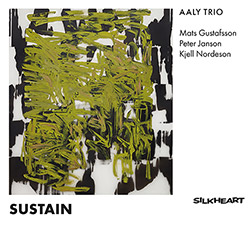 |
| AALY Trio (Gustafsson / Nordeson / Janson) Sustain (Silkheart) |
| AALY Trio, named as a reference to Albert Ayler, is Mats Gustafsson (winds), Kjell Nordeson (bass), and Peter Janson (drums), who began their journey in Sweden in the 1980s, drawing significant influence from Chicago's creative scene in the 90s, and reuniting now with the same incendiary energy and deep rapport, captured in 11 composed and collective works. |

![Hoffman, Christopher: REX [VINYL]](https://www.teuthida.com/productImages/misc4/36934.jpg)
![Wrens: Half Of What You See [VINYL]](https://www.teuthida.com/productImages/misc4/37095.jpg)
![Cartier, Pierre: Chansons de Douve [2 CDs]](https://www.teuthida.com/productImages/misc3/cartierChansonsDouve.jpg)
![Davies, Angharad / Burkhard Beins : Meshes Of The Evening [VINYL]](https://www.teuthida.com/productImages/misc4/36990.jpg)
![Bussmann, Nicholas / Sven-Ake Johansson / Yan Jun: Tea Time [Vinyl]](https://www.teuthida.com/productImages/misc4/36991.jpg)
![Feldman, Morton / GBSR Duo w/ Taylor MacLennan: Trios [6 CD BOX SET]](https://www.teuthida.com/productImages/misc4/37020.jpg)
![Williams, Jessica: Blue Abstraction: Prepared Piano Project 1985-1987 [VINYL]](https://www.teuthida.com/productImages/misc4/37080.jpg)
![Levin, Daniel / Laurent Estoppey: Freedom From The Known [VINYL]](https://www.teuthida.com/productImages/misc4/37091.jpg)
![Fagaschinski, Kai: Aerodynamics [VINYL 2 LPs]](https://www.teuthida.com/productImages/misc4/36992.jpg)
![Allbee, Liz: Breath Vessels [VINYL]](https://www.teuthida.com/productImages/misc4/37012.jpg)


![Parker, Evan / Andrea Centazzo: Bullfighting On Ice! Live In Padova 1977 [VINYL]](https://www.teuthida.com/productImages/misc4/37064.jpg)
![Curran, Alvin / Andrea Centazzo / Evan Parker: Real Time [VINYL]](https://www.teuthida.com/productImages/misc4/37065.jpg)
![Curran, Alvin / Andrea Centazzo / Evan Parker: Real Time Two [VINYL]](https://www.teuthida.com/productImages/misc4/37066.jpg)
![Rodrigues, Ernesto / Jung-Jae Kim / Guilherme Rodrigues / Eric Bauer / Stephen Flinn: 5 In The Afternoon [2CDs]](https://www.teuthida.com/productImages/misc4/36957.jpg)
![Evans, Peter / Being & Becoming: Ars Ludricra [VINYL + DOWNLOAD]](https://www.teuthida.com/productImages/misc4/37026.jpg)
![Belorukov, Ilia / Alex Riva: Wrestling For Futility [CASSETTE w/DOWNLOAD]](https://www.teuthida.com/productImages/misc4/36994.jpg)
![Genthon, Anouck / Lionel Marchetti: Suite Blanche [2 CDs]](https://www.teuthida.com/productImages/misc4/36642.jpg)
![Toeplitz, Kasper T.: Erosions Programmees [CD + BOOKLET]](https://www.teuthida.com/productImages/misc4/36639.jpg)
![Gate, The : Almost Live [CASSETTE + MAGAZINE]](https://www.teuthida.com/productImages/misc4/36836.jpg)
![A Magic Whistle: The Solar Cell [VINYL]](https://www.teuthida.com/productImages/misc4/36658.jpg)
![McGee, Hal: Columbus Expedition [Cassette w/ Download]](https://www.teuthida.com/productImages/misc4/36650.jpg)
![Jaeger, Kassel: Fernweh [VINYL 2 LPs]](https://www.teuthida.com/productImages/misc4/36541.jpg)

![Frey, Jurg : Composer, Alone [3 CDs]](https://www.teuthida.com/productImages/misc4/36927.jpg)
![Frey, Jurg with ensemble]h[iatus: Je Laisse A La Nuit Son Poids D](https://www.teuthida.com/productImages/misc4/36988.jpg)

![Pisaro-Liu, Michael: Within (2) / Appearance (2) [2 CDs]](https://www.teuthida.com/productImages/misc4/36831.jpg)
![Musicworks Magazine: #151 Summer 25 [MAGAZINE + CD]](https://www.teuthida.com/productImages/misc4/36559.jpg)
![Brown, Dan / Dan Reynolds: Live At The Grange Hall [unauthorized][CASSETTE]](https://www.teuthida.com/productImages/misc4/36245.jpg)
![Zorn, John: The Song of Songs [CD + CD BOOK]](https://www.teuthida.com/productImages/misc4/36923.jpg)
![Coultrain: Mundus [COLORED VINYL]](https://www.teuthida.com/productImages/misc4/33056.jpg)
![Hprizm: Signs Remixed [COLORED VINYL]](https://www.teuthida.com/productImages/misc4/30635.jpg)
![Halls Of the Machine: All Tribal Dignitaries [CASSETTE w/ DOWNLOAD]](https://www.teuthida.com/productImages/misc4/36134.jpg)
![Koenjihyakkei: Live at Club Goodman [2 CDs]](https://www.teuthida.com/productImages/misc4/36111.jpg)
![Sorry For Laughing (G. Whitlow / M. Bates / Dave-Id / E. Ka-Spel): Rain Flowers [2 CDS]](https://www.teuthida.com/productImages/misc4/35985.jpg)
![Rolando, Tommaso / Andy Moor : Biscotti [CASSETTE w/ DOWNLOADS]](https://www.teuthida.com/productImages/misc4/36106.jpg)
![Electric Bird Noise / Derek Roddy: 8-10-22 [CD EP]](https://www.teuthida.com/productImages/misc4/35970.jpg)
![Elephant9 : Mythical River [VINYL]](https://www.teuthida.com/productImages/misc4/34624.jpg)
![Elephant9 with Terje Rypdal: Catching Fire [VINYL 2 LPs]](https://www.teuthida.com/productImages/misc4/35355.jpg)
![Coley, Byron: Dating Tips for Touring Bands [VINYL]](https://www.teuthida.com/productImages/misc4/17906.jpg)

![Lost Kisses: My Life is Sad & Funny [DVD]](https://www.teuthida.com/productImages/misc4/lostKissesDVD.jpg)