



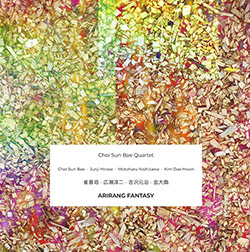
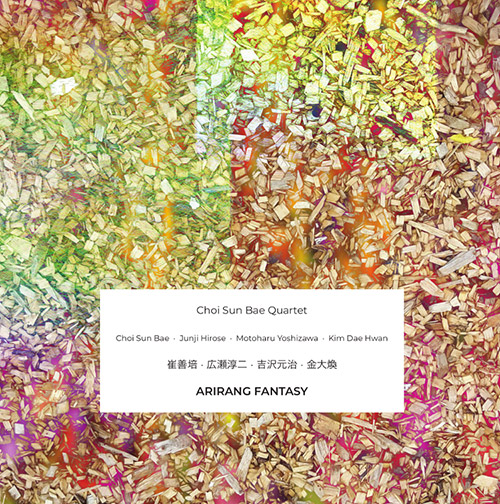
A 1995 live concert at Romanisches Cafe in Tokyo from the South Korean and Japanese free improvising quartet of Choi Sun Bae on trumpet, Junji Hirose on tenor & soprano saxophones, Motoharu Yoshizawa on electric vertical five strings bass, and Kim Dae Hwan on percussion, in five collective improvisations including an homage to Charlie Parker.
In Stock
Quantity in Basket: None
Log In to use our Wish List
Shipping Weight: 5.00 units
EU & UK Customers:
Discogs.com can handle your VAT payments
So please order through Discogs
Sample The Album:
Choi Sun Bae-trumpet
Junji Hirose-tenor saxophone, soprano saxophone
Motoharu Yoshizawa-electric vertical five strings bass
Kim Dae Hwan-percussion
Click an artist name above to see in-stock items for that artist.
Includes 18 page booklet with color photos, credits and liner notes by Choi Sun Bae in Korean and English.
Label: NoBusiness
Catalog ID: NBCD 108
Squidco Product Code: 26158
Format: CD
Condition: New
Released: 2018
Country: Lithuania
Packaging: Jewel Case
Recorded live at Romanisches Cafe, in Roppongi, Tokyo, Japan, on June 12th, 1995, by Teruto Soejima.
"[...] NoBusiness, which is located in Lithuania, has released several reprints of creative music from Japan and South Korea. And in the pile of very exciting free music, Choi Sun Bae Quartet's record Arirang Fantasy, recorded at the Romanian Café in Tokyo on June 12, 1995 also followed.
We meet the trumpeter Choi Sun Bae, the Saxophonist Junji Hirose, the bassist Motuharu Yoshizawa and the Percussionist Kim Dae Hwan, four musicians I have never heard of before I got this record in the mail.
It is said that when these musicians played in Tokyo for the first time, at "Tokyo Meeting" in 1985, they played as a trio with Kang Dae-Hwan on alto saxophone Choi Sun Bae on trumpet and Kim Dae Hwan on drums and percussion. The trio was almost embraced by the Japanese free jazz musicians, and they collaborated with several of them, including Masahiko Satoh, Motoharu Yoshizawa and Kazutoki Umezu. Ten years after this first concert, the concert we witnessed was recorded with both Japanese and South Korean musicians. Sun Bae and Dae Hwan come from South Korea and Junji Hirose and Motorharu Yoshizawa comes from Japan. Motoharu Yoshizawa had previously worked with Derek Bailey, Steve Lacy and Evan Parker, while Junji Hirose had worked in Ground Zero, as well as Masahiko Togashi (drums) and Kasuhisa Uchihashi (guitar and saxophone).
It opens with a long stretch, "Blue Sky", where we only hear Sun Bae on the trumpet and Yoshizawa on five-strand bass. This is a relatively energetic song, where the two fight with an intensity that I associate with the Japanese underground culture. They communicate nicely, and after a slightly shocking opening, people are familiar with the soundtrack and it will be a nice improvisation. Sun Bae's game can remind one part about the way Nate Wooley plays, while the Japanese trumpeter Toshinori Kondo appears.
In the liner notes written by the owner of the cafe where the record was recorded, he writes that since there are so few musicians in Korea playing free music, the musicians need to find their own language, partly based on Korean folk melodies.
On the record we hear mostly duo's and trios, giving each of the four musicians time and space to stretch, experiment and interact on several levels.
The unrelated "Remember Bird" starts completely differently with saxophone and trumpet in some kind of unison "fair". But it does not take long before Sun Bae turns left and is back to the first track, with extremely vigorous trumpet play, while Hiroses saxophone is the most becoming a partner.
The third track "The Stream of Time" opens with Hvans loose drumming, which starts virtually silently, but works upward in intensity. I feel that this form of drumming is relatively far from what we hear today in the West. Of course there is a drum solo that is not far away, for example, Paul Lovens and his like, but there is still something about the "attack" and the way it is done, which you can almost compare to the shows you see and hear from big stadiums with many hundred traditional drummers. But at the same time this is free and extremely freely, and tough.
Then follows "Korea Fantasy" with Sun Bae in the driver's seat. But if at all times he is leading, or if Hiroses saxophone is not good to know. They twist around each other like two in love snakes, and it is impossible to distinguish them from each other. And behind it all lies the bass of Yoshizawa and buzz as if he were attacking the two blowers. Occasionally, he sounds like a lion who is knocking and preparing for an attack, but it does not come. He lets the two blowers hold on and contributes well with the sound of the song. Advanced? To the very highest degree, and very distinctive.
Then they end with the title track, Arirang Fantasy, which is a long (21:50) and utterly free fiction about something that might be Korean folk music, and a song where musicians really cooperate at a high level. The music becomes dreamy, and sometimes it's almost completely silent, but these four musicians do not manage to be quiet for a long time. There is always one of them that breaks out and either smells hard in the drums or floats violently with the arc of the bass while the blowers stay far down there. But after a while, they come with a beautiful ballad-like (sure folk song) thing that is invisibly beautiful in all the "madness". And then they completely take off the two blows and try to correct their instruments while the drums warn about Judgment Day.
But the judgment day does not come. It was just a precaution and you're doing it all the way down with Sun Bae's fine trumpet game before the others come adorned and we're far into freejazz countries again, where intensity is all the time and where the Korean elements are all the time driver's seat. Exciting and original!
The trumpeter Choi Sun Bae and his Japanese and Korean friends have made a record, Arirang Fantasy, for a long time to find the game in the West. This is music that is so eastern and so exciting that it's almost a shame that we have not been aware of them before. Recommended for anyone with ears looking for something new (recorded in 1995) and exciting!"-Jan Granlie, Salt Peanuts (translated by Google)
Also available on vinyl LP.Includes 18 page booklet with color photos, credits and liner notes by Choi Sun Bae in Korean and English.
Get additional information at Salt Peanuts
Artist Biographies
• Show Bio for Choi Sun Bae "Choi Sun Bae produces a clear and lyrical sound on the trumpet, cornet, and flugelhorn. He strives to contribute to the overall beauty of the ensemble rather than to dominate it by drawing attention to the strength and force of his individual improvisations, and he considers tone to be more important than phrasing in his solos. Choi Sun Bae is an accomplished mainstream jazz musician as well as a free improviser. He performs regularly in Japan, where he is well known as Korea's representative master trumpeter. He participated in the Olympic International Jazz Festival in 1988 and played with the Incheon Symphony Orchestra. In 1998 he recorded a freely improvised album, Freedom / Solo Trumpet Improvisations with the help of Suetomi Dakao. This album is an important record of life and art, which is portrayed throughout his work, and it is solid proof that he is a truly contemporary artist. Since 2002 he constantly works together with Alfred Harth appearing on several Laubhuette Productions up to now. In the years 2003 - 2006 he also contributed sound sources to Alfred Harth's Mother-Of-Pearl-CD-Series" ^ Hide Bio for Choi Sun Bae • Show Bio for Junji Hirose "Born March 29, 1955 in Kokubunji, Tokyo. Junji Hirose is one of the most unique artists on the Japanese free improvised music scene. Since the eighties he has developed highly diverse and creative sound, playing tenor and soprano sax and the self-made "noise machine." Hirose started listening to modern jazz in junior high, when he especially liked trumpeters such as Miles Davis and Terumasa Hino. He bought a trumpet and taught himself to play. Having listened to records by Davis's band for some time, he became very interested in John Coltrane, who was in that band. At this time he bought a tenor sax and started to teach himself to play. (He also started to play soprano sax around 1977). Hirose enrolled in Meiji Gakuin University in 1973, and soon joined the student modern jazz club. While he was still a student, a soul group invited him to play in a recording, which came out and became Hirose's record debut. Also as a student, he happened to hear the album Pakistani Pomade, by pianist Alex Schlippenbach's trio, with Evan Parker (sax) and Paul Lovens (drums). This was Hirose's first encounter with European free improvisation, and the music--Parker's in particular--had a strong impact on him, and greatly influenced his musical style. About a year after his graduation in 1978, Hirose began to collaborate more with other musicians. In 1979 he formed the free improvisation trio Free Expansion, with Shuichi Nagano (bass) and Yasuhiro Yamazaki (drums). It was around that time that he got to know Masahiko Kono (trombone) and they began holding concerts together. Hirose also occasionally participated in workshops organized by artists like Toshinori Kondo (trumpet), the late Motoharu Yoshizawa (bass), and Mototeru Takagi (tenor sax), where he played with non-Japanese musicians like Eugene Chadbourne (guitar) and Paul Lovens. Artists with whom Hirose played often in the early 1980s included the late Akira Iijima (guitar), Yoshinori Motoki (guitar), and Yoshisaburo Toyozumi (drums). These gigs were held mainly at the club Far Out in Atsugi, and the performance space Terpsichore in Nakano, Tokyo. At Terpsichore he organized concerts with a variety of artists--musicians, dancers, poets, etc. Hirose released his first solo album, Solo Saxophone, in 1981. When the EastAsia Orchestra was formed in 1982 by Yoshiaki Fujikawa (tenor sax), Hirose was invited to join the group on sax. He left the band soon thereafter, but rejoined them in 1984 for a brief period, during which they toured West and East Germany, Holland, Switzerland, and Austria. This was Hirose's first experience performing outside Japan. In the same year he joined percussionist Masahiko Togashi's band as a sax player, and had played with Togashi in various settings--duo, trios, quartets, orchestras, etc.--until Togashi's death. In a number on the 1981 album Hodgepodge, Hirose used the electric guitar as a "noise machine." After that he began to develop his original self-made instrument for "noise sound." At first he simply placed a lot of junk items and toys around him and made sounds on them; but in the mid-1980s he put them together in a frame. In 1987, when he was to perform at a jazz festival in Leipzig, East Germany, Hirose made the instrument smaller so he could carry it more easily, and found this version to be better than the larger one. Thus it became the prototype for his current noise machine. In the late 1980s, Hirose played this instrument much more than he played the sax. At about that time he met Otomo Yoshihide (turntables and guitar), and starting in 1988 played duos with him over a period of several years. In 1989 they made the duo album Silanganan Ingay. While Hirose used mainly the noise machine in duo concerts, he joined Otomo's band Ground-Zero as a sax player. In 1991 he was a guest performer with the band, and in 1992-93 he was a regular member. He also played sax in Ground-Zero's final concert in Tokyo in 1998. In 1989, Bassist Daisuke Fuwa formed the orchestra Shibusashirazu, which incorporates jazz, dance, theater, and art, and since then Hirose has occasionally played sax with the group. He was also a member of drummer Masahiro Uemura's avant rock/jazz band P.O.N. for the entire duration of its existence (1991 to 1999). Around the mid-1990s, he joined video artist Hideaki Sasaki's trio project Stereodrome with Uchihashi Kazuhisa Uchihashi (guitar and effects). Hirose performed at the Moers Jazz Festival in 1993 and 1998, as a member of Ground-Zero and Shibusashirazu orchestra respectively." ^ Hide Bio for Junji Hirose • Show Bio for Motoharu Yoshizawa "Motoharu Yoshizawa (吉沢元治) (1931 - September 12, 1998) was an influential Japanese bassist known for playing in a distinctive free jazz and free improvisation style, sometimes deploying electronics and using the unusual self-designed five-string bass he referred to as the "Tiritack". Yoshizawa collaborated with innumerable musicians over his long career; some of the better known include Masayuki Takayanagi, Masahiko Togashi, Takehisa Kosugi, Mototeru Takagi, Kaoru Abe, Steve Lacy, Dave Burrell, Derek Bailey, Evan Parker, Barre Phillips, Butch Morris, Elliott Sharp, Ikue Mori, Keiji Haino, Kan Mikami, Kazuki Tomokawa, Christopher Yohmei Blasdel & Tenko. Yoshizawa began playing in a free style in the mid-1960s, in groups with Yosuke Yamashita and Kazunori Takeda, as well as in a famous jam session with Elvin Jones during John Coltrane's Japan tour of 1966. Yoshizawa's own trio with Mototeru Takagi was said to have been pivotal for Japanese free jazz, though no recordings survive. In 1969, Yoshizawa played with Masahiko Togashi's famous quartet and Masayuki Takayanagi's New Directions group, participating in both groups' landmark recording sessions of that year.Yoshizawa was a pioneer of solo bass performance, his experiments synchronous with those of Barre Phillips. He first played this style in 1969, though nothing was recorded until several years later. In the mid-1970s, Yoshizawa recorded three albums for solo bass. Later in the decade he had a fruitful collaboration with alto saxophonist Kaoru Abe, which led to the recording of one album, Nord. In the 1990s, Yoshizawa began experimenting with an effects-laden, five-string bass of his own design. He spent six months living and playing in New York in 1989-90. ^ Hide Bio for Motoharu Yoshizawa • Show Bio for Kim Dae Hwan "Kim Dae Hwan (김대환) was one of Korea's most renowned western style percussionists. He died 70 years old. It was very fast to be gone. We cannot forget his wildness and smile. At first He was a drummer of the first Korean rock group ADD4 formed by Shin Joong Hyun who is the godfather of Korean rock. Then he formed his own band called Kim Trio (the principle of this band was never performing the same songs), and so on. He joined the first Korean free music group Kang Tae Hwan Trio in 1978. After that, he had performed by solo musician, and collaborated with many kinds of artists till his death. And also he was a famous calligraphist. His work, 346 letters on a gain of rice, appears on Guinness Book. He had performed calligraphy on his stage every time. Only this was his leader album put on the market formally before he died. He played very simple drum sets that constructed with a roto-tom and cymbals and Korean traditional drum, with six sticks in his hands. It was very silently. Above his drum sound, haegeum (Korean traditional instrument) by Mrs. Kang Eun Il was crying bitterly or weeping gently." ^ Hide Bio for Kim Dae Hwan
9/15/2026
Have a better biography or biography source? Please Contact Us so that we can update this biography.
9/15/2026
Have a better biography or biography source? Please Contact Us so that we can update this biography.
9/15/2026
Have a better biography or biography source? Please Contact Us so that we can update this biography.
9/15/2026
Have a better biography or biography source? Please Contact Us so that we can update this biography.
Track Listing:
1. Blue Sky 16:53
2. Remember Bird 7:56
3. The Stream of Time 8:13
4. Korea Fantasy 11:14
5. Arirang Fantasy 21:50
Improvised Music
Jazz
Free Improvisation
Asian Improvisation & Jazz
Quartet Recordings
Friends of Squid
Search for other titles on the label:
NoBusiness.
 |
| Hirose, Junji / Otomo Yoshihide DUO-1 (Ftarri) |
| Three decades after their 1989 album on the Tanga-Tanga label, Silanganan Ingay, turntablist Otomo Yoshihide reunites with improviser Junji Hirose, who more typically performs on saxophone, but in this duo uses his self-made sound instruments created by combining a variety of devices and everyday objects, recording these three "Scenes" live at Pool, in Tokyo. |
 |
| Hwan, Kim Dae / Choi Sun Bae Korean Fantasy (NoBusiness) |
| A live concert from 1999 at Aspirante, Hofu City, Yamaguchi, Japan between Korean improvisers Choi Sun Bae on trumpet & harmonica and Kim Dae Hwan on drums, both members of Kang Tae Hwan trio in their first duo, performing three dialogs with Hwan playing traditional Korean drums in a "one beat" style while Choi Sun Bae plays both electric and acoustic trumpet, including an extended solo section. |
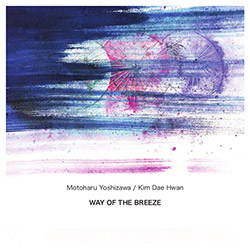 |
| Yoshizawa, Motoharu / Kim Dae Hwan Way Of The Breeze (NoBusiness) |
| A rare 1993 live duo between Japanese avant-garde pioneers Motoharu Yoshizawa on electric bass and Kim Dae Hwan on percussion, this profound and genre-defying recording explores sound itself, blending space, silence, and spontaneous interaction into a philosophical, boundary-pushing acoustic journey that evokes elemental, organic sonic landscapes. |
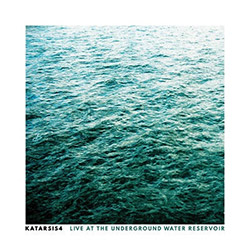 |
| Katarsis4 (Bizys / Janonis / Pancerovas / Jusinskas) Live At The Underground Water Reservoir (NoBusiness) |
| Using the natural resonance of the Liepkalnis underground water reservoir in Vilnius, Lithuania, the Katarsis4 saxophone quartet of Arminas Bizys, Algirdas Janonis, Danielius Pancerovas and Kazimieras Jusinskas merge free improvisation, both melodic and through extended tetechniques, with composed forms and folk music, capturing this extended work of beguiling and powerful music. |
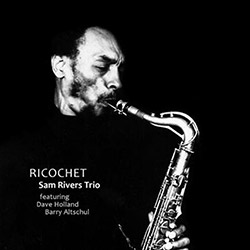 |
| Rivers, Sam Trio feat Dave Holland / Barry Altschul Ricochet (NoBusiness) |
| Captured live in San Francisco in 1978, the lastest in the NoBusiness Sam Rivers Archive series finds the masterful wind player in peak form with the trio of Dave Holland on bass & cello, and Barry Altschul on drums, Rivers on tenor & soprano sax, flute & piano, in the 52 minute free jazz epic "Ricochet", a high-energy work of diverse mood and character; superb! |
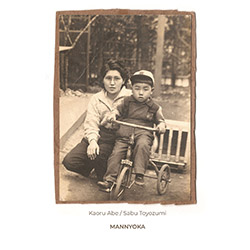 |
| Abe, Kaoru / Sabu Toyozumi Mannyoka (NoBusiness) |
| NoBusiness continues their essential 70's reissue series of renowned Japanese free improvisers, here in an LP and extended CD edition of the live duo of percussionist Sabu Toyozumi and saxophonist Kaoru Abe on alto, soprano & sopranino saxophones, the LP presenting their 1978 concert at Gaja, Hatsudai in Tokyo, the CD extended with a live set at Minor, Kichijoji the same year. |
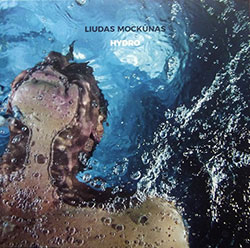 |
| Mockunas, Liudas Hydro [VINYL] (NoBusiness) |
| Lithuanian reedist Liudas Mockunas in an unusual record of clarinet and saxophone improvisations, from solo work of powerful technique to pieces using water prepared instruments to create a wealth of bubbling and aberrant sound on the instrument, side A presenting the 7 part "Hydration Suite", Side B the 3 part "Rehydration", and "Dehydration". |
Customers Who Bought This Item Also Bought:
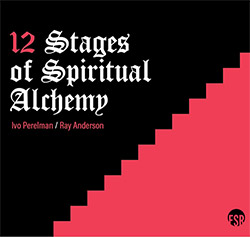 |
| Pereleman, Ivo / Ray Anderson 12 Stages of Spiritual Alchemy (Listen! Foundation (Fundacja Sluchaj!)) |
| Tenor saxophonist Ivo Perelman and trombonist Ray Anderson distill their proven chemistry heard in the quartet album Molten Gold (FSR 03|2023), here in twelve concise, alchemy-titled improvisations, Perelman's elastic lines and altissimo edge intertwining with Anderson's plunger color, slide glissandi, and buoyant phrasing to forge vividly conversational miniatures of texture, tension, and release. |
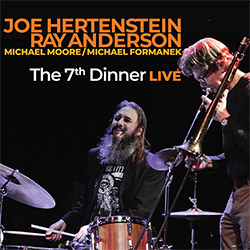 |
| Anderson, Ray / Joe Hertenstein Quartet feat. Michael Moore & Michael Formanek 7th Dinner Live (Listen! Foundation (Fundacja Sluchaj!)) |
| Drawn from three 2024 concerts in Berlin, St. Johann, and Cormons, drummer Joe Hertenstein's touring trio with Michael Moore (reeds) and Michael Formanek (bass) welcomes trombonist Ray Anderson, the quartet forging strong themes and free-form interplay where Anderson's ebullience, Moore's lyricism, Formanek's foundational lines, and Hertenstein's flexible drive spark constantly evolving momentum. |
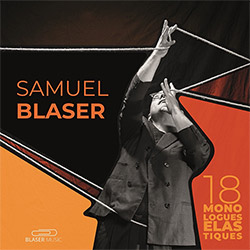 |
| Blaser, Samuel 18 Monologues Elastiques (Blaser Music) |
| A solo journey of striking imagination, Swiss trombonist Samuel Blaser channels the modernist spirit of Blaise Cendrars in eighteen original works recorded in Berlin, blending sculptural sound, melodic exploration, and poetic abstraction into a deeply personal meditation that bridges contemporary jazz, literature, and sonic art. |
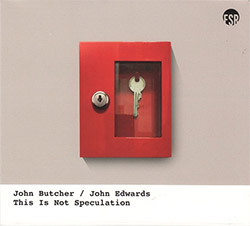 |
| Butcher, John / John Edwards This Is Not Speculation (Listen! Foundation (Fundacja Sluchaj!)) |
| A remarkable live recording from Einstein Kultur in Munich, reuniting British free improvisation masters John Butcher on saxophones and John Edwards on double bass in four expansive, detailed, and often breathtaking duets, exploring abstract soundscapes with razor-sharp interplay, extended techniques, and an uncompromising sense of sonic exploration. |
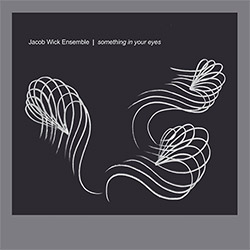 |
| Wick, Jacob Ensemble Something in Your Eyes (Full Spectrum) |
| Trumpeter & vocalist Jacob Wick leads an ensemble of Mexico City's vibrant experimental musicians with Gibran Andrade, Mabe Fratti, Alina Maldonado, Saul Ojeda, and Federico Sanchez, in a deconstructed exploration of pop, jazz, and country, transforming fragments of songs by Emmylou Harris, Alice Coltrane, Kylie Minogue, and Billie Holiday into improv scores that transform tradition into new sonic forms. |
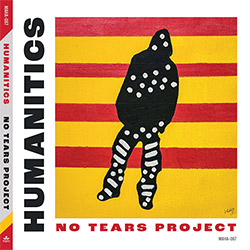 |
| No Tears Project Humantics (Mahakala Music) |
| A powerful and insightful fusion of jazz, spoken word, and improvisation, this evocative album led by Christopher Parker and Kelley Hurt explores themes of resilience, justice, and shared humanity through compositions by Oliver Lake, Donald Brown, and Bobby LaVell, with gripping performances by a stellar ensemble that includes Marc Franklin, Chad Fowler, Rodney Jordan, Darrian Douglas, Treasure Shields Redmond, &c. |
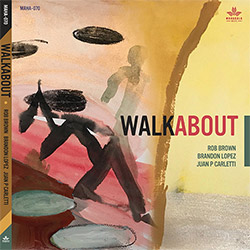 |
| Brown, Rob / Brandon Lopez / Juan P. Carletti Walkabout (Mahakala Music) |
| An energetic trio session of collective free improvisation from NY alto saxophonist Rob Brown, bassist Brandon Lopez, and drummer Juan Pablo Carletti, recorded in the studio and driven by an intense energy that maintains a powerful swing, with Brown's incisive phrasing, Lopez's commanding bass, and Carletti's dynamic percussion merging into a spontaneous and deeply expressive musical force. |
 |
| Copland, Marc Quartet (Robin Verheyen / Drew Gress / Mark Ferber) Dreaming (Inner Voice Jazz) |
| Expanding their intuitive interplay, the Marc Copland Quartet — featuring Robin Verheyen, Drew Gress, and Mark Ferber — explores harmonic depth and rhythmic layering through a dynamic set blending originals with reinterpretations of Monk and Kern, weaving lyrical free ballads, intricate compositions, and rich improvisational dialogs with great spontaneity, cohesion, and warmth. |
 |
| Booker T & The Plasmic Bleeds Ode To BC/LY... And Eye Know BO.... da Prez (Mahakala Music) |
| Underground saxophone legends Booker T. Williams and Gary Hammon lead a powerhouse ensemble with Marc Franklin, Chad Fowler, Kelley Hurt, Christopher Parker, Luke Stewart, and Chad Anderson, blending post-Coltrane jazz, reggae inflections, and balladry in a vibrant session that revisits their decades-long musical journey while honoring resilience, friendship, and cultural legacy. |
 |
| Haino, Keiji / Natsuki Tamura What Happened There? (Libra) |
| An electrifying 1st-time meeting between guitarist Keiji Haino and trumpeter Natsuki Tamura, captured live at Tokyo's Shinjuku Pit Inn, where the duo shape an unpredictable set that veers from reflective stillness to wildly passionate outbursts, their extended techniques and visceral vocals — sometimes urgent, sometimes outrageous — fueling an exhilarating and uncompromising sonic adventure. |
 |
| Zorn, John (Roeder / Wollesen / Zorn / Lage) New Masada Quartet, Volume Three (Tzadik) |
| The third volume in John Zorn's New Masada Quartet — Zorn on alto sax, Jorge Roeder on bass, Kenny Wollesen on drums, and Julian Lage on guitar — captures a packed 2024 concert at Roulette in Brooklyn, where fervent interplay and exceptional soloing bring six Zorn compositions to life in a single, seamlessly indexed track before an enthusiastic audience. |
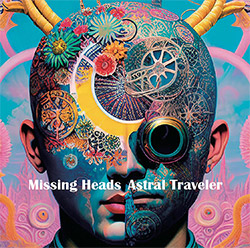 |
| Missing Heads (Kazuhie / Mitsuru / Yoshida) Astral Traveler (Magaibutsu Limited) |
| With two guitarists split between the left and right sides of the head--Kazuhide Yamaji and Mitsuru Tabata, also on vocals--in a trio aTwo guitarists split between the left and right sides of the head--Kazuhide Yamaji and Mitsuru Tabata, also on vocals--in a trio with Ruins drummer and Magaibutsu label-leader Tatsuya Yoshida, for a an energetic album of mostly instrumental post-prog "no-wave" improvisations, nine wild tracks captured live from four 2024 concerts in Japan.with Ruins drummer and Magaibutsu label-leader Tatsuya Yoshida, for a an energetic album of mostly instrumental post-prog "no-wave" improvisations, nine wild tracks captured live from four 2024 concerts in Japan. |
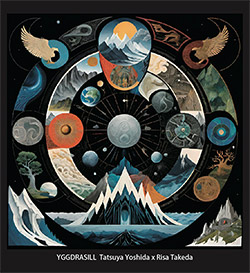 |
| Yoshida, Tatsuya x Risa Takeda YGGDRASILL (Magaibutsu Limited) |
| Thirteen high-speed rock improvisations on drums, synth, piano & voice from the continuing collaboration of Magaibutsu label leader & drummer Tatsuya Yoshida and synthesist & pianist Risa Takeda, each track titled for Nordic mythology, the album title a reference to the World Tree, a giant ash supporting the universe; dramatic, amazing, unconventional instrumental music. |
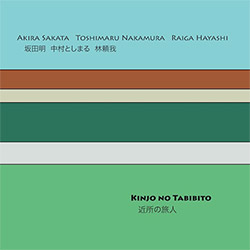 |
| Sakata, Akira / Toshimaru Nakamura / Raiga Hayashi Kinjo no Tabibito (Meenna) |
| A wild live improvisation at Apollo, in Shimokitazawa, Tokyo from legendary Japanese reedist Akira Sakata on alto sax and clarinet, Raiga Hayashi on drums, and Toshimaru Nakamura on no-input mixing board, the latter adding unusual electronic elements to otherwise characteristically energetic free jazz from the Tokyo scene, making this a wonderfully unique album. |
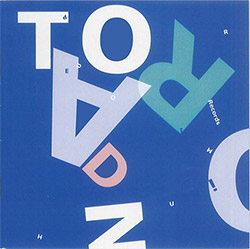 |
| Great Sakata Quintet (Sakata / Schwedt / Eckhardt / Borghini / Lillinger) Tornado (Euphorium) |
| After three Luten and two Brotzmann quintets, pianist Oliver Schwerdt, drummer Christian Lillinger and two double bassists--John Eckhardt and Antonio Borghini--invite Japanese multi-reedist and vocal improviser Akira Sakata to join them in concert at naTo, in Leipzig for a wild concert, releasing a monumental improvisation in a full length CD and a 2nd set on 3" CD. |
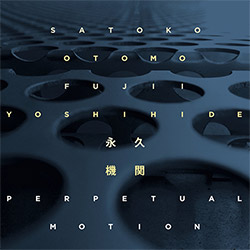 |
| Fujii, Satoko / Otomo Yoshihide Perpetual Motion (Ayler Records) |
| Expanding their instruments into sonic sculpture, this first meeting between acclaimed Japanese improvisers Satoko Fujii, performing inside and out of the piano, and electric guitarist Otomo Yoshihide, demonstrates their incredible compatibly as heard in these live recordings at Tokyo's Pit Inn, part of an annual festival organized by Fujii & trumpeter Natsuki Tamura. |
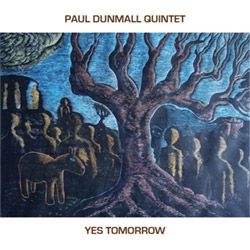 |
| Dunmall, Paul Quintet (w / Saunders / Foote / Owston / Bashford) Yes Tomorrow (Discus) |
| An exhilarating departure from saxophonist Paul Dunmall's Coltrane-esque approach to free improvisation with this electrified quintet of Steven Saunders on guitar, Richard Foote on trombone, James Owston on bass and Jim Bashford on drums, playing with upbeat urgency through a set of Dunmall compositions, often letting Saunder's riffs take the foreground around a first-rate set of solos. |
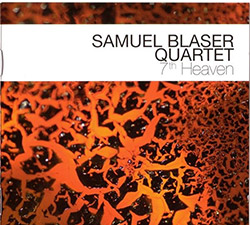 |
| Blaser, Samuel 7th Heaven (Between The Lines) |
| Based in New York at the time of this recording, Swiss trombonist and composer Samuel Blaser's quartet with Thomas Morgan on double bass, Gerald Cleaver on drums and Scott Dubois on guitar explore rhythmic and tonal approaches to improvisation, bridging modern compositional forms with traditional jazz in energetic playing of an engagingly relaxed mood. |
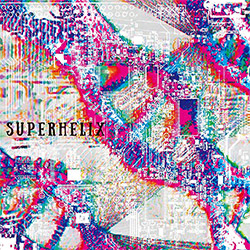 |
| Yoshida, Tatsuya / Risa Takeda SUPERHELIX [CD + DOWNLOAD VIDEOS] (Magaibutsu Limited) |
| Fifteen rock instrumentals between drummer Tatsuya Yoshida and pianist & keyboardist Risa Takeda, generally high-speed, technically superb and melodically infused pieces of imaginative creativity with a quirky sense of humor, augmented with Yoshida's vocalizing and effect processing from both; includes a download sheet for 15 high-def movies, one for each track on the album. |
![Rollins, Sonny : The Early Years [4 CDs]](https://www.teuthida.com/productImages/misc4/37711.jpg)
![Orchestre National De Jazz: With Carla [2 CDs]](https://www.teuthida.com/productImages/misc4/37714.jpg)
![Vasseur, Christian / Steve Gibbs / Nicolo Vivi : FWWU+ Duos Trios [2 CDs]](https://www.teuthida.com/productImages/misc4/37891.jpg)
![Ehrlich, Marty: OPEN AIR: The Complete Saxophone Quartet Compositions of Julius Hemphill [2 CDs]](https://www.teuthida.com/productImages/misc4/37922.jpg)
![Frith, Fred / Cornelius Claudio Kreusch / Johannes Tonio Kreusch: Pink / Neon [2 CDs]](https://www.teuthida.com/productImages/misc4/37712.jpg)
![Frith, Fred / Cornelius Claudio Kreusch / Johannes Tonio Kreusch: Pink / Neon [VINYL 2 LPs]](https://www.teuthida.com/productImages/misc4/37713.jpg)
![Miguel, Sei: Viva! O Carro de Fogo de Sei Miguel [2 CDs]](https://www.teuthida.com/productImages/misc4/37739.jpg)
![Money: 5 [2 CDs]](https://www.teuthida.com/productImages/misc4/37890.jpg)
![Drumm, Kevin: The Mild Temper [6 CD BOX SET]](https://www.teuthida.com/productImages/misc4/37651.jpg)
![Trzaska, Mikolaj / John Edwards / Mark Sanders: Because It Happens [VINYL]](https://www.teuthida.com/productImages/misc4/37551.jpg)
![Wassermann, Ute: Chimeric [VINYL]](https://www.teuthida.com/productImages/misc4/37652.jpg)
![Aranda, Irene (Malfon / Aranda / Yamasaki): May [CD + DOWNLOAD]](https://www.teuthida.com/productImages/misc4/37825.jpg)


![Bopp, Christiane: Rever, murmurer, dire [CD + DOWNLOAD]](https://www.teuthida.com/productImages/misc4/37823.jpg)
![Angles 4 (Kuchen / Haker-Flaten / Stahl / Nordeson): Angles 4 [CD + DOWNLOAD]](https://www.teuthida.com/productImages/misc4/37826.jpg)
![Glass Triangle (Parkins / Rasmussen / Sawyer): 3 X 1 [CD + DOWNLOAD]](https://www.teuthida.com/productImages/misc4/37827.jpg)
![Musicworks: #154 Summer 2026 [MAGAZINE + CD]](https://www.teuthida.com/productImages/misc4/37879.jpg)

![TRAC (Teddy Ryles / Alexander Cooper): Heavy Nano Ream Aria [2 CDs]](https://www.teuthida.com/productImages/misc4/37647.jpg)
![Jerman, Jeph: For Alvin Kelly [CASSETTE + DOWNLOAD]](https://www.teuthida.com/productImages/misc4/37521.jpg)
![Mann, Oliver / Stefano Pilia: Precious Moments [CASSETTE + DOWNLOAD]](https://www.teuthida.com/productImages/misc4/37494.jpg)
![Jerman, Jeph / Ted Byrnes: Muir [CASSETTE + DOWNLOAD]](https://www.teuthida.com/productImages/misc4/37520.jpg)
![+DOG+: Angel Wings [VINYL]](https://www.teuthida.com/productImages/misc4/37513.jpg)
![Money: 4 [2 CDs]](https://www.teuthida.com/productImages/misc4/37505.jpg)
![+DOG+: The Garden [VINYL]](https://www.teuthida.com/productImages/misc4/37511.jpg)
![Le UN: 25 Pieces Sans Vide [3 CDs]](https://www.teuthida.com/productImages/misc4/37374.jpg)
![Directives: Reconsolid [CASSETTE]](https://www.teuthida.com/productImages/misc4/37418.jpg)
![Tilbury, John: At Home [4 CDs]](https://www.teuthida.com/productImages/misc4/37729.jpg)
![Scott, Ryan: 21st-Century Canadian Snare Drum [2 CDs]](https://www.teuthida.com/productImages/misc4/37538.jpg)
![Feldman, Morton / GBSR Duo w/ Taylor MacLennan: Trios [6 CD BOX SET]](https://www.teuthida.com/productImages/misc4/37020.jpg)
![Frey, Jurg : Composer, Alone [3 CDs]](https://www.teuthida.com/productImages/misc4/36927.jpg)
![Bruce, Lenny: Comedy & Controversy: The Original Albums 1958-61 [2 CDs]](https://www.teuthida.com/productImages/misc4/37409.jpg)
![Amba, Zoh: Eyes Full [VINYL]](https://www.teuthida.com/productImages/misc4/37491.jpg)
![Henry Cow: The Henry Cow Box Redux: The Complete Henry Cow [18 CDs, DVD & 3 BOOKLETS]](https://www.teuthida.com/productImages/misc4/37272.jpg)
![MacLean, Steve: Box Of Seven [7 CD BOX]](https://www.teuthida.com/productImages/misc4/36467.jpg)
![Mehead: One Good Eye [REISSUE]](https://www.teuthida.com/productImages/misc4/37276.jpg)
![Zorn, John: The Song of Songs [CD + CD BOOK]](https://www.teuthida.com/productImages/misc4/36923.jpg)
![Coultrain: Mundus [COLORED VINYL]](https://www.teuthida.com/productImages/misc4/33056.jpg)
![Hprizm: Signs Remixed [COLORED VINYL]](https://www.teuthida.com/productImages/misc4/30635.jpg)
![Halls Of the Machine: All Tribal Dignitaries [CASSETTE w/ DOWNLOAD]](https://www.teuthida.com/productImages/misc4/36134.jpg)
![Koenjihyakkei: Live at Club Goodman [2 CDs]](https://www.teuthida.com/productImages/misc4/36111.jpg)
![Sorry For Laughing (G. Whitlow / M. Bates / Dave-Id / E. Ka-Spel): Rain Flowers [2 CDS]](https://www.teuthida.com/productImages/misc4/35985.jpg)
![Rolando, Tommaso / Andy Moor : Biscotti [CASSETTE w/ DOWNLOADS]](https://www.teuthida.com/productImages/misc4/36106.jpg)
![Electric Bird Noise / Derek Roddy: 8-10-22 [CD EP]](https://www.teuthida.com/productImages/misc4/35970.jpg)
![Coley, Byron: Dating Tips for Touring Bands [VINYL]](https://www.teuthida.com/productImages/misc4/17906.jpg)

![Lost Kisses: My Life is Sad & Funny [DVD]](https://www.teuthida.com/productImages/misc4/lostKissesDVD.jpg)