


The second edition of this essential box set corrects the recording date and resequences the performances, as the trio of guitarist Derek Bailey, saxophonist Evan Parker, and drummer/multi-instrumentalist Han Bennink are heard in an amazing evening of performance at 28 rue Dunois, in Paris, France, in duo and trio configurations, exploring material similar to Parker's "Topography of the Lungs".
In Stock
Quantity in Basket: None
Log In to use our Wish List
Shipping Weight: 12.00 units
EU & UK Customers:
Discogs.com can handle your VAT payments
So please order through Discogs
Sample The Album:
Derek Bailey-guitar
Evan Parker-tenor saxophone, soprano saxophone
Han Bennink-drums, instruments
Click an artist name above to see in-stock items for that artist.
UPC: 3491570067321
Label: Fou Records
Catalog ID: FR-CD-34-37
Squidco Product Code: 37246
Format: 4 CDs
Condition: New
Released: 2025
Country: France
Packaging: Box Set - 4 CDS + Booklet
Recorded at 28 rue Dunois, in Paris, France, on April 2nd, 3d and 4th, 1981, by Jean-Marc Foussat.
"Topographie Parisienne captures Derek Bailey, Han Bennink and Evan Parker in a historic series of live performances recorded at 28 rue Dunois in Paris in April 1981. Across four CDs, the trio explores extended free improvisations in shifting configurations - solos, duets and full trio performances - highlighting the depth, invention and intensity of three central figures of European improvised music."-Fou
"I had already digitised all the music, recorded on magnetic tape, of course, but I was in transit, between two houses, which prevented me from accessing all my archives and forced me to rely solely on my memory, when, in the summer of 2018, Evan Parker finally gave me the green light over the phone to produce the first version of this box set, which I still thought would be a record of a single long concert.
No one could have imagined that this would one day become 'History', as Evan so rightly pointed out to me during that same phone call. In the urgency and analogue excitement of the time, I was not as meticulous as today's computer technology requires. To do it properly, I should obviously have written everything down on each reel. This was not the case and, on the boxes of the tapes in question, there is only the indication 'DB-HB-EP'. None of them is numbered. Only one is dated: 'Dunois | 3 April 1981'. So, in good faith, I invented the story that, in a tour de force, all the music had been played on that one day. Neither Evan, Han nor I, though, could really remember anything concrete about it — it was too long ago. Han only remembered that it was a Company organised and prepared by Evan alone, who had had the idea of bringing the three of them together again with Derek... something that Evan himself had completely forgotten. I didn't have any photos either. In his archives, Horace had pictures of each of the musicians from those years, but unfortunately they weren't related to this particular concert.
It was only much later, when I finally unpacked after moving into my current home that, first miracle, I found, neatly stored in a folder, the entire roll of photos that my brother — whom I took with me as often as possible — had taken during the second of these three concerts. With the photos were the Dunois flyers, all of which mention three days, of course. Then, second miracle, the day before receiving the proofs for this new edition, among my CDs, which I was organising alphabetically, there it was, dispelling all doubts: the envelope containing a detailed history of my recordings during those blessed years. The remaining mystery is that I don't know why Derek's solo track is missing. For a moment I thought of Aida... but that turned out to be a little earlier.
Today, even though we know almost everything about the reality of that gathering, I'm still happier to offer you the crazy idealised concert that stays in my memory, and so I am taking the liberty of deliberately changing the completely random order that appeared on the first version to present the unfolding of a royally dreamed-up invention!"-Jean-Marc Foussat (tr. Janette Parr) October 2025
"A sequel to the legendary Topography of the Lungs that first brought together the three improvisers almost half a century ago? Or an edition of Company, Derek Bailey's Variable Geometry Group? Indeed, a libretto by Riccardo Bergerone records Company dates at Dunois in April 81 with these three musicians (12-13 - 14 April?). Almost three and a half hours of music for an evening at Le Dunois. Two DB - HB - EP trios of more than 40 minutes. Two 12 - and 27 - minute DB - EP duets, a 30 - minute DB - HB duo, two 12 - minute HB - EP duets and two 11 - and 10 - minute EP solos.
If Evan Parker and Derek Bailey collaborated closely in duets and other ensembles such as Music Improvisation Company and then Company, as well as with the Spontaneous Music Ensemble (the album Karyobin and the legendary double ceded The Quintessence for example), it's mostly in duet with Derek Bailey that Bennink has been performing for years.
Jean-Marc Foussat, the director of FOU Records, has been a ubiquitous, enthusiastic, selfless and generous soundman ever since. We owe him some superb sounds for these musicians: Aida, a solo of Derek Bailey, Pisa 80, An Improvisor's Symposium of Evan Parker with Bailey Lovens Lewis etc ..., Epiphany of Company etc ... Today, after checking carefully the circumstances of the concert and the recording with the protagonists and witnesses like Jean Buzelin and Jean Rochard, Foussat decided to publish the entirety of it.
Maybe Derek Bailey or Evan Parker would have picked enough to sell two. Since the time of the recording of Topography of The Lungs, a flagship album recorded in 1970 as a creative manifesto for the independent label Incus founded by Bailey, Parker and Tony Oxley, a lot of water had already flowed under the bridges. Topography was then the expression of a sound exploration in the margin of the instrument. Each instrumentalist assumes, directly or in their own way, the "non-idiomatic" demand expressed by Bailey a few years later (see his book Improvisation Its Nature and Practice in Music) within the free-jazz phenomenon completely free and aggressive panzer trend -muzik of Brotzmann and Schlippenbach. But also the music of this album is that of a collective welded and coherent with a common musical goal, the discovery of new sounds and modes of games and completely revolutionary improvisations.
In 1981, this concert features three individuals who have evolved since the year of the recording of Topography of The Lungs and tiennnet to emphasize their differences. It is clear that Bennink and Parker do not have the same concerns. Derek Bailey has found a personal style that will find its most beautiful expression in 1980 in the acoustic album Aida (Incus 40) and his virtuoso playing on the electric, based on the use of a volume pedal, has acquired in a clear and logical way with its partners. Evan Parker has embarked on solo soprano sax music (an illusion of polyphony with circular breathing) as can be heard twice in this set. And he too has created a very personal universe where the oblique treatment of melodic and sometimes repetitive elements with a magical inspiration meets his immoderate taste for alternative breathing and articulation techniques.
Han Bennink has abandoned his drums drums composed of Chinese drums, woodblocks, bells, scrapers, Indian tablas, a multitude of cymbals and rattlesnakes of all sizes and provenances, not to mention this gigantic bass drum, for a much more basic ancient kit. His current style refers more to the sound of Baby Dodds than to that of Elvin Jones, reintroducing African rhythms as they are heard on the ethnological field recordings he collected eagerly (Ocora and Unesco). He adopts a host of instruments: it is heard here to the clarinet and trombone with which he opens the hostilities in the trio of CD 2 with a real talent while playing drums with the feet. A little farther, it is with the harmonica that it is inserted between the two duettists British. But it was not unusual for him to fight with a violin or banjo sitting on the floor. It is also heard to whirl the pulsations and strikes on the surface of these instruments as if all the furniture of an apartment was flying down the stairs bouncing on the steps. Rather than creating a universe based on a common denominator, each artist, and especially Bennink and Bailey, tries to train the other towards his personal fads.
On the first trio of CD 1, Bailey can barely be heard playing the acoustic guitar surrounded by the loudness of the other two. Likewise, in the HB - DB duo of CD 4. This CD 4 closes with a fascinating duet from Parker to soprano and Bennink to clarinet and bass clarinet, which manages to cope with the prodigy. As this is probably the second and final meeting of these three essential musicians, these recordings should alert all who are interested in near and far improvised music and recall the importance of Dunois 28 in the musical life of the improvisation. Steve Beresford just made a comment about a trio gig at the Little Theater Club, presumably in the early '70s. Extraordinary moments and brave attempts to diversify sound and sound practices are removed from this album. hold the challenge of the duration and diversification of improvisations. Paris topography of a multiplicity of sounds and musical actions and a real complicity between three major artists.
These recordings contain all the ingredients of free-music, the explosive energy is close to the trance, the silence is approached with a lot of sonic details, the madness of Han Bennink Bailey presses in its last entrenchments, even in the airy sequences by inventing unforgettable rhythmic figures. If Parker seems imperturbable, he does not hesitate to burst the column of air and warm his reed. Despite inevitable overflows (Bennink!), A deep listening binds the three musicians, especially trio.
The Cd2 Trio also evolves unexpectedly, expressing very validly the philosophy of Project Company in its approach to renew and extend the practice of improvisation. I also add that we hear the audience laughing with the jokes (visual) drummer. Some would say that these four CDs are too long and excessive. I maintain that the exchanges and follies contained here exert (still and ever) a real fascination and that they drag us into extremes to which a studio session does not always succeed. Thank you Jean-Marc, Han and Evan for having authorized this unexpected and highly delightful release!"-Fou Records (via Google Translator
Artist Biographies
• Show Bio for Derek Bailey "Derek Bailey (29 January 1930 - 25 December 2005) was an English avant-garde guitarist and leading figure in the free improvisation movement. Bailey was born in Sheffield, England. A third-generation musician, he began playing the guitar at the age of ten, initially studying music with his teacher and Sheffield City organist C. H. C. Biltcliffe, an experience that he did not enjoy, and guitar with his uncle George Wing and John Duarte. As an adult he worked as a guitarist and session musician in clubs, radio, dance hall bands, and so on, playing with many performers including Morecambe and Wise, Gracie Fields, Bob Monkhouse and Kathy Kirby, and on television programs such as Opportunity Knocks. Bailey's earliest foray into 'what could be called free improvised music' was in 1953 with two other guitarists in their shared flat in Glasgow. He was also part of a Sheffield-based trio founded in 1963 with Tony Oxley and Gavin Bryars called "Joseph Holbrooke" (named after the composer, whose work they never actually played). Although originally performing relatively "conventional" modal, harmonic jazz this group became increasingly free in direction. Bailey moved to London in 1966, frequenting the Little Theatre Club run by drummer John Stevens. Here he met many other like-minded musicians, such as saxophonist Evan Parker, trumpet player Kenny Wheeler and double bass player Dave Holland. These players often collaborated under the umbrella name of the Spontaneous Music Ensemble, recording the seminal album Karyobin for Island Records in 1968. In this year Bailey also formed the Music Improvisation Company with Parker, percussionist Jamie Muir and Hugh Davies on homemade electronics, a project that continued until 1971. He was also a member of the Jazz Composer's Orchestra and Iskra 1903, a trio with double-bass player Barry Guy and tromboneist Paul Rutherford that was named after a newspaper published by the Russian revolutionary Vladimir Lenin. In 1970, Bailey founded the record label Incus with Tony Oxley, Evan Parker and Michael Walters. It proved influential as the first musician-owned independent label in the UK. Oxley and Walters left early on; Parker and Bailey continued as co-directors until the mid-1980s, when friction between the men led to Parker's departure. Bailey continued the label with his partner Karen Brookman until his death in 2005[citation needed]. Along with a number of other musicians, Bailey was a co-founder of Musics magazine in 1975. This was described as "an impromental experivisation arts magazine" and circulated through a network of like-minded record shops, arguably becoming one of the most significant jazz publications of the second half of the 1970s, and instrumental in the foundation of the London Musicians Collective. 1976 saw Bailey instigate Company, an ever-changing collection of like-minded improvisors, which at various times has included Anthony Braxton, Tristan Honsinger, Misha Mengelberg, Lol Coxhill, Fred Frith, Steve Beresford, Steve Lacy, Johnny Dyani, Leo Smith, Han Bennink, Eugene Chadbourne, Henry Kaiser, John Zorn, Buckethead and many others. Company Week, an annual week-long free improvisational festival organised by Bailey, ran until 1994. In 1980, he wrote the book Improvisation: Its Nature and Practice. This was adapted by UK's Channel 4 into a four-part TV series in the early '90s, edited and narrated by Bailey. Bailey died in London on Christmas Day, 2005. He had been suffering from motor neurone disease." ^ Hide Bio for Derek Bailey • Show Bio for Evan Parker "Evan Parker was born in Bristol in 1944 and began to play the saxophone at the age of 14. Initially he played alto and was an admirer of Paul Desmond; by 1960 he had switched to tenor and soprano, following the example of John Coltrane, a major influence who, he would later say, determined "my choice of everything". In 1962 he went to Birmingham University to study botany but a trip to New York, where he heard the Cecil Taylor trio (with Jimmy Lyons and Sunny Murray), prompted a change of mind. What he heard was "music of a strength and intensity to mark me for life ... l came back with my academic ambitions in tatters and a desperate dream of a life playing that kind of music - 'free jazz' they called it then." Parker stayed in Birmingham for a time, often playing with pianist Howard Riley. In 1966 he moved to London, became a frequent visitor to the Little Theatre Club, centre of the city's emerging free jazz scene, and was soon invited by drummer John Stevens to join the innovative Spontaneous Music Ensemble which was experimenting with new kinds of group improvisation. Parker's first issued recording was SME's 1968 Karyobin, with a line-up of Parker, Stevens, Derek Bailey, Dave Holland and Kenny Wheeler. Parker remained in SME through various fluctuating line-ups - at one point it comprised a duo of Stevens and himself - but the late 1960s also saw him involved in a number of other fruitful associations. He began a long-standing partnership with guitarist Bailey, with whom he formed the Music Improvisation Company and, in 1970, co-founded Incus Records. (Tony Oxley, in whose sextet Parker was then playing, was a third co-founder; Parker left Incus in the mid-1980s.) Another important connection was with the bassist Peter Kowald who introduced Parker to the German free jazz scene. This led to him playing on Peter Brötzmann's 1968 Machine Gun, Manfred Schoof's 1969 European Echoes and, in 1970, joining pianist Alex von Schlippenbach and percussionist Paul Lovens in the former's trio, of which he is still a member: their recordings include Pakistani Pomade, Three Nails Left, Detto Fra Di Noi, Elf Bagatellen and Physics. Parker pursued other European links, too, playing in the Pierre Favre Quartet (with Kowald and Swiss pianist Irene Schweizer) and in the Dutch Instant Composers Pool of Misha Mengelberg and Han Bennink. The different approaches to free jazz he encountered proved both a challenging and a rewarding experience. He later recalled that the German musicians favoured a "robust, energy-based thing, not to do with delicacy or detailed listening but to do with a kind of spirit-raising, a shamanistic intensity. And l had to find a way of surviving in the heat of that atmosphere ... But after a while those contexts became more interchangeable and more people were involved in the interactions, so all kinds of hybrid musics came out, all kinds of combinations of styles." A vital catalyst for these interactions were the large ensembles in which Parker participated in the 1970s: Schlippenbach's Globe Unity Orchestra, Chris McGregor's Brotherhood of Breath, Barry Guy's London Jazz Composers Orchestra (LJCO) and occasional big bands led by Kenny Wheeler. In the late 70s Parker also worked for a time in Wheeler's small group, recording Around Six and, in 1980, he formed his own trio with Guy and LJCO percussionist Paul Lytton (with whom he had already been working in a duo for nearly a decade). This group, together with the Schlippenbach trio, remains one of Parker's top musical priorities: their recordings include Tracks, Atlanta, Imaginary Values, Breaths and Heartbeats, The Redwood Sessions and At the Vortex. In 1980, Parker directed an Improvisers Symposium in Pisa and, in 1981, he organised a special project at London's Actual Festival. By the end of the 1980s he had played in most European countries and had made various tours to the USA, Canada, Australia, New Zealand and Japan. ln 1990, following the death of Chris McGregor, he was instrumental in organising various tributes to the pianist and his fellow Blue Notes; these included two discs by the Dedication Orchestra, Spirits Rejoice and lxesa. Though he has worked extensively in both large and small ensembles, Parker is perhaps best known for his solo soprano saxophone music, a singular body of work that in recent years has centred around his continuing exploration of techniques such as circular breathing, split tonguing, overblowing, multiphonics and cross-pattern fingering. These are technical devices, yet Parker's use of them is, he says, less analytical than intuitive; he has likened performing his solo work to entering a kind of trance-state. The resulting music is certainly hypnotic, an uninterrupted flow of snaky, densely-textured sound that Parker has described as "the illusion of polyphony". Many listeners have indeed found it hard to credit that one man can create such intricate, complex music in real time. Parker's first solo recordings, made in 1974, were reissued on the Saxophone Solos CD in 1995; more recent examples are Conic Sections and Process and Reality, on the latter of which he does, for the first time, experiment with multi-tracking. Heard alone on stage, few would disagree with writer Steve Lake that "There is, still, nothing else in music - jazz or otherwise - that remotely resembles an Evan Parker solo concert." While free improvisation has been Parker's main area of activity over the last three decades, he has also found time for other musical pursuits: he has played in 'popular' contexts with Annette Peacock, Scott Walker and the Charlie Watts big band; he has performed notated pieces by Gavin Bryars, Michael Nyman and Frederic Rzewski; he has written knowledgeably about various ethnic musics in Resonance magazine. A relatively new field of interest for Parker is improvising with live electronics, a dialogue he first documented on the 1990 Hall of Mirrors CD with Walter Prati. Later experiments with electronics in the context of larger ensembles have included the Synergetics - Phonomanie III project at Ullrichsberg in 1993 and concerts by the new EP2 (Evan Parker Electronic Project) in Berlin, Nancy and at the 1995 Stockholm Electronic Music Festival where Parker's regular trio improvised with real-time electronics processed by Prati, Marco Vecchi and Phillip Wachsmann. "Each of the acoustic instrumentalists has an electronic 'shadow' who tracks him and feeds a modified version of his output back to the real-time flow of the music." The late 80s and 90s brought Parker the chance to play with some of his early heroes. He worked with Cecil Taylor in small and large groups, played with Coltrane percussionist Rashied Ali, recorded with Paul Bley: he also played a solo set as support to Ornette Coleman when Skies of America received its UK premiere in 1988. The same period found Parker renewing his acquaintance with American colleagues such as Anthony Braxton, Steve Lacy and George Lewis, with all of whom he had played in the 1970s (often in the context of London's Company festivals). His 1993 duo concert with Braxton moved John Fordham in The Guardian to raptures over "saxophone improvisation of an intensity, virtuosity, drama and balance to tax the memory for comparison". Parker's 50th birthday in 1994 brought celebratory concerts in several cities, including London, New York and Chicago. The London performance, featuring the Parker and Schlippenbach trios, was issued on a highly-acclaimed two-CD set, while participants at the American concerts included various old friends as well as more recent collaborators in Borah Bergman and Joe Lovano. The NYC radio station WKCR marked the occasion by playing five days of Parker recordings. 1994 also saw the publication of the Evan Parker Discography, compiled by ltalian writer Francesco Martinelli, plus chapters on Parker in books on contemporary musics by John Corbett and Graham Lock. Parker's future plans involve exploring further possibilities in electronics and the development of his solo music. They also depend to a large degree on continuity of the trios, of the large ensembles, of his more occasional yet still long-standing associations with that pool of musicians to whose work he remains attracted. This attraction, he explained to Coda's Laurence Svirchev, is attributable to "the personal quality of an individual voice". The players to whom he is drawn "have a language which is coherent, that is, you know who the participants are. At the same time, their language is flexible enough that they can make sense of playing with each other ... l like people who can do that, who have an intensity of purpose." " ^ Hide Bio for Evan Parker • Show Bio for Han Bennink "Drummer and multi-instrumentalist Han Bennink was born in Zaandam near Amsterdam in 1942. His first percussion instrument was a kitchen chair. Later his father, an orchestra percussionist, supplied him with a more conventional outfit, but Han never lost his taste for coaxing sounds from unlikely objects he finds backstage at concerts. He is still very fond of playing chairs. In Holland in the 1960s, Bennink was quickly recognized as an uncommonly versatile drummer. As a hard swinger in the tradition of his hero Kenny Clarke, he accompanied touring American jazz stars, including Sonny Rollins, Ben Webster, Wes Montgomery, Johnny Griffin, Eric Dolphy and Dexter Gordon. He is heard with Gordon on the 1969 album "Live at Amsterdam Paradiso" (on the Affinity label) and with Dolphy on 1964s "Last Date" (PolyGram). At the same time, Bennink participated in the creation of a European improvised music which began to evolve a new identity, apart from its jazz roots. With fellow Dutch pioneers, pianist Misha Mengelberg and saxophonist Willem Breuker, he founded the musicians collective Instant Composers Pool in 1967. Bennink anchored various bands led by Mengelberg or Breuker, and appeared in their comic music-theater productions. Bennink attended art school in the 1960s, and is also a successful visual artist in several media, often constructing sculpture from found objects, which may include broken drum heads and sticks. He has designed the covers for many LPs and CDs on which he appears. Bennink is represented by Amsterdam's Galerie Espace, and has been the subject of several one-man shows, including one at the Gemeente Museum in the Hague in 1995. In 1966, Bennink played the US's Newport Jazz Festival with the Mengelberg quartet. From the late 1960s through the '70s Bennink collaborated frequently with Danish, German, English and Belgian musicians, notably saxophonists John Tchicai and Peter Broetzmann, guitarist Derek Bailey and pianist Fred van Hove. Bennink, Broetzmann and van Hove had a longstanding trio well documented on FMP Records. There Bennink also showcased his talents on clarinet, trombone, soprano saxophone and many other instruments, also featured in a series of solo albums he began in 1971. Bennink's many recordings from the 1980s include sessions with Mengelberg's ICP Orchestra (where he remains), South African bassist Harry Miller, soprano saxophonist Steve Lacy, trombonists Roswell Rudd and George Lewis, and big-bandleaders Sean Bergin and Andy Sheppard. From 1988 to'98 Bennink's main vehicle was Clusone 3, with saxophonist and clarinetist Michael Moore and cellist Ernst Reijseger, a band noted for its free-wheeling mix of swinging jazz standards, wide-open improvising, and tender ballads. Clusone played Europe and North America, West Africa, China, Vietnam and Australia, and recorded five CDs for Gramavision, hat Art and Ramboy. Nowadays he is frequently heard with tenor saxophonist Tobias Delius's quartet and in a trio with pianist/keyboardist Cor Fuhler and bassist Wilbert de Joode, and he still collaborates occasionally with jazz luminaries such as Johnny Griffin, Von Freeman and Ray Anderson. A conspicuous feature of Bennink's musical life since the 1960s is the spontaneous duo concert with musicians of many nationalities and musical inclinations; in the '90s he recorded in duo with among others pianists Mengelberg, Irene Schweizer and Myra Melford, guitarist Eugene Chadbourne, trumpeter Dave Douglas and tenor saxophonist Ellery Eskelin. Since 2008 Han Bennink has his own Han Bennink Trio consisting of Han Bennink, Joachim Badenhorst on clarinet and Simon Toldam on piano." ^ Hide Bio for Han Bennink
2/25/2026
Have a better biography or biography source? Please Contact Us so that we can update this biography.
2/25/2026
Have a better biography or biography source? Please Contact Us so that we can update this biography.
2/25/2026
Have a better biography or biography source? Please Contact Us so that we can update this biography.
Track Listing:
CD1
1. EP Tenor Solo 10:21
2. DB-HB-EP Trio 41:54
CD2
1. HB-EP Duet 1 17:24
2. DB-EP Duet 28:01
3. HB-EP Duet 2 12:11
CD3
1. DB-HB Duet 39:40
2. DB-EP Duet 12:11
CD4
1. DB-HB-EP Trio 46:06
2. EP Soprano Solo 11:51
February 2026
Improvised Music
Free Improvisation
Jazz
European Improvisation, Composition and Experimental Forms
London & UK Improv & Related Scenes
Trio Recordings
Duo Recordings
Bailey, Derek
Parker, Evan
Box Sets
Staff Picks & Recommended Items
New in Improvised Music
Recent Releases and Best Sellers
Search for other titles on the label:
Fou Records.
 |
| Parker, Evan / Joelle Leandre Long Bright Summer (RogueArt) |
| Drawing on decades of fearless improvising, saxophonist Evan Parker and bassist Joëlle Léandre engage in an intense and unfiltered acoustic dialogue recorded live in France, their shared language enabling lightning reactions, extended techniques, surges of density and flow, hushed textural intimacy, and moments where Léandre's wordless voice merges seamlessly into their spontaneous interplay. |
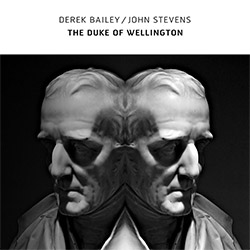 |
| Bailey, Derek / John Stevens The Duke of Wellington (Confront) |
| Seminal figures in the evolution of free or nonidiomatic improvisation, guitarist Derek Bailey and percussionist/pocket trumpeter John Stevens are heard in a 1989 London performance vividly captured by Michael Gerzon at The Duke of Wellington, their restless and enthusiastic interplay shifting from angular invention to lyrical reflection in a compelling document of their remarkable rapport. |
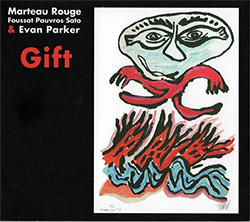 |
| Marteau Rouge (Foussat / Pauvros / Sato) / Evan Parker Gift (Fou Records) |
| A fiery live performance recorded at Instants Chavires in 2009, reuniting Marteau Rouge's raw and electrified trio of synth, guitar, and drums with saxophonist Evan Parker, erupting in extended collective improvisations that dissolve structure in favour of texture, power, sonic friction and ecstatic freedom through waves of noise, silence, combustion, and control. |
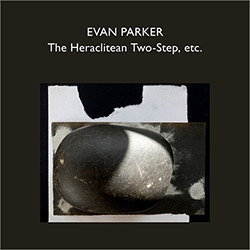 |
| Parker, Evan The Heraclitean Two-Step, etc. [4 CDs + BOOK] (False Walls) |
| Celebrating Evan Parker's 80th birthday in 2024 in a 4-CD set of solo improvisations recorded from 1994-2024, paired with a 120-page book featuring essays, an extended interview with Martin Davis plus visual artwork by Parker, blending profound reflections on space, sound, and artistic evolution while showcasing pivotal recordings and contributions from the improv and art community. |
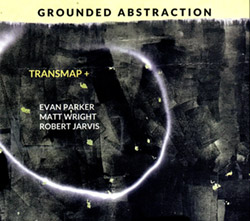 |
| Transmap+ (Evan Parker / Matt Wright / Robert Jarvis) Grounded Abstraction (FMR) |
| A 2022 concert of acoustic and electroacoustic interaction at The Jazz Centre UK from the Trans Map duo of Evan Parker on soprano saxophone and Matthew Wright on laptop processing, the "+" in Transmap+ being trombonist Robert Jarvis, a versatile collaborator since London Improvisers Orchestra and here a 3rd voice expanding their spectacular open collective free improv. |
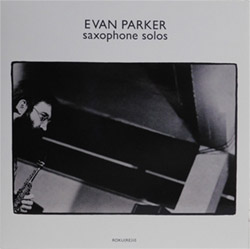 |
| Parker, Evan Saxophone Solos [VINYL] (Otoroku) |
| Virtually unprecedented for the time, Evan Parker's 1976 solo soprano saxophone album captures Parker's prowess and unusual harmonic approach to the saxophone in a 1975 concert at the Unity Theatre in London and in the FMP studio the same year, using the instrument in startling ways as he captivates his listeners through a unique revelation of logic, drama and staggering skill. |
 |
| Shipp, Matthew / Evan Parker Leonine Aspects (RogueArt) |
| Meeting in France in 2017 for the Festival Météo de Mulhouse, Evan Parker alternating between soprano and tenor saxophones and Matthew Shipp on acoustic piano, present an epic extended improvisation that naturally evolves through several sections, followed by a brief post-script, each musician attentively focused as they support the clarity of each other's playing. |
 |
| Parker, Evan / Agusti Fernandez Tempranillo (Listen! Foundation (Fundacja Sluchaj!)) |
| Reissuing this astonishing 1995 studio recording, capturing the first encounter between two legendary free jazz performers--UK saxophonist Evan Parker on tenor and soprano saxophones and pianist Augustí Fernández--in an 8-part dialog of mercurial speed balanced with moments of passionate introspection, resissued with new mastering, restoring this essential meeting. |
 |
| Schlippenbach Quartet Three Nails Left (Corbett vs. Dempsey) |
| Remastered and with the original cover, the expanded Schlippenbach Trio of pianist Alexander Von Schlippenbach, saxophonist Evan Parker on soprano & tenor, drummer/percussionist Paul Lovens, and German double bassist Peter Kowald, a stellar group captured in two incredibly inventive concerts at Third New Jazz Festival Moers and at Quartier Latin in 1974 & 1975. |
 |
| Foussat, Jean-Marc / Daunik Lazro / Evan Parker Cafe OTO 2020 [2 CDs] (Fou Records) |
| A momentous 2020 concert at London's Cafe OTO, presented in two discs, the 1st with label leader Jean-Marc Foussat in a solo improvisation on synth and voice, the 2nd in a trio with Daunik Lazro on tenor & baritone sax, and Evan Parker on soprano sax, the 2 saxophones weaving and responding to Foussat's remarkable alien soundscapes and vocalization in an immersive extended improvisation. |
 |
| ICP Tentet Tetterettet (Corbett vs. Dempsey) |
| 10 years after drummer Han Bennink, pianist Misha Mengelberg, and saxophonist Willem Breuker formed the ICP co-op, Bennink & Mengelberg formed this 10-piece "Tetterettet", an all-star international group including Peter Brotzmann, Tristan Honsinger, John Tchicai, this their first incredible and far-ranging album, remastered and available on CD for the first time. |
 |
| Parker, Evan / Eddie Prevost Tools Of Imagination (Listen! Foundation (Fundacja Sluchaj!)) |
| An awe-inspiring concert between two of London's free improvisation legends, recording at Pardon To Tu [Teatr Nowy Clubroom] in Poland--percussionist Eddie Prevost and saxophonist Evan Parker on tenor sax--in an hour-long performance that starts with Prevost's reverberant bowed metal, as the two build and recede with profound concentration and masterful skill. |
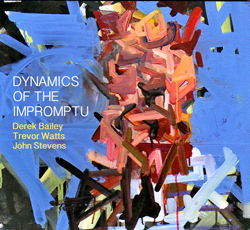 |
| Bailey, Derek / Trevor Watts / John Stevens Dynamics of the Impromptu (FMR) |
| Live recordings from 1973-74 from the trio of drummer John Stevens, guitarist Derek Bailey, and saxophonist Trevor Watts, dynamic works performed "impromptu" with a wealth of ideas as these innovators demonstrate the skills that helped define them as masterful players. |
 |
| Parker, Evan / Barry Guy / Paul Lytton Live at Maya Recordings Festival [VINYL 2 LPs] (NoBusiness) |
| Superb improvisation from three masters - Evan Parker on sax, Barry Guy on bass and Paul Lytton on drums - performing at the Maya Recordings Festival, September 23 - 25, 2011 at Theater am Gleis, Winterthur, Switzerland. |
 |
| Various Artists 13 Miniatures For Albert Ayler (RogueArt) |
| A large excerpt from the tribute to Albert Ayler concert presented at Fondation Cartier, Paris on December 2nd 2010 with Joe Mcphee, Evan Parker, Barre Phillips, John Tchicai, Jean-Luc Cappozzo, Jean-Jacques Avenel, &c. &c. |

![Aries House Zaes: Network Friction [VINYL]](https://www.teuthida.com/productImages/misc4/37242.jpg)
![Lindorff-Ellery, Evan: Light Sound Falling [CASSETTE w/ DOWNLOAD]](https://www.teuthida.com/productImages/misc4/37043.jpg)
![Lindorff-Ellery, Evan / Naomi Juniper: Studio, Creek [CASSETTE W/ DOWNLOAD]](https://www.teuthida.com/productImages/misc4/37044.jpg)
![Koyoltzintli and Friends: Wild Fire Clay Percussion Group [CASSETTE W/ DOWNLOAD]](https://www.teuthida.com/productImages/misc4/37045.jpg)
![Hearsay (Allen Moore, Ishmael Ali, Bill Harris): Glossolalia [CASSETTE]](https://www.teuthida.com/productImages/misc4/34531.jpg)

![Ali, Ishmael (Ishmael / Wilkerson / Wilkes / Baker / Tong / Harris): Burn the Plastic, Sell the Copper [VINYL]](https://www.teuthida.com/productImages/misc4/37105.jpg)
![Reid, Tomeka Quartet (w/ Roebke / Halvorson / Fujiwara): Dance! Skip! Hop! [VINYL]](https://www.teuthida.com/productImages/misc4/37094.jpg)

![Coleman, Rodger: Journey to Brno [CASSETTE + DOWNLOAD]](https://www.teuthida.com/productImages/misc4/37175.jpg)
![Allbee, Liz: Breath Vessels [VINYL]](https://www.teuthida.com/productImages/misc4/37012.jpg)
![Belorukov, Ilia / Alex Riva: Wrestling For Futility [CASSETTE w/DOWNLOAD]](https://www.teuthida.com/productImages/misc4/36994.jpg)
![Genthon, Anouck / Lionel Marchetti: Suite Blanche [2 CDs]](https://www.teuthida.com/productImages/misc4/36642.jpg)
![Toeplitz, Kasper T.: Erosions Programmees [CD + BOOKLET]](https://www.teuthida.com/productImages/misc4/36639.jpg)
![Gate, The : Almost Live [CASSETTE + MAGAZINE]](https://www.teuthida.com/productImages/misc4/36836.jpg)
![Feldman, Morton / GBSR Duo w/ Taylor MacLennan: Trios [6 CD BOX SET]](https://www.teuthida.com/productImages/misc4/37020.jpg)
![Frey, Jurg : Composer, Alone [3 CDs]](https://www.teuthida.com/productImages/misc4/36927.jpg)
![Frey, Jurg with ensemble]h[iatus: Je Laisse A La Nuit Son Poids D](https://www.teuthida.com/productImages/misc4/36988.jpg)

![Pisaro-Liu, Michael: Within (2) / Appearance (2) [2 CDs]](https://www.teuthida.com/productImages/misc4/36831.jpg)

![Musicworks Magazine: #151 Summer 25 [MAGAZINE + CD]](https://www.teuthida.com/productImages/misc4/36559.jpg)
![Zorn, John: The Song of Songs [CD + CD BOOK]](https://www.teuthida.com/productImages/misc4/36923.jpg)
![Coultrain: Mundus [COLORED VINYL]](https://www.teuthida.com/productImages/misc4/33056.jpg)
![Hprizm: Signs Remixed [COLORED VINYL]](https://www.teuthida.com/productImages/misc4/30635.jpg)
![Halls Of the Machine: All Tribal Dignitaries [CASSETTE w/ DOWNLOAD]](https://www.teuthida.com/productImages/misc4/36134.jpg)
![Koenjihyakkei: Live at Club Goodman [2 CDs]](https://www.teuthida.com/productImages/misc4/36111.jpg)
![Sorry For Laughing (G. Whitlow / M. Bates / Dave-Id / E. Ka-Spel): Rain Flowers [2 CDS]](https://www.teuthida.com/productImages/misc4/35985.jpg)
![Rolando, Tommaso / Andy Moor : Biscotti [CASSETTE w/ DOWNLOADS]](https://www.teuthida.com/productImages/misc4/36106.jpg)
![Electric Bird Noise / Derek Roddy: 8-10-22 [CD EP]](https://www.teuthida.com/productImages/misc4/35970.jpg)
![Elephant9 : Mythical River [VINYL]](https://www.teuthida.com/productImages/misc4/34624.jpg)
![Elephant9 with Terje Rypdal: Catching Fire [VINYL 2 LPs]](https://www.teuthida.com/productImages/misc4/35355.jpg)
![Coley, Byron: Dating Tips for Touring Bands [VINYL]](https://www.teuthida.com/productImages/misc4/17906.jpg)

![Lost Kisses: My Life is Sad & Funny [DVD]](https://www.teuthida.com/productImages/misc4/lostKissesDVD.jpg)