


![Feldman, Morton / GBSR Duo w/ Taylor MacLennan: Trios [6 CD BOX SET] (Another Timbre)](https://www.teuthida.com/productImages/misc4/37020.jpg "Feldman, Morton / GBSR Duo w/ Taylor MacLennan: Trios [6 CD BOX SET] (Another Timbre)")
![Feldman, Morton / GBSR Duo w/ Taylor MacLennan: Trios [6 CD BOX SET] (Another Timbre)](https://www.teuthida.com/productImages/full/37020.Full.jpg "Feldman, Morton / GBSR Duo w/ Taylor MacLennan: Trios [6 CD BOX SET] (Another Timbre)")
Spanning Morton Feldman's three expansive trios for flute, piano, and percussion, these performances by the GBSR Duo with Taylor MacLennan immerse the listener in an extended temporal field where quiet intensity, precise timbral balance, and fragile rhythmic relationships unfold with hypnotic patience, transforming duration itself into an expressive element of listening, presence, and sustained attention.
In Stock
Quantity in Basket: None
Log In to use our Wish List
Shipping Weight: 12.00 units
Sample The Album:
Morton Feldman-composer
Taylor MacLennan-flute, bass flute, piccolo
Siwan Rhys-piano, celesta
George Barton-vibraphone, glockenspiel, marimba, tubular bells
Click an artist name above to see in-stock items for that artist.
Label: Another Timbre
Catalog ID: at251x6
Squidco Product Code: 37020
Format: 6 CDs
Condition: New
Released: 2026
Country: UK
Packaging: Box Set - 6 CDs w/ booklet
Recorded St. Paul's School, in Barnes, UK, in January and August 2025, by Simon Reynell.
A 6-CD box set of Morton Feldman's three long pieces for flute, piano and percussion, played by the GBSR Duo (Siwan Rhys & George Barton) with Taylor MacLennan on flutes.
Why Patterns? (1979) 30 minutes
Crippled Symmetry (1982) 90 minutes
For Philip Guston (1984) 280 minutes
Six and a half hours of great music, beautifully played.
Another Timber Interview with the musicians by Marat Ingeldeev
As we mark Feldman's centenary, do you remember how you first came across his music and what impression it made on you?
George: I was first introduced to it in my late teens, at school. My music teacher, Sinan Savaşkan, was a devotee of Feldman's music and played us Madame Press Died Last Week at Ninety and excerpts from Rothko Chapel in class. The idea was to explain the Darmstadt school by contrast, holding Feldman up as a kind of anti-Boulez or anti-Stockhausen figure in terms of, among other things, working with intuition as opposed to system. I found there to be something mysterious and seductive about the music; its rich tactility was a revelation.
Siwan: I first came across Feldman's music thanks to George. While we were both students at the Guildhall School, George put out a notice for willing pianists to perform For Philip Guston-literally 'pianists' because he'd been advised that, due to the length of the piece, the job should be shared by more than one student. This is how we met and For Philip Guston is one of the very first pieces we played together. We ignored the advice to use more than one player and I'm very glad we did, because the grand scale of the work gave me a particularly intense and immersive first experience. My memories of my early impressions of Feldman's music are hazy and more tactile than anything else. I do remember loving the then unusual experience of being inside a piece for such a great length of time. The focus and long duration make it feel like a room around you, and maybe because of the particular shape and pacing there's scope to observe and take in the room a little more than with other music, which I find an extremely rich musical experience.
Taylor: I first heard Feldman's music as a first-year student at the Royal College of Music, during a lecture where Rothko Chapel was played. I had never heard anything remotely like this music, and I remember being struck by how hauntingly beautiful it was.
Has your perception of Feldman's music changed over the years of listening or performing it?
Siwan: In my first years of getting to know it, I heard and played a lot of his later works, and mistakenly assumed that much of the rest of his output would be similarly quiet, resonant, obsessive and long-form. In recent years, mainly thanks to Philip Thomas' Feldman piano music recordings, I discovered his earlier work with all its variety and curiousness and realised that there were many more worlds than I had first imagined. So in this way, my perception has changed as I've learnt or heard more of it. Returning to the pieces I had previously played to record them for this box set felt very much like stepping back in time, or into a familiar room.
George: I don't think my perception of the fundamentals of Feldman's music, or perhaps of the fundamentals of what draws me to it, has changed greatly over the years. Listening to and reading the scores, as well as Feldman's writings and interviews, has given a deeper understanding of how he fits into musical history and of how he arrived at his compositional decisions. There is also a trap here which many have observed when working on his pieces: his own statements on his music are frequently intentionally obfuscatory, frustrating earnest attempts to grasp the motivations behind them with deliberate cuteness. As a result, I find myself having to wean myself from the impulse to seek documentary evidence for interpretative decisions, instead returning to my instinctive sense of what to prioritise as a performer.
Taylor: The first time I had the opportunity to perform Feldman's work was in 2022 with George and Siwan, when we played Crippled Symmetry in Sheffield Cathedral (I believe Simon Reynell was in the audience, and perhaps this performance planted the seed for this box set). Performing it was a truly memorable and rewarding experience for me. However, it gave me a false sense of security before tackling For Philip Guston. Of course it is three times as long, but it also demands a completely different mindset due to its rhythmic and ensemble challenges, alongside the need to maintain control of your instrument at the very softest end of your dynamic range. My perception of performing Feldman's music certainly changed after understanding the challenges of For Philip Guston.
What was the recording process for this box set like, and how did you tackle For Philip Guston given its four-hour duration?
Taylor: We recorded a couple of versions of Why Patterns? and Crippled Symmetry as these could only be captured in full takes due to the compositional nature of these pieces. This made the recording process for these works somewhat anxiety-inducing. The thought of potentially 'ruining' a complete take of the 1.5-hour Crippled Symmetry weighed heavily on my mind at times. Fortunately, complete takes of For Philip Guston were unnecessary.
George: Inevitably you have to break up pieces when recording-performing complete takes of For Philip Guston would not be practical. But because so much resonance hangs over the entire work, editing can also be difficult. As a result we sometimes played long passages of music in a take, twenty minutes to half an hour. When it's working, something of the mindset from performing the whole span of the piece, the strange feeling of immersion (or submersion!), begins to take hold.
Siwan: One of the biggest challenges over the three days we spent recording For Philip Guston was maintaining concentration and taking care of physical fatigue, as playing very quietly and very rhythmically for extended periods can be quite physically and mentally taxing. This is hard to do while also balancing the strong desire to get under the music's skin and play long stretches of this very absorbing material, so we had to be quite disciplined about take lengths. There were however a few long passages where, as we played, we all felt something was right and flowing well, and so continued for much longer than planned-one of the great things about working with Simon Reynell is that he also senses when one of these 'magic takes' is happening and knows when to allow things to continue.
George: It's also very hard to record quiet. In practical terms that's because someone opening a door somewhere else in the building could ruin a take. But more importantly, playing quietly into a microphone can actually increase the perceived body of a sound if it is then amplified too loudly (this is how the Hollywood/Hans Zimmer 'oof' bass drum sound is made!). Luckily, Simon is a past master at recording quiet music-he manages to convey through the recording a sense of the actual volume in the room, perhaps something to do with his background in documentary.
Both Why Patterns? and Crippled Symmetry rely on independently moving parts, with each performer following their own line. For Philip Guston, by contrast, is tightly fixed and unfolds on a much larger timescale. How do these different approaches feel from the player's perspective?
Siwan: All three works require a strong focus on sound production, control and very precise rhythmic placement, but it's perhaps surprising how strongly a shift in style or system of notation (FPG vs WP/CS) can affect the approach without necessarily changing the overall sonic result. The way of performing Why Patterns? and Crippled Symmetry can be much more inwardly focused. There's no need to maintain such a keen awareness of where your colleagues are in terms of alignment. There's perhaps a bit more space for playfulness.
Taylor: Performing Why Patterns? and Crippled Symmetry is quite a freeing experience for me. Even though Feldman's material is highly specific in terms of pitch and rhythm, there's a sense of being on your own trajectory. You can fully inhabit your own sound as well as the collective, whilst enjoying the serendipity of unexpected alignments or fresh perspectives between the three instrumental lines.
George: In the case of For Philip Guston, the performer's focus is more communal due to the complicated rhythmic interactions between those horizontal lines. It's a very delicate balance, almost as though each player is blowing gently through a straw to keep a very light and fragile object suspended between us-you have to match your colleagues exactly or the object becomes destabilised. The timescale merely adds another layer of difficulty because you can't really afford to lose focus on this shared sound object, but maintaining it over four and a half hours is a difficult game of self-management. The brief moments when you are able to rest and reset become very important.
Taylor: Beyond the sheer duration and stamina required, the real challenge lies in sustaining the sublime atmosphere Feldman conjures, without showing the effort required to execute the material. When you factor in the extreme length of the work, it becomes quite a daunting task which demands more from you than anything else I've played. The payoff is completely worth it though.
The launch of the box set will take place on Sunday 18 January 2026 at Kings Place in London, where you will perform the whole of For Philip Guston-no takes, no breaks. How do you mentally and physically prepare for such a long, continuous performance?
Siwan: Aside from keeping an eye on my liquid intake just before the concert, most of my preparation beforehand will be reminding myself that I can trust myself to play the music. I care a lot about the piece, and it's sometimes easy to get carried away with worries about whether we'll do it justice. Of course we'll rehearse it until it feels as bulletproof as it can, but with the knowledge from having performed it before that there will be moments when fatigue sets in and concentration lapses, or the back starts to hurt-those come and go, and there will also be moments of focus and elation.
Taylor: I've not had the experience of performing For Philip Guston, so I find it reassuring to be partnered with Siwan and George for this concert. They bring a profound understanding of this music, along with their unique connection as a musical unit, and I feel honoured to be invited to take part. My preparation has focused on immersing myself in the score and becoming accustomed to playing through extended sections of the piece. Physically, it has involved building stamina and finding ways to stay relaxed and economical over the course of it. It is still difficult to imagine what it will feel like to play the work from start to finish in performance-no takes, no breaks. The scale is hard to comprehend. Rather than thinking in terms of minutes and hours passing, I'm trying to approach it as a single, immersive event, one in which the outside world is shut out and time effectively stops. I'm sure I will experience a wide range of thoughts and emotions, alongside the inevitable aches and pains, but I am equally sure that I will emerge from the other end changed in some way.
George: It's partly a question of balancing priorities in rehearsal. On the one hand, the piece is rich with detail and contains many difficult or fiddly passages. You have to do the normal rehearsal thing and hone in on those, especially knowing that in performance you may already be fatigued, having played long stretches of music where you are moving, counting and generally thinking at a much slower pace. At the same time, you have to use the rehearsal time for training-actually getting used to the feeling of playing for extended periods, experiencing your mental energy waxing and waning. The passing of time is such a feature of Feldman's music that learning to experience it, by doing, is a key part of accessing the essence of the work, rather than merely an incidental requirement of its length. In that sense, for all that it presents challenges and can even feel arduous at times, it's also a privilege.
Siwan: After having recorded the piece, where we got to repeat material as much as we wanted or needed, it will feel very different to follow the inevitable forward line of performing it, and to throw notes and chords into the ether never to hear them back again. There's something I quite like about sitting at the piano and settling in for a long-haul piece. The piano feels more like home than ever in those moments and I'm sure the audience will also be doing a similar sort of settling in. We'll be sharing a musical experience over such a long duration-I always feel that creates a special bond between audience and performers-and I'm looking forward to that feeling very much.
Artist Biographies
• Show Bio for Morton Feldman "Morton Feldman was born in New York in 1926 and died there in 1987. Just like Cage, a close friend, he was an American composer - an American artist - an American in the true sense of the word. He identified himself by differentiating his views on composition from those of his colleagues in Europe. He was proud to be an American because he was convinced that it enabled him the freedom, unparalleled in Europe, to work unfettered by tradition. And, he was an American also in what may have been a slight inferiority complex in the face of cultural traditions in Europe, something he proudly rejected and secretly admired. Like any true artist, Feldman was endowed with a sensitivity for impressions of a wide variety of sources, literature and painting in particular. His affinity to Samuel Beckett has enriched music literature by a unique music theatre piece, Neither, and two ensemble works. His friendship with abstract impressionist painters gave birth to a range of masterpieces, Rothko Chapel in particular. But even the knotting of oriental rugs gave Feldman musical ideas (The Turfan Fragments). To the question as to why he preferred soft dynamic levels, he replied: "- Because when it's loud, you can't hear the sound. You hear its attack. Then you don't hear the sound, only in its decay. And I think that's essentially what impressed Boulez . That he heard a sound, not an attack, emerging and disappearing without attack and decay, almost like an electronic medium. Also, you have to remember that loud and soft is an aspect of differentiation. And my music is more like a kind of monologue that does not need exclamation point, colon, it does not need..." Feldman also had an intriguing reply up his sleeve when it came to answering the question why he composed in the first place: "You know that marvellous remark of Disraeli's? Unfortunately, he was not a good writer, but if he was a great writer, it would have been a wonderful remark. They asked him whydid he begin to write novels. He said because there was nothing to read. (laughs). I felt very much like that in terms of contemporary music. I was not really happy with it. It became like a Rohrschach test". More than twenty years since his death, Morton Feldman's music is as alive as ever." ^ Hide Bio for Morton Feldman • Show Bio for Taylor MacLennan "Taylor MacLennan: Flute Taylor has been the flute player of Explore Ensemble since its foundation in 2012. Originally from Scotland, Taylor moved to London in 2010 to study at the Royal College of Music where he received his Bachelor's and Master's degrees as well as an Artist Diploma in 2017. During his time there, he won the RCM Flute Prize and had the opportunities to work with conductors including Bernard Haitink, Vladimir Ashkenazy and Sir Roger Norrington. Taylor took up further study with Patrick Gallois at the Accademia Musicale Chigiana in Siena where he was awarded the Diploma of Merit. Taylor was a member of Southbank Sinfonia in 2018 and has since worked with the BBC Symphony Orchestra, English National Opera and the Oxford Philharmonic, as well as guest principal flute with Scottish Ballet. Taylor has appeared at festivals including the BBC Proms, Aldeburgh, Cheltenham and Encuentro de Música Santander. Taylor enjoys tennis, being a home barista and all things culinary." ^ Hide Bio for Taylor MacLennan • Show Bio for Siwan Rhys "Welsh pianist Siwan Rhys enjoys a varied career of solo, chamber, and ensemble playing, with a strong focus on contemporary music and collaboration with composers. She has played at prestigious British venues such as the Barbican Hall, Wigmore Hall, Royal Festival Hall, St David's Hall, Symphony Hall, and abroad at the Elbphilharmonie Hamburg, Le Tambour Rennes, and Shanghai Symphony Hall amongst others. She has also appeared at the Aldeburgh Festival, BBC Proms, Principal Sound, Occupy the Pianos, Lille Piano(s) Festival, and has recorded many times for television, radio, and labels such as NMC, all that dust, and Prima Facie. Her recent recording of Stockhausen's KONTAKTE (with percussionist George Barton) was released in October 2019 on the all that dust label. Recent concert engagements include performances of Charles Ives' 'Concord Sonata' in France as part of the Oeuvres Monstres series, Nono's ...sofferte onde serene... at the Principal Sound festival, Feldman's For Philip Guston and Why Patterns?, Stockhausen's KONTAKTE, and appearances at Occupy the Pianos and Lille Piano(s) Festival playing music by Vivier and Eastman. Also a regular ensemble and orchestral pianist, Siwan has worked with the London Sinfonietta, Birmingham Contemporary Music Group, Colin Currie Group, Aldeburgh Festival Ensemble, Mahogany Opera Group, Music Theatre Wales, Philharmonia Orchestra, London Symphony Orchestra, and City of Birmingham Symphony Orchestra, with conductors Oliver Knussen, François-Xavier Roth, and George Benjamin among others. Siwan works regularly with mezzo-soprano Lucy Goddard, and is a member of GBSR piano-percussion duo with whom she was a 2017-18 St John's Smith Square Young Artist. She is an honorary member of the Welsh Gorsedd of Bards and an Entente Cordiale alumna. She teaches at the London Contemporary School of Piano." ^ Hide Bio for Siwan Rhys • Show Bio for George Barton "George Barton is a solo, chamber and orchestral percussionist and timpanist based in London. He is a member of the Colin Currie Group and has also worked with the London Symphony Orchestra, Orchestra of the Age of Enlightenment, Nash Ensemble, Britten Sinfonia, Aurora Orchestra, Birmingham Contemporary Music Group, Endymion, Music Theatre Wales, BBC Singers, Mahogany Opera Group, Notes Inégales, Riot Ensemble, London Contemporary Orchestra, the Royal Opera House, and the Multi-Story Orchestra, among many other ensembles and orchestras. As a solo artist George has performed at the Southbank Centre's "The Rest is Noise" festival, the "Occupy the Pianos" festival at St John's Smith Square, and at a number of Nonclassical events across London, among other venues across the UK. His collaboration with Turner Prize -winning artist Jeremy Deller at the Barbican's Station to Station festival was featured on BBC2's Artsnight, and his playing has been recorded and broadcast many times for BBC Radio 3 and NMC. He was featured soloist at Filthy Lucre's The Sounding Body concerts and clubnight - footage available on the media page. As an ensemble and orchestral player he has performed at all the major London concert halls, including at the BBC Proms every year since 2014, as well as such venues as the Cologne Philharmonie, Elbphilharmonie Hamburg, Tokyo Opera City, and many others. He has performed chamber music at various venues around the UK and abroad, including the Concertgebouw Grote Zaal, Amsterdam, Cité de la Musique, Paris, Delft Chamber Music Festival, Royal Festival Hall, and Huddersfield Contemporary Music Festival. With duo partner Siwan Rhys he has performed at St John's Smith Square, Barbican Hall, the City of London Festival, XOYO, Scala and The Forge, among other venues. Committed to commissioning new music, the duo became New Dots artists in 2014; in 2017 they took part in the Stockhausen biennial at Kürten, performing Kontakte and solo works. The duo was selected to become one of three St John's Smith Square Young Artists for the 2017-18 season. Their programme for the season included the premiere of a 40-minute work from Oliver Leit and the UK premiere of Eric Wubbels' doxa, alongside music by Stockhausen, Kagel, Cage, Fran le Lohé and John Luther Adams, as well as unpublished music by Morton Feldman." ^ Hide Bio for George Barton
1/22/2026
Have a better biography or biography source? Please Contact Us so that we can update this biography.
1/22/2026
Have a better biography or biography source? Please Contact Us so that we can update this biography.
1/22/2026
Have a better biography or biography source? Please Contact Us so that we can update this biography.
1/22/2026
Have a better biography or biography source? Please Contact Us so that we can update this biography.
Track Listing:
CD 1
1. Why Patterns? 29:29
2. Crippled Symmetry 1 30:28
CD 2
1. Crippled Symmetry 2 1:01:17
CD 3
1. For Philip Guston 1 58:58
CD 4
1. For Philip Guston 2 1:19:36
CD 5
For Philip Guston 3 1:10:16
CD 6
1. For Phillip Guston 4 1:10:59
Box Sets
Compositional Forms
Avant-Garde
Ambient, Minimal, Reductionist, Onky Sound, &c.
London & UK Improv & Related Scenes
Trio Recordings
Staff Picks & Recommended Items
New in Compositional Music
Recent Releases and Best Sellers
Search for other titles on the label:
Another Timbre.
 |
| Opstad, James Drift (Another Timbre) |
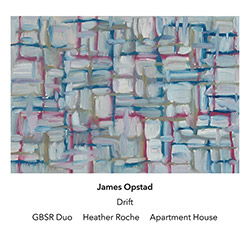
| The debut composer album from Apartment House bassist James Opstad presents five chamber works performed by Apartment House, the GBSR Duo, and clarinettist Heather Roche, tracing his evolution from electroacoustic exploration to intricately layered instrumental writing, where overlapping tempi, gradual transformations, and subtle harmonic shifts create a sense of suspended motion and quiet intensity. |
 |
| Newland, Paul Things That Happen Again (Another Timbre) |
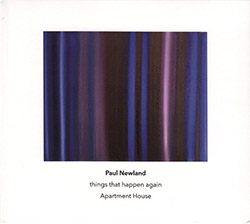
| A portrait of UK interdisciplinary composer Paul Newland's music through five pieces dating from 2009 to 2023 performed by members of London's Apartment House ensemble, including a string quartet, two different trio combinations, a short work for solo piano, and a score for open instrumentation, realised in this recording by a septet. |
 |
| Denyer, Frank / Octandre Ensemble Screens (Another Timbre) |
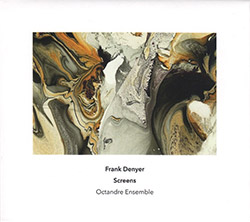
| An exceptional collection of works by composer Frank Denyer written between 1973 and 2021, especially the monumental 5-part "Five Views of the Path", performed by the UK Octandre Ensemble led by composer Christian Mason and conductor Jon Hargreaves, which focuses on modern composers with an emphasis on works of timbre and ritual, Denyer's work being an ideal match. |
 |
| Lamb, Catherine Parallaxis Forma (Another Timbre) |
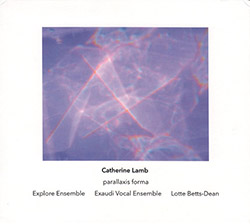
| Two works for voice and chamber orchestra performed by the UK Explore Ensemble under the direction of Nicholas Moroz, and a multi-tracked vocal work by Lotte Betts-Dean, rich and understated works of rich harmonics and atmospheric overtones composed by Catherine Lamb, placing phonetic vocals in space and ambiance, eschewing words for tone, texture and motion; mesmerizing. |
 |
| Quatuor Umlaut (Karl Naegelen / Morton Feldman) Calques (Umlaut Records) |
| Founded by violinists Amaryllis Billet and Anna Jalving, with Fanny Paccoud on viola and Sarah Ledoux on cello, Quatuor Umlaut presents their first recordings, joined by clarinetist Joris Ruhl for two pieces: "Calques" by composer Karl Naegelen using effects of transparency and fusion of tones; and Morton Feldman's highly textured "Clarinet and String Quartet". |
 |
| Akama, Ryoko Songs For A Shed (Another Timbre) |
| Six beautiful, fragile and mysterious works for piano in combinations with other orchestral arrangements and solo, including pitch-based compositions and a graphic work directed by photographs, performed by members of Apartment House in duos, quintets & sextets; works initially commissioned by Another Timbre and Philip Thomas and here performed on piano by Siwan Rhys. |
 |
| Feldman, Morton (Judith Wegmann / Andreas Kunz) For John Cage [2 CDs] (ezz-thetics by Hat Hut Records Ltd) |
| First performed in 1982, Morton Feldmans' monumental composition for piano and violin dedicated to peer John Cage creates a distinctive environment of instrumental interaction where patterns are subtly varied in a virtual suspension of time as the music drifts and reflects, beautifully rendered in this 2021 recording by pianist Judith Wegmann and violinist Andreas Kunz. |
 |
| Cage, John / Apartment House Number Pieces [4-CD BOX SET] (Another Timbre) |
| A 4-disc box-set with a 44-page booklet of extensive notes, presenting John Cage's Number Pieces which he wrote in the last five years of his life, adapted for mid-size ensembles and performed by the London-based ensemble Apartment House, compositions 'Five' to 'Fourteen' along with alternative versions of three of the pieces; significant and essential. |
 |
| Feldman, Barbara Monk Verses (Another Timbre) |
| Known for her chamber and piano works, Canadian composer and widow of Morton Feldman presents five beautiful chamber works performed by the trio of George Barton on percussion, Siwan Rhys on piano and Mira Benjamin on violin, introspective and contemplative pieces of rich color & reflection that reveal the gravity between sound and silence. |
 |
| Weeks, James Summer (Another Timbre) |
| Five chamber works from UK composer James Week performed by Explore Ensemble, developing works extending the poetic idea of a piece as an imaginary or remembered space by exploring combinations of instruments such as the mixed instrumental duos, the use of slow-moving or static background harmonics, and intimate instrumental idioms based on long, breath-length sounds. |
 |
| Feldman, Morton (Judith Wegmann) Triadic Memories [2 CDs] (ezz-thetics by Hat Hut Records Ltd) |
| The second of four connected solo piano works by Morton Feldman, Triadic Memories is about that reality, the acoustic space created by the piano's strings and soundboard, as Feldman attempted to expand the temporal frame of his music, heard here in Judith Wegmann's 2019 recording, where thThe second of four connected solo piano works by Morton Feldman, Triadic Memories is about the acoustic space created by the piano's strings and soundboard, as Feldman worked to expand the temporal frame of his music, heard her in Judith Wegmann's 2019 studio recording where that space is revealed by a magnificent Bosendorfer 280VC piano.at space is revealed by a magnificent Bosendorfer 280VC piano. |
 |
| Smith, Linda Catlin Wanderer (Another Timbre) |
| Eight sophisticated chamber pieces composed by Linda Catlin Smith and realized by the Canadian Apartment House ensemble, including a solo piano performed by Philip Thomas, a piano duo with Thomas and Mark Knoop, and works for percussion & cello, 2 quintet pieces for strings, percussion and winds, and two 7-piece conducted works with two percussionists, strings and brass. |
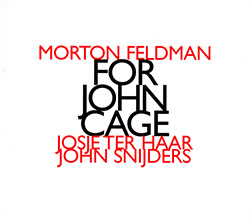 |
| Feldman, Morton For John Cage (Hat [now] ART) |
| Morton Feldman was a friend, flatmate and student of John Cage's innovative approaches to composition; he wrote this 3 part work for violin and piano in 1982 as a 70th birthday present for Cage, here performed by violinist Josje Fosie Ter Haar and pianist John Snijders. |
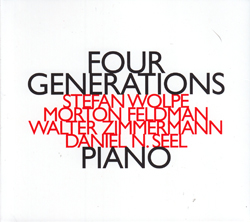 |
| Wolpe / Feldman / Zimmerman / Seel Four Generations (Hat [now] ART) |
| Pianist and composer Daniel N. Seel plays four pieces from four generations of different composers including Stefan Wolpe, Morton Feldman, Walter Zimmerman, and his own work. |

![Davies, Angharad / Burkhard Beins : Meshes Of The Evening [VINYL]](https://www.teuthida.com/productImages/misc4/36990.jpg)
![Bussmann, Nicholas / Sven-Ake Johansson / Yan Jun: Tea Time [Vinyl]](https://www.teuthida.com/productImages/misc4/36991.jpg)
![Williams, Jessica: Blue Abstraction: Prepared Piano Project 1985-1987 [VINYL]](https://www.teuthida.com/productImages/misc4/37080.jpg)
![Fagaschinski, Kai: Aerodynamics [VINYL 2 LPs]](https://www.teuthida.com/productImages/misc4/36992.jpg)
![Allbee, Liz: Breath Vessels [VINYL]](https://www.teuthida.com/productImages/misc4/37012.jpg)


![Parker, Evan / Andrea Centazzo: Bullfighting On Ice! Live In Padova 1977 [VINYL]](https://www.teuthida.com/productImages/misc4/37064.jpg)
![Curran, Alvin / Andrea Centazzo / Evan Parker: Real Time [VINYL]](https://www.teuthida.com/productImages/misc4/37065.jpg)
![Curran, Alvin / Andrea Centazzo / Evan Parker: Real Time Two [VINYL]](https://www.teuthida.com/productImages/misc4/37066.jpg)
![Rodrigues, Ernesto / Jung-Jae Kim / Guilherme Rodrigues / Eric Bauer / Stephen Flinn: 5 In The Afternoon [2CDs]](https://www.teuthida.com/productImages/misc4/36957.jpg)
![Evans, Peter / Being & Becoming: Ars Ludricra [VINYL + DOWNLOAD]](https://www.teuthida.com/productImages/misc4/37026.jpg)
![Coley, Byron / Mats Gustafsson / Thurston Moore: Now Jazz Now: 100 Essential Free Jazz & Improvisation Recordings (1960-80) [BOOK]](https://www.teuthida.com/productImages/misc4/36932.jpg)
![HobbyHouse (Mia Dyberg / Axel Filip): HobbyHouse [CD + DOWNLOAD]](https://www.teuthida.com/productImages/misc4/36944.jpg)
![Mines, Kelsey / Erin Rogers: Scratching At The Surface [CD + DOWNLOAD]](https://www.teuthida.com/productImages/misc4/36945.jpg)
![Nebbia, Camila (feat/ Marilyn Crispell / Lesley Mok): A Reflection Distorts Over Water [CD + DOWNLOAD]](https://www.teuthida.com/productImages/misc4/36946.jpg)
![Vanheerentals, Adia: Taking Place [CD + DOWNLOAD]](https://www.teuthida.com/productImages/misc4/36947.jpg)
![Belorukov, Ilia / Alex Riva: Wrestling For Futility [CASSETTE w/DOWNLOAD]](https://www.teuthida.com/productImages/misc4/36994.jpg)

![Genthon, Anouck / Lionel Marchetti: Suite Blanche [2 CDs]](https://www.teuthida.com/productImages/misc4/36642.jpg)
![Toeplitz, Kasper T.: Erosions Programmees [CD + BOOKLET]](https://www.teuthida.com/productImages/misc4/36639.jpg)
![Gate, The : Almost Live [CASSETTE + MAGAZINE]](https://www.teuthida.com/productImages/misc4/36836.jpg)

![A Magic Whistle: The Solar Cell [VINYL]](https://www.teuthida.com/productImages/misc4/36658.jpg)
![McGee, Hal: Columbus Expedition [Cassette w/ Download]](https://www.teuthida.com/productImages/misc4/36650.jpg)
![Jaeger, Kassel: Fernweh [VINYL 2 LPs]](https://www.teuthida.com/productImages/misc4/36541.jpg)


![Frey, Jurg : Composer, Alone [3 CDs]](https://www.teuthida.com/productImages/misc4/36927.jpg)
![Frey, Jurg with ensemble]h[iatus: Je Laisse A La Nuit Son Poids D](https://www.teuthida.com/productImages/misc4/36988.jpg)

![Pisaro-Liu, Michael: Within (2) / Appearance (2) [2 CDs]](https://www.teuthida.com/productImages/misc4/36831.jpg)
![Musicworks Magazine: #151 Summer 25 [MAGAZINE + CD]](https://www.teuthida.com/productImages/misc4/36559.jpg)
![Brown, Dan / Dan Reynolds: Live At The Grange Hall [unauthorized][CASSETTE]](https://www.teuthida.com/productImages/misc4/36245.jpg)
![Zorn, John: The Song of Songs [CD + CD BOOK]](https://www.teuthida.com/productImages/misc4/36923.jpg)
![Coultrain: Mundus [COLORED VINYL]](https://www.teuthida.com/productImages/misc4/33056.jpg)
![Hprizm: Signs Remixed [COLORED VINYL]](https://www.teuthida.com/productImages/misc4/30635.jpg)
![Halls Of the Machine: All Tribal Dignitaries [CASSETTE w/ DOWNLOAD]](https://www.teuthida.com/productImages/misc4/36134.jpg)
![Koenjihyakkei: Live at Club Goodman [2 CDs]](https://www.teuthida.com/productImages/misc4/36111.jpg)
![Sorry For Laughing (G. Whitlow / M. Bates / Dave-Id / E. Ka-Spel): Rain Flowers [2 CDS]](https://www.teuthida.com/productImages/misc4/35985.jpg)
![Rolando, Tommaso / Andy Moor : Biscotti [CASSETTE w/ DOWNLOADS]](https://www.teuthida.com/productImages/misc4/36106.jpg)
![Electric Bird Noise / Derek Roddy: 8-10-22 [CD EP]](https://www.teuthida.com/productImages/misc4/35970.jpg)

![Elephant9 : Mythical River [VINYL]](https://www.teuthida.com/productImages/misc4/34624.jpg)
![Elephant9 with Terje Rypdal: Catching Fire [VINYL 2 LPs]](https://www.teuthida.com/productImages/misc4/35355.jpg)
![Coley, Byron: Dating Tips for Touring Bands [VINYL]](https://www.teuthida.com/productImages/misc4/17906.jpg)

![Lost Kisses: My Life is Sad & Funny [DVD]](https://www.teuthida.com/productImages/misc4/lostKissesDVD.jpg)