


![Henderson, Joe: The Classic 1960s Albums [4 CD BOX SET] (Enlightenment)](https://www.teuthida.com/productImages/misc4/37197.jpg "Henderson, Joe: The Classic 1960s Albums [4 CD BOX SET] (Enlightenment)")
![Henderson, Joe: The Classic 1960s Albums [4 CD BOX SET] (Enlightenment)](https://www.teuthida.com/productImages/full/37197.Full.jpg "Henderson, Joe: The Classic 1960s Albums [4 CD BOX SET] (Enlightenment)")
Bringing together seven landmark 1960s sessions, this 4-CD set captures Joe Henderson at the height of his early career, leading stellar ensembles through a compelling range of post-bop expression, from hard-driving grooves to exploratory improvisation, showcasing his commanding tone, compositional strength, and enduring influence on modern jazz.
In Stock
Quantity in Basket: None
Log In to use our Wish List
Shipping Weight: 12.00 units
Sample The Album:
Joe Henderson-tenor saxophone
Kenny Dorham-trumpet
Lee Morgan-trumpet
Curtis Fuller-trombone
Grachan Moncur III-trombone
McCoy Tyner-piano
Herbie Hancock-piano, electric piano
Andrew Hill-piano
Cedar Walton-piano
Bobby Hutcherson-vibraphone
Butch Warren-bass
Bob Cranshaw-bass
Ron Carter-bass
Richard Davis-bass
Pete La Roca-drums
Elvin Jones-drums
Joe Chambers-drums
Jack DeJohnette-drums
Click an artist name above to see in-stock items for that artist.
UPC: 823564040202
Label: Enlightenment
Catalog ID: EN4CD9254
Squidco Product Code: 37197
Format: 4 CDs
Condition: New
Released: 2026
Country: UK
Packaging: Digipack - 8 panel
Page One was originally released as a Vinyl LP in 1963 on the Blue Note label with catalog code BLP 4140 / BST 84140)Our Thing was originally released as a Vinyl LP in 1963 on the Blue Note label with catalog code BLP 4177 / BST 84177)In 'n Out was originally released as a Vinyl LP in 1964 on the Blue Note label with catalog code BLP 4166 / BST 84166)Inner Urge was originally released as a Vinyl LP in 1966 on the Blue Note label with catalog code BST 84189)Mode for Joe was originally released as a Vinyl LP in 1966 on the Blue Note label with catalog code BST 84227)Tetragon was originally released as a Vinyl LP in 1968 on the Milestone label with catalog code MSP 9017)Power to the People was originally released as a Vinyl LP in 1969 on the Milestone label with catalog code MSP 9024)
"Joe Henderson was a visionary jazz saxophonist and whose powerful tone and fearless improvisation helped shape modern post-bop. His work bridged hard bop and avant-garde jazz, influencing generations of musicians with its intellect, soul, and restless creativity. Henderson played with many of the leading American players of his day and recorded for several prominent labels, including Blue Note, Milestone, Contemporary Records and Verve, enjoying a a lengthy musical career spanning more than four decades. This collection brings together the very finest albums on which Joe Henderson performed as a leader, released throughout the 1960s. A superb starting point for listeners new to Joe's sound, and a welcome reminder for everyone else."-Enlightenment
Artist Biographies
• Show Bio for Joe Henderson "Joe Henderson (April 24, 1937 - June 30, 2001) was an American tenor saxophonist whose fluid phrasing, rich tone, and innovative improvisational style made him one of the most distinctive voices in post-bop jazz. Born in Lima, Ohio, Henderson studied music at Kentucky State College and Wayne State University before serving in the U.S. Army, where he played in military bands. Upon moving to New York City in the early 1960s, he quickly became a sought-after sideman and a vital contributor to the Blue Note Records scene. Henderson's breakthrough came with his 1963 debut album Page One, which featured trumpeter Kenny Dorham and included the jazz standard "Recorda Me." During the 1960s, he recorded prolifically as both a leader and a sideman, appearing on seminal albums like Horace Silver's Song for My Father, Lee Morgan's The Sidewinder, and Andrew Hill's Point of Departure. His playing combined technical mastery with adventurous harmonic ideas and rhythmic flexibility, balancing soulful expressiveness with intellectual rigor. In the 1970s, Henderson explored more avant-garde, fusion, and world music elements, while also delving into solo and duo formats. His later career saw a resurgence of recognition, particularly with his acclaimed 1990s Verve recordings, including Lush Life: The Music of Billy Strayhorn, which won a Grammy Award and brought his artistry to a new generation of listeners. Throughout his four-decade career, Henderson remained a deeply respected figure in jazz, known for his thoughtful compositions, signature tone, and ability to adapt across styles without ever compromising his musical identity. His legacy continues to inspire saxophonists and improvisers around the world." ^ Hide Bio for Joe Henderson • Show Bio for Kenny Dorham "McKinley Howard "Kenny" Dorham (August 30, 1924 - December 5, 1972) was an American jazz trumpeter, singer, and composer. Dorham's talent is frequently lauded by critics and other musicians, but he never received the kind of attention or public recognition from the jazz establishment that many of his peers did. For this reason, writer Gary Giddins said that Dorham's name has become "virtually synonymous with underrated." Dorham composed the jazz standard "Blue Bossa", which first appeared on Joe Henderson's album Page One. Dorham was one of the most active bebop trumpeters. He played in the big bands of Lionel Hampton, Billy Eckstine, Dizzy Gillespie, and Mercer Ellington and the quintet of Charlie Parker. He joined Parker's band in December 1948. He was a charter member of the original cooperative Jazz Messengers. He also recorded as a sideman with Thelonious Monk and Sonny Rollins, and he replaced Clifford Brown in the Max Roach Quintet after Brown's death in 1956. In addition to sideman work, Dorham led his own groups, including the Jazz Prophets (formed shortly after Art Blakey took over the Jazz Messengers name). The Jazz Prophets, featuring a young Bobby Timmons on piano, bassist Sam Jones, and tenorman J. R. Monterose, with guest Kenny Burrell on guitar, recorded a live album 'Round About Midnight at the Cafe Bohemia in 1956 for Blue Note. In 1963 Dorham added the 26-year-old tenor saxophonist Joe Henderson to his group, which later recorded Una Mas (the group also featured a young Tony Williams). The friendship between the two musicians led to a number of other albums, such as Henderson's Page One, Our Thing and In 'n Out. Dorham recorded frequently throughout the 1960s for Blue Note and Prestige Records, as leader and as sideman for Henderson, Jackie McLean, Cedar Walton, Andrew Hill, Milt Jackson and others. Dorham's later quartet consisted of some well-known jazz musicians: Tommy Flanagan (piano), Paul Chambers (double bass), and Art Taylor (drums). Their recording debut was Quiet Kenny for the Prestige Records' New Jazz label, an album which featured mostly ballads. An earlier quartet featuring Dorham as co-leader with alto saxophone player Ernie Henry had released an album together under the name "Kenny Dorham/Ernie Henry Quartet." They produced the album 2 Horns / 2 Rhythm for Riverside Records in 1957 with double bassist Eddie Mathias and drummer G.T. Hogan. In 1990 the album was re-released on CD under the name "Kenny Dorham Quartet featuring Ernie Henry." During his final years Dorham suffered from kidney disease, from which he died on December 5, 1972, aged 48. On June 25, 2019, The New York Times Magazine listed Kenny Dorham among hundreds of artists who recorded for record labels whose master recordings were reportedly destroyed in the 2008 Universal fire." ^ Hide Bio for Kenny Dorham • Show Bio for Lee Morgan American trumpeter Lee Morgan (1938-1972) was a leading voice of hard bop, emerging in his teens with Dizzy Gillespie before becoming a key figure at Blue Note Records, where albums like The Sidewinder blended soulful grooves with advanced improvisation, and his incisive tone and rhythmic drive made him one of the most influential trumpet stylists of the 1960s. ^ Hide Bio for Lee Morgan • Show Bio for Curtis Fuller American trombonist Curtis Fuller (1934-2021) was one of the first major jazz soloists to establish the trombone as a modern improvising voice, recording extensively for Blue Note Records and working with artists such as John Coltrane and Art Blakey, combining a warm tone with fluid bebop lines and a strong sense of swing. ^ Hide Bio for Curtis Fuller • Show Bio for Grachan Moncur III "Grachan Moncur III (born June 3, 1937) is an American jazz trombonist. He is the son of jazz bassist Grachan Moncur II and the nephew of jazz saxophonist Al Cooper. Born in New York City (his father's father was from the Bahamas) and raised in Newark, New Jersey, Grachan Moncur III began playing the cello at the age of nine, and switched to the trombone when he was 11. In high school he attended the Laurinburg Institute in North Carolina, the private school where Dizzy Gillespie had studied. While still at school he began sitting in with touring jazz musicians on their way through town, including Art Blakey and Jackie McLean, with whom he formed a lasting friendship. After high school Moncur toured with Ray Charles (1959�62), Art Farmer and Benny Golson's Jazztet (1962), and Sonny Rollins. He took part in two classic Jackie McLean albums in the early 1960s, One Step Beyond and Destination... Out!, to which he also contributed the bulk of compositions and which led to two influential albums of his own for Blue Note Records, Evolution (1963) with Jackie McLean and Lee Morgan, and Some Other Stuff (1964) with Herbie Hancock and Wayne Shorter. Moncur joined Archie Shepp's ensemble and recorded with other avant-garde players such as Marion Brown, Beaver Harris and Roswell Rudd (the other big name in American free jazz trombone). During a stay in Paris in the summer of 1969, he recorded two albums as a leader for the famous BYG Actuel label, New Africa and Aco Dei de Madrugada, as well as appearing as a sideman on numerous other releases of the label. In 1974, the Jazz Composer's Orchestra commissioned him to write Echoes of Prayer (1974), a jazz symphony featuring a full orchestra plus vocalists and jazz soloists. His sixth album as a leader, Shadows (1977) was released only in Japan. Unfortunately, he was subsequently plagued by health problems and copyright disputes and recorded only rarely. Through the 1980s he recorded with Cassandra Wilson (1985), played occasionally with the Paris Reunion Band and Frank Lowe, appeared on John Patton's Soul Connection (1983), but mostly concentrated on teaching. In 2004 he re-emerged with a new album (Exploration) on Capri Records featuring Grachan's compositions arranged by Mark Masters for an octet including Tim Hagans and Gary Bartz." ^ Hide Bio for Grachan Moncur III • Show Bio for McCoy Tyner "McCoy Tyner, in full Alfred McCoy Tyner, also called Sulaimon Saud, (born December 11, 1938, Philadelphia, Pennsylvania, U.S.), American jazz pianist, bandleader, and composer, noted for his technical virtuosity and dazzling improvisations.McCoy Tyner. Tyner began performing with local jazz ensembles while in his mid-teens. He met saxophonist John Coltrane in 1955 and, after a brief stint (1959) with a group led by Art Farmer and Benny Golson, helped Coltrane form his renowned quartet in 1960. Tyner developed his signature strong pentatonic chord-playing style and lightning-fast runs during his years with Coltrane. In addition, the group began incorporating elements of African and other musical genres into their playing style. Striking out on his own in 1965, Tyner led a variety of ensembles (for many years including bassist Ron Carter) and also worked solo and extensively as a sideman. From the mid-1980s he performed largely in a trio, but he also formed a big band that made occasional appearances. Tyner made dozens of recordings in his own name and contributed to dozens more. Notable among his own albums are The Real McCoy (1967), Sahara (1972), 4 × 4 (1980), and Infinity (1995) and, with his big band, Uptown/Downtown (1988). Tyner converted to Islam in the mid-1950s and adopted the name Sulaimon Saud." ^ Hide Bio for McCoy Tyner • Show Bio for Herbie Hancock "Herbert Jeffrey Hancock (born April 12, 1940) is an American pianist, keyboardist, bandleader, composer and actor. Hancock started his career with Donald Byrd. He shortly thereafter joined the Miles Davis Quintet, where he helped to redefine the role of a jazz rhythm section and was one of the primary architects of the post-bop sound. In the 1970s, Hancock experimented with jazz fusion, funk, and electro styles. Hancock's best-known compositions include the jazz standards "Cantaloupe Island", "Watermelon Man", "Maiden Voyage", and "Chameleon", as well as the hit singles "I Thought It Was You" and "Rockit". His 2007 tribute album River: The Joni Letters won the 2008 Grammy Award for Album of the Year, only the second jazz album to win the award, after Getz/Gilberto in 1965. [...]" ^ Hide Bio for Herbie Hancock • Show Bio for Andrew Hill Andrew Hill: Pianist/composer. June 30, 1931-April 20, 2007 "Andrew Hill was born to Hattie and William Robert Hill, Sr. on June 30, 1931 in Chicago, Illinois. He was preceded in death by his parents and his only sibling William Robert Hill, Jr. Andrew was in person as magical and complex as the music he composed and performed. He was at once shy and outgoing, with a slight build, sometimes hesitant speech, and with a ready smile and penetrating gaze that could embrace the whole of a person. Andrew brought an easy elegance and grace to all that he did with an ability to laugh at life's situations. "No tears," he said in responding to his three year life with illness, lived with passion and hope. A legendary jazz pianist and composer, his music defied categorization for over four decades with its enigmatic and sophisticated musical style. He was hailed by The New York Times as "one of the 1960's jazz heroes" and was alternately referred to as a genius and a master by critics and colleagues alike. He was honored with a Lifetime Achievement Award from the Jazz Foundation of America (1997), received the JAZZPAR Award, the world's largest international jazz award (2003), and was named Jazz Composer of the Year five times by the Jazz Journalists Association, receiving the Pianist of the Year and Lifetime Achievement Award in 2007. A champion of Hill's music, the late Blue Note Records founder Alfred Lion proclaimed Hill his "last great protege. With over 40 recordings over just as many years, Hill consistently astounded listeners with his unorthodox compositions. His nonet, Passing Ships, written in 1969 for mixed winds, brass, and a rhythm section, enjoyed much attention and acclaim when it was rediscovered, released, and performed live for the first time in 2006. His last release, Time Lines (Blue Note 2006), was voted Best Jazz Album by Down Beat magazine. He was named to down Beat's Hall of Fame in 2007 and joined the ranks of such lauded composers as Stravinsky, Copland, Elliott Carter, as well as jazz luminaries David Benoit and Chick Corea by signing with music publisher Boosey & Hawkes. He received an Honorary Doctorate of Music from Berklee School of Music on May 12, 2007. His final concert was at Trinity Church, Wall Street on March 29th, 2007. Andrew was named a 2008 NEA Jazz Master by the National Endowment for the Arts, the country's highest award for jazz." ^ Hide Bio for Andrew Hill • Show Bio for Cedar Walton American pianist Cedar Walton (1934-2013) was a central figure in post-bop, known for his elegant touch, sophisticated harmonic sense, and enduring compositions, gaining prominence with Art Blakey's Jazz Messengers before leading his own acclaimed groups and becoming a highly sought-after accompanist across decades of modern jazz. ^ Hide Bio for Cedar Walton • Show Bio for Bobby Hutcherson "Bobby Hutcherson was born January 27, 1941, in Los Angeles. He studied piano with his aunt as a child, but didn't enjoy the formality of the training; still, he tinkered with it on his own, especially since his family was already connected to jazz: his brother was a high school friend of Dexter Gordon and his sister was a singer who later dated Eric Dolphy. Everything clicked for Hutcherson during his teen years when he heard a Milt Jackson record; he worked until he saved up enough money to buy his own set of vibes. He began studying with Dave Pike and playing local dances in a group led by his friend, bassist Herbie Lewis. After high school, Hutcherson parlayed his growing local reputation into gigs with Curtis Amy and Charles Lloyd and in 1960, he joined an ensemble co-led by Al Grey and Billy Mitchell. In 1961, the group was booked at New York's legendary Birdland club and Hutcherson wound up staying on the East Coast after word about his inventive four-mallet playing started to spread. Hutcherson was invited to jam with some of the best up-and-coming musicians in New York: hard boppers like Grant Green, Hank Mobley, and Herbie Hancock, but most importantly, forward-thinking experimentalists like Jackie McLean, Grachan Moncur III, Archie Shepp, Andrew Hill, and Eric Dolphy. Through those contacts, Hutcherson became an in-demand sideman at recording sessions, chiefly for Blue Note. Hutcherson had a coming-out party of sorts on McLean's seminal "new thing" classic One Step Beyond (1963), providing an unorthodox harmonic foundation in the piano-less quintet. His subsequent work with Dolphy was even more groundbreaking and his free-ringing, open chords and harmonically advanced solos were an important part of Dolphy's 1964 masterwork Out to Lunch. That year, he won the DownBeat readers' poll as Most Deserving of Wider Recognition on his instrument. Hutcherson's first shot as a leader came with 1965's Dialogue, a classic of modernist post-bop with a sextet featuring some of the hottest young talent on the scene - most notably Freddie Hubbard, Sam Rivers, and Andrew Hill, although drummer Joe Chambers would go on to become a fixture on Hutcherson's '60s records (and often contributed some of the freest pieces he recorded). A series of generally excellent sessions followed over the next few years, highlighted by 1965's classic Components (which showcased both the free and straight-ahead sides of Hutcherson's playing) and 1966's Stick-Up! In 1967, he returned to Los Angeles and started a quintet co-led by tenor saxophonist Harold Land, which made its recording debut the following year on Total Eclipse. Several more sessions followed (Spiral, Medina, Now) that positioned the quintet about halfway in between free bop and mainstream hard bop - advanced territory, but not entirely fashionable at the time. Thus, the group didn't really receive its due and dissolved in 1971. By that point, Hutcherson was beginning a brief flirtation with mainstream fusion, which produced 1970s funky but still sophisticated San Francisco (named after his new base of operations). By 1973, however, he'd abandoned that direction, returning to modal bop and forming a new quintet with trumpeter Woody Shaw that played at that summer's Montreux Jazz Festival (documented on Live at Montreux). In 1974, he re-teamed with Land and over the next few years, he continued to record cerebral bop dates for Blue Note despite being out of step with the label's more commercial direction. He finally departed in 1977 and signed with Columbia, where he recorded three albums from 1978-1979 (highlighted by Un Poco Loco). Adding the marimba to his repertoire, Hutcherson remained active throughout the '80s as both a sideman and leader, recording most often for Landmark in a modern-mainstream bop mode. He spent much of the '90s touring rather than leading sessions; in 1993, he teamed with McCoy Tyner for the duet album Manhattan Moods. Toward the end of the decade, Hutcherson signed on with Verve, for whom he debuted in 1999 with the well-received Skyline. In 2004, Hutcherson joined the San Francisco Jazz Collective, touring with the ensemble for several years. In 2007, he released the album For Sentimental Reasons, which featured pianist Renee Rosnes. Two years later, Hutcherson returned with the John Coltrane-inspired Wise One. The concert album, Somewhere in the Night, recorded at Dizzy's Club Coca-Cola at Lincoln Center, appeared in 2012. In 2014, Hutcherson joined organist Joey DeFrancesco and saxophonist David Sanborn for the Blue Note session Enjoy the View."-Steve Huey ^ Hide Bio for Bobby Hutcherson • Show Bio for Butch Warren American bassist Butch Warren (1939-2013) was a key contributor to many classic 1960s sessions for Blue Note Records, providing a strong, flexible foundation on recordings by artists including Herbie Hancock and Joe Henderson, though his career was relatively brief due to health issues. ^ Hide Bio for Butch Warren • Show Bio for Bob Cranshaw American bassist Bob Cranshaw (1932-2016) was a versatile and widely recorded musician who worked extensively with Sonny Rollins over several decades, known for his steady groove on both upright and electric bass, and for his adaptability across hard bop, post-bop, and more contemporary styles. ^ Hide Bio for Bob Cranshaw • Show Bio for Ron Carter "Ron Carter is among the most original, prolific, and influential bassists in jazz. He has recorded over 2200 albums, and has a Guinness world record to prove it! In Jazz: Over his 60 year career, he has recorded with so many of the jazz greats greats: Lena Horne, Bill Evans, B.B. King, Dexter Gordon, Wes Montgomery, Bobby Timmons, Eric Dolphy, Cannonball Adderley and Jaki Byard to name a few. From 1963 to 1968, he was a member of the acclaimed Miles Davis Quintet. In other genres: After leaving the quintet he embarked on a prolific 50-year free lance career that spanned vastly different music genres and continues to this day. He recorded with Aretha Franklin, appeared on the seminal hip-hop album Low End Theory with a Tribe Called Quest, wrote and recorded pieces for string quartets and Bach chorales for 2-8 basses and accompanied Danny Simmons on a spoken word album. As a leader: Carter spends at least half the year on worldwide tours with his various groups. The Ron Carter Trio, The Ron Carter quartet, the Ron Carter Nonet and Ron Carter�s Great Big Band. He has recorded multiple albums with his groups. As an author: Carter shares his expertise in the series of books he authored, where he explains his creative process and teaches bassists of all levels to improve their skills and develop their own unique sound. He also penned his autobiography �Finding the Right Notes� which is available in print and also as an audiobook read by the Maestro himself. As a teacher: Carter has lectured, conducted, and performed at clinics and master classes, instructing jazz ensembles and teaching the business of music at numerous universities. He was Artistic Director of the Thelonious Monk Institute of Jazz Studies while it was located in Boston and, after 18 years on the faculty of the Music Department of The City College of New York, he is now Distinguished Professor Emeritus, he currently teaches at Manhattan School of Music. In film scoring: In addition to scoring and arranging music for many films, including some projects for Public Broadcasting System, Carter composed music for A Gathering of Old Men, starring Lou Gosset Jr., The Passion of Beatrice directed by Bertrand Tavernier, and Blind Faith starring Courtney B. Vance. Film appearances: Most jazz documentaries feature the Maestro because of his indelible contribution to the genre. Ken Burns �Jazz�, �Birth of the Cool� about Miles Davis, "It Must be Schwing", the story of the Blue Note and many more. He also appeared as himself in HBO�s hit series �Treme� and was the bassist on soundtracks of Twin Peaks, Bird, and way too many others to mention. Education: Carter earned a bachelor of music degree from the Eastman School in Rochester and a master's degree in double bass from the Manhattan School of Music in New York City. He has also received five honorary doctorates, from the New England Conservatory of Music, Manhattan School of Music, University of Rochester, Juilliard and Berklee, and was the 2002 recipient of the prestigious Hutchinson Award from the Eastman School at the University of Rochester." ^ Hide Bio for Ron Carter • Show Bio for Richard Davis "Richard Davis is an international performing musician and Professor of Bass (European Classicaland Jazz), Jazz History and combo improvisation at the University of Wisconsin-Madison. Chicagoborn, he came to the UW-Madison in 1977 after spending 23 years in New York City establishinghimself as one of the world's premier bass players. Downbeat International Critics Poll named himBest Bassist from 1967-74. He has recorded a dozen albums as a leader and 3000 recordings andjingles as a sideman. His performance/recording credits include Sarah Vaughan, Eric Dolphy, DonSebesky, Oliver Nelson, Bruce Springsteen, Van Morrison, Frank Sinatra, Barbra Streisand, MilesDavis, Thad Jones/Mel Lewis Band, Dexter Gordon, Ahmad Jamal and a host of other notables.Mr. Davis is equally at home in the world of euro classical music, having played under the batons ofGeorge Szell, Leopold Stokowski, Igor Stravinsky, Pierre Boulez, Gunther Schuller, and LeonardBernstein. His great versatility as a bassist keeps him in constant demand for worldwide concertappearances. For nearly fifty years he has drawn enthusiastic audiences in Japan, Europe, Russia,South America, Puerto Rico, Cuba, The West Indies, Hong Kong , Israel and United States. His mostrecent CD release (May 2000) , The Bassists: Homage to Diversity (King Records) was recorded inJapan. This CD was inspired by experiences related to diversity dialogue. His second CD with King records So In Love was assembled with the idea of embracing the oneness of humankind. In 1993, he founded the Richard Davis Foundation for Young Bassists, Inc. which annually brings in 17 masterful bass instructors/performers to teach young bassists ages 3-18.In 1998 he created the Retention Action Project (R.A.P.) focused on open dialogues in subjects that educate all of us to multicultural differences. R.A.P. collaborated with Vice Chancellor Paul W. Barrows (student affairs) and Seema Kapani, Diversity Education Coordinator/Trainer (Equity and Diversity Resourse Center).He has been instrumental in bringing to the UW campus renowned speakers and social change activists such as Peggy McIntosh, Jane Elliott, Francie Kendall, Nathan Rutstein, Victor Lewis, Hugh Vasquez (Color of Fear, Stir Fry Productions,1994) and Allan G. Johnson (Gender Knot). Prof. Davis is devoted to equity issues and shares freely his wisdom, home, and resources with one and all to help create an environment where all can experience dignity and peace. He has also initiated a chapter in Madison of the "Institutes for the Healing of Racism, Inc." Prof. Davis has received honorary doctorate degrees in Musical Arts and Humane Letters, and the Hilldale Award for distinguished teaching from former Chancellor Donna Shalala, and a honorary doctorate of Humane Letters from Edgewood College, Madison, in 1998. In 2000 he received the Manfred E. Swarsensky Humanitarian Award from the Rotary Club Of Madison. In 2001 he received the Governor's of Wisconsin Arts Award. The Reverend Dr. Martin Luther King, Jr. Humanitarian Award, bestowed annually by the City of Madison, was presented to Dr. Richard Davis by Mayor Susan J.M. Bauman during the 18th Annual City-County Observance of Dr. King's birth at the Madison Civic Center, on Monday, January, 2003. (Interview) In 2008, Richard Davis received the MAMA (Madison Area Music Award Michael St. John Lifetime Achievement Award, Human Rights Award (Rev.James C. Wright), "FIGS" 2008 First Interest Group Students (Freshman Year), the TRIO award/first in family to go to College/Awarded by Caroline McCormack. In 2009 he received the Exceptional Service Award University of Wisconsin-Madison 2009 (Gary Sandefur, Dean), and the Spencer Tracy Award for Distinction in the Performing Arts (Wisconsin Historical Society)." ^ Hide Bio for Richard Davis • Show Bio for Pete La Roca "Pete "La Roca" Sims (born Peter Sims; April 7, 1938 - November 20, 2012, known as Pete La Roca from 1957 until 1968) was an American jazz drummer and attorney. Born and raised in Harlem by a pianist mother and a stepfather who played trumpet, he was introduced to jazz by his uncle Kenneth Bright, a major shareholder in Circle Records and the manager of rehearsal spaces above the Lafayette Theater. Sims studied percussion at the High School of Music and Art and at the City College of New York, where he played tympani in the CCNY Orchestra. He adopted the name La Roca early in his musical career, when he played timbales for six years in Latin bands. In the 1970s, during a hiatus from jazz performance, he resumed using his original surname. When he returned to jazz in the late 1970s, he usually inserted "La Roca" into his name in quotation marks to help audiences familiar with his early work identify him. He told The New York Times in 1982 that he did so only out of necessity: "I can't deny that I once played under the name La Roca, but I have to insist that my name is Peter Sims with La Roca in brackets or in quotes. For 16 or 17 years, when I have not been playing the music, people have known me as Sims....When I was 14 or 15, I thought ["La Roca"] was clever; right now, it's an embarrassment. I thought that it would be something that people would probably remember - boy, was I ever right on that one! I can't make my conversion." In 1957, Max Roach became aware of him while jamming at Birdland and recommended him to Sonny Rollins. As drummer of Rollins' trio on the afternoon set at the Village Vanguard on November 3 he became part of the important record A Night at the Village Vanguard. (Only one of five recorded tracks with La Roca was included on the original single LP release of the album). In 1959 he recorded with Jackie McLean (New Soil) and in a quartet with Tony Scott, Bill Evans and Jimmy Garrison. Besides Garrison he often joined with bassists who played in the Bill Evans Trio, especially Scott LaFaro and Steve Swallow, and also accompanied pianists like Steve Kuhn, Don Friedman and Paul Bley. Between the end of the 1950s and 1968, he also played with Slide Hampton, the John Coltrane Quartet, Marian McPartland, Art Farmer, Freddie Hubbard, Mose Allison, and Charles Lloyd, among others. During this period, he led his own group and worked as the house drummer at the Jazz Workshop in Boston, Massachusetts. He recorded two albums as a leader during the mid-1960s, Basra (Blue Note, 1965) and Turkish Women at the Bath (Douglas, 1967). In 1968, with the market for acoustic jazz in decline, Sims decided to enroll in law school. By this time he was already earning most of his income by driving a taxi cab in New York City, a job he held for five years during the 1960s. Sims became a lawyer in the early 1970s, and was still practicing at the time of a 1997 radio interview with WNYC's Steve Sullivan. When his album Turkish Women at the Bath was re-released on Muse Records as "Bliss" in 1973 under Chick Corea's name (without Sims' consent), Sims filed a lawsuit and served as his own legal counsel. Sims won his suit, and the erroneously-labeled records were recalled. He returned to jazz part-time in 1979, and recorded one new album as a leader, Swing Time (Blue Note, 1997). Sims died in 2012 in New York of lung cancer, at the age of 74." ^ Hide Bio for Pete La Roca • Show Bio for Elvin Jones "Elvin Ray Jones (September 9, 1927 - May 18, 2004) was an American jazz drummer of the post-bop era. He showed an interest in drums at a young age, watching the circus bands march by his family's home in Pontiac, Michigan. He served in the United States Army from 1946 to 1949 and subsequently played in a Detroit house band led by Billy Mitchell. He moved to New York City in 1955 and worked as a sideman for Charles Mingus, Teddy Charles, Bud Powell and Miles Davis. From 1960 to 1966 he was a member of the John Coltrane quartet (along with Jimmy Garrison on bass and McCoy Tyner on piano), a celebrated recording phase, appearing on such albums as A Love Supreme. Following his work with Coltrane, Jones led several small groups, some under the name The Elvin Jones Jazz Machine. His brothers Hank Jones and Thad Jones were also jazz musicians with whom he recorded. He was inducted into the Modern Drummer Hall of Fame in 1995." ^ Hide Bio for Elvin Jones • Show Bio for Joe Chambers "Joe Chambers (born June 25, 1942 in Chester, Pennsylvania, United States) is an American jazz drummer, pianist, vibraphonist and composer. He attended the Philadelphia Conservatory for one year. In the 1960s and 1970s, Chambers gigged with many high-profile artists such as Eric Dolphy, Charles Mingus, Wayne Shorter, and Chick Corea. During this period, his compositions were featured on some of the albums on which he appeared, such as those with Freddie Hubbard and Bobby Hutcherson. He has released fifteen albums as a bandleader and been a member of several incarnations of Max Roach's M'Boom percussion ensemble. He has also taught, including at the New School for Jazz and Contemporary Music in New York City, where he leads the Outlaw Band. In 2008, he was hired to be the Thomas S. Kenan Distinguished Professor of Jazz in the Department of Music at the University of North Carolina Wilmington." ^ Hide Bio for Joe Chambers • Show Bio for Jack DeJohnette "Jack DeJohnette (born August 9, 1942) is an American jazz drummer, pianist, and composer. An important figure of the fusion era of jazz, DeJohnette is one of the most influential jazz drummers of the 20th century, given his extensive work as leader and sideman for musicians including Charles Lloyd, Freddie Hubbard, Keith Jarrett, Bill Evans, John Abercrombie, Alice Coltrane, Sonny Rollins, Miles Davis, Joe Henderson, Michael Brecker, Herbie Hancock and John Scofield. He was inducted into the Modern Drummer Hall of Fame in 2007." ^ Hide Bio for Jack DeJohnette
Have a better biography or biography source? Please Contact Us so that we can update this biography.
4/21/2026
Have a better biography or biography source? Please Contact Us so that we can update this biography.
Have a better biography or biography source? Please Contact Us so that we can update this biography.
Have a better biography or biography source? Please Contact Us so that we can update this biography.
4/21/2026
Have a better biography or biography source? Please Contact Us so that we can update this biography.
4/21/2026
Have a better biography or biography source? Please Contact Us so that we can update this biography.
4/21/2026
Have a better biography or biography source? Please Contact Us so that we can update this biography.
4/21/2026
Have a better biography or biography source? Please Contact Us so that we can update this biography.
Have a better biography or biography source? Please Contact Us so that we can update this biography.
4/21/2026
Have a better biography or biography source? Please Contact Us so that we can update this biography.
Have a better biography or biography source? Please Contact Us so that we can update this biography.
Have a better biography or biography source? Please Contact Us so that we can update this biography.
4/21/2026
Have a better biography or biography source? Please Contact Us so that we can update this biography.
4/21/2026
Have a better biography or biography source? Please Contact Us so that we can update this biography.
4/21/2026
Have a better biography or biography source? Please Contact Us so that we can update this biography.
4/21/2026
Have a better biography or biography source? Please Contact Us so that we can update this biography.
4/21/2026
Have a better biography or biography source? Please Contact Us so that we can update this biography.
4/21/2026
Have a better biography or biography source? Please Contact Us so that we can update this biography.
Track Listing:
CD1
1. Blue Bossa 8:02
2. La Mesha 9:09
3. Homestretch 4:14
4. Recorda Me 6:02
5. Jinrikisha 7:24
6. Out of the Night 7:25
7. Teeter Totter 8:34
8. Pedro's Time 10:06
9. Our Thing 5:38
10. Back Road 6:21
11. Escapade 8:06
CD2
1. In 'n Out 10:25
2. Punjab 9:10
3. Serenity 6:17
4. Short Story 7:11
5. Brown's Town 6:25
6. Inner Urge 11:55
7. Isotope 9:14
8. El Barrio 7:15
9. You Know I Care 7:22
10. Night and Day 7:16
CD3
1. A Shade Of Jade 7:08
2. Mode For Joe 8:03
3. Black 6:54
4. Caribbean Fire Dance 6:43
5. Granted 7:23
6. Free Wheelin' 6:42
7. Mamacita 3:24
8. The Kicker 4:10
9. Chelsea Bridge 4:40
10. If 5:37
11. Nardis 4:45
12. Without A Song 6:04
13. O Amor Em Paz (Once I Loved) 5:35
14. Mo' Joe 4:10
CD4
1. Invitation 6:18
2. R.J. 5:38
3. The Bead Game 8:39
4. Tetragon 5:41
5. Waltz for Zweetie 4:29
6. First Trip 5:16
7. I've Got You Under My Skin 5:00
8. Black Narcissus 4:52
9. Afro-Centric 7:04
10. Opus One-Point-Five 4:56
11. Isotope 4:56
12. Power to the People 8:44
13. Foresight and Afterthought (An Impromptu Suite in Three Movements) 7:32
Box Sets
April 2026
Improvised Music
Jazz
Jazz & Improvisation Based on Compositions
Melodic and Lyrical Jazz
Jazz Reissues
New in Improvised Music
Recent Releases and Best Sellers
Search for other titles on the label:
Enlightenment.
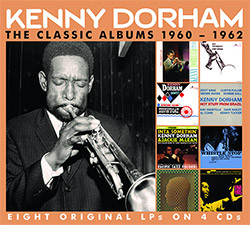 |
| Dorham, Kenny The Classic Albums 1960-1962 [4 CDs] (Enlightenment) |
| A 4-CD/8 album survey of Kenny Dorham's early-1960s output, compiling sessions from Show Boat through Una Mas, where his warm, lyrical trumpet leads shifting ensembles including Joe Henderson and Herbie Hancock, bridging hard bop, modal jazz, and Latin-tinged explorations with refined compositional clarity. |
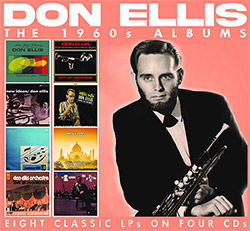 |
| Ellis, Don The 1960s Albums [4 CD BOX SET] (Enlightenment) |
| Collecting eight albums from the early to late '60s, this generous four-CD set surveys the groundbreaking work of trumpeter, composer, and bandleader Don Ellis, tracing his evolution from post-bop experiments with shifting metric structures into large-ensemble innovation infused with global rhythms, expanded instrumentations, and a fiercely exploratory imagination. |
 |
| Bley, Paul Trio Floater & Syndrome - The Upright Piano Sessions, Revisited (ezz-thetics by Hat Hut Records Ltd) |
| Revisiting and remastering two albums from Paul Bley's formative trio years with Steve Swallow on double bass and Pete LaRoca Sims on drums, recorded in Newark, NJ, from 1962-63 but unreleased until the 1980s on Savoy Jazz, as Bley explores Carla Bley's compositions alongside his own, reshaping the piano trio dynamic with a balance of free and lyrical approaches to jazz. |
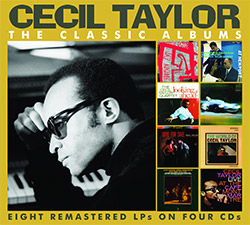 |
| Taylor, Cecil The Classic Albums - 8 Remastered LPs [4 CD BOX SET] (Enlightenment) |
| Reissuing and remastering eight landmark albums released between 1956 and 1962, this collection traces iconoclastic pianist Cecil Taylor�s evolution from bop-influenced beginnings to the groundbreaking free jazz forms he helped pioneer, featuring collaborations with Steve Lacy, John Coltrane, Kenny Dorham, Archie Shepp, Clark Terry, Roswell Rudd, and others, culminating in his trailblazing trio with Jimmy Lyons and Sunny Murray. |
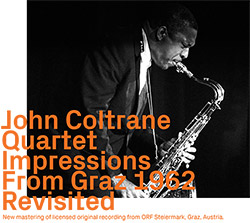 |
| Coltrane, John Quartet (w/ Tyner / Garrison / Jones) Impressions From Graz 1962, Revisited [2 CDs] (ezz-thetics by Hat Hut Records Ltd) |
| Expanding and remastering the 2019 single CD of John Coltrane's Quartet from its European tour in the fall of 1962, with McCoy Tyner on piano, Jimmy Garrison on double bass, and Elvin Jones on drums, performing at Stefaniensaal in Graz, Austria, beautifully recorded by ORF Steiermark and now presented in both volumes, showcasing Coltrane's lyrical roots and growing free inclinations. |
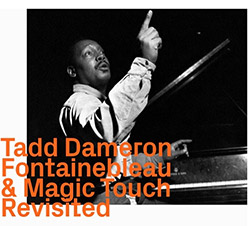 |
| Dameron, Tadd Fontainebleau & Magic Touch, Revisited (ezz-thetics by Hat Hut Records Ltd) |
| Composer, pianist, and bandleader Tadd Dameron's first album, Fontainebleau (1956), and his final work, The Magic Touch (1962), are remastered to highlight his sophisticated hard bop compositions for large ensembles, featuring influential players like Bill Evans, Philly Joe Jones, and Ron Carter, and showcasing Dameron's lasting impact on jazz before his untimely passing. |
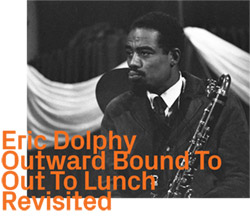 |
| Dolphy, Eric Outward Bound To Out To Lunch Revisited (ezz-thetics by Hat Hut Records Ltd) |
| Arriving in NY in 1959, saxophonist, flute & bass clarinetist Eric Dolphy joined some of the finest avant jazz players, releasing his 1st album as a leader in 1960--Outward Bound--with Freddie Hubbard, Jaki Byard, George Tucker & Roy Haynes; subsequently tagged as an anti-jazz musician, it would be 4 years before his masterwork Out To Lunch would be released, both albums here reissued & remastered. |
 |
| Shepp, Archie The Way Ahead / Kwanza / The Magic Of Ju-Ju, Revisited (ezz-thetics by Hat Hut Records Ltd) |
| Three albums and three distinct groupings in this essential remaster & reissue of two late 60s and one 70s Impulse! albums from saxophonist and composer Archie Shepp, in configurations of septets and nonets with luminaries of the day performing Shepp's rhythm-centric jazz focused on the Afrocentric experience, drawing on blues and spirituals in free jazz settings. |
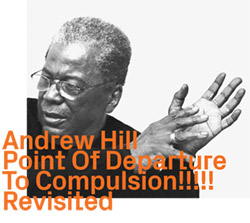 |
| Hill, Andrew Point Of Departure To Compulsion!!!!! (ezz-thetics by Hat Hut Records Ltd) |
| Remastering pianist Andrew Hill's distinct and exemplary albums issued on Blue Note Records in 1965 & 1967: Point of Departure, illustrating Hill's complex and exciting compositions in a front line with Eric Dolphy, Joe Henderson, Kenny Dorham and Tony Williams & Richard Davis; and the percussively rich Compulsion with John Gilmore, Freddie Hubbard, Cecil McBee, & Joe Chambers. |
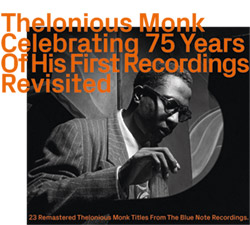 |
| Monk, Thelonious Celebrating 75 Years Of His First Recordings (ezz-thetics by Hat Hut Records Ltd) |
| The foundational work of composer and pianist Thelonious Monk is heard in these six remastered studio sessions for Blue Note Records recorded between 1947 to 1952, performing twenty three original compositions in bands from trios to sextets with a who's who of emerging jazz leaders including Art Blakey, Max Roach, Lou Donaldson, Kenny Dorham, and Milt Jackson. |
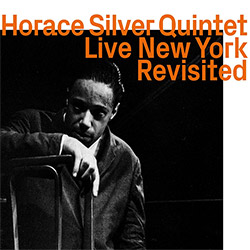 |
| Silver, Horace Quintet Live New York, Revisited (ezz-thetics by Hat Hut Records Ltd) |
| Recorded around the time of his most famous records, Song For My Father and The Cape Verdean Blues, lyrical hard bop/Blue Note pianist and composer Horace Silver's band is heard live at The Half Note in NYC and at "The Cork & Bib" on Long Island with his spectacular band including trumpeters Carmell Jones & Woody Shaw and saxophonist Joe Henderson. |
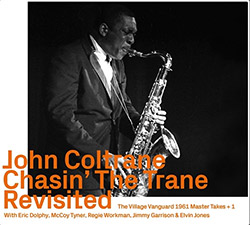 |
| Coltrane, John Chasin The Trane, Revisited (ezz-thetics by Hat Hut Records Ltd) |
| The 4-night engagement at the Village Vanguard in November 1961 with sidemen Eric Dolphy, McCoy Tyner, Reggie Workman, Jimmy Garrison & Elvin Jones resulted in saxophonist John Coltrane's 1962 "Live at the Village Vanguard" album, his evolving freedom surprisingly divisive and even decried as "anti-jazz", here reissued and remastered with a bonus version of "Spiritual". |
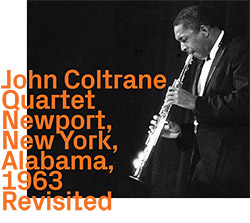 |
| Coltrane, John Quartet Newport, New York, Alabama, 1963, Revisited (ezz-thetics by Hat Hut Records Ltd) |
| Two quartets performing two live concerts from 1963 led by John Coltrane on tenor & soprano saxophones, the first at the Newport Jazz Festival with McCoy Tyner on piano, Jimmy Garrison on double bass and Roy Haynes on drums, the second at Birdland with Elvin Jones on the drums, plus 2 studio recordings with that quartet at Van Gelder Studio in the same year. |
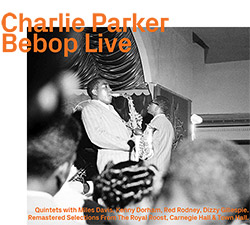 |
| Parker, Charlie Bebop Live [2 CDs] (ezz-thetics by Hat Hut Records Ltd) |
| Remarkably remastered recordings of Charlie Parker's quintets from 1945-49, performing live at Carnegie Hall, Royal Roost, & Town Hall with configurations of Miles Davis, Dizzy Gillespie, Kenny Dorham, Red Rodney, Don Byas, Al Haig, Max Roach, Roy Haynes, Kenny Clarke, Tommy Potter & Curley Russell, allowing us to re-live the consistent brilliance of the leader and his sidemen. |
 |
| Brown, Marion Capricorn Moon To Juba Lee (remastered) (ezz-thetics by Hat Hut Records Ltd) |
| Merging and remastering two essential albums from free jazz saxophonist Marion Brown: his 1966 ESP album "Marion Brown Quartet" with trumpeter Alan Shorter, bassist Reggie Johnson and percussionist Rahied Ali; and his 1967 Fontana album "Juba-Lee" in a septet with Reggie Johnson, drummer Beaver Harris, pianist Dave Burrell, trombonist Grachan Moncur III & saxophonist Bennie Maupin. |



![Harriet Tubman (Ross / Gibbs / Lewis) & Georgia Anne Muldrow: Electrical Field of Love [VINYL]](https://www.teuthida.com/productImages/misc4/37330.jpg)

![Henry Cow: The Henry Cow Box Redux: The Complete Henry Cow [18 CDs, DVD & 3 BOOKLETS]](https://www.teuthida.com/productImages/misc4/37272.jpg)
![Re-Ghoster Extended: Dreaming With The Lights On [VINYL]](https://www.teuthida.com/productImages/misc4/37356.jpg)

![Eva Novoa: Solo (I) [VINYL]](https://www.teuthida.com/productImages/misc4/37117.jpg)
![Perelman, Ivo (w/ Marc Ribot / Elliott Sharp / Joe Morris): Trifecta [3 CDs]](https://www.teuthida.com/productImages/misc4/37315.jpg)
![Thomas, Pat & XT (Wright / Abbott): Strata, Act (Joy Contemporary)* London [VINYL + DOWNLOAD]](https://www.teuthida.com/productImages/misc4/37266.jpg)
![La Casa, Eric / Francisco Lopez: Collection Supranaturelle: Induction / Mutation [2 CDs]](https://www.teuthida.com/productImages/misc4/37287.jpg)
![Aries House Zaes: Network Friction [VINYL]](https://www.teuthida.com/productImages/misc4/37242.jpg)
![Lindorff-Ellery, Evan: Light Sound Falling [CASSETTE w/ DOWNLOAD]](https://www.teuthida.com/productImages/misc4/37043.jpg)
![Lindorff-Ellery, Evan / Naomi Juniper: Studio, Creek [CASSETTE W/ DOWNLOAD]](https://www.teuthida.com/productImages/misc4/37044.jpg)
![Coleman, Rodger: Journey to Brno [CASSETTE + DOWNLOAD]](https://www.teuthida.com/productImages/misc4/37175.jpg)
![Allbee, Liz: Breath Vessels [VINYL]](https://www.teuthida.com/productImages/misc4/37012.jpg)
![Belorukov, Ilia / Alex Riva: Wrestling For Futility [CASSETTE w/DOWNLOAD]](https://www.teuthida.com/productImages/misc4/36994.jpg)

![Genthon, Anouck / Lionel Marchetti: Suite Blanche [2 CDs]](https://www.teuthida.com/productImages/misc4/36642.jpg)
![Toeplitz, Kasper T.: Erosions Programmees [CD + BOOKLET]](https://www.teuthida.com/productImages/misc4/36639.jpg)
![Gate, The : Almost Live [CASSETTE + MAGAZINE]](https://www.teuthida.com/productImages/misc4/36836.jpg)

![Feldman, Morton / GBSR Duo w/ Taylor MacLennan: Trios [6 CD BOX SET]](https://www.teuthida.com/productImages/misc4/37020.jpg)
![Frey, Jurg : Composer, Alone [3 CDs]](https://www.teuthida.com/productImages/misc4/36927.jpg)



![Frey, Jurg with ensemble]h[iatus: Je Laisse A La Nuit Son Poids D](https://www.teuthida.com/productImages/misc4/36988.jpg)


![Pisaro-Liu, Michael: Within (2) / Appearance (2) [2 CDs]](https://www.teuthida.com/productImages/misc4/36831.jpg)
![MacLean, Steve: Box Of Seven [7 CD BOX]](https://www.teuthida.com/productImages/misc4/36467.jpg)
![Mehead: One Good Eye [REISSUE]](https://www.teuthida.com/productImages/misc4/37276.jpg)
![Zorn, John: The Song of Songs [CD + CD BOOK]](https://www.teuthida.com/productImages/misc4/36923.jpg)
![Coultrain: Mundus [COLORED VINYL]](https://www.teuthida.com/productImages/misc4/33056.jpg)
![Hprizm: Signs Remixed [COLORED VINYL]](https://www.teuthida.com/productImages/misc4/30635.jpg)
![Halls Of the Machine: All Tribal Dignitaries [CASSETTE w/ DOWNLOAD]](https://www.teuthida.com/productImages/misc4/36134.jpg)
![Koenjihyakkei: Live at Club Goodman [2 CDs]](https://www.teuthida.com/productImages/misc4/36111.jpg)
![Sorry For Laughing (G. Whitlow / M. Bates / Dave-Id / E. Ka-Spel): Rain Flowers [2 CDS]](https://www.teuthida.com/productImages/misc4/35985.jpg)
![Rolando, Tommaso / Andy Moor : Biscotti [CASSETTE w/ DOWNLOADS]](https://www.teuthida.com/productImages/misc4/36106.jpg)
![Electric Bird Noise / Derek Roddy: 8-10-22 [CD EP]](https://www.teuthida.com/productImages/misc4/35970.jpg)
![Elephant9 : Mythical River [VINYL]](https://www.teuthida.com/productImages/misc4/34624.jpg)
![Coley, Byron: Dating Tips for Touring Bands [VINYL]](https://www.teuthida.com/productImages/misc4/17906.jpg)
![Lost Kisses: My Life is Sad & Funny [DVD]](https://www.teuthida.com/productImages/misc4/lostKissesDVD.jpg)