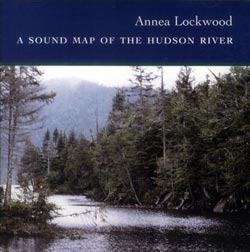
A Sound Map of the Hudson River comes from what could be called Annea Lockwood's middle period. Her early work included such Fluxus-inspired pieces as Piano Transplants (1969-1972), in which old, decrepit pianos were burned, buried and submerged in ponds in different parts of the world. More recently she has been composing for acoustic instruments and voice, working with a didgeridu octet and heavily prepared pianos.
But in the '70s and '80s, Lockwood was working with environmental sound in ways that are now seen as landmarks in the psychoacoustic movement, and primary among those is her 1989 A Sound Map of the Hudson River. The 72-minute recording works on multiple levels. It can simply be taken at face value as an environmental recording, something along the lines of a white-noise machine that pleasantly blocks the outside world. The close, rich recordings move through peaceful and more turbulent parts of the river along a course from the Adirondack Mountains to Staten Island, with meetings of birds and boats along the way. The recording also invites a Cagean appreciation, framing our environment to focus attention and appreciation.
But the waters run deeper than that, and Lockwood shows a strong compositional sense in the organization of the 15 site-specific recordings. There's tension and release, a literal flow to the piece. Whether she merely recorded five minutes at each spot and spliced them together or worked over hours of tape to get the strongest presentation, there's something truly engaging about her water music.
Comments and Feedback:
More Recent Reviews, Articles, and Interviews @ The Squid's Ear...
The Squid's Ear presents reviews about releases sold at Squidco.com written by independent writers.





 Julia Eckhardt:
 Lori Goldston:
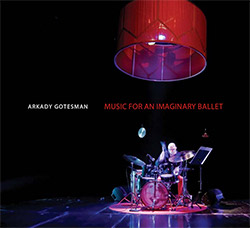 Arkady Gotesman:
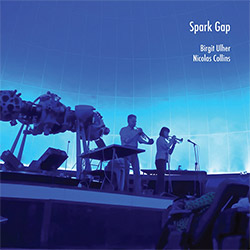 Nicolas Collins / Birgit Ulher:
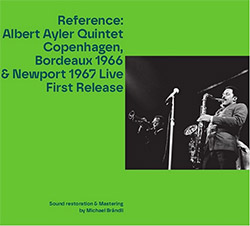 Albert Ayler Quintet:
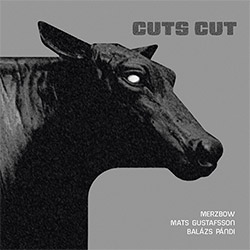 Merzbow / Mats Gustafsson / Balasz Pandi:
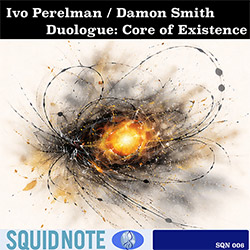 Ivo Perelman / Damon Smith:
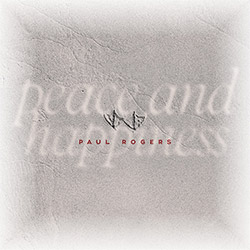 Paul Rogers:
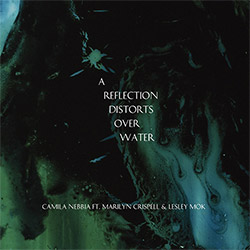 Camila Nebbia (feat. Marilyn Crispell & Lesley Mok):
 Eric La Casa / Francisco Lopez: