Henry Brant
The Henry Brant Collection, Vol. 8
(Innova)
review by Brian Olewnick
2008-01-15
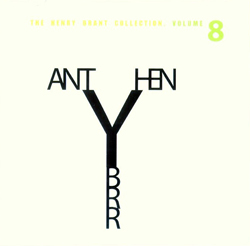
Henry Brant, who will turn 95 in 2008, is best known for his pan-spatial music, large-scale compositions for often disparate groups arrayed over a relatively large area, often with each playing music only marginally, if at all, related to that being performed by the others. That's only a portion of his creative output, however, and a glance at the titles contained on this disc would correctly lead one to believe that there's a whimsical side to Brant as well. "Whoopee in D", "Revenge Before Breakfast" and "Dialog in the Jungle" are at a far remove from pieces of his like "Meteor Farm". The question then, is whether this lighter fare, even those that utilize the pan-spatial attack, holds a similar amount of weight compared to his more serious work.
Well, yes and no. Adapting Bach to rumba and polka forms as does "Whoopee in D" (1932) might fly as a Peter Schickele pastiche, but it only raises a marginal grin here. "Music for a Five and Dime Store" (1932) fares better, a jaunty little trio performed by Vera Beths (violin), Reinhart de Leeuw (piano) and Brant (percussion). It sounds exactly like the sort of piece Willem Breuker (with whom Beths has worked) might cover on one of his repertoire-based releases. The pan-spatial approach does put in a mini-appearance on "Revenge Before Breakfast" (1982), with three separated duos consisting of piccolo/clarinet, xylophone/vibraphone and accordion/cello (members of the California E.A.R. Unit) and the result is loose and playful enough, but at least on disc provides (possible necessarily) little of the environmental impact it might have if experienced live and the music itself is diffuse and unmemorable, kind of George Crumb lite with some weeping tossed in at the end.
"Inside Track" (1982), when heard live, places a piano and percussion onstage and scatters the rest of the orchestra in groups throughout the hall. Again, that aspect is audibly negligible on disc and what sensual diversions the array may have imparted are minimized at the expense of the music as such which, here, is a modernist m�lange of song forms, marches and country waltzes, with a warbling soprano. Like a good bit of the music heard on this disc, it recalls Carl Stalling though without the latter's out and out willingness to go the extra zany step. Brant plays things much more safely, creating sounds that are much more palatable but at the same time, less giddily exciting. Beware any classical piece that uses the term "jazz" in its title. "Jazz Toccata on a Bach Theme" (1940) is lukewarm while the three-movement "Jazz Clarinet Concerto" (1946), written for but never performed by Benny Goodman, is perfectly acceptable as an attractive, post-war swing piece, though you'd have thought a purportedly avant garde composer would've been into bop by that time...
"Double-Crank Hand Organ Music" (1933), for two pianos and percussion, is something of a hoot as it attempts to recreate the sound of the titular street instrument in humorously plodding and raucous fashion. A bevy of odd instruments (odd to classical concert goers, that is) show up for "Altitude 8750" (1990) including things that should never be heard in sensitive company, like bullroarers, but the outcome is more a mishmash of effects (and very annoying vocals) than a cohesive piece. This despite the presence of musicians like Wadada Leo Smith, Larry Polansky, I Wayan Sadra, James Tenney and Hugh Davies in the ensemble. The disc closes with "Dialog in the Jungle" (1964) for five woodwinds, five brass and voice, again spatially separated. The text, a poem by Brant's wife sung by tenor Frank Baker is a bit tough to take in its na�ve earnestness but the crowd at this 1984 performance seemed to enjoy it.
In sum, more froth than heady spirit here, though if that aspect of Brant is your cup of tea, you're sure to be more than satiated.
Comments and Feedback:

More Recent Reviews, Articles, and Interviews @ The Squid's Ear...
|
|





 Julia Eckhardt:
 Lori Goldston:
 Arkady Gotesman:
 Nicolas Collins / Birgit Ulher:
 Albert Ayler Quintet:
 Merzbow / Mats Gustafsson / Balasz Pandi:
 Ivo Perelman / Damon Smith:
 Paul Rogers:
 Camila Nebbia (feat. Marilyn Crispell & Lesley Mok):
 Eric La Casa / Francisco Lopez: