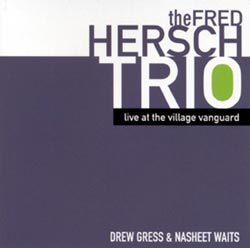
When a pianist like Fred Hersch brings a trio into a place like the Village Vanguard, the Bill Evans comparisons are inevitable. And, apparently, intentional; one of the four non-originals on the program, "Bemsha Swing," was recorded by Evans (on "Conversations With Myself) and Hersch's "Endless Stars" strongly recalls Evans' "Turn Out the Stars." To be fair, how many of the pianists who came up after Evans ascendancy have been untouched by his influence? So Hersch has a lot of company. But he has something else many of his peers do not: a recognizable sensibility (I'm not sure I'd call it a style). It begins with an emphasis on touch and a roseate harmonic palette that proceeds as much from Ravel as from any jazz source. Rhythm is not entirely absent, but it is subsumed in a larger flow. Like Evans, Hersch is known as a ballad player, and like Evans, this tag sells him short. The opening "Bensha Swing" moves, shattering the melody and sprinkling it over the dancing rhythms laid down by bassist Drew Gress and quick-witted drummer Nasheet Waits. But Hersch has been playing a lot of concert music lately and that may explain why the rhythm of the playful blues "Swamp Thang" and of the harmonically tricky "Phantom of the Bopera" just fall short of achieving liftoff. Closer to Hersch's sensibility is the thoughtful medley of Wayne Shorter's "Miyako" and "Black Nile," the latter ending with a drum solo by Waits that sounds like the night sky coming alive after a cleansing thunderstorm. It's not very Evans-like, but the master's ghost is never far away. Indeed, the concluding "I'll Be Seeing You" seems to be addressed to Evans. It's delicate like life itself (though in good health, Hersch is HIV-positive) and as the third chorus dissolves in dreamy nostalgia, Hersch seems to send his spirit out to search for Evans' in that same, hallowed room.





 Julia Eckhardt:
 Lori Goldston:
 Arkady Gotesman:
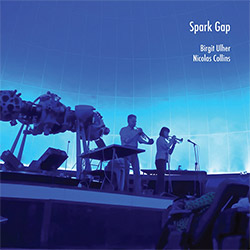 Nicolas Collins / Birgit Ulher:
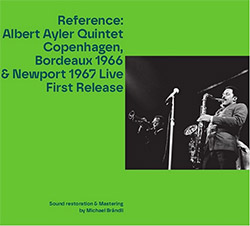 Albert Ayler Quintet:
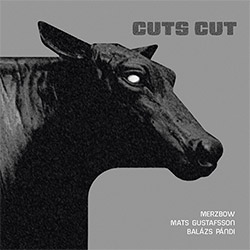 Merzbow / Mats Gustafsson / Balasz Pandi:
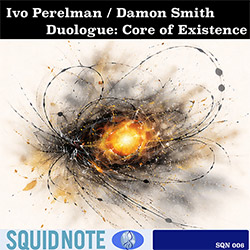 Ivo Perelman / Damon Smith:
 Paul Rogers:
 Camila Nebbia (feat. Marilyn Crispell & Lesley Mok):
 Eric La Casa / Francisco Lopez: