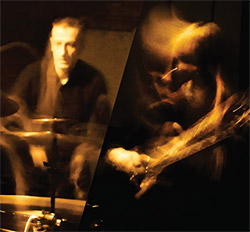
A first-time meeting between Japanese born improvisers, Brooklyn-based percussionist Nava Dunkelman and alto saxophonist Masayo Koketsu in Tokyo have more in common than their native country. Both immersed in the free music scene, the nine Veins of Rain they expose on this disc probes the furthest reaches of instrumental technique and innovative thought without cutting the vein of logic or drowning in cacophony.
One of the key elements is that Dunkelman who is also in a percussion duo and works with electronics is a percussionist not a drummer. That means that her responses or amplifications to the smears, split tone and other extended reed techniques of Koketsu, whose has worked with Lao Dan and Willam Parker, augments textures from a variety of idiophones and pure percussion instruments. Seemingly for every isolated ruff or paradiddle heard, pivots to ratcheting shakes, scrapes across unyielding metal — cymbal or otherwise — kettle-drum-like thuds and the shaking of bell trees and maracas-like tones comes to the fore. In fact the occasional dog-whistle shriek heard may arise from the percussionist's implements rather than Koketsu's overblowing.
Although there are sequences as on "Tsuyu No Tama" where lyrical interludes are mixed with the saxophonist's aggressive snorts, bites and pressure, most of the date emphasizes exploring the farthest reaches of the saxophone's sound horizon. There's also an unexpected respite with "Yukigeshizuku", where the combination of idiophone shakes and straight-ahead reed trills suggests the two are outputting a respectful reading of an Asian tune.
Otherwise multiphonics trumps middle-of-the-road every time, with Koketsu's reed command finding methods in which to project unexpected and unique combinations for timbral expression. For instance, a track like "Aoshigure" finds the saxophonist emphasizing flat line drones with a vibrato wider than many waterways. After Dunkelman creates bass drum rumbles and snare slaps, Koketsu moves from wide expressive flutters to motifs that squeezes out whiny tongue stops and snarls and barely-there reed twitters. Moreover "Aoshigure" extends angled reed cries to their limits in a meeting with Dunkelman's approximation of spring-loaded reverberations and metallic smacks, climaxing with a meeting of drum rattles and reed vibrato.
Unbending in their sonic communication the duo outputs enough extemporaneous variations on themes that are more suggested than stated to maintain interest during the entire session. This dual animation will attract many who prefer this kind of creative music.





 Masayo Koketsu / Nava Dunkelman:
 Nicolas Gombert / James Weeks:
 Reuben / Hanslip / Lash / Hession:
 Ivo Perelman / Matthew Shipp:
 Ishmael Ali (Ishmael / Wilkerson / Wilkes / Baker / Tong / Harris):
 Marta Warelis (w/ LaMar Gay / Baars / Ng / Haker Flaten / Rosaly):
 Maya Bennardo / Erik Blennow Calalv / Kristofer Svensson:
 Charles K. Noyes:
 Marco Fusi / Pierre Alexandre Tremblay:
 Dominic Lash / Mark Wastell: