Burn the Plastic, Sell the Copper. What a wonderfully confrontational title, at least on its face. As it turns out, it derives from an episode involving faulty sound cords rather than an illicit copper running scheme or something else iniquitous. Regardless, the title fits the album's mischievous contents.
Burn the Plastic is Ishmael Ali's first release as leader, a fact which is surprising given his twenty-five or so releases as a sideman and in other groups. Those experiences, especially in the less hierarchical collectives, pervade this release. Although Ali oversaw composition and orchestration, much of this — apart from the solo cello selections — is a group affair, a union of distinct musical personalities that Ali sometimes leads and sometimes supports. And the list of co-conspirators reveals an impressive cross-section of generations of free musicians circulating around Chicago : Ed Wilkerson Jr., Corey Wilkes, Jim Baker, Brianna Tong, and Bill Harris.
The music is wild. It starts with "Reflected, Refracted", which features an extended metallic cello excursion over a sparse disjointed piano and percussion background. The album then quickly tumbles into some iteration of techno-futurist mutant jazz that occupies that odd space between cacophony and glittery beauty. At points, the compositions evoke Ornette's Science Fiction and electric Miles, but any references, deliberate or not, are only temporary and updated with heavy modern electronics (circuitry, sampling, beats) and Ali's persistent cello. Both latter features thread through the rest of the album as a unifying thread among divergent styles and shifting configurations of musicians. As do an almost schizophrenic sense of playfulness and experimentalism. One hears a variety of timely avant garde influences: harsh sound art and collage work (including some interesting use of a Jorge Luis Borges recording on" Everness"); contemporary classical sections; broken postindustrial funk; Jungle Sky beats; a lo-fi demented Stereolab indie number (the closer, "Every Circle a Moon"); angular, electro-pockmarked blues ("Stars in My Pocket"); and a lot of background glitch.
Through it all, I cannot shake the idea that as much as this is one man's vision, it is also a stylistic pastiche (which is the title of the minimalist sixth track), running much of the gamut of any given recent issue of the Wire but with more tactical intentionality. In its specific diversity of sounds, Burn the Plastic seems to point to a cyborgic future for free jazz, or whatever we wish to call it at this point. And, as even the most forward-thinking worthwhile music so often does, this album wears its fractured historical moment on its sleeve. It is steampunkt futurism for our data-farm present, an unapologetically digital collaging of older acoustic forms with today's computerized aesthetics. And it is good. Very good.





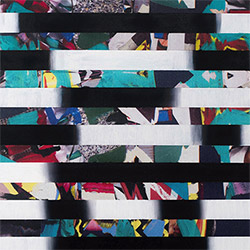 Ishmael Ali (Ishmael / Wilkerson / Wilkes / Baker / Tong / Harris):
 Marta Warelis (w/ LaMar Gay / Baars / Ng / Haker Flaten / Rosaly):
 Maya Bennardo / Erik Blennow Calalv / Kristofer Svensson:
 Charles K. Noyes:
 Marco Fusi / Pierre Alexandre Tremblay:
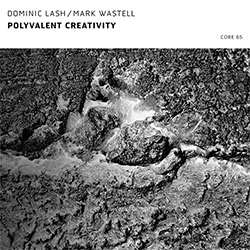 Dominic Lash / Mark Wastell:
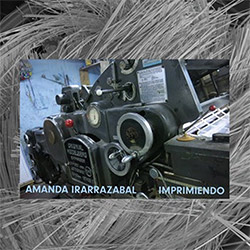 Amanda Irarrazabal:
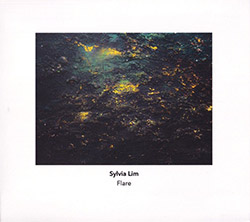 Sylvia Lim:
 Tom Challenger & Evan Parker:
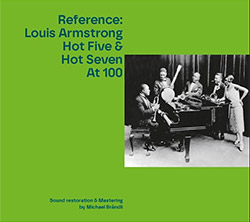 Louis Armstrong: