Trends come and go, disappear and then get re-investigated, in all fields of aesthetics, including improvised music. An approach that may have seemed to have been exhausted is re-examined only to discover veins previously un-mined, perhaps unable to have been mined at the time. On the other hand, one may return to an abandoned mode of attack only to find out that, at least so far, it has indeed run dry.
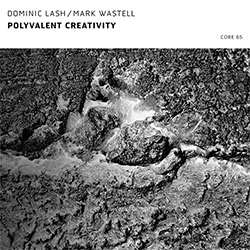
For a long time, a certain type of improvised music, stemming from (among many others) the work of artists like Derek Bailey and Evan Parker, was characterized by an incessant flurry of sound, a horror vacui that could be both overwhelming and claustrophobic, reaching ecstatic heights but also descending into what Radu Malfatti famously termed, "gabby music". Subsequently, say from the mid-90s on for a couple of decades, while this approach was by no means abandoned, a more spacious, quieter way was sought. Deriving influence (again, among many others) from ensembles like AMM, musicians began paying more attention to the environments in which they found themselves, engaging less in a conversational dialogue with each other and more with the world at large, sometimes resulting in music that was barely there. Both Lash and Wastell were deeply involved in this end of things but both, to some extent and like numerous other musicians, seem to have been recently probing back into the further-past, attempting to wrest more of value out from that earlier, more rambunctious tradition.
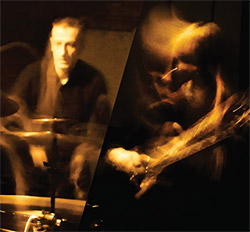
For this listener, the five tracks don't quite get there, at least in the sense of uncovering new territory, not that that was necessarily the point of the musicians. An "innocent" listener, not knowing anything about the recording, would be excused for thinking it was from the early 90s, say a forgotten Bailey/John Stevens duo, though not if they listened closely. Not a bad thing, to be sure but, for some, a bit disquieting. Lash and Wastell are extremely adept on their instruments, Lash in particular getting into some lovingly delicate passages where his strumming almost conjures up some ghostly Brazilian presence and even echoes of flamenco on the second cut. Wastell is quick and precise, very colorful and responsive to each situation. Indeed, on the first piece especially, Lash extends out into relatively tonal and sonorous areas, quite deliciously, while Wastell's soft cymbal spatters and rapid brushwork are a joy that, oddly enough, conjures up another early pioneer of the practice, the late Jamie Muir. In fact, the music is strong, robust and creative throughout, really fine; aficionados of the genre will derive great pleasure herein. There's just something that nags at me re: where is all this going?
Comments and Feedback:

More Recent Reviews, Articles, and Interviews @ The Squid's Ear...
|





 Amanda Irarrazabal:
 Sylvia Lim:
 Tom Challenger & Evan Parker:
 Louis Armstrong:
![John Tilbury: At Home [4 CD BOX] (Another Timbre)](https://www.teuthida.com/productImages/misc4/37729.jpg "John Tilbury: At Home [4 CD BOX] (Another Timbre)") John Tilbury:
John Tilbury: LDL (Leimgruber/Demierre/Lehn):
 Magda Mayas' Filamental:
 Rodrigues / Rodrigues / Torres / Schlippenbach / Kellers:
 Parkins / Rasmussen / Sawyer: