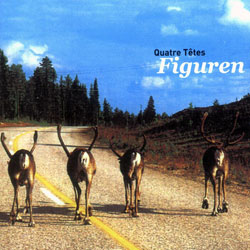
An all-female Swiss quartet, basically the fusion of two duos. Pianist Gabriela Friedli and trombonist Priska Walss (here doubling on alphorn) are known as Duo Frappant, a CD already released on Intakt titled Intervista. A second pianist, Claudia Ulla Binder, was a regular performing companion of flutist Susann Wehrli, in this occasion also featured on melodica. The separate entities took the shape of Quatre T�tes five years ago, after having met at "Z�rcher Stadtsommer 2004". As a symbolic memento of past times, three of the pieces in this program are duets.
That these women are technically well-trained becomes evident from the very first cut "Beauty's Biest", a cross of amusing improvisation and chamber music which meshes somber chordal work and quiescent coals of whimsical, if digestible anti-patterns. Another episode, "Lavtina", examines the connections between a somewhat disenchanted predisposition to leaving lots of spaces for the ideas to flow and contrapuntal environments that might recall early theatre backgrounds. An acceleration of sorts is found in "L�ufer und Turm", Walss' trombone spreading astute lines amidst a not overly dissonant harmonic tissue, while in "Penelope" the alphorn is tackled by rendering it akin to a didgeridoo against Wehrli's quasi-accordion melodica shades, causing yours truly to fantasize about a transverse If, Bwana/Guy Klucevsek liaison before aptly bowed piano strings conclude the whole with remarkable authority and a required touch of mystery.
Someone could be turned off by the instrumental cluttering characterizing certain parts of the record, or decide that this kind of impromptu decision-making hides in actual fact a lack of revolutionary spark. This is in part true � we couldn't really say that everything sounds unexpected. Yet even during the most skeletal exchanges, such as the Wehrli/Friedli dialogue in "Voyageurs", the rewards come from a pair of factors: the absolute transparency of the timbres and the rather candid approach to unearthing instant solutions, both qualities manifested in every juncture by the musicians. This is a much appreciated attitude revealing seriousness � not necessarily a given in today's scene.
Maybe the secret lies exactly there: this stuff does not sound like "avant-garde". Figuren appears more as an ongoing process involving four artistic voices who are still attempting to reach a superior level of consistency as a collective unit, but whose straight genuineness is a pleasant diversion from the annoyingly sanctimonious rigor shown by many weightier names in this field.





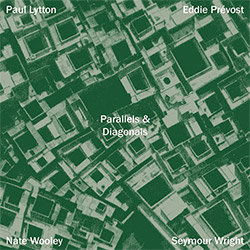 Paul Lytton / Eddie Prevost / Nate Wooley / Seymour Wright:
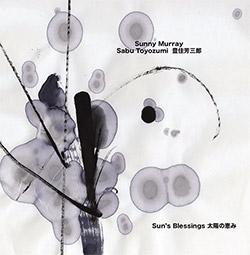 Sunny Murray and Sabu Toyozumi:
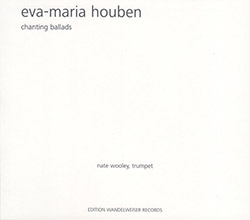 Eva-Maria Houben (Nate Wooley):
 Masayo Koketsu / Nava Dunkelman:
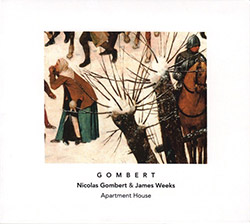 Nicolas Gombert / James Weeks:
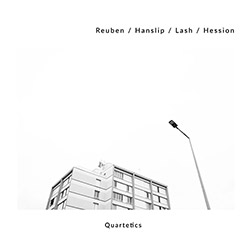 Reuben / Hanslip / Lash / Hession:
 Ivo Perelman / Matthew Shipp:
 Ishmael Ali (Ishmael / Wilkerson / Wilkes / Baker / Tong / Harris):
 Marta Warelis (w/ LaMar Gay / Baars / Ng / Haker Flaten / Rosaly):
 Maya Bennardo / Erik Blennow Calalv / Kristofer Svensson: