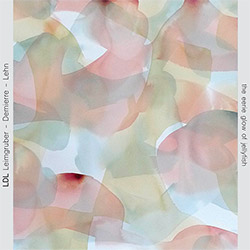
Recorded live at Ulrichsberg's Kaleidophon Festival in April 2024, The Eerie Glow Of Jellyfish surely doesn't ease you in, alternating instances of intense exploration of the grey areas between stillness and (unusual) timbral interconnection with sonic outbursts measurable on the Richter scale. Urs Leimgruber, Jacques Demierre and Thomas Lehn have been at this for decades now — the first two through LDP, their trio with the late Barre Phillips, with Lehn eventually graduating from guest to full member. The interplay they've built together for the occasion shows facets that can appear loud, murky, unrelenting in spite of a birth certificate stating "near-silence".
The instrumentation obviously breaks from free-improv templates. No drums, no bass, and — on top of everything — Demierre plays a 1771 spinet run through amplification: plucked strings with a metallic, fast-fading attack, more struck zither than keyboard. He may conceive some sort of on-the-spot broken arpeggio here and there, but more frequently he stacks clusters until they blur into thick clouds of resounding dissonance.
The record's real subject is variable mass. This is electroacoustic music at everchanging density — lots of oscillator work, shrieking runs from the saxophone, harsh timbres piling on top of each other until the three instruments become one continuous clangor. Leimgruber barely plays "normal" pitches at all; it's mainly overtones, circular breathing, full-throated eruptions that, at times, tear straight through everything else in the mix. Lehn's synthetic matters twirl and grind against the noise, adding irregular blips or peculiar luminosity rather than fighting it. He treats the synthesizer almost as a processing engine, chewing up whatever signal arrives from intuition and spitting it back, entirely misshapen, to his comrades.
The dynamic textural palette is a genuine point of interest: from rarefaction to saturation, nothing stays discrete for long. The trio can generate serious collisions from an initially reflective conversation, periodically thickening the weave until it's hard to parse who's doing what. It can be tough, even "punishing" listening for untrained ears. What comes through is not always classifiable as "three musicians reacting to each other" — although they definitely do — but as unique sound sources compounding into something bigger and more complex than any one of them. A kind of accumulated intensity from veterans who've clearly decided that restraint isn't always the point.




 Masayo Koketsu / Nava Dunkelman:
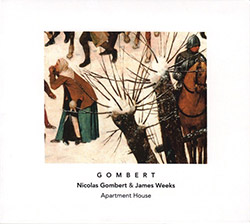 Nicolas Gombert / James Weeks:
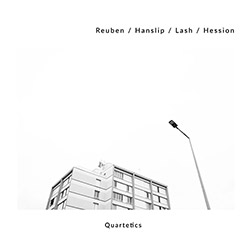 Reuben / Hanslip / Lash / Hession:
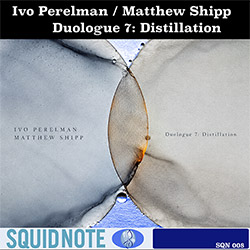 Ivo Perelman / Matthew Shipp:
 Ishmael Ali (Ishmael / Wilkerson / Wilkes / Baker / Tong / Harris):
 Marta Warelis (w/ LaMar Gay / Baars / Ng / Haker Flaten / Rosaly):
 Maya Bennardo / Erik Blennow Calalv / Kristofer Svensson:
 Charles K. Noyes:
 Marco Fusi / Pierre Alexandre Tremblay:
 Dominic Lash / Mark Wastell: