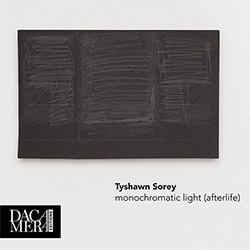
Sorey engages in various musical approaches but Monochromatic Light (Afterlife) is the first in this particular vein, I believe, since his monumental Pillars from 2018. By "vein", I mean a kind of Western composed music in the tradition of the New York School, particularly Morton Feldman. The Feldman references are overt here, not only in the music but in the fact that it was premiered in Rothko Chapel in Houston. That said, Sorey only uses these aspects as a kind of starting point; if he doesn't stray too far in some respects, the divergences are significant, particularly as an African-American composer.
Its a 75-minute work, scored for a Feldmanesque trio (Kim Kashkashian, viola; Sarah Rothenberg, piano/celeste; Steven Schick, percussion), augmented by baritone Davóne Tines and the Houston Chamber Choir. And, in actuality, the music doesn't sound especially like Feldman; there are few repeated melodic fragments, for instance, really only a good taste of this after the 50-minute mark. It's more the general atmosphere, if anything. Indeed, this listener heard a bit of Crumb's tonality and, in the choir, possibly some references to Penderecki. More deeply, there's the sustained, calmness and quietude, held over the piece's long duration, that might call to mind some of Feldman's lengthy compositions. In the first few minutes, the viola, rich and deep, tends to hold sway, sometimes over muffled two-beat patterns on low drums though, as said, there's little in the way of an iterative process. Instead, the music flows naturally and un-hemmed, melancholy and, one gets the sense, ruefully thoughtful.
Baritone Tines makes his appearance around the 25-minute mark. The libretto, a such, is an extremely salient feature of the work, consisting of (gradually unfurled) the first couple of lines from "Sometimes I Feel Like a Motherless Child". This imbues the composition, otherwise at least somewhat of a piece with the (white) Western post-war classical tradition, with a strong connection to African-American history. The listener almost automatically draws a connection with Paul Robeson. While the music generally resides within a somber, if slightly tense, area (the choir often wordlessly generating shimmering, even ghostly tones), on one or two occasions, things boil to the surface, not in an explosion, but in an acknowledgment of the underlying pain, as when Tines reaches emotional heights about an hour in, creating a very moving and intensely sad aura, the music also obliquely referring to the musical theme of the spiritual toward the conclusion of the work.
There's much more in play here, virtually every moment carrying some combination of strong musical ideas (beautifully performed) and historical weight. Sorey's ability to maintain this over such a duration is no mean feat. One looks greatly forward to hearing further investigations down this path or its byways. A superb recording.
Comments and Feedback:

More Recent Reviews, Articles, and Interviews @ The Squid's Ear...
|





 Tom Challenger & Evan Parker:
 Louis Armstrong:
![John Tilbury: At Home [4 CD BOX] (Another Timbre)](https://www.teuthida.com/productImages/misc4/37729.jpg "John Tilbury: At Home [4 CD BOX] (Another Timbre)") John Tilbury:
John Tilbury: LDL (Leimgruber/Demierre/Lehn):
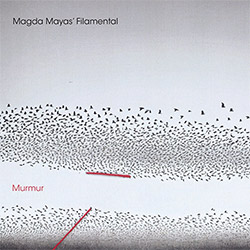 Magda Mayas' Filamental:
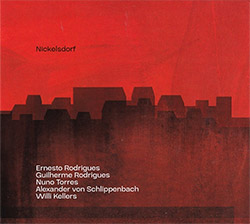 Rodrigues / Rodrigues / Torres / Schlippenbach / Kellers:
 Parkins / Rasmussen / Sawyer:
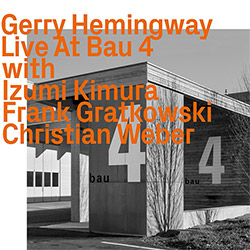 Gerry Hemingway / Izumi Kimura / Frank Gratkowski / Christian Weber:
 Christoph Gallio:
 Ryoji Ikeda: