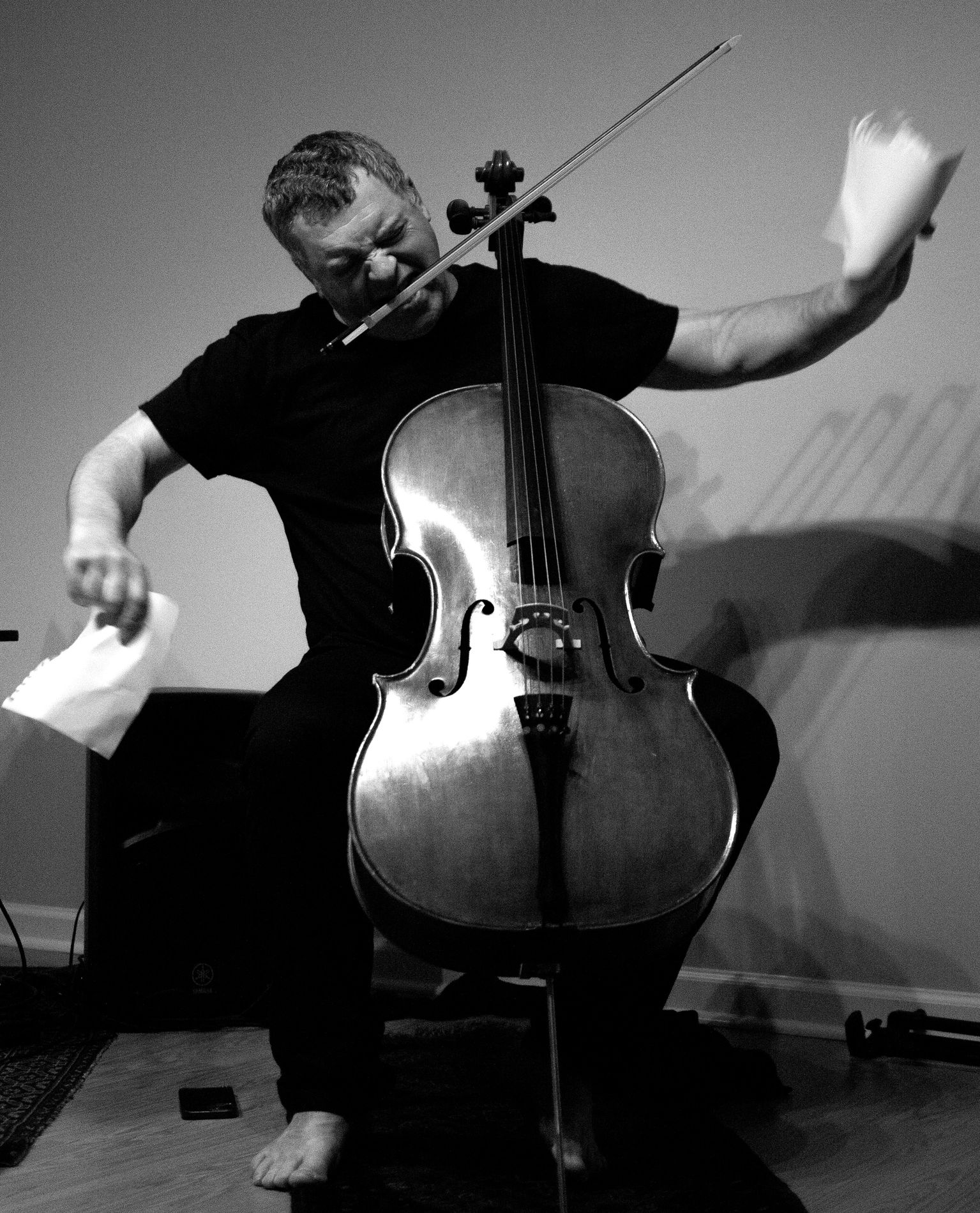
Cellist Daniel Levin is widely regarded as one of the most compelling voices in contemporary improvised music, praised for his fluency, imagination, and expansive musical vision. His work draws from European classical traditions, American jazz, microtonal and new music, and free improvisation, creating a distinctive language that transcends stylistic boundaries. Born in Burlington, Vermont, Levin began playing cello at the age of six and later studied Jazz at the New England Conservatory before becoming an active participant in the New York City avant-garde scene. He has collaborated with artists including Anthony Braxton, Gerald Cleaver, Tim Berne, Mat Maneri, Joe Morris, William Parker, Ken Vandermark and many others, and now lives in Durham, North Carolina where he continues to perform, compose, teach, and produce interdisciplinary creative work.
Provided by the artist.
When did you start performing?
I started performing concerts on the cello at a young age, since I began to learn how to play the cello when I was 6. My first performances as an improviser were probably around the age of 22, 23.
What do you consider to be your hometown, and how does that affect your music?
I moved from NYC to Durham, North Carolina in 2017. It took a while for me to feel like Durham was my hometown, since I was used to living in and around NYC, and I was used to working within that community. But now I feel that Durham is a really fertile and productive environment for me.
In particular, I have been working with the improvised dance community here, which developed around institutions like Duke University and ADF (American Dance Festival) and is really world-class. I also do lots of local and regional touring, which enables me to play often and to push my work further.
In addition, I am deeply involved in producing cross-disciplinary concerts of movement and music, music education, and other activities like running a monthly Improvisers Lab for local musicians and movers. So, living in Durham, immersed in so many aspects of creative work, really feeds me and has helped me to grow as an artist in ways that I don't think would have been possible had I stayed in New York.
What performers have been your inspiration?
Here are a few: John Coltrane, Joe Maneri, Mat Maneri, Randy Peterson, Paul Tobias, Daniel Shifrin, Pina Bausch, Gerald Cleaver, Mariza.
What do you find most challenging about being an improviser in today's music industry?
Most people don't have a good understanding of what is actually going on with improvised music. So, we have people writing about the music who can only provide a sort of sports commentary narrative — something like this:
"And then there was a lot of pizzicato thrumming, and then some arco whacks, and then some squeaks, culminating in an apotheosis that leaves the listener wondering what just happened. Highly recommended / not recommended."
I made that up, but that kind of writing is pervasive.
When we improvise, we think about form. We employ all kinds of strategy and skill in how we use the techniques that we have developed over time on our instruments and as improvisers. We do all of this with the goal of making music that works and is satisfying to behold, referencing traditions of composed and improvised music while pushing those traditions into the present moment and beyond.
It's not about the thrumming or the whacks or the squeaks. It's about how we use the tools at our disposal to create something new and vital and strong and original. I want the conversation to be about that.
What I find challenging is that the conversation is rarely about that, but instead remains focused on the perceived novelty of the music, which results in a superficial and limited understanding of what's happening in the music.
What do you base your success on?
I'm successful when I produce work that I feel is strong. I used to think more about the reception of my work as an indicator of success, but over time I have learned to put less stock in that.
Early on, I received a lot of very positive press and feedback about my work, and I internalized that as a measure of success. Inevitably, I also received negative reviews, and since I had been relying on external validation, that was difficult.
Going through that experience taught me to use different criteria to determine what success means to me.
Can you talk about your experiences collaborating with other artists or musicians? How does it influence your creative process?
I was deeply immersed in chamber music as a kid, especially string quartets. This involved intense collaboration with other musicians. We would rehearse for hours, often working note-by-note to tune intervals between instruments and explore choices of rhythm, timbre, articulation, and tempo.
Every sound produced by each player was highly consequential, and the level of listening required was enormous.
When I began working with others as an improviser, I realized that I wanted to apply that same level of detail and nuance from string quartet playing to improvisation — except that now the material would be created spontaneously rather than provided by a composer.
My collaborative approach still follows that template. When rehearsing, I sometimes stop in the middle of an improvisation to discuss what just happened so we can better understand each other's choices and thought processes. My goal is to reach — and even exceed — the level of precision, lyricism, complexity, virtuosity, and subtlety that I experienced in chamber music, but in an improvised context.
What are your latest releases?
My most recent record is Freedom From The Known with Laurent Estoppey, which came out in January on Hat Hut. Before that was Multiplicities, a trio with bassist Hernâni Faustino and Rodrigo Pinheiro on Thödol Records. This week, At Dropa House, my fourth solo record, is coming out on Squid Note Records.
Could you share the story behind your latest record, and what inspired its creation?
Freedom From The Known is our second album. The first one, Sumac, was released in 2023 on ears&eyes records.
Laurent and I toured the Northeast US in April 2025, including a performance at Firehouse 12 in New Haven, Connecticut. Firehouse 12 is a remarkable venue and recording studio housed in a converted firehouse. Everything there is top-shelf and the production values are exceptional.
Usually we play one long set, but Firehouse 12 programs two separate sets with a break between them, which allowed us to develop the music over the course of the entire evening in a way we had not previously experienced. The performances were beautifully recorded, and we selected the strongest material from both sets to create the record.
The title comes from the book Freedom From The Known by J. Krishnamurti.
How do your recent and upcoming releases fit into your creative path?
The new solo record, At Dropa House, documents my continued exploration of the solo cello format, which I have pursued very actively. I am drawn to the challenge of creating an entire musical universe on my own.
Freedom From The Known represents the ongoing evolution of my work with Laurent Estoppey. I'm grateful to have encountered him and always look forward to collaborating with him. I'm also a big admirer of the Hat Hut label, which has such an extraordinary catalog and aesthetic quality.
Multiplicities documents our process of exploring the trio format through solos and duos before coming together as a trio. After performing solos, we explored the three duo combinations and then applied those experiences to the trio, which helped us discover new ways of relating musically.
How do you approach the composition process, and are there any specific themes or emotions you tend to explore in your music?
I used to compose extensively for a quartet with trumpet, vibraphone, and bass. Those compositions functioned as launching pads that guided the group into particular improvisational spaces.
I often imagined each instrument occupying a physical space with its own gestures, movements, and colors, forming something like a constellation of kinetic sculptures interacting with one another.
That ensemble allowed me to explore some intense personal experiences from my early life, and we recorded eight albums together. After that period, I felt compelled to move toward work based entirely on spontaneous improvisation, so I haven't composed much since.
How do you navigate the balance between creative freedom and commercial appeal?
Without creative freedom, what's the point of making my own work? That always has to lead the way.
There have been times when commercial appeal and creative freedom overlapped, and that was gratifying because it created more opportunities for performing and developing the work. But commercial appeal has never been my focus.
Trying to align my work with shifting perceptions of what is fashionable or marketable would distract me from the real goal — continually developing my voice as an improviser and composer.
What role does technology and social media play in promoting your music and connecting with your audience?
Social media can be very helpful in promoting music and connecting with audiences as well as with promoters, labels, venues, and other musicians. Many unexpected opportunities arise through online connections.
Sometimes I find it challenging to strike the right balance when promoting the various activities I'm involved in, including performing, presenting, and producing.
Could you describe a memorable live performance experience or tour that has had a lasting impact on you and your music?
I've had many exceptional performance experiences throughout my life, both in improvised music and earlier in chamber music and orchestral settings.
Every performance has an impact — not only the transcendent ones but also the challenging ones where things don't quite work.
Sometimes a performance feels like surfing the perfect wave all night, and sometimes it feels like paddling around searching for one that never arrives. Both experiences are valuable.
The many solo tours I have done have probably had the most intense impact on my development.
In an era of streaming platforms, how do you feel about the changing landscape of music consumption and its impact on independent musicians?
The shift from physical media to streaming has had a strongly negative financial impact on musicians overall.
Streaming has increased accessibility, but it has also created an overwhelming amount of available music where things can easily be overlooked. Many listeners are accustomed to platforms that do not compensate artists fairly.
That said, there are still many listeners who actively support artists through platforms like Bandcamp or by purchasing recordings at concerts. There are also dedicated labels, distributors, and retailers who approach these challenges with integrity and a deep commitment to artists.
Musicians often have a close relationship with their audience. How do you engage with listeners and build community around your music?
I really value making records and sharing that music with people. When someone purchases music through my Bandcamp page, I often send them a personal note thanking them.
But live performance remains the most meaningful way to connect. A concert is a human ritual where performers and audiences share attention and intention in the creation of music happening only in that moment.
I enjoy speaking with the audience during performances, sometimes inviting them to move closer, and afterwards I like discussing the music with them. These conversations help build community around improvised music.
How can fans find you?
My website, daniel-levin.com, lists my upcoming concerts and links to my Bandcamp page.
I'm also on Instagram as @dlcello.
People can contact me by email as well: [email protected].





 Marco Fusi / Pierre Alexandre Tremblay:
 Dominic Lash / Mark Wastell:
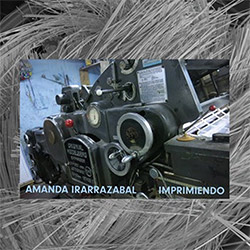 Amanda Irarrazabal:
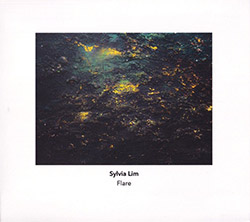 Sylvia Lim:
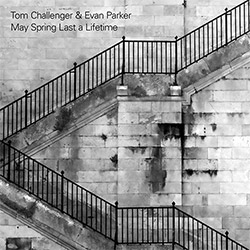 Tom Challenger & Evan Parker:
 Louis Armstrong:
![John Tilbury: At Home [4 CD BOX] (Another Timbre)](https://www.teuthida.com/productImages/misc4/37729.jpg "John Tilbury: At Home [4 CD BOX] (Another Timbre)") John Tilbury:
John Tilbury: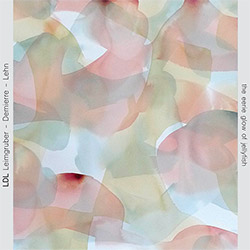 LDL (Leimgruber/Demierre/Lehn):
 Magda Mayas' Filamental:
 Rodrigues / Rodrigues / Torres / Schlippenbach / Kellers: