Jason Bivins and Ian Davis - Benthic �(Family Vineyard)
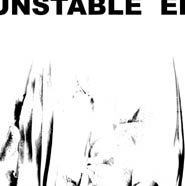 The core of The Liturgy of Ghosts is the quartet of guitarist Jason Bivins, soprano saxophonist Marty Belcher, baritone saxophonist Joe Donnelly and drummer Matt Griffin; for this disc, the collective�s second (following 17 Ways, Family Vineyard, 2001), the group is augmented by Eric Weddle�s "no-input mixing board" (i.e. with a line running directly between input and output jacks, permitting feedback manipulation), as well as cameos by several other players. "Unstable Ensemble" indeed! These improvisations, recorded at five different stops on the band�s summer 2001 tour, have a measured pace bearing little resemblance either to free jazz or to European free improvisation. Calm, sometimes languid in pace, these pieces are uncannily free-floating, as if they didn�t need to ground themselves by departing from and returning to familiar touchstones. The most pertinent lineage is perhaps the musical free-falls of Jimmy Giuffre or Joe Maneri: at one point an explicit homage is made by referencing Carla Bley�s "Jesus Maria," a piece given a classic reading on the Giuffre Trio�s Fusion (1961). Given the basic austerity of texture - sometimes quite bleached - there�s still a surprising amount of variation across the album. The opener, "Beneath the Rafters," is almost stricken, drifting slowly as a ghost ship; "In the Fullness of Time" is a eerie and slow-building drone piece, sounding as if it takes place underwater rather than in the air. The closer, "To Speak, To Listen," opens in territory reminiscent of Gunther Schuller�s "Night Music" then undergoes a few dreamlike transformations, settling into a moody Coltraneish groove atop the thrums of guest bassist Darin Gray. On the face of it the disc�s most conventional gesture, this slips into a jazzier idiom, actually comes across by this point as one of its most deeply estranged moments. The most prominent voice on the album is Bivins�. As a record reviewer for Cadence and other music journals, he�s at times chided guitarists for unimaginatively sticking to a single approach. On The Liturgy of Ghosts he exploits a range of techniques, playing with and without a pick; he usually employs a clean tone, occasionally lightly FX-colored. He avoids distortion, preferring to use a bow when he wants to elicit richer sounds from the instrument.





 Julia Eckhardt:
 Lori Goldston:
 Arkady Gotesman:
 Nicolas Collins / Birgit Ulher:
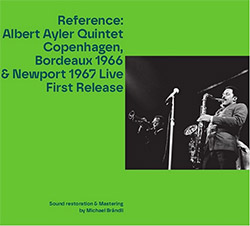 Albert Ayler Quintet:
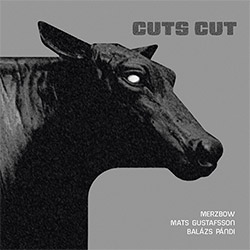 Merzbow / Mats Gustafsson / Balasz Pandi:
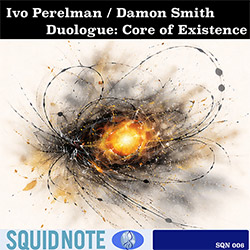 Ivo Perelman / Damon Smith:
 Paul Rogers:
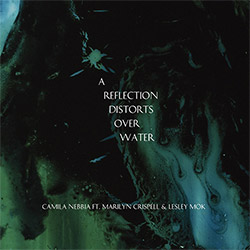 Camila Nebbia (feat. Marilyn Crispell & Lesley Mok):
 Eric La Casa / Francisco Lopez:

 Benthic offers a closer look at Bivins, pairing him with drummer Ian Davis for nine improvisations. The set-up recalls Derek Bailey�s many duets with percussionists - especially Playing, the album with John Stevens, since like Stevens Davis plays a barebones kit - but Bailey�s influence is rarely directly audible: instead, Bivins takes whatever�s direct and expressive in the vocabularies of rock, metal, blues, and jazz guitar and sets it skittering sideways. These solos are almost obsessively detailed (like Joe Morris with a lot more pauses for breath), but build to no statement and avoid any overarching logic. Tenaciously accreted from snippets and cuttings, they find a place for everything, although - as with collages, and as with compost - somehow even the most diverse inputs take on the general texture and color of the whole. Davis takes a mostly secondary role on the disc. At his most propulsive he�s an ideal partner - the pattering lightness resulting from the lack of a bass drum is quite refreshing - but when the tempo drops he wilts: on the opening of "Priapulid" he�s positively inert, and the first half of "Bathysphere" reveals he�s among the 90% of percussionists who have yet to figure out how to get anything interesting out of bowing a cymbal. But though the album suffers from dead spots and too little change of pace and dynamics, there are always good things around the corner if you�re patient: the 3-1/2-minute miniature "Cuskeel" is the standout, and even the exasperatingly overlong "Bathyscape" is worth sitting through for its blues-drenched finale, where Bivins and Davis unleash their most intense playing.