The idea of a "with strings" recording session is a delightful one with a long and distinguished pedigree, from Charlie Parker, to Clifford Brown, to Chet Baker, to Charles Mingus, to Sarah Vaughan, to Ornette Coleman, and so many more. The idea of a string quartet or a string orchestra accompanying and supporting a loquacious soloist is the epitome of suave and sophisticated music making.
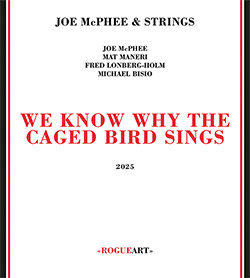
With this release, the story is a little different. The reasons for this particular combination of Joe McPhee's tenor saxophone with Mat Maneri's viola, Fred Longberg-Holm's cello and Michael Bisio's double bass are explained at length in the liner notes by Michel Dorbon, but suffice it to say that happenstance played a role. Nonetheless (or because of the happy synchronicity involved) the music coalesces with a magical magnetism and what we get is not the gossamer dream-like string writing in some of the above-mentioned "with strings" recordings. Instead, it is sophisticated improvised chamber music juxtaposing McPhee's muscular and agile tenor playing with his fleet and imaginative cohorts.
The focal theme is expressed by a reference to poet Maya Angelou, whose poem "Caged Bird" vividly expressed via a simple metaphor some of the agonizing social realities of the heritage of slavery. Her autobiography, I know Why the Caged Bird Sings, extended the poem's message and a transposition from the poetry of words to the poetry of music happens on the 12 tracks on this release. The album's second track, "We Know Why the caged Bird Sings (for Maya A)," features a short poem by McPhee presenting his own take on Angelou's theme, and from there the tracks riff on the theme, with titles like "Singing Birds I, II, III, IV,V, and VI," "Four Windows," and the closing "Variations on a Theme," a kind of summative coda. Throughout, this is sympathetic and telepathic music making of a high order by masterful instrumentalist-composers.





 Sunny Murray and Sabu Toyozumi:
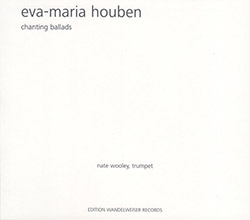 Eva-Maria Houben (Nate Wooley):
 Masayo Koketsu / Nava Dunkelman:
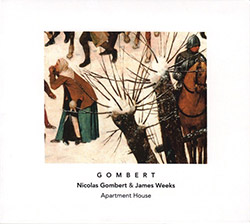 Nicolas Gombert / James Weeks:
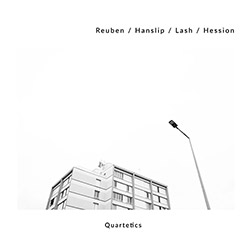 Reuben / Hanslip / Lash / Hession:
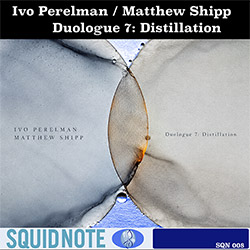 Ivo Perelman / Matthew Shipp:
 Ishmael Ali (Ishmael / Wilkerson / Wilkes / Baker / Tong / Harris):
 Marta Warelis (w/ LaMar Gay / Baars / Ng / Haker Flaten / Rosaly):
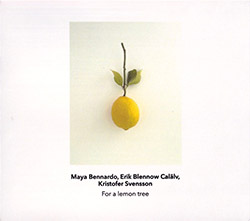 Maya Bennardo / Erik Blennow Calalv / Kristofer Svensson:
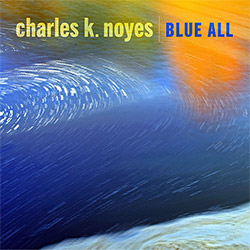 Charles K. Noyes: