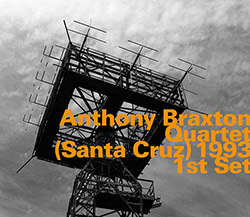
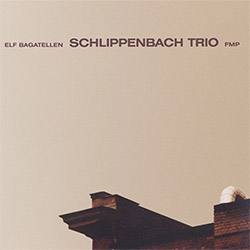
There's something that's dawned on me, something terribly obvious, in listening to Anthony Braxton's (Santa Cruz) 1993 � First Set and the more recently released Quartet (Santa Cruz) 1993 � Second Set and that's that these are records of really difficult jazz. There is no end of people who would agree on that count but listening back to Braxton's "classic quartet" and hearing how well they played together, and thinking about them as a working band, can do a lot to demystify Braxton's notoriously heady music.
My emphasis here is not on "difficult" but on "jazz," because Braxton's quartet is working (more or less) the way jazz bands do. Consider, for example, another "classic quartet" (and one that Braxton himself often points to), the group of John Coltrane, McCoy Tyner, Jimmy Garrison and Elvin Jones. What was their achievement? One could say, in short, that it was playing together enough that they were able to come up with a common language. Not just a style but a coherent system of internal communication that allowed them to take a song like "My Favorite Things" and make it into something like no one had heard before, and yet still recognizable.
The quartet plays Braxton's compositions here (rather than a well-known Broadway tune) but that isn't a difference that makes a difference. His band of the second half of the '80s and early part of the '90s (pianist Marilyn Crispell, bassist Mark Dresser and drummer Gerry Hemingway, the leader hears on flute as well as saxophones) was as tight a band as he ever had, which is to say they knew the language. The quartet plays a half dozen compositions (with two interpolations) presented on disc in two tracks. How tight they become by the halfway mark is just astonishing.
To call the quartet a "jazz band" may not seem profound � and indeed it isn't. But realizing Braxton was playing the music he loved (and not trying to be difficult) helps to see the way through the truly challenging complexities he's come up with in the years since his "classic" days.





 Tom Challenger & Evan Parker:
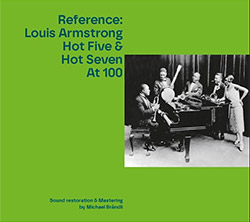 Louis Armstrong:
![John Tilbury: At Home [4 CD BOX] (Another Timbre)](https://www.teuthida.com/productImages/misc4/37729.jpg "John Tilbury: At Home [4 CD BOX] (Another Timbre)") John Tilbury:
John Tilbury: LDL (Leimgruber/Demierre/Lehn):
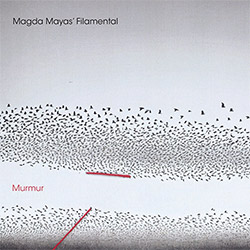 Magda Mayas' Filamental:
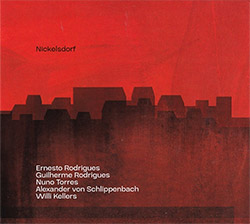 Rodrigues / Rodrigues / Torres / Schlippenbach / Kellers:
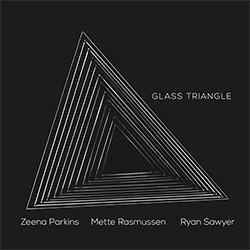 Parkins / Rasmussen / Sawyer:
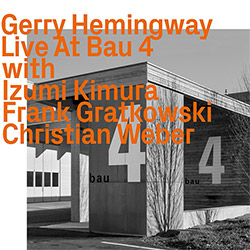 Gerry Hemingway / Izumi Kimura / Frank Gratkowski / Christian Weber:
 Christoph Gallio:
 Ryoji Ikeda: