Roberto Rodriguez, featuring David Krakauer
(Tonic)
February 27th
review by Matt Rand
2003-03-06
Klezmer is joyous. Klezmer is peppy. Think of the old and the young dancing together into the night, clapping all the while. Quick, spritely melodies. Shrill shrieks of celebration.
But there's something else about klezmer: it's sad. The celebration of klezmer has always been tempered by the notion that there is something about which we aren't speaking. There is in the music a sense of mourning, a sense of deep regret, a sense in every exciting moment that, listen, this is in a minor key.
Enter Cuba. Cuban music is sad, too. But its sadness has a muted elegance to it, like a lonely woman in a black evening dress, or a '57 Chevy parked outside an empty grocery store. Most of the time, though, Cuban music is fast, gregarious and syncopated as hell. And when Cuban music is happy, it doesn't look back, careening through sweaty rhythms toward some sort of tropical bliss. So, take the happy side of Cuban music and marry it to Jewish melodies and harmonies. What do you get? Roberto Rodriguez.
Rodriguez's music offers a blend of these two kinds of music that feels almost inevitable at times. Each influence is clear, but the resulting sound isn't a patchwork. Playing at Tonic with David Krakauer on clarinet (and with Meg Okura on violin, Ted Reichman mostly on accordion, but on piano, too, Mary Wooten on cello, Marcus Rojas on tuba and euphonium and Bernie Minoso on bass), Rodriguez worked through many of the tunes he wrote and recorded for his 2002 Tzadik release, El Danzon de Moises, music that reflects his youth in Havana's Jewish community.
Solos sprung up out of Rodriguez's darting melodies, lines of musical questioning and answering that erupted, generally first with Krakauer, into high-wire dances. Krakauer taunted his fellow musicians, playing closely with Okura and then daring her to run as fast as he soon would. Yet, in spite of all this head-cutting going on, Rodriguez kept his playing evenly paced, smiling and laying the Latin groundwork for the party atmostphere. His rare solos were tame and melodic, and as he soloed, he kept his eye on the band, making sure he was still leading them where he wanted them to go.
The evening was a celebration without second thoughts. Rodriguez described one of his songs as being based on a saying passed down to young Cuban Jews, essentially "What would Solomon do?" Then he urged the audience to dance.
Comments and Feedback:

More Recent Reviews, Articles, and Interviews @ The Squid's Ear...
|
|





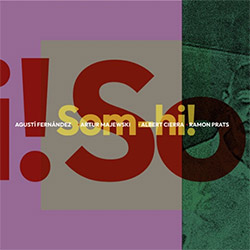 Agusti Fernandez / Artur Majewski / Albert Cirera / Ramon Prats:
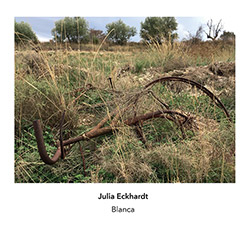 Julia Eckhardt:
 Lori Goldston:
 Arkady Gotesman:
 Nicolas Collins / Birgit Ulher:
 Albert Ayler Quintet:
 Merzbow / Mats Gustafsson / Balasz Pandi:
 Ivo Perelman / Damon Smith:
 Paul Rogers:
 Camila Nebbia (feat. Marilyn Crispell & Lesley Mok):